
Your Favorite Artist Probably Isn’t Rich — They’re Just Good at Looking Rich
The internet completely destroyed people’s understanding of money in the music industry.
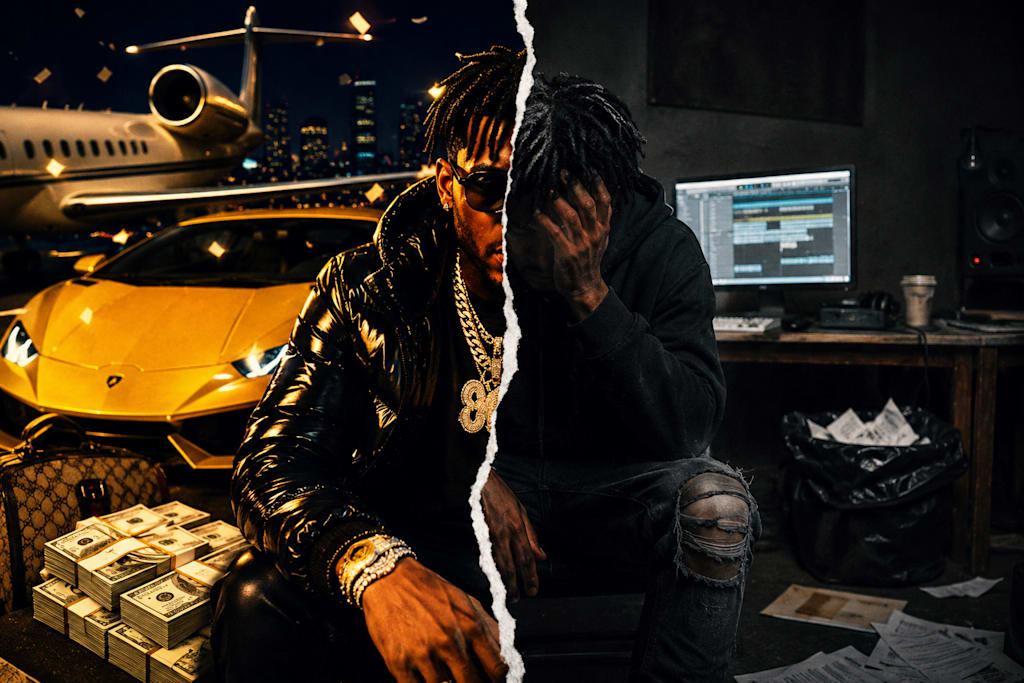
Today, audiences see:
designer clothes
luxury cars
expensive jewelry
private jets
massive mansions
VIP parties
million-dollar chains
…and automatically assume the artist behind the image is financially untouchable.
But the reality behind modern music culture is often much darker than the lifestyle being advertised online.
A shocking number of artists who appear rich are actually:
financially unstable
drowning in debt
trapped in terrible contracts
living off advances
struggling with cash flow
renting luxury temporarily for content
And the craziest part?
The industry quietly depends on this illusion surviving.
Because modern music is no longer just about songs.
It’s about perception.
The internet transformed artists into lifestyle brands. Social media rewards visual success aggressively because success attracts attention. Attention creates engagement. Engagement creates streams, headlines, sponsorships, and algorithmic visibility.
So artists are pressured to look successful long before they become financially secure.
That pressure changed music culture completely.
A rapper today can rent a Lamborghini for a few hours, film content around it, post clips online, and suddenly millions of people psychologically associate him with wealth.
A musician can wear borrowed designer clothes at one event and create the illusion of luxury permanently through carefully selected photos.
The audience rarely sees what happens after the camera turns off.
And honestly, many fans don’t even want reality.
Fantasy performs better online.
Social media platforms are built around aspiration. People engage more with:
luxury
beauty
exclusivity
status
fantasy lifestyles
That’s why flashy content spreads faster than ordinary reality.
The algorithm rewards illusion.
And artists adapt accordingly.
The problem is that modern audiences massively overestimate how much musicians actually earn from streaming.
People see:
“500 million streams”
and imagine life-changing wealth.
But streaming payouts are often divided between:
distributors
labels
managers
producers
publishers
collaborators
taxes
marketing expenses
you can do the math here.
Sometimes artists with millions of monthly listeners still struggle financially behind the scenes.
Especially independent artists.
Streaming created a dangerous cultural illusion where visibility looks identical to financial success.
But visibility and wealth are not the same thing anymore.
An artist can be:
famous online
viral globally
constantly reposted
heavily streamed
…and still have unstable finances.
The internet blurred the line between celebrity and actual economic power.
That confusion became psychologically damaging for artists too.
Modern musicians are trapped inside image economies where public perception affects career momentum constantly. Looking “successful” online can literally influence:
fan growth
label attention
industry respect
collaboration opportunities
sponsorship deals
So many artists start spending money they don’t truly have in order to maintain the appearance of success.
And once audiences expect luxury from a musician, the pressure becomes endless.
Fans now subconsciously judge artists through visible wealth symbols:
chains
watches
cars
fashion
travel
homes
Success became visual performance.
The internet intensified this because platforms like Instagram transformed lifestyle display into a major part of celebrity culture. Fans no longer just listen to artists.
They study them.
Every post becomes social evidence of status.
And artists understand this deeply.
That’s why some musicians prioritize appearance over long-term financial security. A luxury image generates faster internet momentum than quiet responsibility ever will.
A rapper investing money carefully will never go as viral as a rapper throwing cash in front of a rented supercar.
That’s just how modern internet culture works.
And labels often encourage this behavior indirectly because aspirational lifestyles sell music emotionally. Fans don’t only buy songs anymore.
They buy fantasies.
The fantasy of escaping ordinary life.
The fantasy of sudden wealth.
The fantasy of limitless success.
Music videos, Instagram posts, jewelry, and luxury aesthetics all feed into that emotional dream.
But behind the scenes, many artists are burning themselves out trying to maintain images they cannot realistically sustain financially.
Some musicians live almost entirely on advances from labels or future earnings that haven’t arrived yet. Others spend heavily to remain culturally relevant online because disappearing visually can hurt momentum.
That creates a dangerous cycle:
look rich to stay visible
stay visible to keep making money
spend money to maintain the image
repeat endlessly
The artist becomes trapped inside their own branding.
And the audience rarely notices because social media only shows selected moments carefully designed for perception.
The irony is that some genuinely wealthy people in entertainment often look far less flashy publicly than struggling artists trying desperately to appear successful.
Real wealth and visible wealth are often completely different things.
Some of the richest individuals in entertainment understand something important:
money grows quietly.
Internet culture teaches the opposite.
The internet rewards loud success signals because visible luxury creates aspiration instantly. Quiet financial stability is boring online.
Nobody goes viral for:
paying taxes responsibly
saving money
investing carefully
avoiding unnecessary spending
So internet culture unintentionally pushes artists toward financial performance instead of financial security.
The saddest part is how this affects younger audiences psychologically too.
Many fans compare themselves constantly against celebrity lifestyles that may not even be financially real. Social media makes wealth appear normal, effortless, and constant when much of it is carefully staged marketing.
The illusion spreads insecurity everywhere.
And musicians themselves suffer mentally from it too.
Imagine becoming moderately successful but feeling pressured to pretend you are massively wealthy because the internet expects constant luxury from public figures.
That pressure must feel exhausting.
Especially in industries where fame can disappear quickly.
Streaming and social media created a world where artists can become globally visible overnight but financially unstable just as fast. One viral hit does not guarantee long-term wealth anymore.
The internet accelerated fame.
But it also accelerated instability.
And maybe that’s the biggest misunderstanding modern audiences have about the music industry:
Visibility is no longer proof of power.
A million followers does not guarantee financial freedom.
A viral song does not guarantee wealth.
A luxury image does not guarantee stability.
The modern music industry runs heavily on perception management.
And social media made that perception almost impossible to separate from reality.
That’s why some artists who look unstoppable online are secretly terrified financially behind the scenes.
Because in today’s internet culture, looking rich became part of the job itself.
About the Creator
Enjoyed the story? Support the Creator.
Subscribe for free to receive all their stories in your feed.
Comments
There are no comments for this story
Be the first to respond and start the conversation.