
Why Following Trends Is Killing Independent Artists
Every year, a new sound takes over the music industry.
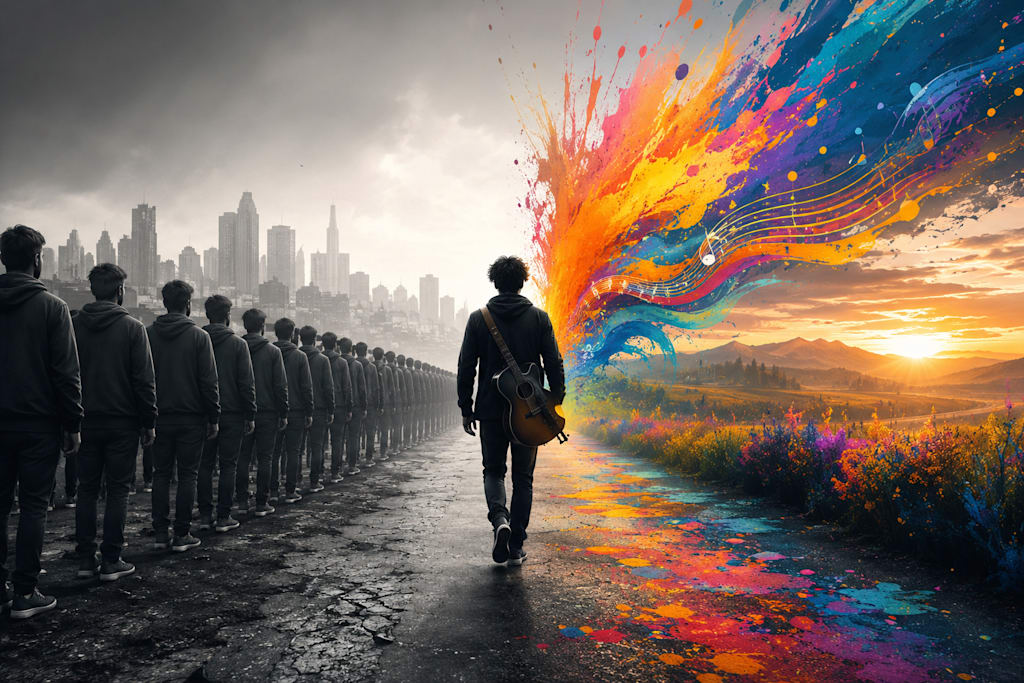
A specific drum pattern becomes popular.
A certain vocal style dominates playlists.
A particular genre suddenly explodes across social media.
And almost immediately, thousands of artists begin chasing it.
At first, this seems logical.
If a style is generating millions of streams, why not create something similar?
If an artist is blowing up with a specific sound, why not borrow elements from that formula?
After all, success leaves clues.
The problem is that by the time most artists notice a trend, they are already late.
And by the time they fully adapt to it, the trend is usually dying.
This is one of the biggest reasons so many independent artists struggle to grow.
They spend their careers chasing what's already working instead of creating what could work next.
Ironically, the very thing they believe will help them succeed often becomes the reason they remain invisible.
The Trend Trap
The internet has accelerated everything.
A sound can emerge, explode, and fade within a matter of months.
Social media platforms amplify whatever is currently generating engagement.
Streaming algorithms reward songs that resemble sounds listeners already enjoy.
As a result, artists are constantly exposed to the same message:
"Do more of what's already winning."
This creates a dangerous cycle.
A trend becomes popular.
Thousands of artists copy it.
The market becomes saturated.
Audiences get bored.
A new trend appears.
The cycle repeats.
The artists trapped inside this loop are always reacting rather than creating.
They become followers instead of leaders.
And followers rarely build lasting careers.
The Market Doesn't Need Another Copy
Imagine an artist becomes massively successful with a unique sound.
That sound helped them stand out because nobody else was doing it.
Then hundreds of artists begin copying the formula.
At that point, listeners already have the original.
Why would they choose the imitation?
This is the question many musicians fail to ask themselves.
The music industry does not reward the tenth version of an idea nearly as much as it rewards the first.
When audiences discover something fresh, they become excited.
When they hear the same formula repeated endlessly, they lose interest.
Being similar may feel safer.
But safety rarely creates attention.
The Artists We Remember Were Different
Look at the artists who truly changed music.
They didn't become successful because they perfectly copied existing trends.
They became successful because they introduced something unique.
Something unexpected.
Something that felt different from everything around them.
At first, many of these artists were criticized.
People said they sounded strange.
People doubted their direction.
People questioned whether audiences would understand them.
Yet those differences eventually became their greatest strengths.
The qualities that made them stand out initially were the same qualities that later defined their legacy.
History repeatedly rewards originality.
Not imitation.
Why Unique Artists Build Stronger Fanbases
There is another problem with chasing trends.
Even when it works, it often creates weak fan relationships.
Think about why people become fans of an artist.
It's rarely because the artist sounds exactly like everyone else.
Fans connect with identity.
Perspective.
Personality.
Emotion.
Originality.
People follow artists who give them an experience they can't find elsewhere.
When an artist develops a unique sound, listeners begin associating that sound with them.
The artist becomes recognizable.
Memorable.
Distinct.
That's where loyalty begins.
If listeners can replace you with fifty other artists making the same music, your growth will always be fragile.
Algorithms Change. Identity Doesn't
Many independent artists build their entire strategy around whatever platforms currently reward.
Today it might be short-form content.
Tomorrow it could be something completely different.
Algorithms constantly evolve.
Trends constantly shift.
Audience behavior constantly changes.
The artists who survive these changes are usually the ones who built identities rather than trends.
Because identity travels across platforms.
A unique artist remains unique regardless of where listeners discover them.
A trend-based artist often loses momentum when the trend disappears.
This is why building a recognizable sound is one of the most valuable long-term investments an artist can make.
Your Sound Is Your Competitive Advantage
In business, companies search for competitive advantages.
Something competitors cannot easily replicate.
Artists should think the same way.
Your sound is not just music.
It's your brand.
Your identity.
Your fingerprint.
Your competitive advantage.
Anyone can copy a drum pattern.
Anyone can copy a vocal effect.
Anyone can imitate a trend.
But nobody can perfectly replicate your perspective, experiences, and creative instincts.
The more you develop those qualities, the harder you become to replace.
And in today's crowded music industry, being irreplaceable matters.
Finding Your Own Sound Takes Time
One reason artists chase trends is because developing originality is difficult.
Creating your own sound requires experimentation.
Failure.
Patience.
Self-awareness.
Most artists don't discover their identity overnight.
It often takes years.
Many of the musicians we consider unique today spent countless hours refining their craft before finding the style that truly represented them.
The process can feel frustrating.
There are no shortcuts.
No formulas.
No guarantees.
But that's exactly what makes originality valuable.
If uniqueness were easy, everyone would have it.
The Fear of Being Different
Perhaps the biggest obstacle isn't talent.
It's fear.
Many artists secretly worry that audiences won't accept something different.
They fear rejection.
They fear criticism.
They fear standing out.
So they choose familiarity instead.
They hide inside trends because trends feel safer.
But music history tells a different story.
The artists who achieve extraordinary success often take extraordinary creative risks.
Not every risk works.
But meaningful innovation rarely happens without discomfort.
Sometimes sounding different is exactly what attracts attention.
Growth Comes From Recognition
Many artists believe growth comes from exposure alone.
Exposure matters.
But recognition matters even more.
If listeners hear your song and immediately know it's you, you've created something powerful.
Recognition leads to familiarity.
Familiarity leads to trust.
Trust leads to loyal listeners.
And loyal listeners create sustainable careers.
This is why creating your own sound is not merely an artistic decision.
It's a strategic one.
The more recognizable your music becomes, the easier it becomes for fans to remember you.
And in an era where thousands of songs are released every day, being memorable is a superpower.
The Future Belongs to Originals
The internet has made copying easier than ever.
Every trend is visible.
Every successful formula can be analyzed.
Every viral moment can be replicated.
Because of this, originality has become more valuable, not less.
Audiences are constantly searching for something that feels fresh.
Something authentic.
Something unexpected.
Something real.
The artists who provide that experience often separate themselves from the crowd.
Not because they followed the market.
Because they gave the market something it didn't already have.
Final Thoughts
Following trends can create temporary attention.
Creating your own sound can create a career.
Trends come and go.
Algorithms change.
Popular sounds evolve.
But identity endures.
The artists who leave lasting impacts are rarely the ones who perfectly copied what was already successful.
They are the ones who introduced something new.
Something recognizable.
Something impossible to confuse with anyone else.
As an independent artist, your goal should not be to sound like the artist who is winning today.
Your goal should be to become the artist nobody can copy tomorrow.
Because in the long run, uniqueness isn't a risk.
It's your greatest advantage.
About the Creator
Enjoyed the story? Support the Creator.
Subscribe for free to receive all their stories in your feed.
Comments
There are no comments for this story
Be the first to respond and start the conversation.