
The Future of Humanity
How Technology, AI, and Innovation Are Reshaping Our World
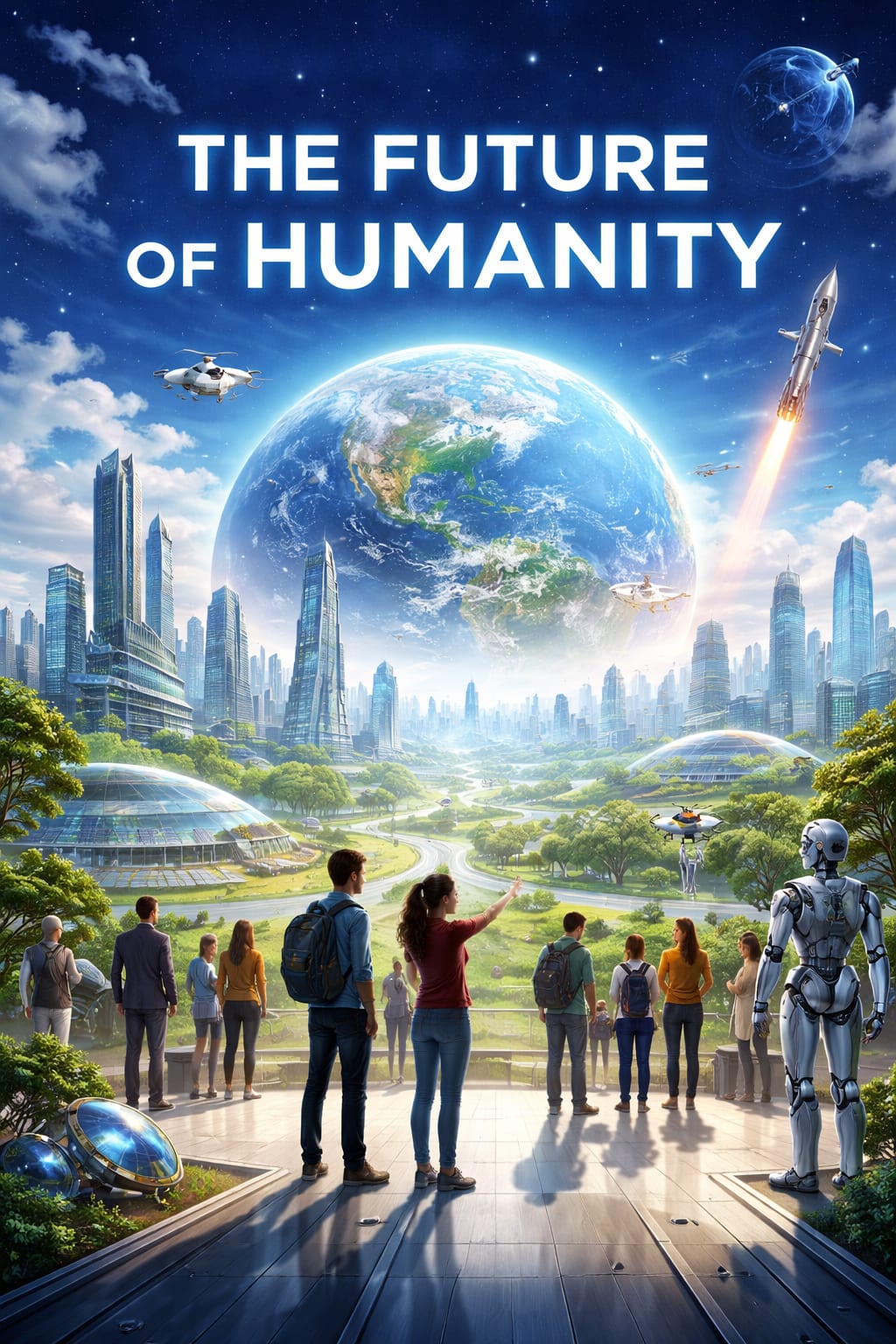
Humanity stands at a turning point unlike any other in history. From the invention of the wheel to the rise of the internet, progress has always shaped how we live, think, and interact. Today, however, the pace of change is accelerating at an extraordinary rate. Technologies such as artificial intelligence, biotechnology, and space exploration are not just improving our lives—they are redefining what it means to be human.
The future of humanity is no longer a distant concept reserved for science fiction. It is unfolding right now, driven by innovation, creativity, and global interconnectedness. While these advancements bring immense opportunities, they also raise critical questions about ethics, identity, and survival.
The Rise of Artificial Intelligence
Artificial intelligence (AI) is one of the most transformative forces shaping our future. Machines are no longer limited to performing simple tasks; they are now capable of learning, reasoning, and even creating.
AI is already integrated into everyday life:
Virtual assistants help manage schedules
Algorithms recommend content and products
Automated systems drive cars and manage industries
In the future, AI could revolutionize:
Healthcare: Predicting diseases and developing personalized treatments
Education: Offering tailored learning experiences for every individual
Workplaces: Automating repetitive tasks and enhancing productivity
However, this rise also brings concerns. Will AI replace human jobs? Can machines make ethical decisions? The challenge lies in ensuring that AI remains a tool that benefits humanity rather than controlling it.
Biotechnology and Human Enhancement
Advancements in biotechnology are pushing the boundaries of what the human body can achieve. Scientists are exploring ways to:
Edit genes to eliminate diseases
Extend human lifespan
Enhance physical and cognitive abilities
Technologies like gene editing have the potential to eradicate genetic disorders and improve overall health. Imagine a world where illnesses such as cancer or Alzheimer’s are no longer life-threatening.
But with such power comes ethical dilemmas. Should humans be allowed to “design” future generations? Where do we draw the line between healing and enhancement? These questions will shape how biotechnology evolves in the coming decades.
The Future of Work
The nature of work is rapidly changing. Automation and digital platforms are transforming traditional jobs while creating new opportunities.
Key trends include:
Remote Work: People can work from anywhere, breaking geographical barriers
Freelancing: More individuals are choosing independent careers
Digital Skills: Demand for tech-related skills continues to grow
While automation may replace certain roles, it will also create new ones that require creativity, critical thinking, and emotional intelligence—qualities that machines cannot easily replicate.
The future workforce will need to adapt continuously, learning new skills and embracing change. Education systems must evolve to prepare individuals for this dynamic environment.
Space Exploration and Expansion
Humanity’s future may not be limited to Earth. Advances in space technology are opening the door to interplanetary exploration.
Scientists and engineers are working on:
Establishing colonies on other planets
Mining resources from asteroids
Developing sustainable life-support systems in space
The idea of humans living beyond Earth is becoming increasingly realistic. Space exploration could provide solutions to challenges such as overpopulation and resource scarcity.
At the same time, it inspires a sense of unity. Viewing Earth from space reminds us that we share one planet, encouraging global cooperation and responsibility.
Climate Change and Sustainability
One of the greatest challenges facing humanity is climate change. Rising temperatures, extreme weather, and environmental degradation threaten ecosystems and human life.
The future will depend on our ability to:
Transition to renewable energy sources
Reduce carbon emissions
Protect natural habitats
Technology plays a crucial role in addressing these issues. Innovations in clean energy, sustainable agriculture, and waste management offer hope for a greener future.
However, technological solutions alone are not enough. Collective action, policy changes, and individual responsibility are essential to ensure the survival of our planet.
The Evolution of Human Connection
Technology has transformed how we connect with one another. Social media, messaging platforms, and virtual environments have made communication instant and global.
In the future, connection may become even more immersive:
Virtual reality could enable shared experiences across distances
Augmented reality may blend digital and physical worlds
Brain-computer interfaces could allow direct communication through thoughts
While these advancements enhance connectivity, they also raise concerns about privacy, mental health, and the authenticity of relationships. Maintaining meaningful human connections in a digital world will be a key challenge.
Ethics and Responsibility
As humanity advances, ethical considerations become increasingly important. Questions about privacy, equality, and control will shape the future.
Key ethical issues include:
Who controls powerful technologies?
How do we ensure equal access to innovation?
What rights should intelligent machines have, if any?
Without proper regulation and ethical frameworks, technological progress could lead to inequality and misuse. It is essential for governments, organizations, and individuals to work together to establish guidelines that prioritize human well-being.
The Role of Education
Education will be the foundation of humanity’s future. As the world changes, learning must evolve beyond traditional methods.
Future education may focus on:
Critical thinking and problem-solving
Adaptability and lifelong learning
Emotional intelligence and collaboration
Technology will play a major role, offering personalized learning experiences and global access to knowledge. However, the human element—mentorship, creativity, and empathy—will remain irreplaceable.
Hope and Uncertainty
The future of humanity is filled with both promise and uncertainty. While innovation offers solutions to many challenges, it also introduces new risks.
What remains constant is human resilience. Throughout history, humanity has faced obstacles and emerged stronger. The same spirit of curiosity and determination will guide us into the future.
Conclusion
The future of humanity is not predetermined—it is shaped by the choices we make today. Technology, AI, and innovation have the power to create a world of abundance, health, and opportunity. At the same time, they require careful management to avoid unintended consequences.
As we move forward, the goal should not simply be progress, but meaningful progress—one that enhances human life while preserving our values and planet. By embracing innovation responsibly and working together, humanity can build a future that is not only advanced but also compassionate, inclusive, and sustainable.
The journey ahead is complex, but it is also full of possibility. The future is not something we wait for—it is something we create.
About the Creator
Enjoyed the story? Support the Creator.
Subscribe for free to receive all their stories in your feed.
Comments
There are no comments for this story
Be the first to respond and start the conversation.