Sculpture
Wood Carving in Saharanpur: A Timeless Heritage
The Rich History of Wood Carving in Saharanpur The history of wood carving in Saharanpur is a testament to the evolution of traditional skills. It beautifully merges artistry with craftsmanship. This practice deeply reflects the industrial and cultural heritage of the region. Over the centuries, artisans have perfected ancient techniques, shaping the unique identity of Saharanpur craftsmanship.
By umar khalid2 years ago in Art
Medieval Masonry: The Craftsmanship Behind Iconic Structures
The medieval era, spanning roughly from the 5th to the 15th century, was an age of remarkable architectural innovation. From soaring cathedrals to fortified castles, medieval masonry laid the foundation—quite literally—for some of the world’s most enduring structures. These buildings, with their intricate stonework and enduring strength, not only showcased the skill of medieval masons but also reflected the cultural, religious, and technological advancements of the time. This blog delves into the medieval mason style of building, exploring its techniques, materials, and the legacy it has left behind. --- The Role of the Mason in Medieval Society Masons were among the most skilled craftsmen of the medieval period. Their work required not only physical strength but also a deep understanding of geometry, physics, and aesthetics. Masons often belonged to guilds, organizations that maintained standards, trained apprentices, and protected trade secrets. Guilds played a crucial role in the evolution of masonry techniques, and their influence is evident in the uniformity and precision of medieval stonework. These craftsmen were responsible for building structures that served religious, defensive, and residential purposes, shaping the medieval landscape in the process. --- Techniques and Tools of the Trade Medieval masons relied on a combination of hand tools and ingenious techniques to craft their masterpieces. 1. Tools: - Chisels and Mallets: Used for shaping stones. - Plumb Bobs and Levels: Ensured structures were straight and balanced. - Compasses: Assisted in creating precise curves and circles for arches and windows. - Hammers: Broke larger stones into manageable sizes. 2. Techniques: - Ashlar Masonry: This involved cutting stones into uniform shapes for a smooth and polished appearance. - Rubble Masonry: Used irregular stones, often for less visible or fortified sections. - Vaulting and Arches: Key features in gothic and Romanesque styles, requiring mastery of geometry. - Buttressing: Counteracted the lateral forces of vaulted ceilings, allowing for taller and more intricate designs. Masons used scaffolding and wooden frames to ensure stability during construction, particularly for arches and domes. --- Materials in Medieval Masonry The choice of materials depended largely on local availability and the purpose of the structure. - Stone: Limestone, sandstone, and granite were popular due to their durability. Some structures incorporated marble for decorative elements. - Mortar: Made from lime and sand, mortar bonded stones together and added to the structure’s longevity. - Timber: Often used as a framework or for scaffolding during construction. Masons meticulously sourced and prepared materials, as the quality of the stone and mortar significantly influenced the durability of the building. --- Styles of Medieval Masonry Medieval architecture evolved over time, with distinct styles emerging in different periods and regions. 1. Romanesque Style (10th–12th Century): Characterized by thick walls, rounded arches, and small windows, Romanesque structures emphasized strength and stability. Examples include the Abbey of Sainte-Foy in France and Durham Cathedral in England. 2. Gothic Style (12th–16th Century): Gothic architecture brought a revolution in masonry, featuring pointed arches, ribbed vaults, and flying buttresses. This style allowed for taller buildings and larger windows, often filled with intricate stained glass. Iconic examples include Notre-Dame de Paris and Chartres Cathedral. 3. Defensive Masonry: Castles and fortifications required robust masonry to withstand attacks. Thick walls, crenellations, and moats were hallmarks of defensive structures like the Tower of London and Carcassonne in France. --- The Legacy of Medieval Masonry Medieval masons left behind a legacy of craftsmanship and innovation. Many of their buildings still stand today, a testament to their skill and ingenuity. These structures not only serve as historical landmarks but also inspire modern architecture. The enduring popularity of medieval-style buildings in modern designs speaks to the timeless appeal of their symmetry, strength, and beauty. Architects and masons today often study medieval techniques to understand the principles of durability and aesthetics that defined this era. --- Challenges of Medieval Masonry Despite their remarkable achievements, medieval masons faced significant challenges. Building large structures took years—sometimes decades or even centuries. Funding was often a constraint, particularly for cathedrals and churches. The lack of advanced machinery meant that every stone was shaped and placed by hand, requiring immense labor and precision. Yet, these challenges only highlight the incredible dedication and skill of medieval masons. --- Conclusion Medieval masonry is a cornerstone of architectural history, blending artistry with engineering in ways that continue to awe and inspire. The masons of the Middle Ages created structures that were not only functional but also profoundly beautiful, reflecting the values and aspirations of their society. From the grandeur of Gothic cathedrals to the impenetrable walls of medieval castles, the craftsmanship of medieval masons has stood the test of time, reminding us of an era when stone and skill converged to create enduring masterpieces. Today, these buildings stand as monuments to human ingenuity and creativity, offering a window into a world where every stone told a story and every structure reached for the heavens.
By Deji Akomolafe2 years ago in Art
The Timeless Appeal of Religious Statues in Modern Homes
Religious statues have been part of human civilization for thousands of years. These statues symbolize faith, spirituality, and culture. Since ancient temples to the wall of modern homes, these continue to occupy a significant place in the lives of many around the world. In the contemporary world where homes have become a reflection of personal belief, religious statues are placed with tradition and current aesthetics.
By Herisculpt TechVoyager2 years ago in Art
Michelangelo’s David: A Colossal Masterpiece of Renaissance Art
Michelangelo’s David is one of the most iconic and celebrated sculptures in the world, a masterpiece of Renaissance art that has captivated viewers for centuries. Commissioned in 1501 and completed in 1504, this monumental statue stands at an astounding 17 feet tall and weighs over 12,000 pounds. Sculpted from a single block of pristine white marble, David is a testament to Michelangelo’s extraordinary skill and vision, as well as the cultural and artistic ideals of the Renaissance period. This blog delves into the story behind the creation of David, its immense scale, and its enduring significance as a symbol of artistic genius and human potential. --- The Commission and Creation of David In 1501, the city of Florence commissioned a young Michelangelo Buonarroti to sculpt a statue of the biblical hero David. The project was intended as a symbol of the city’s strength, independence, and faith in divine providence. Florence, surrounded by rival city-states and often embroiled in conflict, saw David as a fitting representation of resilience and courage. The marble block that Michelangelo used for the sculpture was not new. Known as the “Giant,” this massive piece of marble had been quarried decades earlier and left unused, partially due to its flawed surface and challenging dimensions. Several artists had attempted to work with it but abandoned the project, deeming the marble too difficult to sculpt. Michelangelo, however, saw potential in the block and accepted the challenge. Over the course of three years, he transformed the rough marble into a masterpiece that would redefine the boundaries of art and sculpture. --- The True Size of David One of the most striking features of Michelangelo’s David is its sheer size. Standing at 17 feet tall (5.17 meters) and weighing more than 12,000 pounds (5.4 tons), the statue is far larger than life. Why Is David So Large? The statue’s monumental size was intentional, as it was originally meant to be placed high on the roofline of Florence Cathedral. Its exaggerated proportions were designed to ensure that the figure would appear balanced and powerful when viewed from below. Michelangelo subtly adjusted the anatomy, such as enlarging the hands and head, to account for the perspective and to emphasize David’s strength and intelligence. While the statue was ultimately installed in the Piazza della Signoria, the seat of Florence’s civic government, its size and grandeur immediately made it a centerpiece of the city. --- Sculpting From a Single Block of Marble Another remarkable aspect of David is that it was carved from a single block of marble. Known as Carrara marble, this material is famed for its pure white color and fine grain, making it a favorite among Renaissance sculptors. The challenges Michelangelo faced in working with this particular block were immense. The marble was weathered and had imperfections, requiring extraordinary precision to avoid fractures. Michelangelo’s ability to envision the final figure within the block and bring it to life with such finesse is a testament to his genius. --- Symbolism and Artistic Genius David as a Symbol Michelangelo’s David is more than just a work of art; it is a symbol of human potential and civic pride. In the biblical story, David, a young shepherd, defeats the giant Goliath with a simple sling and unwavering faith. In Florence, David became a metaphor for the city’s triumph over larger, more powerful enemies through ingenuity and divine favor. Unlike earlier depictions of David, which often showed him post-victory with Goliath’s head, Michelangelo chose to depict him before the battle. This decision imbues the statue with a sense of tension and anticipation, highlighting David’s courage, focus, and readiness to act. Artistic Achievements Michelangelo’s David is celebrated for its anatomical precision and lifelike detail. Every muscle, vein, and sinew is meticulously rendered, reflecting Michelangelo’s deep study of human anatomy. The contrapposto pose, in which David stands with his weight shifted onto one leg, adds a sense of dynamism and naturalism to the figure. This stance, combined with the intense gaze and poised posture, captures the essence of Renaissance ideals: balance, harmony, and the glorification of human form and intellect. --- Legacy and Cultural Impact Since its unveiling in 1504, David has become one of the most famous sculptures in the world. It has inspired countless artists, writers, and thinkers, and remains a symbol of artistic achievement and human potential. Over the centuries, the statue has endured challenges, including weathering, vandalism, and transportation. Today, the original David is housed in the Galleria dell’Accademia in Florence, where it continues to draw millions of visitors each year. A replica now stands in the Piazza della Signoria, ensuring that Michelangelo’s vision remains a part of Florence’s public identity. --- Conclusion: A Masterpiece for the Ages Michelangelo’s David is a triumph of artistry, engineering, and human creativity. Its immense size and the audacity of sculpting it from a single block of marble underscore Michelangelo’s unparalleled skill and vision. More than just a statue, David embodies the ideals of the Renaissance and serves as a timeless reminder of the power of determination, courage, and ingenuity. Over 500 years later, it remains a source of awe and inspiration, a masterpiece that continues to captivate and connect us to the brilliance of its creator. For anyone standing before David, it is impossible not to marvel at the genius required to create such a monumental work—a true testament to Michelangelo’s legacy as one of the greatest artists in history.
By Deji Akomolafe2 years ago in Art
Michelangelo's "David": Making Blood Flow in Marble
Michelangelo’s David is not just a sculpture; it is a masterpiece of art and human creativity. Carved between 1501 and 1504, this monumental statue stands as a symbol of the Renaissance, embodying the ideals of human beauty, strength, and intellect. What sets David apart from other sculptures of its time is its lifelike quality—Michelangelo seemed to make the blood flow through the veins of the cold marble, bringing his creation to life. In this blog post, we will explore the origins of David, the genius of Michelangelo's artistry, and the lasting impact of this timeless masterpiece. --- The Genesis of David Michelangelo di Lodovico Buonarroti Simoni was just 26 years old when he was commissioned to sculpt David. The commission came from the Opera del Duomo, the cathedral workshop of Florence, which sought to create a monumental figure to represent the city’s ideals of strength and independence. A massive block of Carrara marble, abandoned by previous artists who deemed it too flawed, became Michelangelo's canvas. It took him over three years of meticulous labor to transform this raw stone into one of the greatest works of art in history. Unlike earlier depictions of David, which often showed the young shepherd after his victory over Goliath, Michelangelo chose to portray him before the battle. This decision gave the sculpture an unprecedented emotional depth, capturing David in a moment of quiet determination and tension. --- The Anatomy of Perfection Michelangelo's training in anatomy, gained through the dissection of human cadavers, is evident in every inch of David. Standing at 17 feet tall, the statue is a towering representation of the human form, yet it is its details that truly bring it to life. The Veins and Muscles The veins on David’s hands and arms seem to pulse with life, as if blood flows beneath the surface. This remarkable detail was achieved through Michelangelo’s understanding of anatomy and his ability to manipulate the marble to mimic the texture and dynamism of human skin. The tension in David’s muscles—particularly in his neck and arms—reflects the psychological state of a young man preparing for a life-or-death confrontation. His body is not overly idealized; instead, Michelangelo captures the natural imperfections and asymmetries of a real human form, making David both heroic and relatable. The Face of Determination David’s face is another masterpiece within a masterpiece. His furrowed brow, slightly parted lips, and intense gaze convey a sense of focus and readiness. This is not the face of a mythical hero, but of a real person grappling with fear, courage, and resolve. The eyes, carved with precision, seem to follow the viewer, adding a layer of dynamism to the statue. Michelangelo’s use of shadow and light enhances the emotional impact, making David appear alive, as though he is breathing and thinking in real-time. --- Symbolism and Innovation Michelangelo’s David is steeped in symbolism. Created during a time when Florence was under threat from external forces, the statue was seen as a symbol of the city’s resilience and defiance. Just as David triumphed over the giant Goliath, Florence aspired to overcome its own adversaries. Breaking Tradition Before David, most large sculptures were part of architectural structures or displayed within churches. Michelangelo’s David, however, stood alone as a freestanding figure, allowing it to be admired from every angle. This innovation emphasized the human form as a work of art in its own right, reflecting the Renaissance ideals of humanism and individualism. The Contrapposto Stance David’s pose, known as contrapposto, is another hallmark of Renaissance art. His weight is shifted onto one leg, creating a naturalistic and relaxed posture. This stance not only adds to the realism of the sculpture but also imbues it with a sense of potential energy, as though David is poised to spring into action. --- Michelangelo’s Genius: Making Marble Breathe Michelangelo’s ability to make marble appear soft and alive was unparalleled. He once said, “Every block of stone has a statue inside it, and it is the task of the sculptor to discover it.” With David, he seemed to discover not just a statue but the essence of humanity itself. Carving the Marble The process of creating David involved immense skill and patience. Michelangelo worked with a chisel and mallet, gradually revealing the figure within the marble. He used a technique called subtractive sculpting, where material is carefully removed to shape the form. One mistake could ruin the entire piece, yet Michelangelo’s precision was flawless. Illusion of Movement Despite being carved from a single block of stone, David seems dynamic. The slight twist of his torso, the positioning of his head, and the tension in his limbs all contribute to the illusion of movement. This interplay between stillness and action is a hallmark of Michelangelo’s genius. --- The Legacy of David Since its unveiling in 1504, David has been celebrated as a masterpiece of art and engineering. Originally placed in the Piazza della Signoria, the statue became a civic icon, representing Florence’s independence and artistic supremacy. Today, David resides in the Galleria dell'Accademia in Florence, where millions of visitors marvel at its beauty each year. Its impact extends beyond the art world, influencing literature, philosophy, and even popular culture. A Timeless Inspiration Michelangelo’s David continues to inspire artists and viewers alike. Its realism, emotional depth, and technical brilliance remind us of the limitless potential of human creativity. It also serves as a testament to the Renaissance spirit, celebrating the dignity and power of the individual. --- Conclusion Michelangelo’s David is more than a sculpture; it is a living, breathing entity crafted from stone. Through his unparalleled mastery of anatomy and marble, Michelangelo made the blood flow in his creation, transforming an inanimate material into a timeless symbol of human strength, courage, and beauty. Whether admired for its artistic innovation, emotional depth, or symbolic resonance, David remains one of the greatest achievements in human history. In it, we see not only the vision of Michelangelo but also a reflection of ourselves—our fears, our hopes, and our triumphs. To stand before David is to witness the power of art to transcend time, to make marble come alive, and to remind us of the extraordinary potential within us all.
By Deji Akomolafe2 years ago in Art
Levitate . Content Warning. AI-Generated.
A variety of techniques may be used to achieve levity, one of the most intriguing magical abilities. This class will only address a handful of them. Before moving on to more complex tactics that will require some preparation and practice, we will go over some basic approaches that may be done at home right now. Get ready to discover how to levitate as we also go over some more costly variants that are used by experts and that you have likely seen on some major television shows. This first technique involves the magician entering the room, covering the front of their body with a towel or blanket, and then appearing to float straight out of it.
By Shamir Omar2 years ago in Art
Where Art Meets Science: Transforming Storytelling Through Special Effects Make-Up
In the world of special effects (SFX) make-up, few names stand out like Eline Van Den Storme. A talented French artist who has carved out her own space in Hollywood, Eline's journey from her roots in Montévrain, Île-de-France to becoming a sought-after name in Los Angeles' special effects industry showcases a combination of technical skill, artistic vision, and relentless determination.
By Cyrus Wahome2 years ago in Art
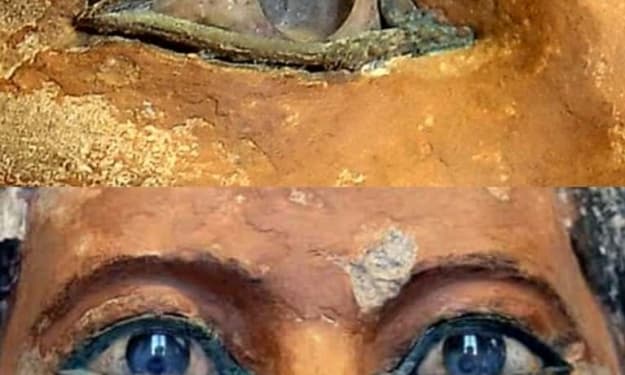
The Inlaid Eye of the Seated Scribe: A Marvel of Ancient Egyptian Craftsmanship
The Seated Scribe, an iconic piece of ancient Egyptian art dating back to the Old Kingdom (circa 2600-2350 BCE), stands as one of the finest examples of Egyptian sculpture. While much of its allure lies in its realistic portrayal of a scribe in mid-action, one of its most remarkable features is the inlaid eye. Crafted from red-veined white magnesite and rock crystal, the eye is an extraordinary example of the intricate artistry and technical prowess achieved by ancient Egyptian craftsmen. This detailed feature not only enhances the lifelike quality of the figure but also offers a glimpse into the sophisticated artistic methods employed by ancient Egyptian sculptors. The Seated Scribe: A Snapshot of Ancient Egyptian Society The Seated Scribe is a portrayal of a middle-aged man, likely a government official or a private scribe, engaged in the act of writing. Unlike the idealized figures of pharaohs and gods seen in many Egyptian artworks, the Seated Scribe is refreshingly realistic. His body is plump, his face marked by wrinkles and a slightly tired expression. This attention to realism reflects the importance of the scribe's role in Egyptian society. Scribes were vital to the administration, responsible for recording laws, religious texts, and the deeds of the pharaohs. They were often depicted in a more humanized manner, embodying the wisdom, intelligence, and practical skill that they were admired for, rather than the divine or heroic traits typically assigned to the upper echelons of society. The Eye: An Inlaid Work of Art What truly sets the Seated Scribe apart, however, is the detail of his eyes. The eyes of the sculpture are not simple carvings; they are inlaid with materials that would have been precious and difficult to obtain at the time, demonstrating the technical skill of the artist. The inlaid eyes are composed of two primary materials: red-veined white magnesite for the sclera (the white part of the eye) and rock crystal for the cornea. These materials, particularly magnesite, were not native to Egypt, suggesting that they were imported, highlighting the trade networks that the ancient Egyptians maintained. The use of such materials would have been a sign of wealth and status, indicating that the scribe was a person of considerable importance. The rock crystal was finely polished to create a smooth, translucent surface that mimicked the natural appearance of an eyeball. The magnesite, with its distinctive red veins, was carefully selected to give the sclera an appearance of life and depth. The eyes were further detailed by adding a colored material to represent the iris, which was fixed behind the polished crystal. This artistic technique enhanced the lifelike quality of the sculpture and contributed to the overall sense of realism that the piece exudes. The irises were likely created using a combination of natural pigments and resins, materials readily available in Egypt. This intricate level of detail in the eyes, where even the iris is carefully represented, would have made the sculpture appear almost alive. Symbolism of the Eyes in Ancient Egyptian Art In ancient Egyptian culture, the eyes were a symbol of perception, wisdom, and clarity. The concept of “seeing” was deeply symbolic, representing not only physical vision but also the ability to discern spiritual truths. The use of inlaid eyes in sculptures was not limited to realism; it also conveyed an important symbolic message. The eye was seen as a conduit to the soul, and the act of giving an image or statue eyes was thought to animate the figure. This belief stemmed from the idea that a person’s soul could continue to exist in the afterlife, and the eyes would allow the spirit to see and interact with the world. Therefore, the meticulous crafting of the eyes in the Seated Scribe may have been an effort to ensure that the figure would possess the necessary faculties to “see” into the afterlife, making the scribe’s soul capable of enduring beyond death. Moreover, the eyes were not only symbolic of the spirit’s perception but also served as a reflection of the vitality of the individual depicted. In the case of the Seated Scribe, the eyes could be interpreted as reinforcing the active, engaged nature of the figure, who is immersed in his work and in the practice of recording knowledge. By adding such lifelike eyes, the sculptor ensured that the scribe was portrayed as a vibrant, thinking individual, contributing to the broader theme of the artwork: the importance of intellect, wisdom, and the written word in Egyptian society. A Reflection of Egyptian Craftsmanship and Trade The skill required to create the inlaid eyes of the Seated Scribe speaks volumes about the level of craftsmanship in ancient Egypt. Not only was the artist proficient in the use of stone and crystal, but the choice of materials indicates a deep understanding of texture, color, and the ability to manipulate different substances to achieve a desired effect. The polished crystal, in particular, would have required great precision to avoid cracking or damaging the delicate material. Similarly, the red-veined magnesite, with its subtle hues, was carefully chosen to add a layer of depth to the figure, drawing attention to the realism of the face. The use of imported materials such as magnesite also reflects the interconnected nature of the ancient Egyptian world. Egypt was part of a complex network of trade routes that spanned Africa and the Near East, providing access to rare materials that could not be found locally. The existence of such trade, evident in the Seated Scribe’s eyes, underscores the Egyptian Empire’s economic and cultural reach during the Old Kingdom. Conclusion The inlaid eyes of the Seated Scribe are a stunning testament to the artistry, symbolism, and technical skill of ancient Egyptian craftsmen. Through the use of red-veined white magnesite, rock crystal, and other materials, the artist imbued the sculpture with a lifelike presence that transcends the boundaries of time. The eyes are not just a marvel of ancient craftsmanship but also a powerful symbol of perception, wisdom, and the eternal connection between life and the afterlife. As we look at the Seated Scribe today, we are reminded of the enduring legacy of ancient Egyptian culture and the extraordinary skill of its artists, who were able to capture the essence of life in stone and crystal.
By Deji Akomolafe2 years ago in Art
The Palais Garnier: A Masterpiece of 19th-Century Paris
Nestled in the heart of Paris, the Palais Garnier stands as one of the most iconic and opulent symbols of 19th-century French architecture and culture. Commonly known as L'Opéra Garnier, this historic opera house, with its 1,979-seat capacity, has been a centerpiece of Parisian life since its inauguration in 1875. Commissioned by Emperor Napoleon III during the Second Empire, the Palais Garnier is more than just a venue for opera and ballet; it is a testament to the artistic and architectural ambition of its era. --- A Visionary Project The Palais Garnier was born out of necessity and grandeur. By the mid-19th century, the Paris Opera, then housed in the Théâtre de l'Académie Royale de Musique, required a new home. Napoleon III envisioned a grand structure befitting the cultural and political power of his regime. In 1861, Charles Garnier, a relatively unknown architect, won the design competition for the new opera house. His vision was a Beaux-Arts masterpiece that combined opulence, functionality, and cutting-edge construction techniques. Construction began in 1861 but faced numerous delays, including the Franco-Prussian War, the fall of the Second Empire, and the discovery of an underground lake beneath the site. This subterranean lake, immortalized in Gaston Leroux’s The Phantom of the Opera, required a complex drainage system and remains a fascinating part of the opera house’s lore. --- A Triumph of Beaux-Arts Architecture When it finally opened its doors in 1875, the Palais Garnier was hailed as an architectural triumph. Its design epitomized the Beaux-Arts style, characterized by grandeur, symmetry, and elaborate ornamentation. Garnier’s vision was to create a “palace of pleasure,” where every corner would dazzle and delight. The exterior of the building is a feast for the eyes. Its façade is adorned with sculptures, columns, and friezes, each element rich with symbolism. The twin gilded statues of Harmony and Poetry crown the structure, while busts of great composers like Mozart, Beethoven, and Rossini pay homage to the operatic art form. The grand staircase, a masterpiece of marble and gilded bronze, is as much a stage for the audience as the performers, designed to showcase the elegance and fashion of Parisian high society. --- Inside the Palais Garnier Stepping into the Palais Garnier is akin to entering a dreamscape of gilded splendor. The Grand Foyer, stretching nearly 60 meters long, rivals the Hall of Mirrors at Versailles in its opulence. Adorned with crystal chandeliers, frescoed ceilings, and gold-leafed accents, it offers a breathtaking space for audiences to mingle before performances. The auditorium, with its iconic horseshoe-shaped seating, is the heart of the Palais Garnier. It features plush red velvet seats and a proscenium arch dripping with gold ornamentation. Overhead, a 1964 modernist fresco by Marc Chagall graces the ceiling, juxtaposing the classical elegance of the space with vibrant, surrealist imagery. The stage itself is a marvel of 19th-century engineering, designed to accommodate elaborate set changes and large-scale productions. Beneath the stage lies the infamous underground lake, a relic of the site’s original construction challenges. This hidden feature adds an element of mystique to the opera house, inspiring tales and legends that have become part of its identity. --- Cultural Significance The Palais Garnier is not only an architectural masterpiece but also a cultural landmark that has played a pivotal role in the history of opera and ballet. It was the primary home of the Paris Opera until 1989, when the Opéra Bastille was inaugurated. Today, the Palais Garnier is primarily used for ballet performances, though it occasionally hosts opera and other events. Its influence extends beyond the realm of performing arts. The opera house has inspired countless artists, writers, and filmmakers. Gaston Leroux’s 1910 novel The Phantom of the Opera and its subsequent adaptations have immortalized the Palais Garnier in popular culture, adding an air of mystery and romance to its legacy. --- The Palais Garnier Today In the modern era, the Palais Garnier remains a must-visit destination for tourists and a cherished institution for Parisians. Its dual role as a functioning performance venue and a historical monument allows visitors to experience both the grandeur of its architecture and the artistry of its performances. Guided tours of the opera house provide insight into its history, architecture, and legends, while evening performances offer a chance to witness world-class ballet in one of the most breathtaking settings imaginable. The building’s gift shop and restaurant ensure that even casual visitors can take a piece of its magic home. --- A Timeless Legacy The Palais Garnier is more than just a building; it is a symbol of Paris’s enduring love for art, beauty, and culture. Its blend of architectural innovation, artistic grandeur, and historical significance make it a cornerstone of French heritage. Whether admired for its aesthetic splendor, appreciated for its artistic contributions, or explored for its hidden mysteries, the Palais Garnier continues to captivate and inspire all who encounter it. As one gazes upon the gilded statues, walks up the grand staircase, or listens to the echoes of a performance within its hallowed halls, it becomes clear why the Palais Garnier remains one of the world’s most celebrated opera houses. It is not merely a relic of the past but a living testament to the enduring power of art and the human spirit.
By Deji Akomolafe2 years ago in Art