Painting
Stitching Stories: Preserving Culture Through Craftsmanship
In the heart of a bustling city, amidst the towering skyscrapers and modern marvels, there stood a small, unassuming tailor shop. Its faded sign bore the name "Threads of Identity," a nod to its humble beginnings and the generations of skilled artisans who had crafted garments within its walls.
By Khawaja Hamza3 years ago in Art
Decor Your Walls with High Heeled Art!
Are you a shoe lover or an art fan? High Heeled Art has the perfect for you! Our unique paintings showcase beautiful high heels as their primary focus. Improve your home decor with unique and eye-catching shoe art paintings. These paintings are not ordinary; they are extraordinary pieces of art that will elevate any home decor. Our best paintings featuring dogs in high heels, such as "Pug and Boots" (47 x 23 inches) and "Bulldog in Cowboy Boots" (23 x 47 inches), are crafted with top-notch materials. These artworks are truly unique masterpieces. Take your interior decorating skills to the next level by exploring our selection at High Heeled Art.
By Highheeled Art3 years ago in Art
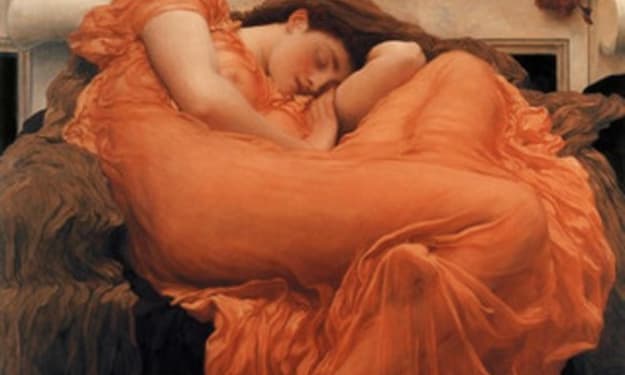
Flaming June. Content Warning.
Flaming June: Unraveling the Mystery Behind an Artistic Enigma Within the annals of art history, certain narratives possess an enigmatic allure, captivating the imagination with tales of lost treasures and resurfaced relics. Among these, the saga of Flaming June stands as a testament to the enduring fascination of the art world—a story that spans centuries and traverses continents, shrouded in mystery and illuminated by moments of revelation.
By Arushi Tiwari3 years ago in Art
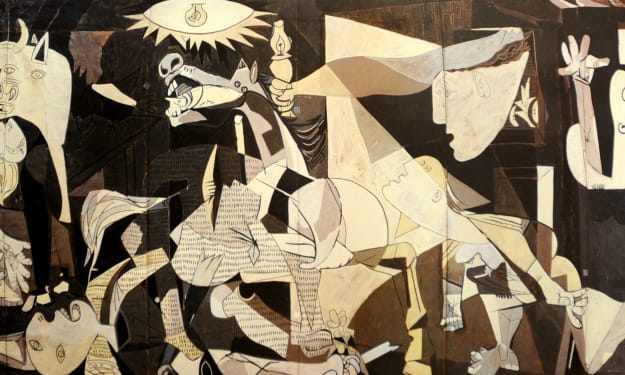
Pablo Picasso and His Art
Artist Pablo Picasso is well-known for his impressive artworks among them abstract paintings such as “Guernica”. There are many museums all over Europe in cities like Paris, France, and Barcelona, Spain which devote entire displays to the art of Picasso. His paintings and artwork can cost more than $100 million at auctions. The artist died on April 8, 1973.
By Rasma Raisters3 years ago in Art
The Mona Lisa
Welcome to a journey through th art history, where we delve deep into the captivating allure of the world's most enigmatic masterpiece - he Mona Lisa. Picture yourself in Paris, the year is 1911, and a crisp Monday morning bathes the City of Light in its golden glow. Amidst the hustle and bustle of daily life, a trio of shadowy figures emerges from the venerable Louvre Museum, their arms cradling a precious cargo wrapped in nondescript cloth. Little did the unsuspecting bystanders know, they were witnessing the audacious theft of a cultural icon—the Mona Lisa. Crafted by the Renaissance polymath Leonardo da Vinci in 1503, the Mona Lisa transcends the boundaries of time and space, captivating audiences with her enigmatic smile and beguiling gaze. But who was the mysterious woman immortalized on canvas? According to Italian artist Giorgio Vasari, she was Lisa Gherardini, the wife of Florentine merchant Francesco Giocondo. Vasari's account, penned in 1550, cemented Lisa's identity and forever intertwined her fate with that of Leonardo's masterpiece. Known as "La Gioconda" in Italian, or simply Mona Lisa, she embodies the epitome of timeless beauty and intrigue. Leonardo's genius, however, extends far beyond the realm of art. A true Renaissance polymath, he dabbled in science, engineering, anatomy, and more, leaving an indelible mark on human history. Yet, it is his mastery of the subtle nuances of expression that truly sets him apart. Through the delicate play of light and shadow, Leonardo imbued the Mona Lisa with a lifelike quality that defies explanation. But what secrets lie beneath her enigmatic smile? Some speculate that Leonardo himself may have been the inspiration behind the painting, while others believe she embodies the idealized beauty of the Italian aristocracy. Yet, the truth may lie closer to home, with Lisa Gherardini herself serving as Leonardo's muse. As we peel back the layers of history, we uncover a tale of intrigue and deception. In 1516, Leonardo journeyed to France at the invitation of King Francis I, bringing the Mona Lisa with him. Little did he know that centuries later, she would find herself at the center of an international scandal. The year was 1911 when Vincenzo Peruggia, an Italian nationalist, orchestrated the daring theft of the Mona Lisa from the Louvre. Believing that the painting rightfully belonged in Italy, Peruggia sought to return her to her homeland. For two years, the painting remained hidden in plain sight, until Peruggia's impatience led to his capture and the painting's triumphant return to France. Yet, it was this very theft that catapulted the Mona Lisa to unparalleled fame. No longer merely a masterpiece of art, she became a symbol of intrigue and fascination, drawing throngs of admirers from around the globe to gaze upon her enigmatic smile. But what sets the Mona Lisa apart from other works of art? For starters, she was not painted on traditional canvas but rather on poplar wood—a testament to Leonardo's innovative spirit. Despite her diminutive size, measuring a mere 77 cm by 53 cm, she commands attention with her arresting presence. The Mona Lisa's allure lies not only in her subject matter but also in Leonardo's masterful use of technique. Through the technique of sfumato, or "smoky effect," he blurred the lines between reality and illusion, creating a sense of depth and atmosphere that is unparalleled in Renaissance art. And then, of course, there is her smile—a source of endless speculation and debate. Leonardo's meticulous study of anatomy and expression allowed him to capture the fleeting nuances of emotion, leaving viewers mesmerized by the enigmatic curve of her lips. But perhaps the most intriguing aspect of the Mona Lisa is the ongoing debate surrounding her origins. Recent discoveries suggest the existence of a second Mona Lisa, shedding new light on Leonardo's creative process and leaving art historians pondering the true nature of his masterpiece. As we reflect on the enduring legacy of the Mona Lisa, let us marvel at the timeless allure of a painting that continues to captivate and inspire centuries after its creation. Whether she is a symbol of feminine beauty, an embodiment of Leonardo's genius, or simply a portrait of a Florentine merchant's wife, one thing remains certain—the Mona Lisa will forever remain shrouded in mystery, her secrets waiting to be uncovered by those bold enough to seek them out.
By Sanjana Dixit3 years ago in Art