Painting
Love Rekindled: Molly-Mae Hague and Tommy Fury Steal the Spotlight at Cheshire Event
Molly-Mae Hague and Tommy Fury, one of the most adored couples to emerge from the world of reality television, are turning heads again. The two Love Island stars, both 25, made their first public appearance following a surprise New Year’s Eve kiss that has since captured headlines and warmed fans’ hearts.
By mureed hussain2 years ago in Art
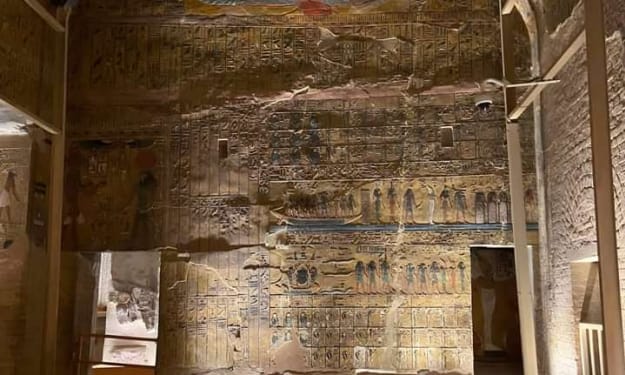
The Mural Paintings in the Tomb of Seti I: A Window into Ancient Egypt
Deep within the arid hills of the Valley of the Kings on Luxor’s West Bank lies one of the most remarkable archaeological treasures of ancient Egypt: the tomb of Seti I. Discovered in 1817 by Italian explorer Giovanni Battista Belzoni, this tomb is renowned not only for its impressive architecture but also for its extraordinary mural paintings. These vivid and meticulously crafted artworks provide a profound insight into the beliefs, artistry, and culture of one of history's most fascinating civilizations. A Pharaoh’s Eternal Rest Seti I, the second ruler of the 19th Dynasty (1290–1279 BCE), was one of ancient Egypt’s most powerful and ambitious pharaohs. As the father of the legendary Ramesses II (Ramesses the Great), Seti’s reign was marked by military conquests, administrative reforms, and monumental building projects, including the construction of his grand tomb. The tomb, designated KV17, is the longest and one of the most elaborate in the Valley of the Kings. It extends over 137 meters into the rock and is divided into multiple corridors, chambers, and halls, all richly adorned with intricate murals. The tomb was designed to ensure the pharaoh’s safe passage to the afterlife, with every painting and inscription serving a specific spiritual purpose. The Mural Paintings: A Journey Through the Afterlife The mural paintings in Seti I’s tomb are among the most beautifully preserved and detailed in the Valley of the Kings. They depict scenes from ancient Egyptian funerary texts, including the Book of the Dead, the Amduat (Book of What Is in the Underworld), and the Book of Gates. These texts served as guides for the pharaoh’s journey through the afterlife, ensuring his rebirth and union with the gods. Vibrant Colors and Symbolism The murals are a testament to the skill of ancient Egyptian artisans, who used natural pigments to create vibrant colors that have endured for over 3,000 years. The palette includes deep blues, radiant golds, rich reds, and earthy greens, each with symbolic meaning. For example, blue represents the heavens and the Nile, while gold symbolizes divinity and eternity. The precision of the artwork is striking, with figures and hieroglyphs rendered in exquisite detail. The artists followed strict conventions, such as depicting gods and pharaohs in profile with stylized features, to convey their divine nature. These conventions also ensured consistency across the tomb's many chambers, creating a harmonious visual narrative. Scenes of Divine Encounters One of the most captivating aspects of the murals is their depiction of Seti I’s interactions with the gods. In these scenes, the pharaoh is shown making offerings to deities such as Osiris, Ra, and Hathor, seeking their protection and guidance. The gods, in turn, are depicted bestowing blessings upon the king, symbolizing his divine right to rule and his journey toward eternal life. Particularly notable are the scenes in the Hall of Beauties, where Seti I is shown receiving the Ankh (symbol of life) from various gods. This hall also contains a celestial ceiling adorned with astronomical symbols, representing the night sky and the promise of rebirth. The Underworld and Resurrection The murals in the tomb’s deeper chambers delve into the mysteries of the underworld, portraying the challenges and trials that Seti must overcome to achieve immortality. The Amduat, for instance, describes the journey of the sun god Ra through the 12 hours of the night, symbolizing the soul's passage through darkness and its ultimate resurrection at dawn. These scenes are filled with fantastical imagery, including serpents, guardian spirits, and protective deities. Despite their otherworldly nature, the artwork conveys a sense of order and balance, reflecting the ancient Egyptian belief in Ma’at—the principle of cosmic harmony. Preservation and Challenges While the murals in Seti I’s tomb are remarkably well-preserved, they face ongoing threats from natural and human factors. The fragile limestone walls are vulnerable to humidity, temperature fluctuations, and salt crystallization, which can cause the paint to flake or fade. Additionally, the influx of tourists poses a risk to the tomb's delicate environment. To protect this invaluable heritage, the Egyptian authorities and international organizations have implemented conservation measures, including controlled access and advanced monitoring systems. A full-scale replica of the tomb has also been created to allow visitors to experience its splendor without endangering the original artwork. A Legacy of Artistic Brilliance The mural paintings in the tomb of Seti I are more than just decorative art; they are a profound expression of ancient Egyptian spirituality, philosophy, and aesthetics. Through their intricate designs and vivid colors, they convey the hopes and beliefs of a civilization that revered life, death, and the eternal cycle of renewal. For modern viewers, these murals offer a rare glimpse into the world of the pharaohs, revealing not only their religious practices but also their artistic brilliance. Standing before these masterpieces, one cannot help but feel a connection to the past, marveling at the skill and devotion of those who created them. Visiting the Tomb The tomb of Seti I is one of the most sought-after sites in the Valley of the Kings, though it is not always open to the public due to conservation concerns. Visitors who do gain access are treated to a breathtaking journey through ancient Egypt’s artistic and spiritual heritage. For those unable to visit, the replica tomb and virtual tours provide an excellent alternative, ensuring that this cultural treasure can be appreciated by people around the world. In the end, the mural paintings in the tomb of Seti I stand as a timeless testament to the ingenuity and vision of ancient Egypt. They remind us of a civilization that sought to transcend mortality, leaving behind a legacy that continues to inspire awe and wonder.
By Deji Akomolafe2 years ago in Art
Ginger and Turmeric: A Powerful Pair for Your Health
Introduction: Did you know that a combination of two ordinary household spices might have the capacity to increase your health in ways you never imagined? Ginger and turmeric, both having their own amazing list of health benefits, are commonly used together to make natural treatments for anything from inflammation to digestion. These two spices, filled with antioxidants and anti-inflammatory qualities, have been utilized in traditional medicine for ages. But in today's environment, they are garnering even more attention for their potential in improving overall well-being.
By miloud ferhi2 years ago in Art
Creating a Cozy Reading Nook with Canvas Prints
A cozy reading nook is a perfect retreat for book lovers, offering a comfortable and inviting space to relax and escape into the world of literature. By incorporating canvas prints, you can enhance the ambiance of your reading nook, creating a visually appealing and personalized environment that inspires relaxation and enjoyment.
By Canvas Kraft2 years ago in Art
Van Gogh's Compassion: How Modern Writers Shaped His Artistic Vision
Vincent van Gogh, one of history’s most celebrated artists, is often remembered for his striking use of color and emotion in his work. Yet, at the core of his art lies a profound compassion for humanity, especially for those who lived on the margins of society. This compassion, deeply rooted in his personal experiences and evolving worldview, was significantly influenced by modern writers of his time, such as Émile Zola and the Goncourt brothers. These authors, with their keen observations of human nature and society, played a crucial role in shaping Van Gogh’s perspective, as he transitioned from religious readings to modern literature. A Shift in Van Gogh's Inspirations Van Gogh’s early life was steeped in religion. Born into a devout Dutch Reformed family, he initially aspired to follow in his father’s footsteps as a clergyman. For years, his readings were dominated by the Bible and religious texts that emphasized morality, charity, and compassion for the less fortunate. These readings nurtured his deep empathy for the downtrodden, which later became a defining feature of his art. However, Van Gogh’s life took a dramatic turn when he failed to find fulfillment in his religious pursuits. By the mid-1880s, his interests began to shift, and he turned to modern literature for inspiration. Writers like Émile Zola, Edmond, and Jules de Goncourt offered a fresh lens through which Van Gogh could explore the complexities of society and human behavior. Their unflinching portrayals of the struggles of ordinary people resonated deeply with him, aligning with his own feelings of empathy and solidarity with the underprivileged. The Influence of Émile Zola Émile Zola, a leading figure of the Naturalist movement, was known for his detailed and often gritty depictions of the working class. His works, such as Germinal and L'Assommoir, explored the harsh realities of industrialization, poverty, and the resilience of the human spirit. Zola’s commitment to portraying life as it was—without romanticizing or moralizing—struck a chord with Van Gogh. Through Zola’s writings, Van Gogh found a new way to articulate his compassion. He began to see art not just as a medium for beauty but as a tool for truth-telling. Like Zola, Van Gogh wanted to highlight the dignity and struggles of the working class, a theme that would permeate much of his work. Paintings like The Potato Eaters and Weavers capture the raw, unembellished lives of laborers, echoing Zola’s literary focus on the resilience and humanity of the poor. The Goncourt Brothers and the Human Condition The Goncourt brothers, Edmond and Jules, also left a lasting impression on Van Gogh. Their works, often steeped in meticulous detail, explored the psychological and social nuances of their characters. They delved into the human condition, exposing the vulnerabilities and aspirations of individuals caught in the complexities of modern society. Van Gogh admired their ability to reveal the inner lives of their characters. Inspired by their insights, he sought to do the same in his art. His portraits, such as those of postman Joseph Roulin and the weary laborers of Provence, are not just representations of physical appearances but also intimate studies of personality and emotion. Van Gogh imbued these works with a sense of humanity that transcends the canvas, much like the Goncourts did in their literature. Compassion as the Core of Van Gogh's Art Despite his shift from religious texts to modern literature, Van Gogh’s underlying compassion for humanity remained unchanged. If anything, it deepened as he grappled with the harsh realities of life depicted by Zola and the Goncourts. He saw art as a means to express these feelings, to give voice to those who were often overlooked or forgotten. Van Gogh’s empathy is evident in the subjects he chose. From the humble peasants in The Potato Eaters to the vibrant yet weary workers in his Sower series, his art consistently celebrates the dignity and resilience of ordinary people. His compassion extended even to his landscapes, where he often depicted the harsh beauty of rural life, as seen in Wheatfield with Crows and The Red Vineyard. A Legacy of Compassion and Creativity Van Gogh’s art continues to resonate with audiences because of its emotional depth and authenticity. His ability to convey compassion and humanity, influenced by the works of Zola and the Goncourt brothers, set him apart as an artist who painted not just with his hands but with his heart. In many ways, Van Gogh’s journey reflects a broader human experience—the search for meaning and connection in a world that can often seem indifferent. Through his art, he found a way to bridge the gap between his inner world and the lives of others, creating a legacy that speaks to the universal need for empathy and understanding. Conclusion Vincent van Gogh’s artistic vision was profoundly shaped by his transition from religious readings to the modern literature of Zola and the Goncourts. These writers broadened his perspective, deepened his compassion, and inspired him to portray the struggles and triumphs of ordinary people in his art. Today, as we stand before his masterpieces, we are reminded of the enduring power of empathy and the timeless beauty of his compassion for humanity.
By Deji Akomolafe2 years ago in Art
Why Does All AI Art Look Like That?. Content Warning.
Life Drawing was one of the first classes all first-semester students had to take. This is the class where you spend 2 hours a day meticulously studying a bowl of fruit or box and pole, or a naked person in a curious pose. These life-drawing models would be set up and lit by harsh lamps to cast dramatic shadows, so we could observe and learn how light and atmosphere effects surface texture and creates the composition. It’s a challenging class because it is A) extremely technical and B) extremely boring. It didn’t matter what your interest or major was — painting, sculpture, photography, interior design, Fashion (or, like me), sequential art — no one likes drawing sweaty naked dudes sitting on a box for two hours. But it is important because this is how you learn the fundamentals of all art, regardless of medium. One student in particular, had trouble in life drawing. He was, like me, interested in sequential art. He wanted to draw comics for Marvel and didn’t really get why he needed to spend four hours a week drawing the sweaty naked dude sitting on a box instead. The first week of class, the instructor had us bring a piece of our art. Something we were proud of, to show the class. It was both an icebreaker and a way to introduce the class to the idea of public critique. My fellow comic book artist showed us all a page from his comic book portfolio that he was very proud of, and which he had very obviously traced from one or more published comics. The figures were stiff, familiar, but different, as he’d slathered on his own details and changed just enough of the figure to make them “original characters” while still leaving enough detail underneath for those of us familiar with the recent Marvel and DC publication schedule to identify which issue and page he’d cribbed from. The backgrounds were minimal to non-existent, and the perspective was likewise barely there.
By General gyan2 years ago in Art
A Nostalgic Reunion: Mayim Bialik Joins Melissa Rauch in 'Night Court'
Television magic happens when beloved stars from iconic shows come together again, rekindling their chemistry in new and exciting ways. Fans of The Big Bang Theory were treated to such a heartwarming surprise when Melissa Rauch and Mayim Bialik reunited on the set of Night Court. This delightful crossover brings together two immensely talented actresses, promising a blend of humor, nostalgia, and unforgettable moments.
By mureed hussain2 years ago in Art
SURPURA DAM JODHPUR Best Tourist Spot Jodhpur
Exploring Surpura Dam Jodhpur: A Hidden Gem for Nature Enthusiasts car rental in jodhpur Surpura Dam, Jodhpur is a serene and picturesque water reservoir located just a short drive from the bustling city of Jodhpur. Nestled amidst lush greenery and surrounded by beautiful hills, the Surpura dam Jodhpur provides a peaceful retreat for nature lovers, photographers, and those seeking tranquility away from the city’s hustle. The calm waters and the scenic views make it an ideal spot for various activities such as birdwatching, nature walks, and photography. Known for its abundant flora and fauna, Surpura Dam Jodhpur is particularly popular during the migratory bird season, offering an excellent opportunity to spot a variety of bird species. Whether you’re looking to relax by the water, enjoy a picnic, or simply explore the surrounding landscape, Surpura Dam Jodhpur offers a perfect escape into nature’s beauty.Discover the Beauty of Surpura Dam Jodhpur, Rajasthan
By JCS cab and Car Rental Service Jodhpur 2 years ago in Art
The Hobby That Changed How I Have Fun . AI-Generated.
It started on a whim. A gray Saturday afternoon, the kind of day that begged for pajamas and endless scrolling through social media. I was doing exactly that when an ad popped up: “Learn to Paint—No Experience Necessary!” It featured a picture of a smiling woman holding a canvas covered in bright swirls of color.
By Barry Fourie2 years ago in Art