Painting
The "Last Da Vinci" Mysteries and the $450 Million "Salvator Mundi"
Introduction Leonardo da Vinci's Salvator Mundi, or "Savior of the World," sold for a record-breaking $450.3 million in November 2017 at Christie's New York, making it the most expensive painting ever sold at auction. The sale not only captivated the general public, but it also sparked ferocious arguments among scholars, art historians, and collectors. Was this Leonardo da Vinci's lost masterpiece, or was it a work that was overhyped and lacked authenticity?
By Silas Blackwoodabout a year ago in Art
What Is Contemporary Art?
Introduction Contemporary art is a dynamic and ever-evolving field that reflects the ideas, concerns, and innovations of the present time. Unlike traditional art forms, which often adhere to established techniques and styles, contemporary art pushes boundaries, challenges conventions, and engages with modern society in thought-provoking ways. But what exactly defines contemporary art? How does it differ from modern art? And why is it so diverse and sometimes controversial? This article explores the meaning of contemporary art, its key characteristics, major movements, influential artists, and its significance in today's world. Defining Contemporary Art Contemporary art refers to art created in the late 20th and early 21st centuries, roughly from the 1970s to the present day. Unlike "modern art," which generally covers the period from the 1860s to the 1970s, contemporary art is rooted in the current era and responds to today's cultural, political, and technological landscape. One of the defining features of contemporary art is its lack of a single dominant style. Instead, it embraces a wide range of mediums, including painting, sculpture, installation, digital art, performance, video, and conceptual works. This diversity reflects the globalized, interconnected world we live in, where artists draw inspiration from various cultures, histories, and disciplines. Key Characteristics of Contemporary Art Contemporary art is known for several defining traits: 1. Conceptual Focus Many contemporary artists prioritize ideas over aesthetics. The meaning behind the artwork is often more important than its visual appeal. Conceptual art, for example, challenges viewers to think critically about the message rather than just admire the craftsmanship. 2. Breaking Traditional Boundaries Contemporary artists frequently experiment with unconventional materials and techniques. They may combine digital media with traditional painting, use found objects in sculptures, or create immersive installations that transform entire spaces. 3. Engagement with Social and Political Issues A significant aspect of contemporary art is its commentary on current events, such as climate change, identity politics, migration, and technology. Artists like Ai Weiwei, Banksy, and Kara Walker use their work to critique power structures and advocate for social justice. 4. Global and Multicultural Influences With the rise of globalization, contemporary art incorporates diverse perspectives from around the world. Artists from Africa, Asia, Latin America, and the Middle East have gained prominence, enriching the art world with new narratives and traditions. 5. Use of New Technologies Digital art, virtual reality (VR), artificial intelligence (AI), and NFTs (non-fungible tokens) have become integral to contemporary art. Artists like Beeple and Refik Anadol explore how technology shapes human experience and creativity. Major Movements in Contemporary Art While contemporary art is highly diverse, several influential movements and trends have emerged: 1. Postmodernism (1970s–1990s) Postmodernism rejected the rigid rules of modernism, embracing irony, pastiche, and hybridity. Artists like Cindy Sherman and Jeff Koons played with identity, consumer culture, and media representations. 2. Street Art and Graffiti (1980s–Present) Originating from urban subcultures, street art has become a legitimate form of contemporary expression. Banksy, Shepard Fairey, and Jean-Michel Basquiat brought graffiti into galleries, blending activism with aesthetics. 3. Installation and Performance Art (1990s–Present) Artists like Yayoi Kusama and Marina Abramović create immersive environments and live performances that engage audiences physically and emotionally. 4. Digital and New Media Art (2000s–Present) With advancements in technology, artists now use software, 3D printing, and AI to create interactive and digital works. TeamLab and Rafael Lozano-Hemmer are pioneers in this field. 5. Social Practice Art (2010s–Present) This movement emphasizes collaboration and community engagement. Artists work directly with people to address social issues, blurring the line between art and activism. Influential Contemporary Artists Several artists have shaped contemporary art with their innovative approaches: Ai Weiwei – A Chinese dissident artist known for his political activism and large-scale installations. Yayoi Kusama – Famous for her infinity mirror rooms and polka-dot motifs, exploring themes of infinity and mental health. Damien Hirst – A leading figure in the Young British Artists (YBA) movement, known for controversial works like The Physical Impossibility of Death in the Mind of Someone Living (a shark in formaldehyde). Kara Walker – Explores race, gender, and history through silhouettes and provocative installations. Olafur Eliasson – Creates environmental and light-based installations that challenge perceptions of nature and space. Why Is Contemporary Art Sometimes Controversial? Contemporary art often sparks debate because it challenges norms and provokes strong reactions. Some common reasons for controversy include: Shock Value – Artists like Andres Serrano (Piss Christ) and Maurizio Cattelan (Comedian, the banana duct-taped to a wall) use provocative imagery to critique religion, consumerism, and art itself. Ambiguity – Unlike traditional art, contemporary works may not have a clear meaning, leaving viewers puzzled or frustrated. Political Statements – Art that critiques governments, corporations, or social issues can attract censorship or backlash. Despite—or perhaps because of—these controversies, contemporary art remains a powerful medium for questioning reality and inspiring change. The Role of Contemporary Art in Society Contemporary art serves multiple functions in today's world: Cultural Reflection – It mirrors societal values, conflicts, and aspirations. Innovation – Artists experiment with new forms, pushing the boundaries of creativity. Education – Museums, galleries, and public art projects foster dialogue and critical thinking. Economic Impact – The art market, including auctions and NFTs, generates billions, influencing global economies.
By Silas Blackwoodabout a year ago in Art
Why Have There Been No Great Women Artists?
Introduction The question "Why have there been no great women artists?" was famously posed by art historian Linda Nochlin in her groundbreaking 1971 essay of the same name. At first glance, the question seems provocative, even inflammatory. However, Nochlin’s intention was not to suggest that women are incapable of greatness in art but rather to critique the systemic barriers that have historically prevented women from achieving the same recognition as their male counterparts. This article explores the historical, social, and institutional factors that have contributed to the underrepresentation of women in the canon of "great" artists. By examining art education, societal expectations, and the structures of the art world itself, we can better understand why women artists have often been overlooked and how contemporary efforts are reshaping the narrative. 1. Historical Barriers to Women in Art A. Limited Access to Art Education For centuries, formal art training was largely inaccessible to women. During the Renaissance and Baroque periods, aspiring artists typically trained in workshops or academies, which were male-dominated spaces. Women were often excluded from life-drawing classes, which were essential for mastering human anatomy—a cornerstone of traditional Western art. Without access to these foundational skills, many women were denied the opportunity to develop their talents fully. Some exceptions existed, such as Artemisia Gentileschi (1593–1656), who trained under her father and became one of the most accomplished Baroque painters. However, her success was rare and hard-won, requiring familial connections and extraordinary persistence. B. Gendered Expectations and Domestic Roles Women were expected to prioritize marriage, child-rearing, and household duties over professional ambitions. Even women from artistic families, such as Sofonisba Anguissola (1532–1625), often had to balance their creative work with societal expectations. Many talented women artists abandoned their careers after marriage or worked in obscurity, their contributions overshadowed by male peers. C. Patronage and the Art Market Artistic success historically depended on patronage—support from wealthy individuals, the church, or the state. Since women had limited social and professional networks, they struggled to secure commissions. Male artists were often preferred for prestigious projects, reinforcing the perception that great art was inherently masculine. 2. The Myth of the "Great Artist" and Its Exclusion of Women A. The Romanticized Genius The concept of the "great artist" is deeply tied to the Romantic ideal of the solitary, tormented genius—a figure culturally coded as male. Artists like Michelangelo, Van Gogh, and Picasso are celebrated not just for their skill but for their mythologized personas. Women, confined by domestic roles and social restrictions, rarely had the freedom to cultivate such legacies. B. Biases in Art History and Criticism Art historians and critics have long perpetuated the marginalization of women artists. Until the late 20th century, most art history textbooks focused overwhelmingly on male artists, framing their work as universal while treating women’s art as niche or inferior. Even when women produced exceptional work, it was often dismissed as "craft" (e.g., textiles, ceramics) rather than "fine art." C. The Canon and Institutional Exclusion Museums, galleries, and academic institutions have historically favored male artists, reinforcing the idea that greatness in art is male-dominated. The exclusion of women from major exhibitions and permanent collections created a self-perpetuating cycle where their absence was seen as proof of their lack of greatness, rather than a result of systemic bias. 3. Women Artists Who Defied the Odds Despite these obstacles, many women achieved remarkable success, though their recognition often came posthumously or was downplayed during their lifetimes. Some notable examples include: Artemisia Gentileschi – A master of Baroque painting, known for her dramatic depictions of strong female figures. Élisabeth Vigée Le Brun (1755–1842) – A prominent portraitist in pre-revolutionary France and favorite of Marie Antoinette. Berthe Morisot (1841–1895) – A key figure in Impressionism, yet often overshadowed by male peers like Monet and Degas. Georgia O’Keeffe (1887–1986) – One of the few women to gain widespread recognition in modern art, though her work was often sexualized by critics. Frida Kahlo (1907–1954) – Now celebrated as a feminist icon, but initially overlooked in favor of her husband, Diego Rivera. These artists succeeded despite systemic barriers, yet their struggles highlight how the art world has historically sidelined women. 4. Progress and Challenges in the Contemporary Art World A. Feminist Art Movements The feminist art movement of the 1960s and 70s, led by figures like Judy Chicago, Miriam Schapiro, and the Guerrilla Girls, challenged the male-dominated art world. They demanded equal representation, critiqued institutional sexism, and created art that centered women’s experiences. B. Increasing Representation Today, more women artists are gaining recognition, with figures like Yayoi Kusama, Cindy Sherman, and Kara Walker achieving critical and commercial success. Museums are also reassessing their collections, with initiatives like the Tate Modern’s efforts to acquire more works by women. C. Persistent Inequalities Despite progress, disparities remain: Auction Prices – Works by women artists still sell for significantly less than those by men. Exhibition Opportunities – Major retrospectives and solo shows disproportionately feature male artists. Leadership Roles – Women remain underrepresented in directorial positions at major museums.
By Silas Blackwoodabout a year ago in Art
Famous Gothic Art
These amazing Gothic art paintings span from the 13th to the 15th centuries. The Lamentation Giotto di Bondone (c. 1305) Italian artist and architect Giotto di Bondone created this artwork which is one of the most famous panels in his fresco cycle which depicts the life of Christ. In this painting is the aftermath of the crucifixion of Christ showing his followers mourning over his dead body. The Virgin Mary cradles him and Saint John the Evangelist throws out his arms in grief. Giotto was often referred to as the Father of Western painting since he introduced depth, mass, and human emotion in the scenes depicted. In true Gothic tradition there is a gold-tinged background and the viewer can see angels swirling through the sky.
By Rasma Raistersabout a year ago in Art
Colorful Artwork Prints Add Joy and Style to Your Walls
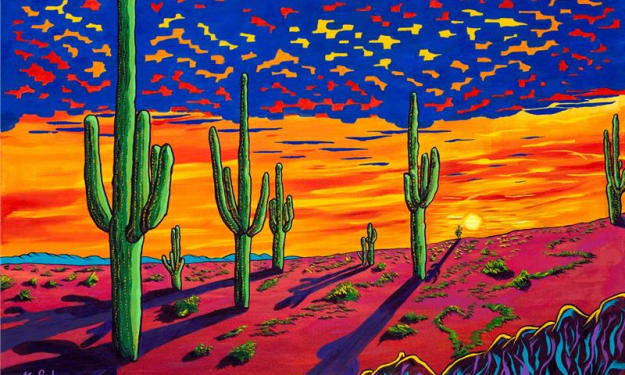
Discover the Charm of Colorful Artwork Prints Colorful artwork prints can instantly brighten any space. These vibrant pieces often come from Sedona art studios. They feature bold tones that match the beauty of bright art. Many collectors also admire their links to Arizona art prints.
By sedona art studiosabout a year ago in Art
Arizona Art Prints Capturing Desert Beauty in Bold Color
Discover the Magic of Arizona Art Prints Arizona art prints bring the desert to life in vivid color. They show the sunsets, mountains, and wide-open skies. Artists from Sedona art studios work hard to capture nature’s beauty. Their colorful artwork prints tell the story of Arizona’s bold spirit.
By sedona art studiosabout a year ago in Art
Bright Art Fill Your World with Energy, Color, and Joy
The Vibrant Magic of Bright Art Bright art lights up every space it touches. It uses bold colors and striking contrasts to create deep feelings. At Sedona art studios, artists craft pieces that shine with life. Their colorful artwork prints reflect joy, energy, and creativity.
By sedona art studiosabout a year ago in Art
The Purple Door: A Splash of Courage
In the little town of Maplewood, where houses wore coats of beige, white, and soft pastels, there stood a small, slightly crooked cottage at the edge of Cedar Lane. Its paint was peeling, its garden wild and untamed, and its windows looked tired. This was the home of Emma, an artist whose heart was as colorful as her paint palette, but whose surroundings had never quite matched her vibrant spirit. Emma had moved to Maplewood five years ago, seeking peace and inspiration after a bustling life in the city. She loved everything about the town—the quiet mornings, the friendly neighbors, the rustling trees—but there was one thing she wished she could change. The town’s colors, or rather, its lack of them. Maplewood was safe and beautiful in its own way, but it was dull. The streets were filled with muted browns, grays, and whites. Even the flowers seemed to shy away from bursting in color. Emma often felt like the town was holding its breath, afraid to stand out, to be noticed. One sunny afternoon, while sipping her tea and watching children play outside, Emma’s eyes fell on her own cottage’s front door. It was a dull, tired gray, the same color as many others on the street. Suddenly, a wild thought struck her—why not paint it purple? Not just any purple, but a deep, rich, royal purple, the kind that demands attention and whispers mystery. Her heart raced with excitement and a hint of rebellion. It felt like a secret waiting to be told—a splash of color that would say, “Here lives someone who dares to dream.” That very weekend, Emma went to the local hardware store and bought a can of paint—purple, of course—along with brushes and rollers. She started with the front door, eager to see how the color would transform the cottage. As the first strokes of purple brushed against the wood, neighbors began to pause and stare. Some smiled, others frowned. Old Mr. Thompson from across the street shook his head and muttered about “kids these days ruining the charm of Maplewood.” But Emma didn’t care. She felt alive. Days passed, and Emma didn’t stop at the door. She painted the window shutters, the porch railing, even the mailbox, all in various shades of purple—from lavender to eggplant. Each new splash of color seemed to breathe life into the house. The garden too began to change as Emma planted purple flowers—lavender, violets, and purple tulips—to match her masterpiece. Her daily routine soon became a dance between mixing colors, deciding which shade of purple to use next, and welcoming curious neighbors who came by to watch the transformation. One morning, a little girl named Lily knocked on Emma’s door with a hesitant smile. “Can I paint with you?” she asked, clutching a tiny brush in her hand. Emma’s face lit up. “Of course! Purple is for everyone.” Lily spent the afternoon painting flower pots and helping Emma care for the new garden. Her laughter echoed through the yard, and for the first time in a long while, Emma felt completely connected—not just to her art, but to her community. Word spread quickly. Some neighbors called it bold; others called it strange. Children loved it, often stopping by to admire the bright house or ask if they could help paint a flowerpot or two. One evening, as the sun dipped below the horizon, Emma sat on her porch, her feet dangling, watching the sky turn from blue to a soft purple hue. She realized something: by painting her house purple, she hadn’t just changed its appearance—she’d changed how she saw the world around her. The next morning, something incredible happened. Mrs. Garcia, who lived two houses down, knocked on Emma’s door with a shy smile. In her hands was a small paintbrush and a can of turquoise paint. “I’ve been thinking,” Mrs. Garcia said nervously, “maybe I could paint my fence… you know, a color that makes me happy. Something that feels like me.” Emma beamed. “I’d love to help!” Soon, a wave of color began sweeping through Maplewood. Mr. Patel painted his garage door sunny yellow, the Hendersons added a splash of teal to their porch, and the school’s front gate transformed into a rainbow mural painted by children and teachers alike. The town, once muted and reserved, became a canvas of joy and expression. People talked more, smiled more, and looked forward to sharing their colors with one another. Purple, the first bold stroke, had inspired an entire community to find their own voice. Emma found herself invited to help neighbors pick colors, organize painting days, and even teach art classes for kids in the community center. What started as a small rebellion became a movement—one that reminded everyone that life was meant to be colorful, bold, and unapologetically bright. Months later, at the annual Maplewood Spring Festival, the mayor stood beside Emma on the main stage. The town was buzzing with laughter, music, and vibrant hues everywhere. “Emma,” the mayor said, “you’ve reminded us that color isn’t just about paint. It’s about courage, creativity, and community. Maplewood shines because of you. Thank you for painting it purple.” Emma looked around, her heart full. She realized that sometimes, the smallest change—like painting a door purple—could spark a revolution of the spirit. And so, Maplewood’s story was forever changed by a splash of purple, a reminder that life is meant to be colorful, bold, and unapologetically bright.
By Wasif islamabout a year ago in Art
Art and Success: The Journey of Creative Mastery
Art is one of humanity’s most profound forms of expression—transcending language, culture, and time. It captures emotions, challenges perceptions, and often becomes a mirror of society. But what does it mean to be successful in art? Is it fame, financial stability, critical acclaim, or something deeper? True success in art is a blend of personal fulfillment, creative authenticity, and meaningful impact. This article explores the essence of artistic success, the challenges artists face, and the steps to achieving lasting recognition.
By Niranjon Chandra Royabout a year ago in Art
Go Global with Your Art – Limited Spots in Online Juried Shows
In an increasingly virtual art world, you must look beyond your studio walls to extend your reach. This is the best time to go global with your art, for the emerging painters, digital illustrators, or mixed-media explorers - opportunities like this online juried shows have never been more accessible. These virtual shows are becoming the launchpads for modern-day artists to showcase their creativity on a global scale—without ever leaving home or your studio space.
By Blair Bartabout a year ago in Art
Put Your Best Face Forward: Submit Your Self-Portrait & Win Rewards!
Self-portraits are the fascinating revelations of our own shelves – they are more than just sketches on paper; they are part of a bigger exploration of an artist’s self while delving into the deeper emotions. If you are a seasoned artist or just beginning your creative journey, you can try your luck in a self portrait contest and showcase your skills on the art of faces & features. Let contemporary art platforms like Gallery4% share your artistic vision with the world of art-lovers to let you leverage your talent for a broader audience.
By rachel brownabout a year ago in Art
Canvas Giclee A Stunning Way to Display Art
Discover the Beauty of Canvas Giclee Canvas giclee is a high-quality way to show off art. It combines advanced printing with rich textures. At Sedona art studios, artists use this method for colorful artwork prints that shine with beauty and detail.
By sedona art studiosabout a year ago in Art