Mixed Media
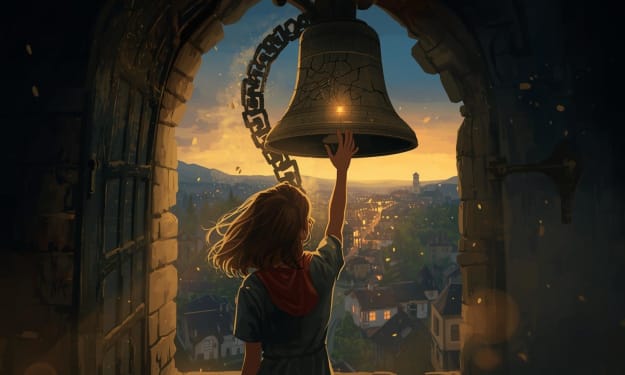
The Day the Silence Learned to Speak
On the edge of a quiet town called Marrowell stood a clock tower that had not spoken in twelve years. People still checked the time by it, of course. The hands moved faithfully, circling the face with stubborn loyalty, but the bell—once the town’s heartbeat—had gone silent after a storm cracked its iron tongue. The mayor promised repairs. The years promised forgetting. And forgetting, as it often does, won.
By Yasir khan10 months ago in Art
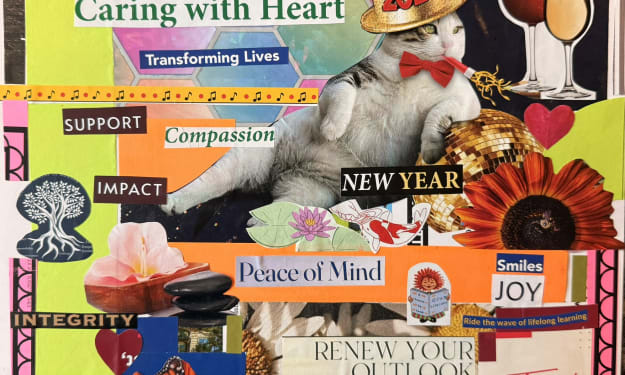
Art Unbound: Platforms Redefining Creativity in the Blockchain Era. AI-Generated.
The art world is shedding its old skins. No longer confined to galleries, auction houses, or static images, it’s expanding into dynamic, decentralized spaces where code, community, and creativity collide. A new wave of platforms is driving this transformation—blending blockchain, critique, and culture to redefine what art can be.
By Solomon Walker10 months ago in Art
Space Between the Brushstrokes
I used to believe that real artists were always working. Every photo I saw online showed someone painting late into the night, hands stained with color, eyes burning with passion. Sketchbooks were always open. Canvases were always half-finished. The message was clear: if you weren’t constantly creating, you were falling behind. So I worked without stopping. I painted in the mornings before work, late at night after dinner, and on weekends when my friends went out. I filled canvas after canvas, but none of them felt finished. Each piece looked rushed, like it was trying to escape the room before I was ready to let it go. Still, I kept going. I told myself that exhaustion was part of the process. That doubt meant I was growing. That real artists pushed through. Until one evening, my brush slipped from my hand and hit the floor. It wasn’t dramatic. No breakdown. No tears. Just a soft clatter against the wood. I stared at it longer than I should have, then sat down on the floor beside it. I didn’t pick it up. The room was quiet. No music. No ticking clock. Just me and a half-painted canvas leaning against the wall. For the first time in months, I wasn’t thinking about what came next. I was empty. The next day, I didn’t paint. Or the next. Days turned into a week. Then two. At first, I felt guilty—like I was betraying some invisible rulebook of creativity. But slowly, something unexpected happened. I started noticing things again. The way light rested on the edge of my coffee cup. The uneven crack in the sidewalk outside my apartment. The sound of my neighbor laughing through the thin walls. Small things. Quiet things. I began carrying a notebook, not to sketch, but to write down what I saw. No pressure. No intention to turn it into art. Just noticing. One afternoon, I visited a small gallery downtown. It wasn’t famous. No long lines. No placards filled with complicated language. Just a few rooms with paintings that felt honest. One piece stopped me completely. It was simple: a large canvas with wide, calm strokes of blue and gray. No sharp edges. No obvious subject. Just space. I stood there for a long time. It didn’t demand anything from me. It didn’t explain itself. It just existed. And suddenly, I understood something I had been missing. Art doesn’t live only in the act of creating. It also lives in the space around it—the pauses, the silence, the moments where nothing happens. When I returned home, I didn’t rush to my paints. I cleaned my workspace instead. I washed my brushes carefully, one by one. I stacked old canvases against the wall. I opened a window and let fresh air move through the room. A few days later, I picked up my brush again. This time, I moved slower. I didn’t aim to finish anything. I didn’t think about how it would look online or whether it was “good enough.” I focused on each stroke as it happened. Where it began. Where it ended. How much pressure I used. When I felt tired, I stopped. No guilt. No pushing. The painting took weeks. Maybe longer. I lost track of time, not because I was forcing myself to work, but because I wasn’t watching the clock anymore. When it was done, I didn’t feel relief or pride the way I used to. I felt calm. The piece wasn’t perfect. But it felt honest. Like it had room to breathe. I learned something important during that quiet season: creativity isn’t a race. It’s a conversation. And sometimes, the most meaningful part of that conversation is listening. Now, when I see artists online working through the night, I don’t compare myself anymore. I know that behind every finished piece is a thousand unseen pauses. Moments where the brush rested. Where the artist stepped back. Where nothing happened—and everything changed. The space between brushstrokes matters. That’s where the art learns how to speak.
By Jhon smith10 months ago in Art
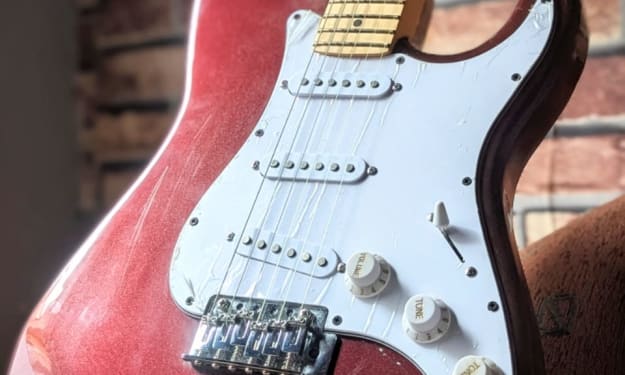
Starting My Guitar Journey With Izzire Guitars Co. AI-Generated.
Learning guitar was always one of those dreams I kept close but could never really reach. Every time I heard someone play, a small part of me wished it was me. Life kept happening and my budget never allowed me to actually buy my own guitar. I used to borrow guitars from friends sometimes and those moments always reminded me how much I wanted to learn for real.
By Jane Rockson11 months ago in Art
The Woman Who Became a Mirror
In the history of performance art, few moments have struck the human conscience as sharply as what unfolded in a modest gallery in Naples in 1974. It was an experiment that involved no words, no movement, and no stage—only a woman, a table of seventy-two objects, and the unpredictable landscape of the human soul. To this day, Marina Abramović’s Rhythm 0 remains one of the most disturbing, enlightening, and unforgettable explorations of human behavior ever witnessed. Marina Abramović, a young performance artist at the time, walked into the Studio Morra gallery with a simple—but terrifying—idea: she would stand motionless for six hours, offering herself as an object to the public. On a table beside her lay seventy-two items ranging from the harmless to the horrific: a rose, a feather, a piece of bread, a comb, perfume, honey, a whip, scissors, a scalpel, a chain, nails, a knife—and a loaded gun. The instructions were brutal in their simplicity: “Use any of these objects on me as you wish. I will not move. I will not resist.” And so she became what she later described as “a mirror for the audience—whatever they wanted to project.” The Opening Hours: Kindness in its Purest Form The first hour passed slowly, almost tenderly. Visitors approached her with caution, unsure how far they were permitted to go. Some whispered apologies as they placed a flower in her hand. One woman brushed Marina’s hair with soft, motherly care. Someone kissed her cheek, almost shyly. These gestures seemed to affirm something hopeful: perhaps when given the choice, humans would choose compassion. Perhaps empathy did not need rules, eyes watching, or fear of judgment. For a moment, humanity looked beautiful. But beauty in the human heart is often thin and delicate—easily shaken when boundaries blur. Curiosity Turns to Permission As the hours ticked on, something subtle began to shift. The crowd grew larger. More confident. More daring. The silent, unblinking woman standing before them no longer seemed entirely human. She did not flinch. She did not speak. She did not claim pain or protest. Slowly, curiosity became a kind of freedom—and freedom without accountability often becomes danger. Someone cut her dress with the scissors. Another cut her skin with the scalpel, watching her bleed. One person dipped the rose’s thorns into her skin, carving slow patterns of red. A man poured honey on her head, not gently but mockingly. Someone else picked up the metal chain and wrapped it around her arms. Laughter began to seep into the room—a laughter that did not sound joyful, but rather hungry. What was emerging was not simply cruelty, but a psychological phenomenon later deeply studied: deindividuation—the state in which people lose their normal restraints when they feel unidentifiable, unjudgeable, invisible. And Abramović had given them exactly that: total permission, total anonymity of guilt. When the Line Finally Broke The darkness reached its peak when a man picked up the loaded gun. He placed it in her hand. Then he lifted her arm, pointing the gun at her own chest. The room shifted instantly. A few audience members intervened, pushing the man away. But the damage had been done—not to her body, but to the collective conscience. In the silence of that gallery, humanity had shown how quickly kindness evaporates and how easily cruelty steps forward when consequences step back. Six Hours of Human Truth For six hours Marina Abramović remained still. She absorbed every gesture—the gentle, the curious, the humiliating, the violent. She gave herself as a canvas onto which strangers could paint their deepest impulses. But when the six hours ended, Marina finally moved. She lifted her head. She turned her eyes to the crowd. She walked toward them—not with anger, not with fear, but simply as a human being reclaiming her humanity. And then something extraordinary happened. The crowd froze. People stumbled backward. They could not meet her gaze. The same hands that had slapped her, cut her, mocked her, or threatened her now shook with regret. In those few moments, guilt flooded the room like cold water. When faced with a silent, motionless figure, people had forgotten she was human. But when she moved—when life returned to her eyes—they remembered. And they could not bear what they had revealed about themselves. Art or Warning? Debate erupted immediately around Rhythm 0: Was it art, or was it a psychological trap? Was it bravery or a dangerous experiment? Marina herself called it a “life-changing experience,” one that forever transformed her understanding of people. Psychologists, however, saw something else: a chilling demonstration of how environmental factors—not inherent evil—can unleash cruelty. When responsibility is removed, empathy fades. When accountability disappears, aggression awakens. When a crowd forms, individuality weakens. But the experiment also revealed something more balanced, more complex: not everyone succumbed to darkness. Some protected her, defended her, or stayed gentle even as the crowd shifted. Their quiet resistance became proof that goodness does not vanish entirely—it simply becomes harder. A Mirror for All of Us Rhythm 0 remains one of the most referenced examples in psychology textbooks on crowd behavior, mob mentality, and deindividuation. But beyond the academic world, it stands as a mirror held up to humanity. It asks questions that still make us uncomfortable: What would you do if there were no consequences? How much of your kindness depends on being watched? Would you stand with compassion—or fall with the crowd? Perhaps none of us can say for sure. But the purpose of Abramović’s performance was not to accuse—it was to reveal. To make us aware of the thin line between restraint and impulse, and the responsibility each person carries simply by being human. If You Had Been in That Room… Each reader must answer this question privately. Would you have placed a flower in her hand? Would you have wiped honey from her face? Would you have protected her? Or would you have followed the crowd, letting the illusion of anonymity loosen your empathy? None of us know with certainty. But perhaps the very act of asking ourselves makes us a little more aware, a little more responsible, a little more human.
By Ikram Ullah11 months ago in Art
Why Make? Podcast
Why Make? Podcast encapsulates all that is wonderful, exciting, and creative about indie podcasting. Why? First, the show is a collaborative project between Erik Wolken and Robb Helmkamp, both furniture makers and sculptors, seeking to create a narrative and oral history through their podcast and, most recently, documentary filmmaking.
By Frank Racioppi11 months ago in Art
Carmen Sinata Delays the Release of “24” due to illness
Rising cinematic R&B artist Carmen Sinata has officially postponed the release of her highly anticipated debut single, “24,” following an unexpected illness earlier this month. What initially appeared to be a setback has quickly transformed into a major artistic turning point — one that expands her creative universe far beyond a typical single drop.
By Navigating the World11 months ago in Art
“All Around (Demo Version)”by Carmen Sinata — A Late-Night Confession
On November 22, 2025, Carmen Sinata released a demo that feels like a vulnerable whisper in the dark: “all around (Demo Version).” On the surface it's simple: layered “ooh ooh ooh” vocal hooks, a minimal but atmospheric instrumental, and the steady pulse of R&B longing. Yet beneath that simplicity lies something deeper: the yearning to be seen, to be claimed fully, and not simply another stop in someone’s path.
By Navigating the World11 months ago in Art