Mixed Media
How Mona Lisa became so overrated?
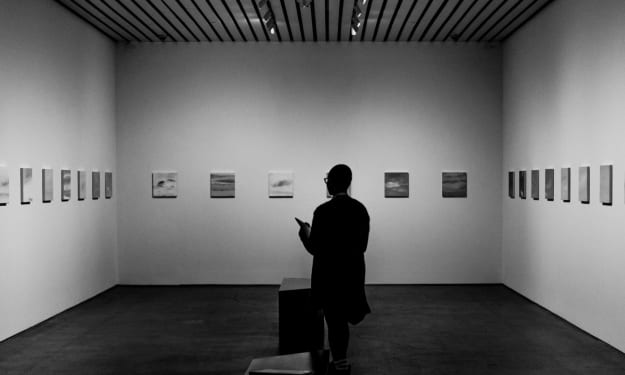
If you want to praise Leonardo daVinci's Mona Lisa as art, you can find it. But what if you think it's just...well? What is the cynical explanation for the Mona Lisa? Why is Mona Lisa so famous? Is it really that much better than da Vinci's Lady in Ermine? It looks better. There is one more ermine. But the Mona is so famous that the director of the Louvre, where the Mona Lisa lives, said that 80% of his visitors are there just to see one painting.
By Shubham Bajaj3 years ago in Art
Wow!! Floating Plants
I had to see it to believe it!! Elevate Your Space: The Enchanting World of Floating Plant Pots for Home and Office Decor In the ever-evolving landscape of interior design, innovation redefines how we perceive and interact with our living spaces. One such innovation that has captured the attention and imagination of design enthusiasts is the floating plant pot. Combining elements of nature, technology, and artistic expression, these mesmerizing creations have become a symbol of modern decor that effortlessly bridges the gap between the natural and the futuristic. Whether gracing the corners of your home or adorning your office desk, floating plant pots are more than just decorative pieces; they are a testament to the harmonious fusion of aesthetics and functionality.
By Reginald Crittenden - truerealfaith3 years ago in Art
The Entire History Of Music
In the year 1742, a quote about music emerged, describing it as a fusion of various sounds that may not always harmonize due to differing tastes. This sentiment was voiced by a character named Philip, who humorously adopted a helium-infused voice in a video. In this presentation, I will delve into the complete chronicle of music, spanning from its inception over 200,000 years ago to its supposed demise in 2008, a year marked by rapid changes in the industry. Contrary to the playful notion of music's "death," the evolution and impact of music continued to flourish.
By Malachi Sopulu3 years ago in Art
Exploring How Nature's Balance Shapes Design
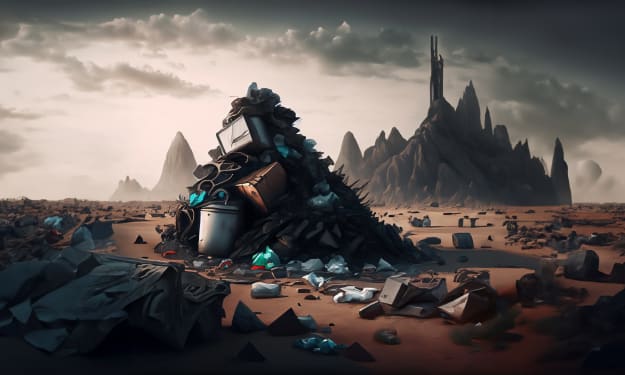
In today's ever-expanding economic realm, the proliferation of design objects flooding the market has emerged as a cause for concern. Regrettably, consumer perspectives have become ensnared by manipulative marketing ploys and advertisements, leading to the accumulation of items with little genuine value. As consumerism evolves into a cultural phenomenon, manufacturers are locked in a perpetual race to unveil the next "must-have" product. This frenzy culminates in a deluge of hastily manufactured design objects, bearing an unsettling resemblance to an overflowing landfill.
By Efe Türkel3 years ago in Art
Decoding the Challenge: AI Art's Struggle with Depicting Hands
In the realm of AI-generated art, there's a curious phenomenon that has captured the attention of many: the struggle to accurately depict hands. It's an odd predicament, considering the remarkable feats of creativity AI models can achieve, from envisioning a post-apocalyptic giraffe astronaut to portraying Genghis Khan playing a pixel art guitar solo. But when it comes to portraying something as seemingly simple as a man holding a delicious apple, AI art tends to falter. Why is it that AI, with all its technological prowess, stumbles when it comes to rendering such a basic and familiar human gesture? Before delving into the peculiar world of AI and hands, let's first acknowledge that AI art is indeed a marvel of modern technology. It can seamlessly blend historical figures like Abraham Lincoln and glam rock icon David Bowie, creating a surreal yet captivating fusion of eras and styles. But it's when we attempt to depict everyday human actions and interactions that the limitations of AI become apparent. To understand this artistic anomaly, we turn to the insights of an artist who has guided countless individuals in the art of drawing hands from imagination. Before embarking on formal artistic training, individuals develop a natural ability to recognize patterns from observing the world around them. This pattern recognition is crucial for creating accurate representations of objects and actions. AI operates similarly, but its learning environment is akin to being confined within a museum. Imagine an AI growing up with access only to images and their accompanying descriptions, much like the placards beside exhibits in a museum. The AI's "museum" is brimming with images of objects, including hands. However, the difference lies in the approach to understanding. While humans can hold an apple, examine its texture, and rotate it in their hands, AI must rely on finding additional images of apples within its limited museum. This pattern recognition forms the basis of AI-generated art, yet it lacks the innate understanding humans possess due to their lived experiences. When an artist undergoes formal training, they delve into the realm of rules and techniques. By simplifying complex objects into basic shapes, like breaking down a hand into a palm, fingers, and thickness, artists can then add their personal style and detailing. AI, on the other hand, operates differently. It can produce visually appealing representations, as seen in its ability to capture light and texture, but it lacks an understanding of how objects truly function. Consider an AI-generated hand illustration. While the shapes may appear unconventional, the AI excels at showcasing intricate details through pixel patterns. However, it's evident that the AI hasn't comprehended the mechanics of finger joints and how they bend. Instead of simplifying forms as artists do, the AI is attempting to mimic hand-like pixels based on its stored patterns, devoid of a deep understanding of hand anatomy. The struggle with hands in AI art isn't an isolated quirk; it offers valuable insights into how AI art models operate. To further explore this phenomenon, conversations with experts in generative art shed light on three significant challenges: data size and quality, hand behavior, and a low margin for error. In the AI's museum, there's an unequal distribution of data, with an abundance of facial images and a scarcity of hands. Consider datasets like Flickr HQ, which boasts thousands of faces with detailed annotations. Yet, datasets for hands may not be as prevalent in training AI art models. The scarcity of data is compounded by the complexity of hand behavior, which remains largely unannotated. While we can describe intricate details of a hand holding an umbrella, AI is left to make educated guesses based on its patterns. Unlike facial images that often follow a centered and symmetrical pattern, hands are incredibly diverse in their movements and positions. The AI struggles to capture this diversity, resulting in peculiar hand renderings that deviate from real-world mechanics. While AI excels in various artistic domains, its hands remain a stumbling block due to the absence of a comprehensive understanding of their dynamics. Despite these challenges, progress is being made. The introduction of Midjourney version 5, the latest AI art generator, offers promising advancements in rendering hands. Yet, complete mastery remains elusive. To address this, AI developers are exploring two avenues: expanding the AI's exposure to a wider range of images and soliciting human feedback. By allowing the AI to analyze a greater volume of pictures, developers aim to enhance its pattern recognition abilities. However, this approach requires substantial computational power. Alternatively, involving more individuals in the AI's learning process could yield valuable results. Drawing parallels with ChatGPT, where human feedback refined language generation, a similar strategy could be employed for AI art. Through human ranking of generated images, the AI can refine its output based on what people find visually appealing. In conclusion, the quirk of AI struggling with hands in art creation offers a fascinating glimpse into the intricacies of AI learning. Despite its remarkable abilities to generate captivating and imaginative art, the AI's limitations provide valuable insights into the nuances of pattern recognition, data availability, and the complexities of human behavior. As AI art continues to evolve, the challenge of hands serves as a reminder that, while machines can simulate creativity, the essence of art lies in the intangible fusion of human insight, emotion, and understanding.
By Shubham Bajaj3 years ago in Art
Deja vu
Deja Vu: Exploring the Puzzling Phenomenon of Familiarity Deja vu, a term derived from French meaning "already seen," refers to the uncanny feeling of familiarity in a situation that is actually new. It is a phenomenon that has intrigued scientists, psychologists, and everyday individuals for centuries. While the true nature of deja vu remains elusive, numerous examples and personal accounts shed light on this intriguing experience.
By Elizabeth Njah3 years ago in Art
Exploring the Diverse Dimensions of Contemporary Art. Content Warning.
Introduction The world of art is a captivating realm where creativity knows no bounds. In this article, we delve into the captivating universe of contemporary art, exploring its history, techniques, inspiration, and the critical role it plays in shaping our perceptions. From captivating paintings to intricate sculptures, the contemporary art scene encompasses a wide array of mediums, inviting audiences to embark on a unique journey through the realms of fiction, mixed media, and beyond.
By Stella Oehtam3 years ago in Art
The Artistic Revolution: How AI is Redefining Creativity in the Modern World
Introduction: In a world where innovation propels us forward at a blistering pace, it's no surprise that even the realm of art has been swept into the whirlwind of change. The rise of AI-generated art is a testament to the seamless merging of technology and creativity, reshaping our perceptions and transforming the art world into an uncharted frontier.
By Kristian Angelov Georgiev3 years ago in Art
Seating in Style: Trending Cafe Chairs to Elevate Your Space
1.The Allure of Elegance: Discover the Gabardine White Luxury Café Chair Experience the epitome of sophistication and comfort with the Gabardine White Luxury Café Chair. Crafted with meticulous attention to detail, this chair seamlessly combines classic design with modern aesthetics. The pristine white hue complements any café ambience, adding an air of elegance to your space. Indulge in relaxation as you sink into its plush cushioning, making every moment a luxurious retreat. Elevate your café experience with the Gabardine White Luxury Café Chair – where style meets comfort in perfect harmony.
By Apkainterior3 years ago in Art