Journey
What I Need
In a world driven by endless desires and constant comparisons, the concept of "what I need" often becomes blurred. Needs and wants are two sides of the same coin, yet understanding the difference between them is crucial for living a balanced and fulfilling life. This article explores the essence of identifying personal needs, how they differ from mere wants, and why focusing on our true needs can lead to genuine happiness and contentment.
By Budhirai Tripura2 years ago in Art
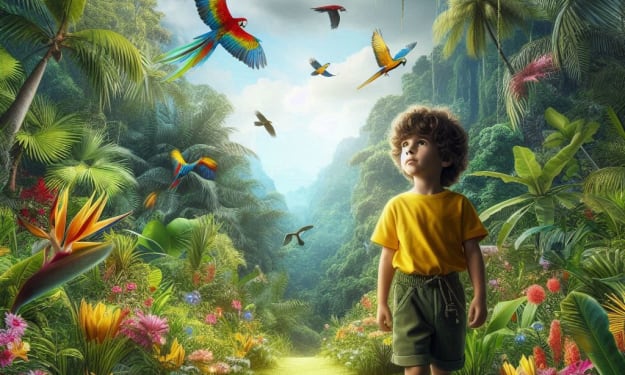
Jungler. AI-Generated.
The jungle was alive. Towering trees loomed overhead, their twisted branches forming a dense canopy that barely let the sun break through. Strange sounds echoed in the undergrowth—rustling leaves, distant howls, and the rhythmic chirping of unseen creatures. Elser moved like a shadow among the foliage, his bare feet silent against the damp earth. He had lived here for as long as he could remember. The jungle was his home, his teacher, and his prison. He wasn’t born here. He knew that much. Fragments of memories haunted him—bright lights, a city skyline, voices calling his name. But those were echoes of a world that no longer existed. Humanity was dying. A sickness had spread across the world, consuming cities and leaving behind empty streets and skeletal ruins. Civilization had collapsed, and those who survived scattered into the wild, searching for answers. Some said the cure was hidden deep within the untouched heart of the jungle. Elser didn’t know if that was true. He only knew that he had survived here while others had not. But today, survival was no longer enough. Today, he had to find a way out. CHAPTER 1: THE CALLING Elser crouched behind a thick tree trunk, his sharp eyes scanning the terrain ahead. The jungle was restless tonight. Something was moving beyond the trees, something unfamiliar. He tightened his grip on his spear, made from sharpened stone and a sturdy branch. Then, he saw them. Three figures, dressed in ragged clothing, stumbled through the jungle, their movements sluggish and unnatural. Their skin was pale, their eyes hollow. Infected. Elser had seen them before—the last remnants of humanity, twisted by the sickness that had wiped out the world. They weren’t dead, not entirely, but they were no longer human either. He held his breath, willing himself to stay still. The infected moved slowly, their senses dulled. If he was careful, they wouldn’t notice him. But then— SNAP. A branch broke beneath his foot. The infected froze. Their heads turned in unison, lifeless eyes locking onto him. And then they charged. CHAPTER 2: ESCAPE OR DIE Elser sprinted through the jungle, weaving between trees and leaping over tangled roots. The infected were fast—but he was faster. He had spent his entire life outrunning predators, and these creatures were no different. But they weren’t the only danger. The jungle itself was a living, breathing entity, filled with hidden traps and unseen threats. One wrong step could mean death—not just from the infected, but from the jungle’s own merciless laws. He reached a steep ravine, its rocky walls plunging into darkness. The only way across was a fallen tree, its trunk slick with moss. Elser didn’t hesitate. He leapt onto the tree, balancing carefully as he made his way across. The infected weren’t as lucky. One of them lunged too quickly and lost its footing, tumbling into the darkness below. The others hesitated for a moment—just long enough for Elser to disappear into the jungle beyond. Safe, for now. But he couldn’t run forever. CHAPTER 3: THE LEGEND OF THE CURE Elser reached his hideout—a hidden cave behind a waterfall. He collapsed onto the ground, breathing heavily. The infected were becoming more aggressive. They were hunting him. But why? He reached into a small pouch tied to his waist and pulled out a piece of old parchment. The ink had faded, but the words were still legible: "Deep in the heart of the jungle lies the key to humanity’s salvation. The cure is real. But only those who truly understand the jungle can find it." Elser had found the parchment buried in the ruins of an old outpost. It was his only clue to the truth. If the cure existed, he had to find it. Not just for himself. For the world. CHAPTER 4: THE HUNT BEGINS The next morning, Elser set out on his journey. He followed the river, using the landmarks described in the parchment. Days passed. He faced storms, wild beasts, and hunger. But he didn’t stop. And then, he found it. A temple, hidden beneath the roots of an ancient tree. The entrance was carved with strange symbols, glowing faintly in the darkness. This was it. The cure was inside. But so was something else. Something waiting for him. CHAPTER 5: THE TEMPLE OF SECRETS Elser stepped forward, his heart pounding as he ran his fingers across the ancient carvings on the temple’s stone walls. The symbols glowed faintly, pulsating like a heartbeat. This place had been hidden for centuries—untouched by the sickness, untouched by time itself. He took a deep breath and pushed open the heavy stone door. A gust of stale air rushed out, carrying the scent of earth and something… old. Inside, the temple was vast, its walls covered in vines and luminescent moss. Strange stone pillars lined the path ahead, each marked with the same symbols from the parchment. But it was the massive stone altar at the center that caught his attention. A pedestal stood in the middle, and atop it sat a small, glowing vial. The cure. Elser took a cautious step forward, but the moment his foot touched the temple floor— CLICK. The ground trembled. From the shadows, deep guttural growls echoed through the chamber. Elser’s grip on his spear tightened. He wasn’t alone. CHAPTER 6: GUARDIANS OF THE CURE From the darkness, figures emerged—twisted, monstrous forms unlike anything he had ever seen. They weren’t infected. These creatures were something else entirely. Their bodies were covered in thick, bark-like skin, their eyes glowing with an eerie green light. The Guardians. Elser’s breath hitched. These creatures were the temple’s protectors, bound by an ancient force to ensure that only the worthy could claim the cure. One of them stepped forward, towering over him. It opened its mouth, but instead of words, a deep rumbling voice filled the chamber, resonating in his mind. “Only the one who understands the jungle may take what is sacred.” Elser swallowed hard. He had spent his entire life in the jungle. He knew its laws, its rhythms. But was that enough? The Guardian raised a clawed hand, pointing toward the walls. Suddenly, the carvings began to shift, forming strange patterns. It was a test. Elser studied the symbols carefully. They depicted animals, plants, rivers, and storms—elements of the jungle itself. The jungle was alive, a delicate balance of life and death. That’s when he understood. With a steady hand, he traced his fingers along the stone, aligning the symbols in the right order. The jungle wasn’t just a place—it was a system, an unbreakable law of nature. If the sickness had broken that balance, then only someone who respected the balance could restore it. The temple rumbled again, but this time, the Guardians stepped back. The largest one nodded. He had passed the test. Elser stepped forward and reached for the glowing vial. The fate of humanity was now in his hands. CHAPTER 7: THE FINAL TRIAL Elser’s fingers wrapped around the vial, its glow pulsating like a living heartbeat. The moment he lifted it from the pedestal, the temple trembled violently. Dust rained from the ceiling, and deep cracks splintered across the stone floor. The Guardians had stepped back, but their glowing eyes remained locked onto him. “You hold the key to balance,” the largest Guardian rumbled. “But the jungle will decide if you are worthy.” The rumbling intensified. A loud crash echoed through the temple as the entrance collapsed, sealing him inside. Then, the ground beneath him sank—Elser barely had time to react before he was falling. Darkness swallowed him. CHAPTER 8: THE JUNGLE’S JUDGMENT Elser hit the ground hard, rolling across damp soil. He groaned, pushing himself up. The glow from the vial illuminated his surroundings—a vast underground chamber filled with roots. They twisted and pulsed like veins, and at the center of it all was something monstrous. A colossal, living root system coiled into a throne, and upon it sat a being unlike anything he had ever seen. Its body was made of vines and bark, glowing symbols carved into its wooden skin. The Jungle Spirit. The entity’s glowing eyes met Elser’s. “You seek to restore balance.” Elser nodded, gripping the vial tightly. “I do.” The spirit’s voice filled the chamber. “Then prove your worth. Will you take the cure for yourself… or will you fight for the world?” Elser frowned. “What do you mean?” The roots around him tightened. “The sickness is a symptom, not the disease. Humanity’s greed, their destruction of nature—this is what led to their fall. If they are given the cure, will they change? Or will they repeat their mistakes?” Elser’s heart pounded. This wasn’t just about survival. It was a choice. Did humanity deserve to be saved? CHAPTER 9: THE PRICE OF SALVATION Elser’s mind raced. He had spent his whole life in the jungle, witnessing its beauty and brutality. He had seen what humans had done before the sickness wiped them out. But he had also seen hope. He thought of the people out there—the ones still fighting to survive, the ones who hadn’t given up. “I won’t let history repeat itself,” he said. “I’ll make sure humanity learns from its mistakes.” The spirit watched him for a long moment. Then, slowly, it raised a hand. The roots pulled away, revealing a hidden passage leading back to the surface. “Then go, Elser. Carry the cure. But remember—balance must be maintained.” As he stepped forward, the spirit’s final words echoed in his mind: “If humanity fails again, the jungle will not be so forgiving.” CHAPTER 10: ESCAPE AND THE FINAL STAND Elser emerged from the temple just as the first rays of sunlight broke through the jungle canopy. He had the cure. Now, he had to get it to the world. But he wasn’t alone. A group of armed men stood outside the temple. Their leader, a scarred man with piercing eyes, smirked as he stepped forward. “Hand it over, boy.” Elser tightened his grip on the vial. These men weren’t survivors. They were scavengers—people who would sell the cure to the highest bidder, dooming humanity to the same cycle of destruction. He couldn’t let that happen. Elser took a deep breath. He had faced wild beasts, infected creatures, and the wrath of the jungle itself. He wasn’t about to lose now. With a fierce yell, he charged into battle. CHAPTER 11: A NEW BEGINNING The fight was brutal. Elser moved like the jungle itself—fast, unpredictable, relentless. By the time the sun fully rose, the scavengers lay defeated. Bloodied but victorious, Elser stood at the jungle’s edge, staring at the ruins of the old world beyond. He held the cure in his hands. This was where his journey truly began. Humanity had one last chance. And Elser would make sure they didn’t waste it. THE END… OR A NEW BEGINNING?
By Muhammad Ogunmuyiwa2 years ago in Art
Why We Need to Earn
Why We Need to Earn: Understanding the Importance of Financial Independence In today’s fast-paced world, earning money is not just about survival; it is about achieving a sense of security, freedom, and purpose. Financial independence allows individuals to not only meet their basic needs but also pursue their dreams, support their loved ones, and contribute to the growth of society. Let’s dive deeper into why earning is crucial and how it impacts various aspects of life. 1. Fulfilling Basic Needs The most fundamental reason for earning is to meet our basic necessities — food, shelter, and clothing. Without a steady source of income, it becomes challenging to provide for ourselves and our families. Financial stability ensures that these essentials are never compromised, creating a foundation for a comfortable life. 2. Achieving Financial Security Financial security means having enough money saved or invested to cover emergencies, medical expenses, and unexpected events. Life is unpredictable, and having a reliable income acts as a safety net during tough times. Without financial security, even minor setbacks can escalate into major crises. 3. Supporting Family and Dependents For many people, earning money is not just about their personal needs but also about supporting their family members. Whether it’s paying for a child’s education, helping elderly parents with medical expenses, or contributing to a spouse’s dreams, income plays a crucial role in maintaining family harmony and well-being. 4. Pursuing Personal Dreams and Goals Earning money empowers individuals to chase their passions. Whether it's starting a business, traveling the world, or learning new skills, financial freedom opens doors to endless possibilities. Without financial means, dreams often remain unfulfilled. 5. Contributing to Society When people earn and spend money, they stimulate the economy. Paying taxes helps fund public services such as education, healthcare, and infrastructure. Additionally, financially stable individuals often give back to society through donations and charitable work, uplifting their communities. 6. Building Self-Confidence and Independence Financial independence boosts self-esteem. Knowing that you can provide for yourself and your family instills a sense of confidence and pride. It eliminates the feeling of helplessness and fosters a mindset of resilience and determination. 7. Planning for the Future Earning money allows individuals to plan for their future — whether it’s saving for retirement, investing in real estate, or securing a child’s education fund. Future planning reduces anxiety about what lies ahead and brings peace of mind. 8. Breaking Free from Debt Debt can be a significant burden. Consistent earning helps individuals pay off loans, credit card debt, and other financial obligations. Becoming debt-free leads to greater financial freedom and stability. 9. Embracing Technology and Innovation Earning money also means having the resources to keep up with technology. In today’s digital era, staying updated with the latest tools and innovations is crucial for both personal and professional growth. Financial resources allow access to courses, software, and gadgets that enhance productivity. 10. Creating Generational Wealth Lastly, earning money with a long-term perspective helps in creating generational wealth. It allows individuals to pass on financial assets to their children and grandchildren, giving them a head start in life. Conclusion In summary, the need to earn money transcends mere survival. It touches every aspect of life — from securing basic needs to fostering personal growth, supporting family, and contributing to societal development. Financial independence empowers individuals to live with dignity, confidence, and purpose. Therefore, striving to earn and manage money wisely is not just a personal goal but a collective responsibility to build a more prosperous future for all.
By Budhirai Tripura2 years ago in Art
The Renaissance: A Revolution in Art and Culture
The Renaissance was one of the most important cultural movements in history. Spanning from the 14th to the 17th century, it marked a rebirth of art, science, and philosophy. Emerging in Italy and spreading across Europe, this period brought some of the most celebrated artists, thinkers, and discoveries that still influence us today. In this article, we will explore the origins of the Renaissance, its key characteristics, famous artists, and its lasting impact on modern civilization. --- 1. The Birth of the Renaissance The Renaissance, meaning "rebirth" in French, was a response to the Middle Ages' stagnation. Where It Began: The movement started in Florence, Italy, in the early 1300s. Why It Happened: People sought to revive the knowledge and creativity of ancient Greece and Rome. Influence of Humanism: A new intellectual movement, humanism, emphasized individual potential, education, and critical thinking. This shift in thinking led to groundbreaking advancements in art, literature, and science. --- 2. Key Characteristics of Renaissance Art Renaissance art differed greatly from medieval art, focusing on realism and perspective. Realism and Detail: Artists studied anatomy to create more lifelike human figures. Use of Perspective: Linear perspective created depth and three-dimensional effects. Mastery of Light and Shadow: Techniques like chiaroscuro and sfumato added realism. Religious and Mythological Themes: Many paintings depicted biblical and mythological stories. Patronage System: Wealthy families like the Medici sponsored artists to create masterpieces. These elements made Renaissance art some of the most admired in history. --- 3. Famous Renaissance Artists and Their Works Some of the greatest artists of all time emerged during the Renaissance: Leonardo da Vinci: Painted Mona Lisa and The Last Supper, showcasing mastery of realism. Michelangelo: Created the Sistine Chapel ceiling and the David sculpture, demonstrating incredible skill in anatomy. Raphael: Known for The School of Athens, which symbolizes classical wisdom. Titian: Renowned for his use of color and dramatic compositions. These artists redefined the meaning of art and set new standards for generations. --- 4. The Scientific and Cultural Impact of the Renaissance The Renaissance was not just about art; it also led to major scientific and philosophical advancements. Scientific Discoveries: Copernicus proposed that the Earth orbits the sun. Galileo improved the telescope and revolutionized astronomy. Printing Press: Invented by Johannes Gutenberg, it allowed for the mass production of books, spreading knowledge. Exploration: Christopher Columbus and other explorers expanded the known world. The Renaissance laid the foundation for modern science, exploration, and communication. --- 5. The Influence of the Renaissance Today The Renaissance continues to shape our world in many ways: Art and Architecture: Renaissance-inspired techniques are still used in paintings and buildings. Education and Humanism: The focus on knowledge and personal development remains key in modern education. Science and Innovation: The Renaissance spirit of discovery paved the way for future advancements. Literature and Philosophy: Writers like Shakespeare were influenced by Renaissance ideas. This period was a turning point that shaped modern Western civilization. --- Conclusion: The Enduring Legacy of the Renaissance The Renaissance was more than an artistic movement; it was a cultural revolution that changed how people viewed the world. By reviving ancient knowledge and encouraging new discoveries, it laid the groundwork for the modern era. From breathtaking paintings to groundbreaking scientific theories, the Renaissance continues to inspire creativity, knowledge, and progress. Its influence can still be seen in art, science, and philosophy today.
By Hridoy Hasan2 years ago in Art
The Evolution of Abstract Art: From Chaos to Expression
Abstract art is one of the most expressive and diverse art movements in history. Unlike traditional art, which aims to represent real objects and scenes, abstract art focuses on color, shape, and emotion. It removes recognizable forms, allowing artists to convey deeper feelings and ideas without limitations. In this article, we will explore the origins of abstract art, its key characteristics, famous abstract artists, and how it continues to shape the modern art world. --- 1. The Birth of Abstract Art Abstract art emerged in the late 19th and early 20th centuries as artists moved away from realism and representation. Where It Began: The movement developed in Europe and Russia. Why It Happened: Artists wanted to break free from traditional rules and explore new ways to express emotion. Influence of Modernism: The rapid changes in science, technology, and philosophy inspired artists to rethink visual art. The goal of abstract art was not to imitate reality but to create a visual language of its own. --- 2. Key Characteristics of Abstract Art Abstract art varies widely, but common features include: Non-Representational Forms: Shapes, lines, and colors replace realistic figures. Emphasis on Emotion: The art focuses on feeling rather than detailed depiction. Use of Color and Texture: Bold colors and thick brushstrokes create impact. Freedom of Interpretation: Viewers can interpret the artwork in their own way. Focus on Composition: The arrangement of elements is as important as the subject itself. Abstract art challenges traditional ideas about what art should be. --- 3. Famous Abstract Artists and Their Work Many groundbreaking artists helped shape the abstract movement: Wassily Kandinsky: Known as the "father of abstract art," he used color and shape to express emotions. Piet Mondrian: Created geometric compositions with primary colors and straight lines. Jackson Pollock: Developed "drip painting," using chaotic splatters to create energetic works. Mark Rothko: Focused on large color blocks to evoke deep emotions. These artists proved that art could exist beyond realism and storytelling. --- 4. The Influence of Abstract Art Today Abstract art has had a lasting impact across various fields: Interior Design: Abstract paintings bring modern aesthetics to homes and offices. Fashion: Abstract patterns influence clothing and textile designs. Graphic Design: Logos, branding, and digital media often use abstract principles. Psychology and Therapy: Abstract painting is used as a form of emotional expression and healing. The movement continues to inspire new generations of artists and designers. --- 5. Why Abstract Art Matters Some people dismiss abstract art as random shapes and colors, but it holds great significance: Encourages Creativity: It allows freedom of expression without rules. Breaks Traditional Boundaries: Abstract art redefines how we see and create art. Elicits Deep Emotions: Colors and forms can provoke strong feelings. Universal Language: Abstract art is understood across cultures, without the need for words. Abstract art invites viewers to experience art in a deeply personal way. --- Conclusion: The Timeless Power of Abstraction Abstract art is more than just colors and shapes—it is a revolution in artistic expression. By removing realism, it challenges us to see the world differently and embrace new perspectives. From paintings to digital designs, abstract art remains a powerful force in the creative world. Its influence continues to shape how we think about art, emotion, and imagination.
By Hridoy Hasan2 years ago in Art
Surrealism: The Art of Dreams and Imagination
Surrealism is one of the most fascinating and imaginative art movements in history. It challenges our perception of reality by blending dreamlike visions with real-world elements. Surrealist artists explore the subconscious mind, creating bizarre, thought-provoking, and often unsettling imagery. In this article, we will explore the origins of surrealism, its key characteristics, famous surrealist artists, and how it continues to influence modern creativity. --- 1. The Birth of Surrealism Surrealism emerged in the early 20th century as a reaction to World War I and the limits of rational thought. Where It Began: The movement started in France, led by poet and writer André Breton. Why It Happened: Artists wanted to escape reality and explore the unconscious mind. Influence of Psychology: Sigmund Freud’s theories on dreams and the subconscious heavily inspired surrealist art. Surrealism encouraged artists to free their minds and express hidden thoughts and emotions. --- 2. Key Characteristics of Surrealist Art Surrealist art is known for its strange, dreamlike quality and unexpected combinations. Key features include: Dream Imagery: Surrealists use dreamlike scenes to explore hidden emotions. Juxtaposition: Unrelated objects are placed together to create unusual meanings. Distorted Reality: Everyday objects are transformed in bizarre or exaggerated ways. Automatism: Artists create without conscious control, allowing their subconscious to guide them. Symbolism: Many surrealist works contain hidden messages and psychological themes. These elements make surrealist art mysterious, thought-provoking, and deeply emotional. --- 3. Famous Surrealist Artists and Their Work Surrealism produced some of the most famous and unique artists in history: Salvador Dalí: Known for The Persistence of Memory, featuring melting clocks. René Magritte: Created The Son of Man, a painting of a man with an apple covering his face. Max Ernst: Experimented with unusual textures and dreamlike imagery. Frida Kahlo: Blended surrealism with personal experiences, creating deeply emotional self-portraits. These artists used surrealism to challenge reality and express their deepest thoughts. --- 4. The Influence of Surrealism Today Surrealism’s impact goes beyond traditional painting and sculpture. It influences: Film: Directors like David Lynch and Christopher Nolan use surreal elements in movies. Literature: Writers create dreamlike stories that challenge reality. Graphic Design: Advertisements and digital art often use surrealist techniques. Fashion: Surrealist-inspired clothing features unusual shapes and bold designs. Surrealism remains one of the most innovative and influential artistic movements. --- 5. Why Surrealism Matters Surrealist art challenges us to see the world differently. It teaches us that: Creativity Has No Limits: There are no rules in surrealist art—only imagination. Dreams Hold Meaning: The subconscious mind is a powerful source of ideas. Reality is Flexible: Surrealism reminds us that perception is personal and ever-changing. Art Can Be Psychological: It encourages self-exploration and deep emotional expression. Surrealism invites us to question reality and explore new possibilities. --- Conclusion: The Endless Magic of Surrealism Surrealist art is a journey into the unknown—a place where reality and dreams merge. It continues to inspire artists, writers, filmmakers, and designers worldwide. By embracing surrealism, we open our minds to endless creative possibilities. Whether in paintings, films, or digital art, surrealism reminds us that imagination has no limits.
By Hridoy Hasan2 years ago in Art
The Power of Minimalist Art: Less is More
Minimalist art is a movement that embraces simplicity, reducing elements to their essential forms. While some may see it as too basic, minimalist art has a unique power—it captures deep meaning with few details. It removes distractions and focuses on pure emotion, balance, and form. In this article, we will explore the origins of minimalist art, its key characteristics, famous minimalist artists, and why this art style remains influential today. --- 1. The Birth of Minimalist Art Minimalism as an art movement emerged in the 1950s and 1960s as a reaction against the complexity of Abstract Expressionism. Where It Began: The movement started in the United States, particularly in New York. Why It Happened: Artists wanted to strip away unnecessary details and focus on the essence of art. Influence of Modernism: Minimalism was inspired by modernist ideas of simplicity, functionality, and clarity. Minimalist artists believed that art should not try to tell a story but instead exist as pure visual experience. --- 2. Key Characteristics of Minimalist Art Minimalist art is defined by a few essential features: Simple Forms: Geometric shapes like squares, circles, and lines dominate minimalist compositions. Limited Colors: Artists often use a monochromatic or restricted color palette. Repetition and Patterns: Repeated shapes and patterns create harmony and rhythm. Focus on Space: Negative space (empty areas) is as important as the elements themselves. Emphasis on Materials: Artists highlight the texture and physical properties of the materials they use. Minimalist art removes unnecessary decoration and focuses only on what is essential. --- 3. Famous Minimalist Artists and Their Work Several artists pioneered the minimalist art movement, creating timeless works: Frank Stella: His paintings focused on clean, structured geometric patterns. Donald Judd: Created simple, box-like sculptures emphasizing form and material. Agnes Martin: Used soft, delicate grids to explore serenity and calmness. Dan Flavin: Worked with fluorescent light to create minimal yet striking installations. These artists showed that simplicity could be powerful and emotionally moving. --- 4. The Influence of Minimalist Art Today Minimalism is not just an art movement—it influences many areas of modern life: Interior Design: Minimalist aesthetics create peaceful, clutter-free spaces. Fashion: Simple and elegant designs reflect minimalist principles. Graphic Design: Clean typography and layouts follow minimalist ideals. Technology: Companies like Apple use minimalism in product design for sleek, functional devices. Minimalism has shaped how we experience visual culture in everyday life. --- 5. Why Minimalist Art Matters Some people dismiss minimalist art as "too simple," but it carries great significance: Encourages Deep Thought: Viewers engage with the work rather than being overwhelmed by details. Creates Emotional Impact: Simplicity can evoke strong feelings of peace, mystery, or contemplation. Focuses on Essentials: Minimalist art teaches us to appreciate what is truly important. Timeless and Universal: Unlike trendy styles, minimalism remains relevant across generations. Minimalist art is proof that sometimes, less is truly more. --- Conclusion: The Beauty of Simplicity Minimalist art reminds us that beauty does not always come from complexity. Through simplicity, balance, and precision, it captures powerful emotions and ideas. Whether in painting, sculpture, or design, minimalism continues to inspire and influence creativity worldwide. For those who appreciate clarity and elegance, minimalist art is a timeless source of inspiration.
By Hridoy Hasan2 years ago in Art
The Timeless Beauty of Renaissance Art
The Renaissance was a golden age of artistic achievement that changed the way we perceive and create art. From the 14th to the 17th century, this movement brought a revival of classical ideals, innovation in techniques, and a new focus on human beauty and realism. Even today, Renaissance art continues to inspire artists, designers, and historians. In this article, we will explore the origins of Renaissance art, its key characteristics, famous artists, and its lasting impact on the world. --- 1. The Birth of Renaissance Art The word "Renaissance" means "rebirth," and this era marked the revival of classical Greek and Roman ideas in Europe. Where It Began: The movement started in Italy, particularly in Florence, a city rich in culture and wealth. Why It Happened: The rediscovery of ancient texts, advancements in science, and support from wealthy patrons like the Medici family fueled this artistic explosion. Influence of Religion: Many Renaissance artworks depicted biblical scenes, but they also celebrated human beauty and intellect. This period marked a shift from medieval religious art to a more human-centered approach. --- 2. Characteristics of Renaissance Art Renaissance art is known for its beauty, balance, and realism. Some key features include: Realism and Humanism: Artists focused on accurate human anatomy, emotions, and natural movements. Perspective: The use of linear perspective created depth and three-dimensionality in paintings. Chiaroscuro: The use of light and shadow added drama and realism. Classical Influence: Many artworks incorporated Greek and Roman themes. Attention to Detail: Artists aimed for perfection in every aspect, from facial expressions to clothing textures. These techniques made Renaissance art more lifelike and emotionally engaging. --- 3. Legendary Artists of the Renaissance The Renaissance gave birth to some of the greatest artists in history. Leonardo da Vinci: A master of multiple disciplines, he painted The Mona Lisa and The Last Supper. Michelangelo: Known for his sculptures like David and his breathtaking work on the Sistine Chapel ceiling. Raphael: Created harmonious and graceful paintings such as The School of Athens. Titian: A pioneer of color and oil painting techniques. Each artist contributed to making the Renaissance an era of artistic revolution. --- 4. Renaissance Art’s Influence on Modern Creativity The impact of Renaissance art extends beyond paintings and sculptures. Architecture: Inspired classical buildings and modern designs. Fashion: Renaissance elegance influences modern haute couture. Film & Photography: Techniques like chiaroscuro are used in cinematography. Graphic Design: Renaissance principles of composition and proportion are still followed. Even digital artists and game designers draw inspiration from Renaissance masterpieces. --- 5. Why Renaissance Art Still Matters Despite being centuries old, Renaissance art remains relevant today. Timeless Beauty: The paintings and sculptures still captivate audiences. Cultural Legacy: Museums and galleries worldwide celebrate Renaissance works. Foundation of Modern Art: Many artistic principles were established during this period. Inspiration for New Artists: Renaissance techniques are still taught in art schools. Renaissance art is a testament to human creativity and ambition. --- Conclusion: A Legacy of Artistic Genius Renaissance art is not just history—it’s a living influence that continues to shape the world of creativity. From stunning frescoes to intricate sculptures, the masterpieces of this era remind us of the limitless potential of human expression. For anyone who loves art, understanding the Renaissance is essential—it’s where the past meets the future in perfect harmony.
By Hridoy Hasan2 years ago in Art