Journey
The Photograph That Never Was
The attic smelled of dust, old wood, and a kind of forgotten grief. Amelia hated coming up here. Her grandmother’s death had left her the estate—a rotting house that leaned into the wind like a tired old man—and she was determined to catalogue its contents before selling.
By Atif khurshaidabout a year ago in Art
Memories
Memories. Who doesn’t know what memories are? But curiously asking - how would you define them? I would say, they are ones lived moments. For some are good ones. Some are not-so-good ones. Some are lost along the way. Memories are basically every moment lived by a person. Any living beings. It can be dogs, cats, us-humans or hell even dolphins have memories. I am sure it even includes plants and trees. Memories are something that people look up to. Yeah, well. We are humans, with a clear mind of our own - We tend to do a lot of thinking when it comes to things. Well coming back, most people prefer or choose to live in the moment. Sometimes, people aren’t really particular about the little things in their lives. Just that which feels right in that moment of time. I suppose, it must feel great to do things in the moment. I mean, I am simply wondering because I feel in some ways I haven't really lived my life that way. To live momentarily. I'm not saying to live every second of the day. But at least once perhaps, if not twice. (Laughing). I don't really know, I'm just speculating here. Maybe to live in the moment, you should be able to feel or see things greatly. Be more understanding. Be more poetic.
By Ealisha Acharyaabout a year ago in Art
The Parthenon
The only full-size replica of the Parthenon in Athens, Greece is a monument to art that is housed in Nashville, Tennessee. Laid out in 1897 for the Tennessee Centennial Exposition, the Parthenon stands proudly as a living monument to its creator and is also a museum of Art and a historically significant monument.
By Sheikh Siyamabout a year ago in Art
Romeo Montague: The Tragic Hero of Verona . AI-Generated.
Romeo Montague: The Tragic Hero of Verona Romeo Montague, the young heir of the Montague family, stands as one of literature's most enduring symbols of passionate, impulsive love. In William Shakespeare's Romeo and Juliet, Romeo's journey from infatuation to profound devotion, and ultimately to tragic demise, captivates audiences with its intensity and poignancy.
By Omar Mohammed about a year ago in Art
Rise Beyond the Limits
I wasn’t born into comfort or convenience. I was born into survival. In a small, dusty town where the roads had more potholes than promises, dreams were not something people chased—they were things people surrendered. We lived in a two-room house with no ceiling fan in the summer and no heater in the winter. The kind of house where rain meant buckets on the floor, and every creaking noise at night sounded like a prayer for the roof to hold on a little longer.
By Muhammad Shayan Khanabout a year ago in Art
Two Styles, Two Stories: Model vs. Family Photography
Photography is a powerful form of storytelling—but not all stories are told the same way. As a photographer who’s captured everything from fashion-forward model shoots to joy-filled family beach sessions, I’ve come to appreciate the unique energy and purpose each type of session holds. While model and family photography both demand technical skill, creativity, and connection, the Kauai photographer, expectations, and outcomes vary greatly. Let’s take a closer look at how these two styles differ—and what makes each one meaningful in its own way.
By Luis Fonsiabout a year ago in Art
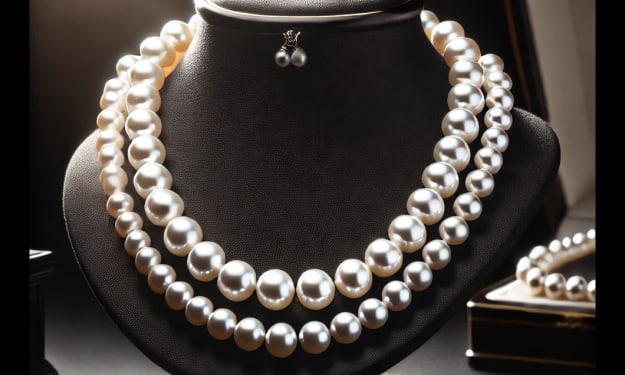
Exquisite Elegance: The Ultimate Guide to Double Layer Pearls Sets
When it comes to timeless sophistication and luxurious style, nothing rivals the charm of Double Layer Pearls Sets. Whether gracing royal courts or modern fashion runways, pearls have remained a symbol of grace, femininity, and affluence. In particular, Double Layer Real Pearls Sets offer a magnificent blend of traditional allure and contemporary flair, making them a must-have for any discerning jewelry enthusiast.
By Pittijewelsandpearlsabout a year ago in Art
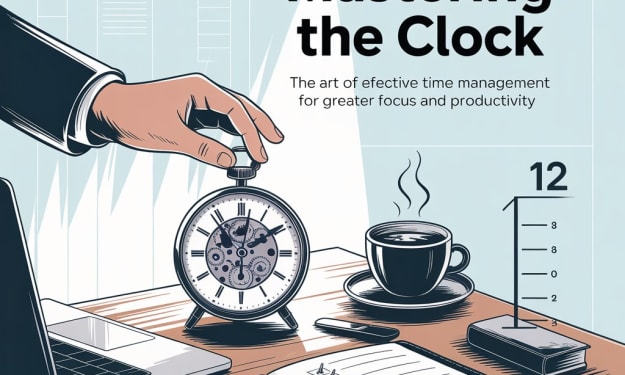
Mastering the Clock: The Art of Effective Time Management
Time is the most democratic resource in the world—everyone gets the same 24 hours a day. Yet, some people consistently achieve more, feel less overwhelmed, and make progress toward their goals, while others feel perpetually behind. The difference lies not in how much time you have, but in how you manage it. Mastering time management is not about squeezing every second of your day, but about using your time purposefully and efficiently.
By Muhammad Farhad Khanabout a year ago in Art
Art Beyond Boundaries: Redefining Expression in a Changing World
Introduction Art is the visual voice of humanity. It has transcended time, culture, and language to express emotions, challenge perceptions, and inspire revolutions. As the world continues to evolve, so does art. Today, we’re witnessing a creative renaissance—one in which boundaries no longer define expression. From ancient traditions to the latest digital innovations, artists are reimagining what it means to create and communicate. In this article, we explore how modern artists are breaking down walls—whether physical, cultural, or ideological—and using their platforms to reshape the future of creative culture. Through the fusion of tradition, technology, and activism, art is not only surviving in the modern world—it is thriving beyond boundaries. Chapter 1: Honoring the Past — Tradition as Foundation Art’s journey begins with tradition. From the cave paintings of Lascaux to the intricate calligraphy of Islamic manuscripts, traditional art forms have laid the foundation of human creativity. While modern artists are forging new paths, many are choosing to honor the past by integrating traditional elements into their work. For example, contemporary artists are reviving ancient textile arts, woodblock printing, and indigenous painting techniques, blending them with modern subjects. The result is a compelling narrative that respects cultural heritage while introducing it to a new audience. This synthesis not only preserves endangered traditions but also strengthens cultural identity. Chapter 2: Technology and the Digital Revolution in Art The digital age has revolutionized every aspect of life, and art is no exception. Digital painting, 3D modeling, augmented reality (AR), and artificial intelligence (AI) have opened up new dimensions of creativity. No longer confined to canvas or sculpture, today’s art lives in code, pixels, and even virtual spaces. NFTs (Non-Fungible Tokens) have created new avenues for artists to monetize their digital work. Artists like Beeple, Pak, and Refik Anadol have proven that digital art is not just a passing trend—it’s a legitimate and lucrative form of expression. Meanwhile, platforms like Instagram, DeviantArt, and TikTok give artists the power to reach global audiences instantly. Technology has also made art more interactive. Immersive installations using AR and VR allow viewers to experience art in multi-sensory ways, redefining the traditional artist-audience relationship. Chapter 3: Art as a Tool for Social Change Art has always had the power to provoke, challenge, and transform. In today’s world, many artists use their voices to address global issues—climate change, racial injustice, gender equality, mental health, and more. Art becomes a mirror, reflecting the struggles and hopes of society. Murals in urban neighborhoods, politically charged performances, and thought-provoking installations all contribute to a growing movement: art as activism. Artists such as Ai Weiwei, Kara Walker, and Shepard Fairey use their mediums to initiate conversations and inspire change. Whether on the streets or online, visual storytelling empowers marginalized communities and calls attention to voices that are often ignored. Art is no longer just an expression—it is resistance, protest, and a vision for a better future. Chapter 4: The Globalization of Art and Culture Global connectivity has made cross-cultural collaboration more accessible than ever. Artists from different parts of the world are merging styles, techniques, and philosophies to create hybrid forms of expression. This cultural exchange promotes empathy, challenges stereotypes, and builds global solidarity. Exhibitions, art fairs, and digital platforms have made it easier for artists to showcase their work internationally. Initiatives like the Venice Biennale, Documenta, and Art Basel feature voices from all corners of the world. These platforms elevate diverse perspectives and encourage dialogue between cultures. The blending of African tribal symbolism with Western abstraction, or Eastern spiritual motifs with modern surrealism, highlights how interconnected our creative worlds have become. Chapter 5: Democratizing Art — Everyone Can Be an Artist Historically, access to art was often restricted by class, education, or geography. Today, smartphones, social media, and free educational platforms are changing that. Anyone with an internet connection can learn to draw, compose music, or design digitally. Apps like Procreate, Canva, and Krita make art creation accessible to beginners. YouTube tutorials and online courses from platforms like Skillshare and Coursera offer affordable learning opportunities. This democratization is fostering a generation of self-taught artists who don’t need permission to create or succeed. Moreover, audiences themselves are evolving. People are more open to unconventional forms of expression, and many embrace outsider art that doesn’t follow traditional standards. The art world is becoming more inclusive, and the line between “artist” and “audience” continues to blur. Chapter 6: The Role of AI and Generative Art Artificial Intelligence is no longer a distant concept—it is now a collaborator in the creative process. Generative art, powered by machine learning algorithms, can produce stunning visuals, music, and poetry. Artists like Refik Anadol are exploring the intersection of data and aesthetics, creating immersive environments that are part science and part imagination. AI doesn’t eliminate the artist’s role; it expands it. Artists now act as curators of algorithms, choosing how machines interpret data and aesthetics. This fusion of human intention and machine computation is pushing the boundaries of creativity. However, ethical concerns also arise: Who owns the work? What is originality? Can machines truly be creative? These questions challenge us to rethink the definition of authorship in the digital age. Chapter 7: Education, Empowerment, and Artistic Healing Beyond galleries and digital platforms, art plays a crucial role in education and emotional well-being. Schools, therapy centers, and community workshops use creative expression as a tool for healing and empowerment. Art therapy is increasingly recognized for its benefits in treating trauma, anxiety, and depression. Community art projects empower individuals to tell their stories and reclaim agency over their lives. Programs in conflict zones and underprivileged communities often use art to bridge divides and promote reconciliation. In this context, art is not just about beauty—it becomes a path to inner peace, understanding, and hope. Chapter 8: The Future of Art — Infinite Possibilities What does the future hold for art? The possibilities are endless. Bio-art using living organisms, neuroaesthetic experiments involving brainwave-responsive installations, and holographic performances are already in development. The Metaverse offers a new frontier where virtual galleries, digital performances, and avatar-driven experiences will reshape how we engage with art. Blockchain will offer more transparency and protection for artists. Meanwhile, sustainability movements will inspire eco-conscious creations made from recycled and biodegradable materials. Art will continue to adapt, challenge, and surprise. One thing is clear: it will never stop evolving. Conclusion: A World Without Borders Art is not confined by canvas, language, or location. It is the shared heartbeat of humanity—constantly growing, shifting, and transcending. In a rapidly changing world, art offers continuity, connection, and courage. Today’s artists are historians, futurists, and revolutionaries. They blend tradition with technology, culture with activism, and the personal with the political. They are showing us that art is not just something we create—it is something we live. In the age of boundless expression, art is the bridge between past and future, between one soul and another. And in that limitless space, we find not just creativity—but humanity itself.
By Sohail Abbasabout a year ago in Art