Journey
A Modern African Tarot
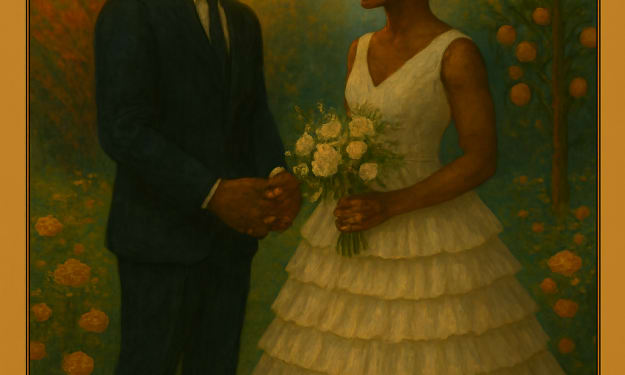
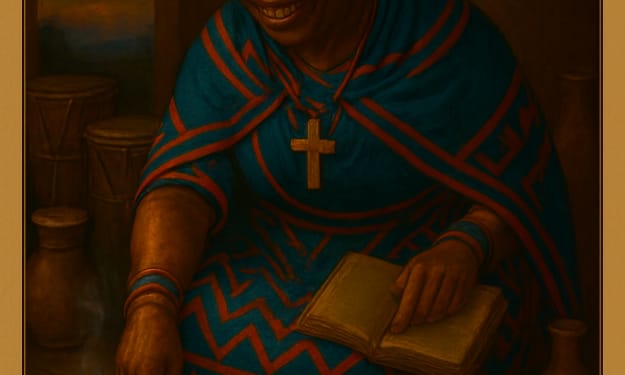
The seventh card in A Modern African Tarot marks a turning point in the journey—from individual mastery to relational depth. Where V PASTOR explores public faith and influence, VI LOVERS brings the focus to connection, commitment, and the spiritual power of union. This card reimagines the traditional Lovers archetype through African symbolism, modern partnership, and the sacred tension between choice and destiny.
By Vongani Bandi11 months ago in Art
A Modern African Tarot
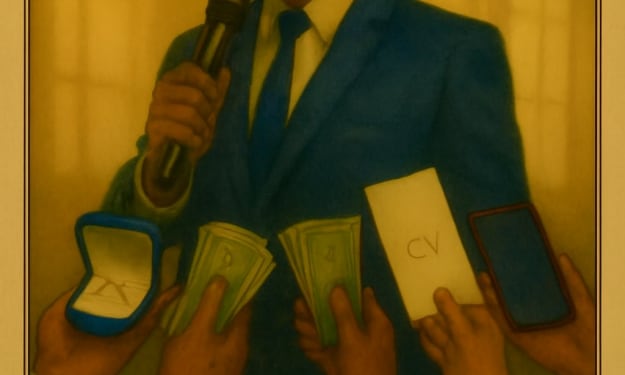
The sixth card in A Modern African Tarot shifts the journey from personal authority to public influence. Where IV EMPEROR represents legacy and leadership, V PASTOR explores spiritual power in the modern age—how faith, charisma, and community converge in one figure. This card reimagines the traditional Hierophant through the lens of African religious life, media visibility, and social aspiration.
By Vongani Bandi11 months ago in Art
A Modern African Tarot
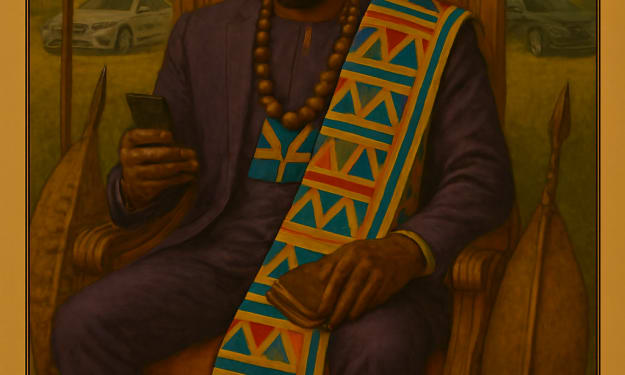
The fifth card in A Modern African Tarot marks a shift from nurturing abundance to establishing structure. Where III EMPRESS celebrates creation and communal prosperity, IV EMPEROR introduces order, protection, and legacy. He is the archetype of leadership—reimagined here through African heritage, modern influence, and ancestral responsibility.
By Vongani Bandi11 months ago in Art
A Modern African Tarot
The fourth card in A Modern African Tarot shifts the journey from introspection to embodiment. Where O FOOL begins the walk, I MAGICIAN channels intention, and II HIGH PRIESTESS guards sacred insight, III EMPRESS celebrates manifestation. She is the archetype of fertility, creativity, and prosperity—reimagined here through the lens of African womanhood, economic power, and communal abundance.
By Vongani Bandi11 months ago in Art
Space Between the Brushstrokes
I used to believe that real artists were always working. Every photo I saw online showed someone painting late into the night, hands stained with color, eyes burning with passion. Sketchbooks were always open. Canvases were always half-finished. The message was clear: if you weren’t constantly creating, you were falling behind. So I worked without stopping. I painted in the mornings before work, late at night after dinner, and on weekends when my friends went out. I filled canvas after canvas, but none of them felt finished. Each piece looked rushed, like it was trying to escape the room before I was ready to let it go. Still, I kept going. I told myself that exhaustion was part of the process. That doubt meant I was growing. That real artists pushed through. Until one evening, my brush slipped from my hand and hit the floor. It wasn’t dramatic. No breakdown. No tears. Just a soft clatter against the wood. I stared at it longer than I should have, then sat down on the floor beside it. I didn’t pick it up. The room was quiet. No music. No ticking clock. Just me and a half-painted canvas leaning against the wall. For the first time in months, I wasn’t thinking about what came next. I was empty. The next day, I didn’t paint. Or the next. Days turned into a week. Then two. At first, I felt guilty—like I was betraying some invisible rulebook of creativity. But slowly, something unexpected happened. I started noticing things again. The way light rested on the edge of my coffee cup. The uneven crack in the sidewalk outside my apartment. The sound of my neighbor laughing through the thin walls. Small things. Quiet things. I began carrying a notebook, not to sketch, but to write down what I saw. No pressure. No intention to turn it into art. Just noticing. One afternoon, I visited a small gallery downtown. It wasn’t famous. No long lines. No placards filled with complicated language. Just a few rooms with paintings that felt honest. One piece stopped me completely. It was simple: a large canvas with wide, calm strokes of blue and gray. No sharp edges. No obvious subject. Just space. I stood there for a long time. It didn’t demand anything from me. It didn’t explain itself. It just existed. And suddenly, I understood something I had been missing. Art doesn’t live only in the act of creating. It also lives in the space around it—the pauses, the silence, the moments where nothing happens. When I returned home, I didn’t rush to my paints. I cleaned my workspace instead. I washed my brushes carefully, one by one. I stacked old canvases against the wall. I opened a window and let fresh air move through the room. A few days later, I picked up my brush again. This time, I moved slower. I didn’t aim to finish anything. I didn’t think about how it would look online or whether it was “good enough.” I focused on each stroke as it happened. Where it began. Where it ended. How much pressure I used. When I felt tired, I stopped. No guilt. No pushing. The painting took weeks. Maybe longer. I lost track of time, not because I was forcing myself to work, but because I wasn’t watching the clock anymore. When it was done, I didn’t feel relief or pride the way I used to. I felt calm. The piece wasn’t perfect. But it felt honest. Like it had room to breathe. I learned something important during that quiet season: creativity isn’t a race. It’s a conversation. And sometimes, the most meaningful part of that conversation is listening. Now, when I see artists online working through the night, I don’t compare myself anymore. I know that behind every finished piece is a thousand unseen pauses. Moments where the brush rested. Where the artist stepped back. Where nothing happened—and everything changed. The space between brushstrokes matters. That’s where the art learns how to speak.
By Jhon smith11 months ago in Art
Indoor vs Outdoor Amusement Parks
1. Industry Context and Structural Shifts The amusement industry is no longer driven solely by novelty or scale. It is increasingly shaped by macroeconomic prudence, urban density, climate volatility, and evolving leisure behavior. Investors and operators are re-evaluating legacy assumptions about land use, attendance cycles, and capital intensity. In this environment, the comparison between indoor and outdoor amusement models has shifted from a conceptual debate to a strategic decision with long-term financial implications.
By Beston Amusement Rides11 months ago in Art
A Modern African Tarot
The third card in A Modern African Tarot deepens the journey begun by O FOOL and I MAGICIAN. Where the Fool steps into possibility and the Magician channels intention, the High Priestess turns inward—toward silence, intuition, and ancestral knowing. She is the guardian of mystery, the voice between worlds, and the embodiment of spiritual depth.
By Vongani Bandi11 months ago in Art
A Modern African Tarot
Tarot has always been more than cards—it’s a mirror, a guide, a way to tell our stories. For centuries, the decks most people know—like the Rider Waite Smith—have been built on European imagery and symbolism. Castles, knights, biblical archetypes… powerful in their context, but distant for those of us whose roots and rhythms are African. These images speak to a worldview shaped by medieval Europe, but they often feel foreign when held in African hands.
By Vongani Bandi11 months ago in Art
A Modern African Tarot
This card marks the beginning of a powerful journey—a series of African-themed Major Arcana reimaginings that will culminate in the final card: The World. Each card in this series is designed to reflect modern African life, symbolism, and spirit, offering a fresh lens through which to explore timeless archetypes. We begin, as all journeys do, with O FOOL.
By Vongani Bandi11 months ago in Art