Illustration
Coloring Book Art: NURIE CREATOR AI
Nurie Creator Review: Features, Benefits, and OTO Insights IntroductionColoring and digital art platforms have seen a huge surge in popularity. Among these, NURIE Creator stands out as an innovative and versatile tool. This detailed NURIE Creator review will cover its core features, NURIE Creator benefits, and discuss the NURIE Creator OTO (one-time offer) options that can enhance your experience.
By James Renouf 2 years ago in Art
NURIE ART: NURIE CREATOR
NURIE Creator Review: Features, Benefits, and OTO Insights IntroductionColoring and digital art platforms have seen a huge surge in popularity. Among these, NURIE Creator stands out as an innovative and versatile tool. This detailed NURIE Creator review will cover its core features, NURIE Creator benefits, and discuss the NURIE Creator OTO (one-time offer) options that can enhance your experience.
By James Renouf 2 years ago in Art
Exploring Generative AI as a Creative Tool for Artists with AI Professionals including Yahya Yuksel
The world of art has always been shaped by new technologies, from the invention of photography to the development of digital painting software. Today, one of the most transformative advancements is generative AI, which has opened up new creative possibilities for artists. AI professionals including Yahya Yuksel express that generative AI uses algorithms to create art, often in collaboration with human artists, and it has sparked a revolution in the way art is made. With its ability to generate everything from abstract visuals to lifelike portraits, this technology is allowing artists to push boundaries, experiment with new forms, and explore ideas that might not have been possible with traditional methods. While generative AI can be a powerful tool, it also raises important questions about authorship, originality, and the role of the artist in the creative process.
By Yahya Yuksel2 years ago in Art
The Robotic Kitten's Holiday Miracle
Snowflakes swirled in the frosty December air as the small town of Everpine prepared for Christmas. Lights twinkled in every window, children built snowmen in the park, and the scent of gingerbread wafted through the streets. Yet, nestled in the corner of a quiet toy shop, Mittens, a robotic kitten, sat on a shelf, feeling forgotten.
By Angelina Vasas2 years ago in Art
The Whispering Grove
Deep in the heart of an ancient forest, hidden from the eyes of most, there was a place known as the Whispering Grove. It was said that the trees here were unlike any others, their trunks gleaming silver under the moonlight, their leaves shimmering with hues of gold. The air hummed softly, as if the grove itself was alive, breathing secrets into the ears of those brave enough to enter.
By Shiv Rabari2 years ago in Art
The Fascinating World of the Fibonacci Sequence
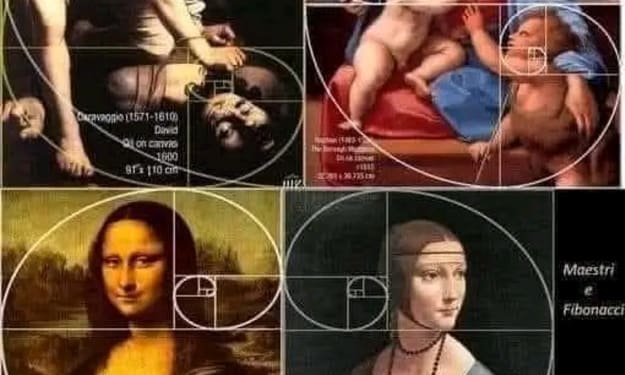
The Fibonacci sequence is one of the most famous and intriguing numerical patterns in mathematics. Discovered by the Italian mathematician Leonardo of Pisa, better known as Fibonacci, this sequence has captivated mathematicians, scientists, and artists alike for centuries. Its applications span mathematics, nature, art, and architecture, making it a universal symbol of balance and harmony. The Origins of the Fibonacci Sequence Leonardo Fibonacci was born in Pisa in 1175. As the son of a wealthy merchant, Fibonacci traveled extensively during his youth, accompanying his father to the port city of Bejaia, in the Kabylia region of modern-day Algeria. There, Fibonacci was introduced to Hindu-Arabic numerals, a far more efficient numbering system than the Roman numerals used in Europe at the time. Fascinated by the mathematical systems he encountered, Fibonacci began studying and eventually wrote the influential book "Liber Abaci" (The Book of Calculation) in 1202. It was in this book that Fibonacci introduced the sequence that would later bear his name. The Fibonacci sequence was originally used to solve a practical problem about the reproduction of rabbits, a question posed to demonstrate the efficiency of Hindu-Arabic numerals in calculations. The Sequence: Simple Yet Profound The Fibonacci sequence begins with 1, 1, and each subsequent number is the sum of the two preceding numbers: 1, 1, 2, 3, 5, 8, 13, 21, 34, 55, 89, 144, … This simple rule creates a pattern that grows exponentially yet maintains a consistent mathematical relationship. The ratio between consecutive Fibonacci numbers approaches the golden ratio (approximately 1.618) as the sequence progresses. The golden ratio, denoted by the Greek letter φ (phi), is often associated with aesthetic beauty and is frequently found in nature, art, and architecture. Applications of the Fibonacci Sequence In Mathematics and Science The Fibonacci sequence has numerous applications in mathematics. It appears in combinatorics, where it can be used to count objects, and in algebra, as a basis for solving problems involving recursion. The sequence also has applications in computer science, particularly in algorithm design and data structure optimization. In nature, the Fibonacci sequence is observed in the arrangement of leaves, flowers, and seeds, where efficiency and symmetry are key. For instance, the spiral patterns of sunflower seeds, pinecones, and shells often follow the Fibonacci sequence, allowing for optimal packing and growth. In Art and Architecture The golden ratio derived from the Fibonacci sequence has inspired countless works of art and architecture. Renaissance artists like Leonardo da Vinci are thought to have used the golden ratio in their paintings to achieve a sense of proportion and harmony. In architecture, the golden ratio can be found in the proportions of historical structures such as the Parthenon in Greece and the Great Pyramid of Giza. The sequence continues to influence modern designs, from graphic design layouts to product packaging. In Finance The Fibonacci sequence even extends into the world of finance. Technical analysts use Fibonacci retracement levels to predict price movements in stocks and commodities. These levels are derived from the ratios between Fibonacci numbers and are used to identify potential areas of support and resistance in the market. Fibonacci's Legacy Though Fibonacci’s sequence is perhaps his most famous contribution, his broader legacy lies in his role as a bridge between the mathematical traditions of the Middle East, India, and Europe. By popularizing the Hindu-Arabic numeral system in Europe, Fibonacci revolutionized commerce and calculation. His work laid the foundation for the mathematical and scientific advancements of the Renaissance. Today, Fibonacci is celebrated not just as a mathematician but as a pioneer who demonstrated the interconnectedness of mathematics and the natural world. The Fibonacci sequence remains a symbol of growth, order, and the inherent beauty of numbers. Why the Fibonacci Sequence Resonates The Fibonacci sequence resonates with so many because it represents universality and harmony. Its presence in everything from a nautilus shell to the stock market speaks to the interconnectedness of the universe. Whether you're an artist, a scientist, or a casual observer of nature, the Fibonacci sequence offers a window into the elegant patterns that underlie our world. A Modern Appreciation In today’s world, the Fibonacci sequence continues to capture the imagination of mathematicians, educators, and enthusiasts. It is a frequent topic in classrooms and is celebrated through Fibonacci-themed art, music, and even software. Moreover, the sequence serves as a reminder of the timelessness of mathematical discovery. The curiosity that led Fibonacci to explore the world of numbers is the same spirit that drives innovation today. Conclusion The Fibonacci sequence is more than just a series of numbers; it is a journey into the essence of order and beauty. From its humble origins in a medieval mathematical text to its modern applications in science and art, the sequence continues to inspire awe and wonder. Leonardo Fibonacci’s legacy is a testament to the power of curiosity and exploration. The next time you see a sunflower or marvel at a spiral staircase, take a moment to appreciate the subtle patterns of the Fibonacci sequence that connect us all to the mysteries of the universe.
By Deji Akomolafe2 years ago in Art
What is a “Chill Guy”, Lado Okhotnikov about memes, clickers and crypto
If you've spent at least a few minutes on the internet, you've probably noticed this stylish brown dog in a sweater, jeans, and red sneakers. It's the “Chill Guy” — a meme that says, “Relax, take it easy.”
By CryptoNews2 years ago in Art
Speed Up Your PC: Say Goodbye to Slow Performance
### How to Speed Up a Slow Computer A slow computer can be frustrating, especially when you need it for work, play, or entertainment. Fortunately, you don't need to be a tech expert to improve your computer's performance. Below are some practical steps to speed up your computer and make it look like new again.
By Muhammad Rashid2 years ago in Art
Choosing the Perfect Shower Experience: A Guide to Bathroom Shower Panels and Accessories
A bathroom is no longer just a functional space; it’s a personal retreat where relaxation meets rejuvenation. One of the most significant contributors to this experience is your shower setup. From elegant hand showers to sophisticated bathroom shower panels, the right choice can transform your daily routine into a spa-like experience. This article is here to help you with all the essentials for choosing the perfect shower head, understanding shower panel prices, and discovering the amazing benefits of advanced shower systems, like panel showers. Let’s dive in!
By Salus India2 years ago in Art