History
The evolution of museum
The Evolution of Museums: From Private Collections to Public Institutions Museums have undergone a significant transformation over the centuries, from private collections to public spaces dedicated to preserving and showcasing art and cultural artifacts. This evolution has been marked by a shift from exclusive repositories of wealth and power to inclusive institutions that promote education, research, and community engagement. Ancient Civilizations and the Emergence of Museums The earliest known spaces dedicated to collecting art were the ancient Egyptian pyramids, built to honor the dead and showcase the wealth and power of the pharaohs. In ancient Greece and Rome, art and artifacts were displayed in public spaces, but these were not museums in the modern sense. Medieval Europe and the Rise of Private Collections During the Middle Ages, art and artifacts were collected by wealthy nobles and merchants, often for personal gain and to demonstrate their status. These collections were not accessible to the public and were often displayed in private homes. The Birth of Modern Museums The modern concept of a museum began to take shape in the 18th century, with the establishment of the first publicly accessible museums in Europe. These museums were often founded by wealthy patrons who wanted to showcase their collections and make them available to the public. However, many of these collections were acquired through colonialism and theft, leaving a legacy that continues to impact museums today. Challenges and Criticisms In recent years, museums have faced criticism for their handling of cultural artifacts and their representation of diverse communities. Many have been accused of perpetuating colonialist and Eurocentric narratives, and of failing to adequately represent the cultures and histories of marginalized communities. Decolonization and Repatriation In response to these criticisms, many museums have begun to decolonize their collections, repatriate stolen artifacts, and increase diversity among their staff and leadership. This process is ongoing, and many museums continue to grapple with the legacies of colonialism and theft. The Future of Museums As the art world continues to evolve, museums must also adapt to meet the needs of diverse communities and address the legacies of colonialism and theft. By doing so, they can become more inclusive and nuanced spaces for understanding our past, present, and future. Museums have the potential to promote understanding and empathy across cultures, but they must be willing to confront their own histories and biases in order to do so. In conclusion, the evolution of museums has been marked by a shift from private collections to public institutions, and from exclusive repositories of wealth and power to inclusive spaces for education, research, and community engagement. While museums continue to face challenges and criticisms, they also have the potential to promote understanding and empathy across cultures, and to become more inclusive and nuanced spaces for understanding our past, present, and future.
By Ali bukhari2 years ago in Art
Tower of London
The Tower of London: Design, History, and Iconic Tales The Tower of London stands as a formidable symbol of England's rich history, spanning nearly a thousand years of architectural evolution, political intrigue, and cultural significance. This iconic fortress, situated on the north bank of the River Thames in central London, has served variously as a royal residence, a prison, an armory, and a treasury. Its complex design and enduring allure continue to fascinate visitors from around the world.
By saifullah choudhary2 years ago in Art
Old Forts
Exploring the Timeless Charm of Old Forts Forts, ancient bastions of history and power, stand as silent witnesses to the passage of time and the evolution of civilizations. Scattered across the globe, these architectural marvels have intrigued and captivated people for centuries. From medieval Europe to ancient Asia and beyond, old forts tell stories of conquest, defense, and cultural exchange. Let's delve into the significance and allure of these remarkable structures that continue to awe and inspire.
By saifullah choudhary2 years ago in Art
Saddam Hussein Seeks McDonald's Franchise
In a surprising turn of events that has captured global attention, former Iraqi leader Saddam Hussein has expressed interest in acquiring a McDonald's franchise. This unexpected development raises a multitude of questions and concerns, as the controversial figure's ambitions intersect with one of the world's most recognizable brands. In this article, we will delve into the intricate details of Saddam Hussein's pursuit of a McDonald's franchise, explore the potential implications, and address the key questions surrounding this astonishing news.
By lionofkurdistan2 years ago in Art
Creative Approaches to Producing Content
Successful SEO campaigns depend very heavily on excellent content. The quality of content produced in articles, blogs etc dictates heavily how well the SEO campaign will perform, since at the very end, it the consumer/view who will have to read that content. This is why SEO companies invest quite a few resources in getting the best content. There are three new ways available to add sparkle to your content creation efforts.
By Praveen Beharry2 years ago in Art
Importance of art
The Importance of Art in Society As I write here today, I am reminded of the power of art to inspire and reflect on the important role it plays in our society. Without art, our world would be a dull and unimaginative place. Art is not just a form of self-expression, but a necessary part of what makes us human. Throughout history, art has been engaged with the political and social issues of the time. From the Russian avant-garde to contemporary artists working today, art has always been a way to challenge prevailing images of power and stereotypes fed to us by the media. Art is not just about creating something beautiful, but about taking a position and making a statement. It is about using our freedom to act and express ourselves in a way that challenges the status quo. As Anthony Gormley so eloquently put it, "Art is about one person's expectation of and their use of their own freedom to act." Art has the power to change the way we think, to challenge our opinions and beliefs, and to open up new horizons beyond what is familiar to us. It exposes what is often hidden and gives voice to the marginalized and oppressed. Art is the conscience of society, prompting us to ask questions and think critically about the world around us. In a world driven by popular consensus and conservative values, art advocates for difference and gives voice to the other. It is a form of soft power that changes the world in subtle but important ways. As Kendall Geers so aptly put it, "Art shakes the tree and then all the monkeys fall out." Artistic imagination and creativity are not added bonuses for society, but an integral part of what makes us human. It is essential that we prioritize art in our education system and recognize its importance in shaping our understanding of the world. In a time when public space and information are increasingly being privatized and regulated, art is the last frontier of unregulated free expression. It is born of and advocates for freedom, and its ability to go beyond the possible and into the imaginable should be an inspiration to us all. So let us open our eyes to art and surprise ourselves. As Oscar Wilde so eloquently put it, "No great artist sees things as they really are. If he did, he would cease to be an artist."
By Ali bukhari2 years ago in Art
Introduction of Art
Art is a form of human expression that has been around for centuries. It has the power to evoke emotions, spark creativity, and bring people together. Art can take many forms, including painting, sculpture, photography, music, dance, theater, and literature. Types of Art 1. Visual Art: Visual art includes painting, sculpture, photography, and printmaking. It is a way to express oneself through physical mediums. a) Painting: Painting is a form of visual art that involves applying paint to a surface. It can be used to create realistic or abstract works of art. b) Sculpture: Sculpture is a form of visual art that involves creating three-dimensional objects. It can be made from materials such as stone, metal, or clay. c) Photography: Photography is a form of visual art that involves capturing images with a camera. It can be used to create realistic or abstract works of art. d) Printmaking: Printmaking is a form of visual art that involves creating multiple copies of an image. It can be used to create realistic or abstract works of art. 1. Performing Art: Performing art includes music, dance, theater, and performance art. It is a way to express oneself through movement and sound. a) Music: Music is a form of performing art that involves creating sound with instruments or voice. It can be used to create various genres of music, such as classical, jazz, or rock. b) Dance: Dance is a form of performing art that involves movement of the body. It can be used to create various styles of dance, such as ballet, hip hop, or contemporary. c) Theater: Theater is a form of performing art that involves acting, directing, and playwriting. It can be used to create various genres of theater, such as comedy, tragedy, or drama. d) Performance Art: Performance art is a form of performing art that involves creating live performances. It can be used to create various forms of performance art, such as installation art or conceptual art. 1. Literary Art: Literary art includes poetry, fiction, and nonfiction writing. It is a way to express oneself through words. a) Poetry: Poetry is a form of literary art that involves creating verse. It can be used to create various forms of poetry, such as sonnets, haikus, or free verse. b) Fiction: Fiction is a form of literary art that involves creating imaginary stories. It can be used to create various genres of fiction, such as novels, short stories, or science fiction. c) Nonfiction: Nonfiction is a form of literary art that involves creating factual writing. It can be used to create various forms of nonfiction, such as biographies, essays, or textbooks. Art Movements 1. Renaissance Art: Renaissance art emerged in the 14th to 17th centuries in Europe. It is characterized by realism, humanism, and classical influences. a) Leonardo da Vinci: Leonardo da Vinci was a Renaissance artist who created famous works such as the Mona Lisa and The Last Supper. b) Michelangelo: Michelangelo was a Renaissance artist who created famous works such as the ceiling of the Sistine Chapel and David. c) Raphael: Raphael was a Renaissance artist who created famous works such as The School of Athens and Parnassus. 1. Impressionist Art: Impressionist art emerged in the 19th century in France. It is characterized by capturing light and color in outdoor settings. a) Claude Monet: Claude Monet was an Impressionist artist who created famous works such as Impression, Sunrise and Water Lilies. b) Pierre-Auguste Renoir: Pierre-Auguste Renoir was an Impressionist artist who created famous works such as Dance at Le Moulin de la Galette and The Luncheon of the Boating Party. c) Mary Cassatt: Mary Cassatt was an Impressionist artist who created famous works such as The Child's Bath and The Boating Party. 1. Modern Art: Modern art emerged in the late 19th and early 20th centuries. It is characterized by experimentation, abstraction, and rejection of traditional forms. a) Pablo Picasso: Pablo Picasso was a Modern artist who created famous works such as Les Demoiselles d'Avignon and Guernica. b) Salvador Dali: Salvador Dali was a Modern artist who created famous works such as The Persistence of Memory and The Elephants. c) Frida Kahlo: Frida Kahlo was a Modern artist who created famous works such as The Two Fridas and Self-Portrait with Thorn Necklace and Hummingbird. 1. Contemporary Art: Contemporary art emerged in the late 20th century and continues to the present day. It is characterized by diversity, globalization, and technological advancements. a) Jean-Michel Basquiat: Jean-Michel Basquiat was a Contemporary artist who created famous works
By Olamide Soyombo2 years ago in Art
Fossil fuels
Have you ever wondered how fossil fuels are formed where they come from and why they are important in our everyday lives fossil fuels have many uses and are all around us fossil fuels such as oil natural gas petroleum and coal are all important non-renewable resources that come from sedimentary rocks oils are used to produce gasoline which has various uses in our world vehicles use gasoline as a form of energy this includes buses trucks motorcycles and cars these all use gasoline to operate natural gas is used for both eating and cooling a home and also for cooking next time you're cooking your favorite meal remember that this was made possible because of natural gas coal is inexpensive and is used around the world to help reduce electricity this electricity can then power your tv your computer and your favorite electronic device so how are fossil fuels formed and where should they come from fossil fuels were formed millions of years ago from dead organic material such as plants and animals coal oil and gas were formed when these plants and animals died and sank to the bottom of the ocean over time this dead organic material was covered by mud and other sediments pressure from layers of sedimentary rocks along with heat turn these dead animals and plants into coal oil and gas coal can be found in sedimentary rocks while oil is found between layers of sedimentary rocks such as shale natural gas usually is found in the form of methane in pockets above deposits of oil over 80 percent of all the energy consumed in the united states comes from natural gas coal and oil can you think of three examples of how fossil fuels are used in your everyday life can you also think of how different life would be without fossil fuels let's review what we just learned fossil fuels such as oil gas and coal are all non-renewable resources that come from what was once dead organic material millions of years ago these dead plants and animals were covered by mud and sediments over time the heat and pressure from sediments turned this dead organic material into natural gas coal and oil natural gas coal and oil have many uses such as creating electricity that powers our homes cooking and fuel for transportation see you all next time.
By Quốc Trần Minh2 years ago in Art
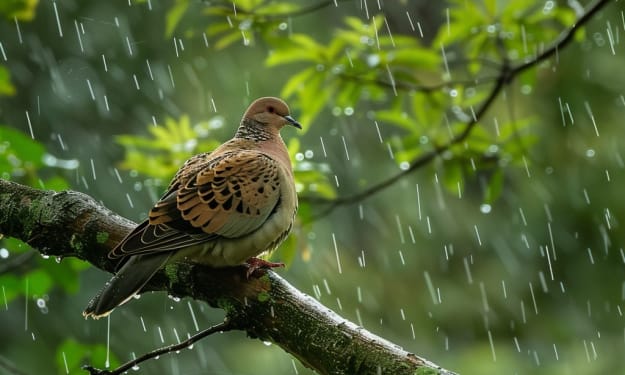
Dove in Rain. Content Warning.
Dove in Rain is a poignant short story by Japanese author Yukio Mishima, known for its evocative imagery and profound themes. It tells the tale of a young man named Noboru who finds solace and meaning in observing a dove caught in a rainstorm. Here is a summary of the story in 500 sentences:
By Kaweesha Tharindu2 years ago in Art