General
A Modern African Tarot
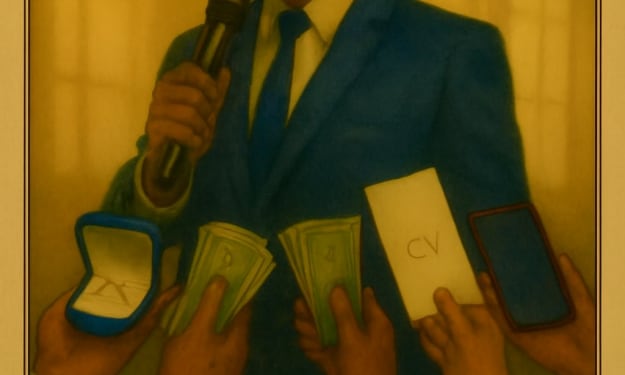
The sixth card in A Modern African Tarot shifts the journey from personal authority to public influence. Where IV EMPEROR represents legacy and leadership, V PASTOR explores spiritual power in the modern age—how faith, charisma, and community converge in one figure. This card reimagines the traditional Hierophant through the lens of African religious life, media visibility, and social aspiration.
By Vongani Bandi10 months ago in Art
A Modern African Tarot
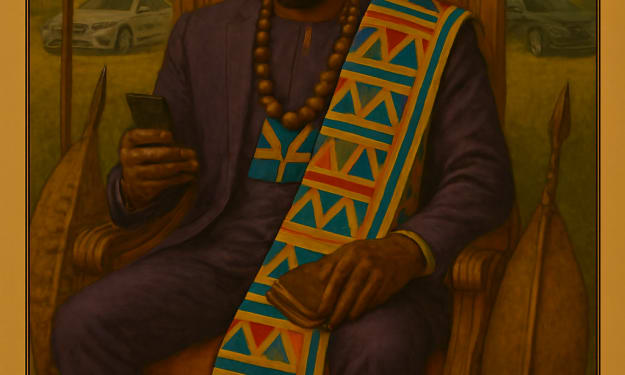
The fifth card in A Modern African Tarot marks a shift from nurturing abundance to establishing structure. Where III EMPRESS celebrates creation and communal prosperity, IV EMPEROR introduces order, protection, and legacy. He is the archetype of leadership—reimagined here through African heritage, modern influence, and ancestral responsibility.
By Vongani Bandi10 months ago in Art
A Modern African Tarot
The fourth card in A Modern African Tarot shifts the journey from introspection to embodiment. Where O FOOL begins the walk, I MAGICIAN channels intention, and II HIGH PRIESTESS guards sacred insight, III EMPRESS celebrates manifestation. She is the archetype of fertility, creativity, and prosperity—reimagined here through the lens of African womanhood, economic power, and communal abundance.
By Vongani Bandi10 months ago in Art
Space Between the Brushstrokes
I used to believe that real artists were always working. Every photo I saw online showed someone painting late into the night, hands stained with color, eyes burning with passion. Sketchbooks were always open. Canvases were always half-finished. The message was clear: if you weren’t constantly creating, you were falling behind. So I worked without stopping. I painted in the mornings before work, late at night after dinner, and on weekends when my friends went out. I filled canvas after canvas, but none of them felt finished. Each piece looked rushed, like it was trying to escape the room before I was ready to let it go. Still, I kept going. I told myself that exhaustion was part of the process. That doubt meant I was growing. That real artists pushed through. Until one evening, my brush slipped from my hand and hit the floor. It wasn’t dramatic. No breakdown. No tears. Just a soft clatter against the wood. I stared at it longer than I should have, then sat down on the floor beside it. I didn’t pick it up. The room was quiet. No music. No ticking clock. Just me and a half-painted canvas leaning against the wall. For the first time in months, I wasn’t thinking about what came next. I was empty. The next day, I didn’t paint. Or the next. Days turned into a week. Then two. At first, I felt guilty—like I was betraying some invisible rulebook of creativity. But slowly, something unexpected happened. I started noticing things again. The way light rested on the edge of my coffee cup. The uneven crack in the sidewalk outside my apartment. The sound of my neighbor laughing through the thin walls. Small things. Quiet things. I began carrying a notebook, not to sketch, but to write down what I saw. No pressure. No intention to turn it into art. Just noticing. One afternoon, I visited a small gallery downtown. It wasn’t famous. No long lines. No placards filled with complicated language. Just a few rooms with paintings that felt honest. One piece stopped me completely. It was simple: a large canvas with wide, calm strokes of blue and gray. No sharp edges. No obvious subject. Just space. I stood there for a long time. It didn’t demand anything from me. It didn’t explain itself. It just existed. And suddenly, I understood something I had been missing. Art doesn’t live only in the act of creating. It also lives in the space around it—the pauses, the silence, the moments where nothing happens. When I returned home, I didn’t rush to my paints. I cleaned my workspace instead. I washed my brushes carefully, one by one. I stacked old canvases against the wall. I opened a window and let fresh air move through the room. A few days later, I picked up my brush again. This time, I moved slower. I didn’t aim to finish anything. I didn’t think about how it would look online or whether it was “good enough.” I focused on each stroke as it happened. Where it began. Where it ended. How much pressure I used. When I felt tired, I stopped. No guilt. No pushing. The painting took weeks. Maybe longer. I lost track of time, not because I was forcing myself to work, but because I wasn’t watching the clock anymore. When it was done, I didn’t feel relief or pride the way I used to. I felt calm. The piece wasn’t perfect. But it felt honest. Like it had room to breathe. I learned something important during that quiet season: creativity isn’t a race. It’s a conversation. And sometimes, the most meaningful part of that conversation is listening. Now, when I see artists online working through the night, I don’t compare myself anymore. I know that behind every finished piece is a thousand unseen pauses. Moments where the brush rested. Where the artist stepped back. Where nothing happened—and everything changed. The space between brushstrokes matters. That’s where the art learns how to speak.
By Jhon smith10 months ago in Art
When the Work Looks Back
Artists like to believe we are the ones doing the looking. We stand before blank canvases, empty pages, untouched clay, glowing screens—deciding where meaning should begin, convincing ourselves that intention alone is enough. We call ourselves observers, architects, originators. We talk about vision as if it arrives fully formed, waiting patiently for our hands to catch up. But anyone who has created long enough knows the truth we rarely say out loud. The work watches back. I learned this in a room with unforgiving lighting and a desk rescued from a sidewalk. The kind of space no one dares call a studio until something good has happened there. The walls were bare except for old tape marks, ghosts of ideas long removed. My supplies were a mismatched congregation—frayed brushes, half-dried paint, a sketchbook warped by coffee spills and impatience. Nothing about the room looked serious. And yet, I treated it like a chapel. Each evening, I sat down with the promise that tonight would be different. Tonight I would make something honest. Something worthy. Something that justified the time I kept stealing from sleep and certainty. Most nights, I failed. I stared too long. I planned too carefully. I chased refinement like it was proof of legitimacy. I smoothed edges that didn’t need smoothing, corrected instincts before they had time to speak. The work stalled in that familiar, suffocating space between idea and execution—alive enough to haunt me, unfinished enough to accuse me. The blank space didn’t feel empty. It felt patient. One night, after a day spent performing competence for other people, I sat down exhausted. Not inspired. Not hopeful. Just tired of pretending I knew what I was doing. So I did something reckless. I stopped trying to be good. I grabbed the wrong brush without apologizing to myself. I mixed colors without testing them first. I let lines wobble and textures clump. I worked quickly, almost carelessly, as if the piece might disappear if I hesitated too long. There was no time for cleverness. No room for borrowed styles or intellectual justifications. And somewhere in that unpolished momentum, the room changed. Not dramatically. Not mystically. Just enough. It was the subtle shift you feel when silence thickens. When attention sharpens. When something that was once inert begins to feel aware. The work watched. Not with judgment—but with expectation. Art does that. Once you commit, truly commit, it demands honesty the way a mirror demands your face. You can decorate it for a while—dress it in technique, hide behind references, borrow voices that feel safer than your own—but eventually it asks the question every artist learns to fear: Is this actually you? I realized how many pieces I had abandoned not because they were bad, but because they were too revealing. Because they told the truth faster than I was ready to hear it. Because they exposed the parts of me I preferred to keep abstract. Art doesn’t just express us. It excavates us. It pulls up old grief and quiet hope and unresolved longing, all tangled together. It reveals patterns we didn’t consciously choose—recurring shapes, familiar themes, the same emotional weather appearing again and again like a signature we didn’t know we were signing. The watching is mutual. As we work, the piece remembers us. Our hesitation. Our impatience. Our courage when it finally arrives. It becomes an archive of who we were brave enough to be in that moment. That night, I didn’t finish the piece. But I didn’t abandon it either. I left it open. Breathing. Unresolved. For the first time, that felt like success. In the days that followed, something shifted—not just in my work, but in me. I stopped apologizing before showing my art. Stopped explaining what it was meant to be, as if intention mattered more than presence. I allowed pieces to exist without defense, imperfect and quietly defiant. I began to understand something essential. Art does not ask us to be fearless. It asks us to be present. To sit with discomfort without immediately fixing it. To keep working while the piece stares back and reflects something we don’t fully recognize yet. To trust that uncertainty is not a flaw in the process, but the process itself. The blank page is not empty. The canvas is not silent. The studio is not neutral. They are waiting. They have always been waiting. So if you sit down tonight and feel watched—good. It means you’ve stopped hiding. It means you’re close. It means the work has begun. Create anyway. Let your hands move before your doubts. Let the piece see you. Because the moment it does, you finally see yourself too.
By LUNA EDITH10 months ago in Art
Lee Levi: The Elegant Force Redefining Global Talent
In the ever-evolving world of entertainment and fashion, Lee Levi stands out as a captivating force whose talent and charisma have taken her far beyond her Scandinavian roots. With an impressive blend of acting prowess, global brand partnerships, and ambassador roles, she represents a new era of boundary-breaking talent—effortlessly blending artistic depth with high-end style and influence.
By Nadeem Mirani11 months ago in Art
Money For Nothing
Introduction This morning I woke to an unexpected nice surprise. Vocal are still ignoring my main account problem, where I have not been able to post since the 23rd of November, and while admitting that there is an issue, they have not followed it up since their reply last Friday. This smacks of incompetence or spite, and I don't know what it is. I will keep badgering them , but this piece is about my AI Art and Photograph shares on Pixabay that you can find here:
By Mike Singleton 💜 Mikeydred - EBA11 months ago in Art