Fine Art
Harry Potter’ HBO Series Confirms Casting for Dumbledore, Snape, McGonagall, Hagrid and More Hogwarts Staffers . AI-Generated.
HBO's highly anticipated "Harry Potter" television series has officially announced its cast for several iconic Hogwarts staff members, signaling a fresh yet faithful adaptation of J.K. Rowling's beloved novels. The series, which is scheduled to premiere on Max in 2026, aims to provide fans with a more complete portrayal of the original books by delving deeper into the wizarding world. A Stellar Lineup of Hogwarts Faculty Leading the cast is Emmy and Tony Award-winning actor John Lithgow, who will portray the wise and enigmatic headmaster, Albus Dumbledore. Lithgow's extensive career spans theater, film, and television, with notable roles in "The Crown" and "Dexter." Joining him is Janet McTeer as Professor Minerva McGonagall, the stern yet compassionate Transfiguration teacher and Deputy Headmistress. McTeer, an Oscar-nominated actress, is known for her performances in "Ozark" and "Jessica Jones." Severus Snape, the complex Potions Master with an enigmatic past, has been cast as Paapa Essiedu. His roles in "I May Destroy You" and "Gangs of London" have won him a BAFTA nomination. Rubeus Hagrid, Hogwarts' lovable half-giant and Keeper of Keys and Grounds, will be played by Nick Frost. Frost is best known for his work in the "Cornetto Trilogy," including "Shaun of the Dead" and "Hot Fuzz." Luke Thallon, who plays Professor Quirinus Quirrell, and Paul Whitehouse, who plays the irritable caretaker Argus Filch, round out the cast. Behind the Scenes: The Work of Creative Minds The series is helmed by showrunner and executive producer Francesca Gardiner, known for her work on "Succession" and "His Dark Materials." Additionally from "Succession," Mark Mylod will serve as an executive producer and direct several episodes. J.K. Rowling returns as an executive producer, ensuring the adaptation remains true to her original vision. Each season of the series will correspond to one of the seven books, allowing for a detailed exploration of the storylines and characters. Filming is scheduled to begin in summer 2025 at Warner Bros. Studios Leavesden, the original filming location for the Harry Potter films.
By Ekramul Hassanabout a year ago in Art
101+ Funny and Positive Monday Memes for Work to Start Your Week Right . AI-Generated.
Introduction to Monday Memes Why Mondays Need Memes Let’s face it—Mondays are like the alarm clock of the week: necessary but universally disliked. After two sweet days of weekend bliss, diving back into emails, meetings, and adulting can feel downright cruel. That’s exactly where memes come in. Monday memes are not just digital chuckles; they’re emotional lifesavers. They remind us we’re not alone in dreading the weekly reset. Whether you're dragging yourself out of bed, dodging responsibilities, or pretending to smile through a team meeting, there’s a meme that gets you.
By Shemul Rayabout a year ago in Art
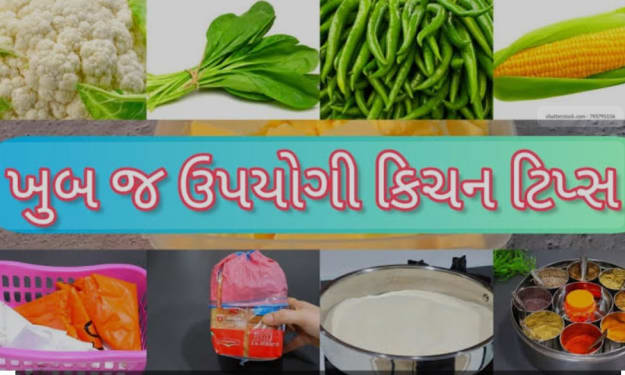
20 Kitchen Tips That Will Come in handy in the kitchen every day, Cooking Tips You Never Knew
20 Kitchen Tips That Will Come in handy in the kitchen every day, Cooking Tips You Never Knew . Housewives primarily focus on preparing meals for their families. They cook food for the whole family. But many times, even after working hard, if the cooking does not taste good, then there is no need to worry. Because we have brought 20 easy cooking tips for you that will help you a lot in making delicious food.
By KETAN J HARANIYAabout a year ago in Art
Ghibli Style Art
Studio Ghibli's dreamlike, whimsical, and deeply felt animation style has captivated audiences for decades. Movies like Spirited Away, My Neighbor Totoro, and Howl’s Moving Castle showcase a unique blend of hand-drawn artistry, fantastical storytelling, and cultural depth that have defined the Ghibli aesthetic. Today, that once time-consuming style can be recreated in seconds with artificial intelligence. However, how did we arrive at this point, and what does it mean for art?
By EktearUddin Saymonabout a year ago in Art
Iconic Rings in Pop Culture: How Jewelry Became a Symbol of Fame and Identity
Rings aren't just jewelry—they’re potent symbols representing identity, status, and storytelling in popular culture. For decades, men’s rings, in particular, have transcended simple adornment, evolving into powerful cultural artifacts associated with legendary musicians, iconic actors, and unforgettable fictional characters.
By zeeshan asif shahzadabout a year ago in Art
Understanding KYC: Your Guide to Identity Verification in the Digital Age
🔹 Role: Why is Identity Verification Important? In today’s digital age, whether you're opening a bank account, investing online, or applying for a loan – one term you’ll often come across is KYC (Know Your Customer).
By Akshay Lingwalabout a year ago in Art
Top 10 Best Makeup Artists in Jaipur for a Stunning Bridal Look
Every bride dreams of looking absolutely flawless on her big day, and finding the best makeup artist in Jaipur is a crucial step in turning that dream into reality. With Jaipur being a hub for destination weddings and traditional royal charm, the city is home to some of the most talented and sought-after makeup artists in the country. Whether you're planning a royal wedding or a simple, elegant affair, the right makeup artist can make all the difference in how confident and beautiful you feel on your special day.
By shaadi dukaanabout a year ago in Art
"The Journey of Pakistan"
The history of Pakistan is a profound tale of civilization, conquest, culture, and resilience. Its land is one of the oldest continually inhabited regions in the world, with archaeological sites dating back to the dawn of human settlement. This historical narrative traces Pakistan's journey from the ancient Indus Valley Civilization to the modern Islamic republic it is today, a story enriched with thousands of years of transformation, diversity, and struggle. Chapter 1: The Dawn of Civilization – Indus Valley (c. 7000 BCE – 1900 BCE) The story begins in the fertile plains of the Indus River, where one of the world’s earliest urban civilizations emerged—the Indus Valley Civilization. Flourishing around 2600 BCE, this society boasted advanced architecture, urban planning, and trade systems. Cities like Mohenjo-Daro and Harappa showcased sophisticated drainage systems, granaries, and standardized weights and measures. The people engaged in agriculture, metallurgy, and trade with Mesopotamia. Despite its brilliance, the civilization mysteriously declined around 1900 BCE, possibly due to climate change or invasions. Chapter 2: Aryan Influx and Vedic Culture (c. 1500 BCE – 600 BCE) After the fall of the Indus Valley Civilization, Indo-Aryan tribes migrated into the region. This period witnessed the composition of the Vedas, ancient Hindu scriptures. The socio-religious practices of the Aryans laid the foundation of Hinduism. During this time, the caste system began to take root. The region that is now Pakistan saw the development of early kingdoms and the spread of Sanskrit culture, especially in Punjab and Sindh. Chapter 3: The Rise of Empires – Achaemenids to Alexander (c. 600 BCE – 326 BCE) In the 6th century BCE, the Achaemenid Empire of Persia extended its rule into the northwest of the Indian subcontinent, including parts of modern-day Pakistan. Under Persian rule, the region became an important satrapy and was introduced to Zoroastrian culture. In 326 BCE, Alexander the Great invaded the region, crossing the Indus River and defeating local rulers like King Porus. Alexander’s invasion left a legacy of Hellenistic influence in the northwest, although it was short-lived. Chapter 4: Maurya and Gupta Empires (321 BCE – 550 CE) Following Alexander’s departure, the Mauryan Empire under Chandragupta Maurya and later Ashoka brought Buddhism and centralized rule to the region. Ashoka’s inscriptions in Mansehra and other areas of Pakistan reflect the spread of Buddhist philosophy. Later, the Gupta Empire, known for its Hindu revival, maintained influence over parts of the region, though with less direct control in the western parts. Chapter 5: Buddhist Flourishing and Gandhara Civilization (1st Century BCE – 5th Century CE) One of the most glorious chapters in the region’s history was the Gandhara Civilization. Centered in present-day Khyber Pakhtunkhwa, it was a hub of Greco-Buddhist art and learning. The city of Taxila became a renowned center of education. Gandhara art combined Hellenistic and Buddhist influences, producing iconic sculptures of the Buddha. This period also marked extensive Buddhist missionary activity that reached Central Asia and beyond. Chapter 6: The Arrival of Islam (8th Century CE – 11th Century CE) In 711 CE, Muhammad bin Qasim, a young general from the Umayyad Caliphate, conquered Sindh, introducing Islam to the Indian subcontinent. This marked the beginning of a new era. The people of Sindh, particularly the lower classes, were drawn to Islam’s egalitarian message. Muslim settlements began to flourish, laying the foundations of Islamic culture in South Asia. Chapter 7: Delhi Sultanate and Regional Muslim Rule (1206 – 1526) After a period of regional kingdoms and Ghaznavid influence, the Delhi Sultanate emerged as a dominant Muslim power in India. Although the heart of the Sultanate was in Delhi, its influence reached parts of Punjab. During this time, Islamic architecture, education, and governance systems spread. Sufi saints such as Data Ganj Bakhsh in Lahore played a crucial role in spreading Islam among the masses. Chapter 8: The Mughal Empire – A Golden Age (1526 – 1707) The Mughal Empire, founded by Babur, brought unprecedented prosperity, culture, and administrative organization to the subcontinent. Cities like Lahore flourished under the Mughals, particularly during the reign of Akbar, Jahangir, and Shah Jahan. Mughal architecture, including the Badshahi Mosque and Shalimar Gardens, became symbols of cultural richness. Urdu emerged as a lingua franca, blending Persian, Arabic, and local dialects. Chapter 9: Decline of Mughal Power and Rise of Regional Powers (1707 – 1857) Following Aurangzeb’s death, the Mughal Empire weakened, leading to the rise of regional powers like the Sikh Empire in Punjab. Ranjit Singh established a strong kingdom in Lahore, controlling much of present-day Pakistan. Meanwhile, British colonial interest in the subcontinent was growing, leading to increased political and military interventions. Chapter 10: British Colonial Period (1857 – 1947) After the failed War of Independence in 1857, the British formally established control over India, including the territories of modern-day Pakistan. The colonial period saw the introduction of Western education, railways, and new political institutions. However, it also brought exploitation and socio-economic changes that disrupted traditional structures. Muslim reformers like Sir Syed Ahmed Khan advocated for modern education and political awareness among Muslims. Chapter 11: The Pakistan Movement (1906 – 1947) The early 20th century witnessed the rise of Muslim political consciousness. The All India Muslim League was formed in 1906 to safeguard Muslim interests. Under the leadership of Muhammad Ali Jinnah, the demand for a separate Muslim homeland gained momentum. The Two-Nation Theory posited that Muslims and Hindus were distinct nations. After intense political negotiations, civil disobedience, and communal strife, Pakistan was created on August 14, 1947. Chapter 12: Early Years of Independence (1947 – 1958) Pakistan’s early years were marked by immense challenges: partition violence, refugee crises, and administrative hurdles. The country adopted its first constitution in 1956, declaring itself an Islamic republic. However, political instability and power struggles led to the imposition of martial law in 1958 under General Ayub Khan. Chapter 13: Military Rule and Political Shifts (1958 – 1971) Ayub Khan’s regime brought industrial growth but also increased inequality. Political unrest grew, leading to his resignation. In 1971, political tensions between East and West Pakistan culminated in the secession of East Pakistan and the birth of Bangladesh. This was a painful moment in Pakistan’s history. Chapter 14: Democratic Struggles and Zia Era (1971 – 1988) Zulfikar Ali Bhutto introduced a new constitution in 1973 and nationalized key industries. His rule ended with a military coup by General Zia-ul-Haq in 1977. Zia’s era saw the Islamization of laws and a strategic alliance with the United States during the Soviet-Afghan War. This period had long-term impacts on Pakistan’s society and politics. Chapter 15: Return to Democracy and Instability (1988 – 1999) After Zia’s death, democratic governments led by Benazir Bhutto and Nawaz Sharif alternated in power. However, political instability, corruption, and economic issues persisted. In 1999, General Pervez Musharraf seized power in another military coup. Chapter 16: Modern Era – Challenges and Progress (2000 – Present) Musharraf’s rule saw economic growth and liberal reforms but also growing extremism and political unrest. Democratic rule resumed in 2008. Pakistan continues to face complex challenges: terrorism, economic crises, climate change, and political instability. Despite this, it has also seen technological growth, youth activism, and a vibrant media landscape. Conclusion Pakistan’s history is a tapestry of civilizations, conquests, and cultural fusion. From the ancient Indus cities to modern metropolises, from spiritual mysticism to scientific pursuit, Pakistan embodies resilience and evolution. Understanding this deep history allows us to appreciate the struggles and achievements that have shaped this remarkable nation.
By Muhammad Huzaifaabout a year ago in Art
Lips on the Wall, Thoughts in the Air
"The Lips on the Wall: A Visual Dialogue of Color, Culture, and Connection" "While walking through a quiet lane one evening, I came across this stunning mural. It stopped me in my tracks. There was something hauntingly beautiful about it — and it made me reflect on how art often speaks louder than words. That moment inspired this article."
By ARYAN MAURYAabout a year ago in Art