Fine Art
iZotope Neutron 4 Mixing Plug-in Suite "Download" . Content Warning.
Neutron 4: Your Sonic Command Center - iZotope's Mixing Mastery Unleashed Embark on a transformative mixing journey with iZotope's Neutron 4 Mixing Plug-in Suite, the epitome of precision and innovation in audio production. This comprehensive suite is meticulously designed to empower musicians, producers, and engineers with a suite of cutting-edge tools that redefine the art of mixing.
By Extra Plugins3 years ago in Art
Abstract Arts
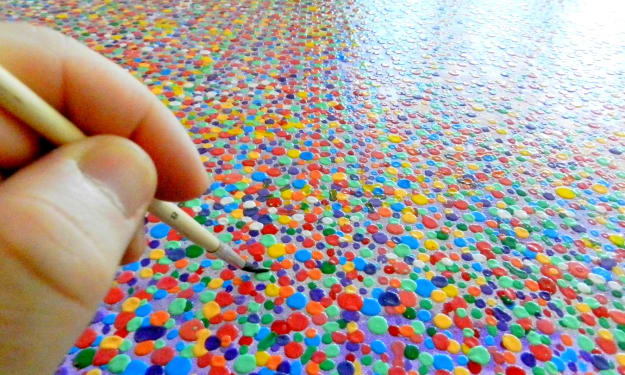
This is another painting. There are red, blue, orange colors and the art is beautiful and lovely. Abstract arts are the arts which are created from different kinds of colors and paints. The way of creating it is first of all we should paint the art and after that we can use the digital photo editor to liquify them and use them according to our arts. We can learn and create them. When we will use different kinds of colors in a painting then that art will become beautiful and lovely like as before. This kinds of arts are used from ancient time and in a present time also these arts has it's own values. When we will look at them our eyes enters in a river and a world of colors. Where it always calls for us. We can't blink our eyes when we will see them. They are a creation of an artist like as me. There are also different kinds of arts.
By Binod Dawadi3 years ago in Art
Carnation and Daffodil Tattoo
In the world of ink and art, tattoos are not merely designs etched onto the skin; they are tales woven in pigment, narrating stories of love, friendship, and shared journeys. Among the myriad choices, the Carnation and Daffodil birth flower tattoo stands out as a symbol of profound connections and everlasting bonds.
By Korai Birth Flowers3 years ago in Art
“The Great Wave off Kanagawa”
"The Great Wave off Kanagawa," also known as "The Great Wave," is a famous woodblock print by the Japanese artist Katsushika Hokusai. Created during the Edo period in the early 19th century, it is Hokusai's most famous work and one of the most recognizable works of Japanese art in the world. This print is part of Hokusai's series "Thirty-Six Views of Mount Fuji," which focuses on various depictions of Japan's iconic mountain.
By RAMESHKUMAR S3 years ago in Art
How to draw and why ?
I started to draw when I was in my late 30s. I didn't go to art school; I just bought a couple of instructional books, and I started out. It was kind of a disaster; the first drawing I did was pretty bad, so was the second. It seemed like I just had no ability to draw at all, and I almost gave up. Maybe this has happened to you, and you're despairing of ever getting any good at drawing. Let me give you some reassurance and some tips. You can learn to draw. I know this because I learned to draw, and because I've also taught tens of thousands of other people to draw. It's a basic skill, like tying your shoe or throwing a ball or driving a car. When you first learned to drive a car, you were probably pretty bad at it. Maybe you learned from your dad in the supermarket parking lot, sweating, gripping the steering wheel, a nightmare. Look at you today – you can drive any car anywhere, you're relaxed, confident, it feels completely natural. You're a driver, and the same can be true of drawing. Let's start with motivation. Why do you want to draw? Maybe just because you always wanted to, or maybe you have an end goal in mind – to do drawings of your dog to hang in the dining room. But there's a deeper reason for learning to draw. It can help you be more engaged with the world around you, help you see beauty you might have missed, express how you feel about life. Drawing can reduce stress, help you feel happy, be more creative, solve problems better. There are just so many benefits to drawing, maybe even as many benefits as learning to drive. But at first, you can't see all that because you're struggling with some basic technical skills, and you're not happy with the results, which can lead to self-sabotage. Telling yourself your drawings have to look perfect, just like photos. Anything less just proves that you suck, you have no talent, you're wasting your time. It's like you just took up jogging and you're beating yourself up because you can't win an Olympic marathon. Art can make us put insane pressure on ourselves, and we don't have to. To succeed at drawing, you just have to draw a lot. You can draw badly, and that's fine. Just keep at it because all this drawing is going to do something magical to your body. It's going to reconfigure your neuromuscular network. You're going to make changes to how your brain handles all that data that's coming in through your eyeballs and sends signals to your arm, hands, and fingers. As you develop these connections, your drawings will become more natural and intuitive, just like driving a car. It'll become more expressive of you as a unique person. That's how your style will emerge. How do you make neurons grow? By building a habit. That doesn't mean you have to practice slogging away at boring drawing exercises for hours every day. Instead, find ways of incorporating drawing into your everyday life. Get a sketchbook and carry it around with you everywhere. Draw all the things in your life – your coffee cup, your sandwich, your napping dog, just ordinary everyday stuff. Now you might be saying, 'I don't know how to draw a napping dog or a sandwich for that matter.' And also, why do I want drawings of coffee cups? Stick with me; there are a couple of reasons to do this. First, learning to draw is mainly a matter of drawing a lot to grow neurons. There aren't magic tricks and shortcuts, no matter what certain YouTube videos might promise you. But you can do it. Second, you'll learn by making mistakes. Every drawing is just a series of challenges and problems that you work through. Third, believe that you can get there, and you will. You don't need talent; you just need to keep making drawings – even bad ones, even bad ones of tuna sandwiches. Speaking of one of the many things that beginners struggle with is subject matter because when we look at what professional artists make art about, we figure those are the things that we're supposed to make art about too. Portraits, landscapes, still lifes of bowls of fruit, and we assume that there are special skills and tools that you need for doing each of these sorts of drawings. We just need to take step-by-step lessons in how to draw portraits of fruit. Here's a more effective approach – learn to draw everything. Draw the stuff in your life. Just carry your sketchbook with you, and whenever you have a spare moment, pull it out and draw anything that's nearby. Keep things relevant and interesting to you, and that way you'll keep doing it. Waiting for a bus? Draw a trash can or the lamppost. Sitting in a waiting room? Draw a stack of magazines, a potted plant, the receptionist's shoes. It really doesn't matter. The more kinds of things you draw, the more confident you'll feel that you can draw anything because the secret is you draw it all pretty much the same way. Drawing is basically a universal skill set – lines, angles, curves. It's this rich language that can be used to say anything. It's like a skeleton key that will unlock any subject, and you learn it by slowing down, by looking intelligently, and by translating what you're seeing into lines. There are so many benefits to carrying a sketchbook with you everywhere. You're learning to draw, building neurons, making a record of your life. You're living your life more intensely because as you look intensely, you're also recording those observations into your brain. You're creating much more vivid experiences and memories. And when you slow down to draw, you're doing the same thing that you do when you meditate or do yoga or pray – you're focusing your mind, you're quieting all these other voices in your head, and you're experiencing things more intensely. Imagine if you could summon up memories from your last vacation that were like 3D immersive virtual reality recordings that include everything that you experienced in detail. Well, you will if you keep drawing. Alright, let's talk supplies. All you really need to begin this process is a basic sketchbook and a pen. Make sure your sketchbook is inexpensive enough that you won't be precious about using it – it's just paper. But also make sure it's a decent quality so you aren't frustrated by your lines showing through to the next page. Pick the right size; make sure it fits into your bag or your pocket. It's going to be your constant companion for the next few months. It should fit you. Any pen is going to do, but you might prefer one made especially for drawing. They're not expensive, and they're made to flow and keep their line consistent. Remember, there's no magic pen, though there are magic markers. Just try them out and work your way through lots of them. And why a pen, you ask? Why not a pencil with a big juicy eraser? Because you want to think about making lines, not erasing them. Commit to what you're seeing, and a pen helps you to do that. Lose the training wheels; be brave. You may be resisting this, but trust me. I've taught thousands of people to draw with a pen, and they always end up thanking me for not letting them use a pencil. Okay, get started. Draw when you're watching TV, draw while you're sitting in bed, draw instead of looking at your phone. In time, you can think about how to shade, draw in perspective, and capture a likeness. None of those things really matter now. What counts is starting the adventure and building your confidence. While you do this, please be good to yourself. Don't beat yourself up; focus on making drawing a part of your everyday life. That will be success, and it's going to be awesome. I can't wait to see where it takes you. Have fun!
By Halem Kotb3 years ago in Art
"Whispers of the Moors". Content Warning.
Title: "Whispers of the Moors" The moors, with their vast expanse of heather-covered hills and hidden hollows, held secrets as ancient as time itself. Nestled within their undulating contours was a village called Dunbridge, a place where tradition and folklore intermingled with the everyday lives of its inhabitants. In the heart of Dunbridge stood a centuries-old manor, imposing and enigmatic, known as Moorcroft Manor.
By Kuldeep Rajawat3 years ago in Art
Buy Absentee Owners List
In today's fast-paced and competitive business landscape, having access to accurate and targeted data is crucial for success. Whether you are a small startup or a well-established enterprise, harnessing the power of data can significantly impact your marketing and sales efforts. Enter ListAbility, your trusted partner in data solutions, offering a comprehensive suite of services to propel your business forward.
By Mohammad Rizwan3 years ago in Art
Wildlife Tour Operators in India: An In-Depth Look
Introduction: India, with its diverse landscapes and rich biodiversity, offers a haven for wildlife enthusiasts seeking an immersive experience in the heart of nature. Exploring the country's national parks and wildlife sanctuaries requires not just enthusiasm but also the expertise of wildlife tour operators. In this in-depth exploration, we delve into the crucial role these operators play in shaping the wildlife adventure, from meticulous planning to fostering conservation ethics and creating memorable, educational experiences for travelers.
By sophiaros61233 years ago in Art
Custom Logo Cookies for Every Occasion
With Inkedibles, you can customize your cookie preferences to your style. Add some flavor to your celebrations with these delicious Custom Logo Cookies. For any kind of occasion—birthday, wedding, business—Inkedibles can make your ideas come to life in a mouthwatering way.
By The InkEdibles Creator Gallery3 years ago in Art
Rhythms of Resilience
In the heart of Miami, where the vibrant colors of art deco buildings blended with the azure waters of the Atlantic, a city thrived on the pulse of diversity and cultural richness. However, an unexpected storm loomed on the horizon, threatening to disrupt the harmony of this lively metropolis.
By Saadudeen Abdulafees3 years ago in Art