Fiction
Soulmate Sketches: The Psychic Art That Might Reveal Your Future Love
That Quiet Whisper of a Soul You've Yet to Meet Have you ever walked through a crowded place, your gaze drifting across strangers, accompanied by a faint, almost imperceptible feeling that you’re searching for someone? It’s not loneliness. It’s a deeper, intuitive pull—a whisper in your heart that your perfect match is out there, perhaps thinking of you, too.
By Epic Vibesabout a year ago in Art
The Day I Almost Gave Up Writing
How one moment of doubt became the turning point in my creative journey --- I still remember the exact day I almost gave up writing. It was an ordinary Tuesday evening. My room was quiet except for the soft tapping of keys as I worked on an essay I thought was my best piece yet. I poured myself into it, revising and polishing every line until it felt perfect. For three days, I carried that story with me everywhere—in my head while I walked, in my notes while I ate, and even in half-sleep when words still echoed in my mind. When I finally hit publish on Vocal Media, I sat back with a mix of relief and excitement. I imagined people reading it, maybe even leaving encouraging comments. For the first time, I felt like a “real writer.” But then I waited. Hours passed. Then days. The story sat there quietly with no reads, no likes, and no feedback. The silence felt heavier than rejection. I thought, Maybe I’m not good enough. Maybe no one really cares about my words. What’s the point of writing if nobody reads it? For the first time in months, I closed my laptop and told myself I was done. --- The Unexpected Comment A week later, while checking my email, I noticed a notification: “New comment on your story.” I clicked it instantly, my heart racing. The comment was from someone I had never met. They wrote: > “I just want you to know that your story spoke to me. I’m going through something similar, and your words made me feel less alone. Thank you.” I froze. It wasn’t a thousand readers. It wasn’t a viral post. It was just one stranger. But that one comment made me realize something powerful: my words had reached someone. My story had mattered, even if only to one person. And maybe—that was enough. --- Why I Kept Writing That message shifted my perspective. Up until then, I measured success in numbers: views, likes, shares. But the truth is, writing is not about numbers—it’s about connection. Even if a single reader finds comfort, hope, or inspiration in my words, then the effort is worth it. So I went back to writing. This time, I stopped worrying about who would read or how many people would notice. Instead, I focused on honesty. I wrote about childhood memories that shaped me, about moments of failure that taught me resilience, and even about small joys like listening to rain or sharing tea with a friend. And slowly, something began to change. Not only did more people start reading my work, but I also began to enjoy the process more. I no longer wrote for approval—I wrote because I needed to, because my voice mattered, even if it was quiet. --- What I Learned Looking back, that difficult moment taught me lessons that shaped my journey: 1. Success isn’t measured in numbers. A single connection can be more meaningful than a hundred empty likes. 2. Doubt is part of the process. Every writer, no matter how skilled, faces moments when they feel invisible. 3. Vulnerability creates impact. The stories that touched readers most weren’t the polished ones. They were the ones where I was honest about my fears and struggles. 4. Growth takes patience. Nothing happens overnight. Each story is another brick in the path forward. --- Where I Am Now It has been months since that day, and I no longer see myself as someone “trying to write.” I see myself as a writer. I’ve connected with readers across the world, shared experiences with fellow creators, and even earned small rewards for my stories. But more important than any recognition is the courage I found to keep going. Now, whenever I’m tempted to give up, I remember that one stranger who took time to leave a comment. That single reader taught me that words have the power to reach hearts in ways we can’t always see. --- Final Thought The day I almost gave up writing was the day I discovered why I should never stop. Writing isn’t about being perfect. It isn’t about going viral. It’s about telling the truth, one story at a time, and trusting that someone out there needs to hear it. Even if it’s only one person.
By Itz stories about a year ago in Art
AI killed my coding brain but I’m rebuilding it.
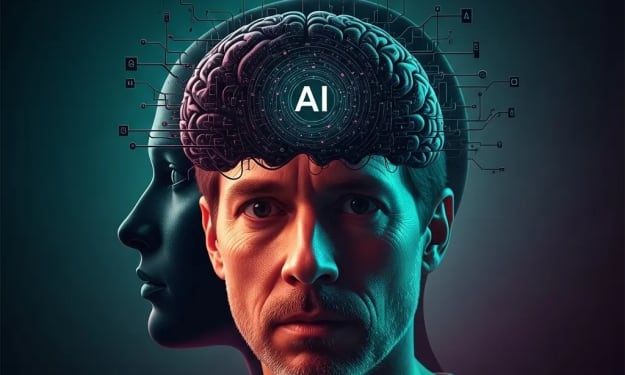
In recent years, artificial intelligence has revolutionized the way we work, learn, and solve problems. In the realm of programming, AI-powered tools like code autocompleters, intelligent debuggers, and even full code generators have made writing software faster and easier than ever. While these tools can be incredibly helpful, there’s a growing number of developers—including myself—who feel that leaning too heavily on AI has dulled their own coding instincts and problem-solving skills. In other words, AI killed my coding brain. But I’m not giving up; I’m rebuilding it.
By Hanifullahabout a year ago in Art
How We Read Ourselves
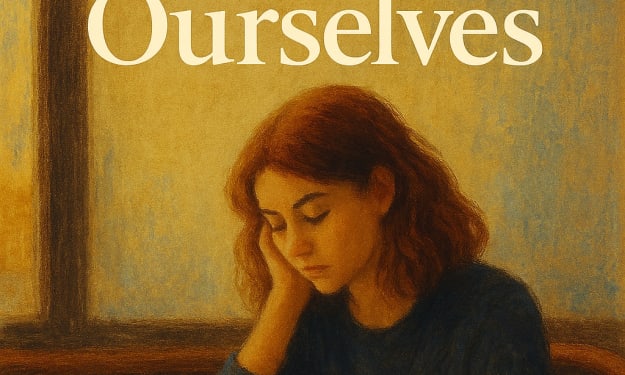
📖 How We Read Ourselves By Haroon In the quiet corner of the café, Marla sat hunched over her notebook, sipping lukewarm espresso and tracing her pen along the creases of the page. The words were hers—at least she believed they were. Her handwriting, curled and deliberate, danced across the paper in a way that felt too poetic to belong to her in real life. She read aloud, softly: "The rain never asked if we wanted its sorrow. It just fell—unapologetic and infinite." It had been a line from a short story she’d written last winter, while grief clung to her skin like a second coat. Back then, her mother had just passed. She’d turned to writing not for healing, but for decoding. Her own feelings were encrypted beneath metaphors and half-rhymes. She wasn’t trying to be a writer. She was trying to be a translator—for her own soul. That’s how Marla began to read herself. We often think that reading is a passive act—a gaze into someone else's world. But when we read what we have written, even if it’s messy or mundane, we discover how we truly sound when we’re not performing for anyone else. We catch ourselves in raw language, in unfiltered emotion, in choices we didn’t know we made. Today, Marla was doing just that. She’d brought with her three notebooks from different points in her life. The blue one from college, when her love life could’ve been a musical if heartbreak came with choreography. The black one from her first job, full of bitterness about cubicles and how the printer always jammed when she needed it most. And the red one—the newest—where thoughts came slower, but carried more weight. She opened a page from the blue notebook: "He said my laugh was beautiful. I believed him, but only until Tuesday." Back then, she read her stories like fiction. Now she read them like evidence. What had she learned about herself from these scattered musings and midnight scribbles? - She loved metaphor because directness frightened her. - Her sadness always borrowed imagery from nature. - She rarely wrote about anger, though she felt it often. - She used humor to undercut vulnerability. - She always wrote in present tense when the memory still hurt. Each discovery chipped away at the hardened facade she’d built around herself. She wasn't just learning how she wrote—she was learning who she had been in each moment. Nearby, a teenage boy typed away on a laptop. His screen glowed with half-sentences and YouTube tabs. Marla wondered what he’d think of himself five years from now if he reread today’s texts. That was the strange truth: we don’t just write to communicate—we write to timestamp who we are at a precise moment in time. Back in her notebook, she found a list she had written one New Year’s Eve. *"Things I want in the next year: – Peace without numbness – Laughs that don’t feel borrowed – Less apologizing for existing"* At the time, those goals had felt distant, possibly naive. But reading them now, something shifted. She smiled. Because she hadn’t realized she had achieved most of them. Not perfectly. Not neatly. But enough. Enough for progress. We don't always need a mirror to see ourselves—we need our own words. They hold up a lens that is sometimes kinder than memory and sometimes harsher than truth. When we re-read ourselves, we are forced to confront our evolution. And sometimes, the person we used to be is not someone we miss—but someone we feel compassion for. Marla closed her notebooks, paid for her espresso, and walked outside. The sky was a soft gray. Not quite moody, not quite bright. Just… readable. She imagined her future self sitting in another café years from now, thumbing through today’s words. What would she learn? What details would time blur, and what metaphors would remain true? She didn’t know. And that was the beauty of it. Because we are always writing ourselves—even when we aren’t aware of it. Through text messages, social media posts, shopping lists, diary entries, and notes to loved ones. We leave behind a trail of thoughts that one day become stories. And when we choose to read them—not to critique, but to understand—we begin to stitch together the shape of our inner life. So Marla did the only thing that made sense. She opened to a fresh page and wrote, "Today, I didn’t feel brilliant. I just felt human. And maybe that’s enough."Start writing...
By Muhammad Haroonabout a year ago in Art