Fiction
Discovering Connections: A Day with Facebook 2025. AI-Generated.
In the bustling city of 2025, where holographic billboards flickered against the skyline, lived Alex, a young graphic designer who had always felt a bit disconnected from the world. Mornings started with the familiar chime of her phone—Facebook's latest update had made the app feel like a living, breathing companion. "Good morning, Alex," greeted Meta AI, the intelligent assistant now seamlessly integrated into the app. With its enhanced memory feature, it remembered her love for minimalist art and suggested a personalized feed of inspiring posts from friends and creators worldwide.044be5
By Omar Mohammed about a year ago in Art
Discovering TikTok 2025: A World of Creativity. AI-Generated.
In the bustling city of 2025, where screens glowed brighter than ever, lived a young artist named Mia. She had always dreamed of sharing her sketches with the world, but her old social apps felt clunky and uninspiring. One rainy afternoon, Mia downloaded the latest version of TikTok, and her life transformed overnight.
By Omar Mohammed about a year ago in Art
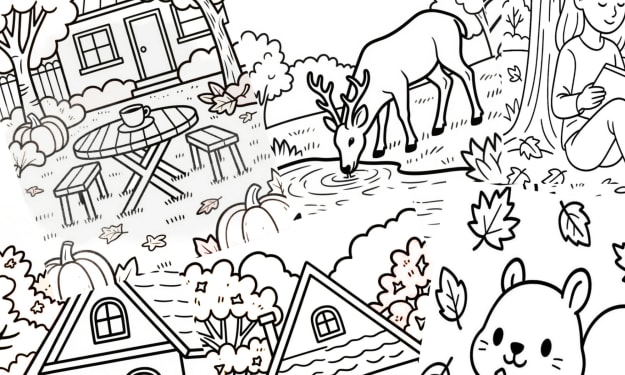
🍂 10 Free Cozy Autumn Houses & Animals Nature Coloring Pages ! 🍂
There’s something enchanting about autumn. The air turns crisp, the leaves paint the world in shades of red, gold, and orange, and cozy evenings suddenly feel like the perfect time to slow down. For many of us, autumn sparks a longing for comfort—warm drinks, soft sweaters, and creative little joys that make the season memorable. One of the simplest and most rewarding activities that captures the spirit of fall is coloring, especially autumn-themed coloring pages.
By The Waiting Treeabout a year ago in Art
The Language of Arts: A World Without Words
The image of a paintbrush and palette above the bold word “ARTS” might seem simple at first glance, yet it speaks volumes about the very essence of human expression. Art, in all its forms, is more than just color on a canvas or melody in the air—it is the heartbeat of culture, a mirror of the soul, and the universal language that binds us together across borders and generations. In a time when the world moves faster than ever, art grounds us. It reminds us of who we are, what we’ve lived through, and what we aspire to become. This picture, bold and unapologetic, is not just about creativity; it’s about survival, identity, and connection. Art as Humanity’s Oldest Voice Before humans learned to write or speak complex languages, we painted on cave walls. The earliest drawings, dating back tens of thousands of years, were not mere decorations but stories—moments captured, beliefs immortalized, and emotions expressed. The picture of “ARTS” captures this timeless truth. Just as the palette holds multiple colors, humanity holds infinite stories. Each stroke of paint, each shape carved into stone, was a way to say, “We are here. We feel. We dream.” Art is our oldest voice, and even today, it remains the most honest one. The Palette of Emotions The brush in the picture points to the truth: art is more than skill—it is emotion. Where words fail, art speaks. A painting can express grief without a single tear drawn. A song can capture joy without ever using the word “happy.” Think of Van Gogh’s swirling skies, Picasso’s fragmented portraits, or a child’s first crayon scribbles. Each one, different in form and style, carries an emotion that resonates with someone, somewhere. Art is deeply personal, yet universally understood. The “Arts” image reminds us that creativity isn’t about perfection—it’s about expression. Just as a palette doesn’t discriminate between colors, true art doesn’t judge. It simply allows emotions to exist. The Power of Connection In a fractured world, art has the power to unite. A street mural in Brazil may inspire someone in Italy. A TikTok dance choreographed in Seoul may be recreated in New York. A novel written in Urdu may move a reader in London. Art doesn’t require translation—it is translation. It takes human experience and shapes it into something anyone can feel. The “Arts” picture with its bold lettering is a declaration: creativity belongs to everyone, not just galleries, critics, or elite spaces. Every sketch in a notebook, every song hummed in the shower, every doodle on the margin of a schoolbook is proof that art is woven into our daily lives. We don’t just consume art—we breathe it. Art as Protest and Power History shows us that art is not only beauty; it is also resistance. Protest posters, revolutionary songs, and political graffiti have shifted societies. Art is often born in silence but speaks louder than armies. From the haunting poetry written in times of war to the vibrant murals painted during civil rights movements, art has always been the voice of the voiceless. It gives power to those who cannot stand on podiums but can wield brushes, pens, and instruments. The “Arts” image represents this strength. The palette is not just for painting—it is a weapon for truth. Each color can expose injustice, ignite revolutions, or heal broken communities. Healing Through Art Science has now confirmed what humans always knew: art heals. Art therapy helps those who cannot articulate pain, while music therapy calms the anxious and uplifts the depressed. Creative practices reduce stress, restore hope, and even improve physical health. A brush dipped in color can become more than paint—it can become medicine. A melody can be more than notes—it can be comfort. When we see the word “ARTS” in bold, it isn’t just an invitation to create—it is a reminder that creativity saves lives. Everyday Artists Too often, people say, “I’m not an artist.” But that’s a myth. To be human is to create. Cooking a meal with care, arranging flowers on a table, designing clothing, even curating an Instagram feed—these are all forms of art. Creativity is not limited to galleries and museums. It lives in our kitchens, streets, schools, and social media feeds. The image with the paintbrush and palette symbolizes that art is accessible. You don’t need expensive tools or training to create. All you need is the courage to express yourself. Why Art Goes Viral On platforms like Vocal Media, art doesn’t just live—it spreads. Viral stories, viral songs, viral paintings—they connect people in ways traditional conversations often cannot. Why? Because they hit the heart. A powerful image or a moving story can cross borders within seconds, uniting strangers under a shared emotion. Viral art doesn’t just entertain—it inspires dialogue, change, and community. The “Arts” picture has that bold, striking simplicity that makes it perfect for going viral: it says so much with so little. The Call of “Arts” When you see the picture, it almost feels like a call to action. The word “ARTS,” painted large and unapologetic, dares you to pick up your own brush, pen, or instrument. It dares you to stop consuming passively and start creating actively. We are all carriers of stories. We are all vessels of creativity. The “Arts” image is a reminder that the world doesn’t need perfect art—it needs your art. Conclusion: A World Painted in Color Imagine a world without art—no paintings, no music, no films, no poetry, no dance. It would be a world without color, without imagination, without soul. The “Arts” image reminds us that creativity is not optional—it is essential. Art is not about fame, or galleries, or recognition. It’s about being alive. It’s about saying, “I was here, and this is how I saw the world.” In every stroke, every lyric, every movement, we leave a mark. Together, these marks create the masterpiece of humanity. So let this image inspire you. Let it remind you that within you lies a palette of infinite colors, waiting to be released. Because at the end of the day, life itself is the greatest canvas, and art is how we paint our story.
By Fazal wahid about a year ago in Art
Shadows and Light
The Beginning In the ancient city of Veyora, stone streets twisted like rivers, and lamps flickered against the night wind. Among its narrow alleys lived a young girl named Arin, who carried both light and darkness within her. Her father was a glassmaker, her mother a storyteller. From her father, she learned how fragile and beautiful life could be, like glass that shone only when touched by light. From her mother, she learned how every story had shadows, for no tale was complete without struggle. But when her parents died during a winter plague, Arin’s world shattered. At only sixteen, she found herself alone, drifting between shadows and light. --- The Weight of Shadows Arin worked in the marketplace, polishing lamps for a few coins. Every day she watched others laugh, trade, and sing, while she carried her grief silently. The city of Veyora itself was full of contrasts—its grand towers glittered with wealth, while its alleys drowned in hunger and despair. Arin often asked herself: Where does light end, and where do shadows begin? Her only comfort was a small lantern her father had made. Its glass was etched with delicate stars. At night, she lit it and whispered to herself, “Light lives, even in darkness.” Yet, she wondered if she truly believed it. --- The Encounter One rainy evening, Arin found a boy huddled beneath an abandoned archway. His clothes were torn, his eyes hollow with hunger. She offered him bread, and he whispered his name: Kaelen. Kaelen was a runaway, fleeing from a cruel master who had treated him like a servant. He carried nothing but scars and bitterness. Where Arin still clung to her small flame of hope, Kaelen trusted only shadows. But that night, when she lit her lantern, Kaelen stared. The gentle glow reflected in his eyes, and for the first time in months, he felt warmth—not from the fire, but from the kindness behind it. That was the beginning of their bond. --- The Journey Together Arin and Kaelen began walking the streets together, helping each other survive. By day, Arin polished lamps while Kaelen fetched water. By night, they sat beneath her lantern, sharing stories. Kaelen often spoke of the cruelty he had endured, and Arin shared memories of her parents. Slowly, the two broken souls became each other’s strength. Yet, Kaelen often said: “Shadows always win, Arin. Light fades too quickly.” And she replied: “But even shadows need light to exist.” --- The Test of Darkness One winter night, the city plunged into chaos. A fire broke out in the northern quarter, and in the panic, thieves looted the marketplace. Arin’s small savings, hidden under her stall, were stolen. Her dream of saving enough money to open a lamp shop was crushed. Kaelen, furious, suggested they steal from the wealthy towers in revenge. “Why should we suffer in the dark while they drown in light?” he growled. Arin hesitated. Shadows pulled at her heart—anger, grief, hopelessness. For the first time, she almost agreed. But when she lit her father’s lantern, the stars etched into the glass reminded her of her mother’s words: Stories are made of shadows and light, but hope is what gives them meaning. She turned to Kaelen. “If we let shadows rule us, then we’ll become what we hate. We must carry light, even when it hurts.” --- The Transformation Instead of stealing, Arin decided to act differently. She began lighting her lantern every night in the city square, not just for herself, but for anyone who needed hope. Slowly, people noticed. Children gathered around her lantern as she told her mother’s old stories. Neighbors, once distant, began to bring candles to light beside hers. Kaelen at first mocked her, but he stayed. And each night, as more lights joined the square, his heart softened. The once-dark marketplace began to glow. Not with wealth, but with shared hope. --- The Triumph of Light Months passed, and Arin’s lantern became a symbol in Veyora. People called her The Keeper of Light. Even in hunger and poverty, the lantern’s glow reminded them that darkness was not the end. Kaelen, too, changed. One night, he whispered, “Maybe shadows don’t always win. Maybe they just need someone stubborn enough to keep lighting the flame.” For the first time, Kaelen lit a lantern himself. His hands trembled, but his eyes shone with quiet courage. Together, Arin and Kaelen opened a small lamp shop—not just to sell lamps, but to teach others how to make them. They gave lanterns to those too poor to afford one, so no home in Veyora would ever be swallowed by darkness again. --- The Legacy Years later, travelers who came to Veyora would hear stories of two orphans who turned a city of shadows into a city of light. The marketplace, once bleak, became known as the Square of Lanterns, where hundreds of small lights glowed every evening. And in the center always burned Arin’s father’s lantern—etched with stars, carrying whispers of the past, yet forever glowing into the future. --- Moral of the Story Shadows and Light teaches us that life is made of both darkness and brightness. Pain, grief, and loss are shadows that shape us, but hope, kindness, and courage are the light that guide us. True strength is not in denying shadows but in choosing to carry light despite them. Even the smallest flame can illuminate the darkest night.
By Noman Khanabout a year ago in Art
Why Choosing a LED Sign Maker in China Can Save Costs Without Compromising Quality
Businesses around the world rely on signage to attract attention and build their brand image. In recent years, LED technology has become the top choice because of its brightness, durability, and energy efficiency. While many countries produce signage, choosing a LED sign maker in China has become a popular decision for companies looking to balance cost and quality. China is a global hub for manufacturing, and when it comes to LED signage, it offers unmatched advantages for businesses of all sizes.
By Devis Colsabout a year ago in Art