Fiction
How Do You Live While Falling Apart
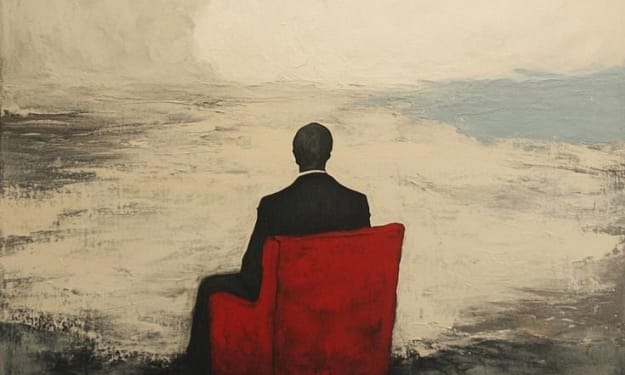
How Do You Live While Falling Apart I wake up every morning inside the same body, yet it doesn’t feel like mine. The mirror greets me with the face of a stranger wearing my features, blinking with my eyes — but he isn’t me. I brush my teeth, tie my shoes, make my coffee — mechanical, precise movements, without life. It’s strange, existing without belonging to yourself. I wait for the day my body will feel like home again, But the days keep passing, and I’m still a guest inside my own skin. There’s a weight that follows me everywhere. Not heavy enough to make me collapse, But just enough to keep me tired all the time. People call it sadness, anxiety, or exhaustion. I call it noise. It whispers behind every thought, interrupts every moment of stillness. I try to drown it with music, with words, with anything that resembles life. But at night, when everything quiets down, Its voice rises. It fills the room, fills the bed. I tell myself I’m fine, That it’s just a phase, that everyone gets lost sometimes. But I know it’s more than that. It’s chaos. Not the loud kind — the quiet kind, Made of small, daily surrenders. You stop replying to messages, You stop explaining yourself, You stop expecting to be understood. And suddenly, you realize you’ve built an entire life out of pretending. I often wonder how people see me: calm, composed, reliable. No one realizes how much effort it takes to keep the mask in place. Inside, I’m negotiating constantly with my thoughts: Don’t say too much. Don’t show weakness. Don’t let them see your hands shake. The rules never end, and the punishment is shame. So I stay silent. I smile when I’m supposed to smile. I nod at the right time. And die a little every time I succeed. Sometimes I wonder: what if I stopped performing? What if I walked into a room and said, “I’m tired. I don’t know who I am anymore”? Would anyone know what to do with that truth, or would they turn away, Waiting for me to go back to the version of me they can handle? I’m afraid my honesty would scare them — And even more afraid that it wouldn’t. There’s a chair in my room that watches me. I know how absurd that sounds, But I can feel its gaze whenever I go quiet. Maybe it’s guilt. Maybe it’s my conscience. Or maybe it’s the version of me that didn’t survive last year. Sometimes I whisper to it at night — softly, shyly — and it listens. I tell it about the dreams I stopped chasing, The people I pushed away, The parts of me that still ache. It never judges. It simply exists. They say healing takes time, But no one tells you that time alone doesn’t heal. It only rearranges the pain. Some days, the ache sits in my chest, On others, it hides in my throat. I’ve learned to live with it, The way one learns to walk with a limp. You adapt, you pretend, And convince yourself the limp is just your style. I think what frightens me most isn’t dying — It’s continuing like this. Waking, performing, living While detached from the script of my own life. I miss the days when I could feel, Even the bad feelings. Now everything is muted, Wrapped in cotton, As if my heart is submerged underwater. Maybe I’ll never go back to who I was. Maybe that’s the point. Maybe I had to lose my old self To learn how to live without illusions. And yet, I still wish I could meet myself again — The version that believed in mornings, That laughed, That didn’t have to pretend to be fine. Tonight, the room is quiet. Nothing but the sound of my breathing. I sit on the bed, Staring at the chair. It stares back. And for a brief, fleeting moment, I wonder if the chair isn’t really watching me — But I am. I am nothing but a shadow of who I once was. The people I trusted — they’ve already forgotten me. My mind betrays me every single day, whispering that happiness is just a lie I keep repeating to myself. Maybe the life I live isn’t even mine anymore. I keep showing up, breathing, moving, yet I’ve been disappearing in plain sight. And maybe, after all this time, I’m the stranger I’ve been running from.
By Ahmed Wagdy12 months ago in Art
The Ca$imuz Art Gallery.
Illustrations of Selena and Willy Chirino I did by Rikki La Rouge Press enter or click to view image in full size The Art gallery i support a free 🇨🇺 Cuba and it is very cultural as well as spiritual. All of the illustrations of famous people that I did here I did it by hand without trying and stuff and I’m proud of the way they came out. All of these are some of my best works also available in a coffee table.
By Revista XCI by Rikki La Rouge 12 months ago in Art
Why Safety Switch Installation Is Essential for Protecting Your Home and Workplace
Electricity is a silent helper—it powers your lights, cools your home, and keeps your workplace running. But the same electricity that makes life easier can also be dangerous. A single fault in wiring or an unnoticed power surge can spark fires, damage equipment, or even cause electric shocks. That’s where a safety switch installation comes in acting as your first line of defense against hidden electrical dangers.
By Ellen Sammyabout a year ago in Art
The Golden Secret of Yellow Bananas. AI-Generated.
In the sleepy village of Greenvale, young Timmy hated fruits. "They're sour and yucky!" he'd whine, tossing apples aside. His grandma, wise old Nana Rose, smiled knowingly. One sunny morning, she handed him a bright yellow banana. "Eat this, Timmy. It's nature's golden treasure." Timmy peeled it suspiciously but took a bite. "Mmm! Sweet!" From that day, he munched yellow bananas daily. Soon, wonders unfolded. First, Timmy's endless sniffles vanished. "Bananas have vitamin C," Nana explained. "They fight colds like superheroes!" Timmy played outside without tissues. Next, during soccer, Timmy sprinted faster than ever. "Potassium in bananas keeps your muscles strong and crampsy," Nana said. No more cramps—Timmy scored the winning goal! At school, Timmy aced math tests. "Bananas boost brain power with vitamin B6," Nana winked. Timmy felt sharp and happy, his mood sunny like the fruit. One evening, Timmy hugged Nana. "Yellow bananas are magic!" Nana laughed. "They're packed with fiber for digestion, antioxidants for health, and energy without crashes. Nature's perfect snack!"
By Omar Mohammed about a year ago in Art
The Orchard's Secret: Red and Green Apples' Gifts. AI-Generated.
In the quaint village of Evergreen, nestled between rolling hills and a sparkling river, lived a curious boy named Alex. One sunny afternoon, Alex wandered into the old orchard owned by Grandma Rose, where rows of apple trees bore fruits in vibrant red and crisp green. "Why do some apples glow red like rubies, while others shine green like emeralds?" Alex asked, plucking one of each. Grandma Rose smiled and handed him a basket. "Let's discover their secrets together, dear. But first, taste them!" Alex bit into the red apple first. Its sweet, juicy flesh burst with flavor, warming his cheeks. "This one makes me feel happy and strong!" he exclaimed. Grandma nodded. "Red apples are packed with antioxidants like quercetin, which protect your heart and boost your immune system. They help lower bad cholesterol and keep your blood sugar steady, giving you energy without the crash." Excited, Alex reached for the green apple. It was tart and refreshing, crunching satisfyingly. "This one's zesty! It wakes me up!" Grandma laughed. "Green apples, like Granny Smith, are rich in fiber and vitamin C. They aid digestion, prevent constipation, and support weight loss by keeping you full longer. Their lower sugar content makes them perfect for steady energy and glowing skin." That evening, as Alex helped Grandma bake pies—one with red apples for sweetness and one with green for tang—they shared the treats with the village. Kids played longer without tiring, elders felt their joints ease, and everyone glowed with health. From then on, Alex visited the orchard daily, alternating between red and green apples. "Balance is the real magic," he told his friends. "Red for heart and joy, green for vitality and freshness!"
By Omar Mohammed about a year ago in Art
The Little Leather Book
Cameron St. Patrick was like no other girl. She was born during the civil rights turbulence of the '60s. The hatred that Cameron witnessed as a child in her mind was commonplace. She remembered hearing stories of how blacks were under attack by whites, jews, and pretty much everyone. When Cameron witnessed violence in her neighborhood, it had no apparent effect on her as she lived a pretty sheltered life. It was just normal behavior on the dead-end street that Cameron grew up.
By PATRICE BISHOP YOUNGabout a year ago in Art
The AI Artist Who Outdid Me
Last week, I was scrolling through social media when something bizarre caught my eye: a digital artwork that looked real. I’m talking about the kind of art that seemed to breathe with emotion, texture, and perspective. The kind that would have easily been created by a human artist, except this one had a twist, at the bottom of the post was a line that read: "Created by AI."
By Sophia Hansonabout a year ago in Art
The House That Listened
When I was a boy, our house always smelled like morning. Not just coffee or toast — but sunlight itself, soft and alive. My mother would hum while she watered the plants near the kitchen window. My father would be outside fixing something that probably didn’t need fixing. And I’d sit by the table, watching the dust dance in the light, feeling like the world was safe and endless.
By Charlotte Cooperabout a year ago in Art
Cried Clay
In a quiet village in southern France, there lived a sculptor named Adrien Marchand. His hands were known across the region for turning lifeless clay into faces that seemed almost ready to breathe. He never married, never had children, and rarely spoke. He lived for his art — and for the one memory that haunted him every day. Long ago, Adrien had been engaged to a woman named Claire. She had been a painter, full of laughter and light. They had planned to open an art studio together, a small space by the river where her colors and his sculptures would live side by side. But life, as it often does, turned differently. Claire fell ill one winter, and within weeks, she was gone. After her death, Adrien stopped sculpting for nearly two years. His hands, once so sure, trembled whenever they touched the clay. He avoided people, living quietly in his stone cottage at the edge of the village. But grief is a strange companion. It doesn’t stay silent forever. One night, unable to sleep, Adrien sat by his wheel again. He began shaping the clay, not thinking, not planning. His hands moved on their own, as though guided by a memory buried deep inside him. Slowly, a face emerged — soft, delicate, unmistakably hers. Claire. Her eyes closed, her lips curved into a faint smile. When he finished, he stared at it for hours. For the first time in years, he spoke aloud. “I tried to forget,” he whispered. “But you never left.” That night, as rain fell softly on the roof, Adrien dreamed of her. She was standing in a field of sunflowers, laughing the way she used to. But when he reached out, she turned to clay and crumbled in his hands. He woke up crying, his heart aching with the strange feeling that she had been close, too close. The next morning, when he entered his studio, he froze. The sculpture’s face was wet — not damp from the rain, but streaked, as though tears had rolled down its cheeks. He touched it. The clay was cool, the tears real. For a long moment, Adrien stood there, unsure if grief had finally broken him. Then, slowly, he smiled. “So even you remember,” he said softly. Days turned into weeks. Adrien continued to sculpt, and every piece he made seemed to hold something human inside it — a pulse, a breath, a trace of sorrow. People from nearby towns came to see his work. They said his statues looked alive, that they carried emotion no one could explain. One woman swore she saw her late husband’s eyes glisten in a bust Adrien had made. But Adrien never sold the first sculpture. He kept it on a table near the window, where the morning light touched its face. Sometimes, he would sit across from it, speaking as if to an old friend. “I know,” he would say. “I’m trying.” One evening, a young apprentice named Luc came to learn from him. Luc was curious and full of questions. He often caught Adrien staring at the sculpture for hours. “Who is she?” Luc finally asked one day. Adrien smiled faintly. “Someone who taught me that clay can cry, and hearts can heal.” Luc never understood what he meant, not fully. But he noticed something strange — whenever Adrien worked with deep feeling, the clay seemed to soften differently, as though listening to him. Years passed. Adrien grew older, his hands slower, but his art more tender. One spring morning, Luc came to the studio and found Adrien sitting quietly at his wheel, eyes closed, a gentle smile on his face. He had passed away in his chair, the sculpture of Claire beside him. When they prepared his things, Luc noticed something new. The sculpture’s eyes — once closed — were slightly open, as if watching over him. And on the table lay a single line written in Adrien’s uneven handwriting. “Art does not end when the artist does. Love shapes what the hands cannot.” The villagers still tell his story. They say that on rainy nights, if you walk past the old studio, you can hear the faint sound of a chisel and the whisper of clay being molded. Some say it’s the wind. Others believe Adrien still works beside her — the clay that once cried now smiling in the moonlight.
By LUNA EDITHabout a year ago in Art