Critique
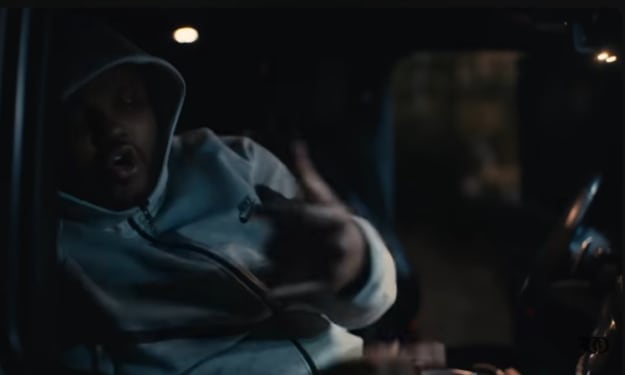
Tee Grizzley – “Robbery 9”: A Gritty Tale of Loyalty, Betrayal, and Street Reality . AI-Generated.
Tee Grizzley – “Robbery 9”: A Gritty Tale of Loyalty, Betrayal, and Street Reality When Tee Grizzley drops a new chapter in his “Robbery” series, listeners know they’re about to hear something cinematic, raw, and unfiltered — and “Robbery 9” is no exception. Released on May 16, 2025 as part of his project Forever My Moment, the track blends gripping storytelling with emotional intensity and hard-hitting rap energy.
By Nivard Anna9 months ago in Art
When Images Refuse Ownership
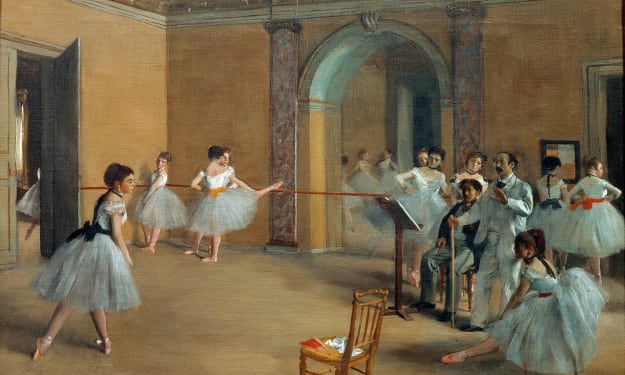
The history of modern art repeatedly demonstrates a stubborn truth: no image can ever be owned absolutely. Forms circulate, poses migrate, gestures recur, and meanings survive only insofar as they continue to work on people. Copyright, originality, and authorship may function as legal or institutional devices, but aesthetically they are always provisional. What ultimately matters is not where an image comes from, but whether it generates a lived response — a mood, a tension, a sense of story. Few contemporary paintings illustrate this more clearly than The Singing Butler (1992) by Jack Vettriano, a work that has become both one of the most reproduced images in Britain and one of the most contested.
By Peter Ayolov9 months ago in Art
Pakistan deploys helicopters, drones to end standoff with Baloch rebels. AI-Generated.
Pakistan Deploys Helicopters, Drones to End Standoff With Baloch Rebels Pakistan’s security forces have intensified operations in Balochistan by deploying helicopters and surveillance drones to break a prolonged standoff with Baloch rebel groups, underscoring the growing complexity of internal security challenges in the country’s largest and most volatile province. The move reflects Islamabad’s determination to restore control while balancing military pressure with political and social sensitivities in a region long marked by unrest.
By Sain Hafiz9 months ago in Art
When health insurance costs more than the mortgage. AI-Generated.
For millions of households, the monthly mortgage payment has long been considered the single biggest expense. Yet an uncomfortable shift is underway: in many families, health insurance premiums now rival—or even exceed—the cost of owning a home. This phenomenon is reshaping personal finances, altering career decisions, and raising urgent questions about the sustainability of modern healthcare systems. A Growing Financial Paradox Traditionally, buying a home symbolized financial stability, while health insurance was a protective safety net—important, but secondary in cost. Today, that balance is breaking down. In several countries, particularly those with privatized or mixed healthcare systems, annual health insurance premiums for a family can easily cross five figures. When deductibles, co-pays, and out-of-pocket maximums are added, total healthcare spending can surpass housing costs. This paradox is especially visible among middle-income families. They earn too much to qualify for subsidies or public assistance, yet not enough to absorb rising premiums without sacrifice. The result is a quiet financial squeeze that rarely makes headlines but affects daily life in profound ways. Why Health Insurance Keeps Getting More Expensive There is no single reason health insurance costs are climbing faster than wages or housing expenses. Instead, several forces are working together. First, healthcare itself is becoming more expensive. Advances in medical technology, specialty drugs, and complex procedures save lives but often come with staggering price tags. Insurance companies pass these costs on to consumers through higher premiums. Second, administrative complexity plays a major role. In systems where multiple insurers, providers, and billing structures coexist, administrative overhead can consume a significant portion of healthcare spending. These inefficiencies ultimately show up in what policyholders pay. Third, risk pooling is weakening. As healthier individuals opt out of comprehensive coverage due to cost, insurance pools become smaller and sicker on average. Insurers then raise premiums to offset the higher risk, pushing even more people away—a cycle that accelerates price increases. The Mortgage Comparison Housing costs, while high, often come with predictability. Fixed-rate mortgages allow homeowners to plan years—or decades—ahead. Health insurance offers no such stability. Premiums can rise annually, benefits can change, and coverage networks can shrink with little warning. In some urban areas, homeowners with older or refinanced mortgages report monthly housing payments lower than their employer-sponsored health insurance premiums. For freelancers or self-employed individuals, the disparity can be even more extreme, with health coverage becoming the single largest line item in their budget. Impact on Work and Life Choices When health insurance costs eclipse mortgage payments, people adjust their lives accordingly. Career mobility suffers as workers stay in jobs primarily for benefits, a phenomenon often called “job lock.” Entrepreneurship becomes riskier, since leaving a traditional employer can mean losing affordable coverage. Family decisions are affected as well. Couples may delay having children, retirees may postpone leaving the workforce, and young adults may stay on parents’ plans as long as possible. Even housing choices can change, with families opting for smaller homes or longer commutes to free up cash for healthcare expenses. The Hidden Costs Beyond Premiums Focusing only on premiums understates the problem. High-deductible plans have become common, meaning insured individuals still pay thousands out of pocket before coverage fully kicks in. As a result, some people delay or avoid medical care altogether, leading to worse health outcomes and higher long-term costs. This dynamic creates a troubling contradiction: people pay more than ever for insurance, yet feel less financially protected when they actually need care. The psychological stress of this uncertainty is an often-overlooked consequence. Who Is Most Affected? While rising health insurance costs touch nearly everyone, certain groups feel the impact more sharply. Small business owners face volatile group rates. Self-employed workers must shoulder the full cost without employer contributions. Older adults who are not yet eligible for public healthcare programs often encounter the highest premiums of all. Geography also matters. In regions with limited insurer competition or fewer healthcare providers, prices tend to be higher. Rural areas, despite lower housing costs, can still see health insurance outpacing mortgage payments due to smaller risk pools. Searching for Solutions Addressing the imbalance between healthcare and housing costs requires systemic change. Policy proposals range from increased regulation of insurance markets to expanded public options and stronger cost controls on medical services and pharmaceuticals. On a personal level, consumers are becoming more strategic—shopping plans annually, using health savings accounts, and prioritizing preventive care. While these steps can help, they rarely offset the underlying upward trend. A New Definition of “Affordable” When health insurance costs more than the mortgage, it challenges traditional ideas of affordability and security. Housing is tangible; healthcare is uncertain. Yet both are essential. As premiums continue to climb, the question is no longer whether healthcare is expensive, but whether current systems align with the financial realities of ordinary families. Until meaningful reforms take hold, many households will continue to face a stark reality: the roof over their heads may cost less each month than the coverage meant to protect their health.
By Sain Hafiz9 months ago in Art
Tom Morello: The Revolutionary Guitar Legend Shaping Modern Rock Music
Who Is Tom Morello? Born Thomas Baptist Morello on May 30, 1964, in Harlem, New York, Tom Morello grew up in Illinois before moving to Los Angeles to pursue music. He studied political science at Harvard University, a background that would later deeply influence his songwriting and activism.
By youssef mohammed9 months ago in Art
Essence, Embodiment, and Relational Reality
The Failure of Reduction and the Need for Synthesis There is a persistent failure in many modern attempts to explain what a human being is. Some frameworks reduce the person entirely to matter, insisting that identity, consciousness, morality, and meaning are nothing more than emergent properties of physical processes. Other frameworks move in the opposite direction, detaching spirit from reason and grounding belief in intuition alone, often at the cost of coherence or accountability. Both approaches fail because both misunderstand essence. One denies that essence exists at all. The other treats it as something vague and undefinable.
By Peter Thwing - Host of the FST Podcast9 months ago in Art
Why John LoPinto Values Intentional Travel Over Speed and Volume
In a world that celebrates movement and accumulation, travel has increasingly become about speed and volume. More destinations, tighter itineraries, and constant motion are often seen as markers of experience. John LoPinto takes a different approach. He values intentional travel over rapid consumption, believing that depth of experience matters far more than distance covered. For him, travel is most meaningful when it creates understanding, not just memories.
By John LoPinto9 months ago in Art
When the Artist Becomes the Art. Content Warning.
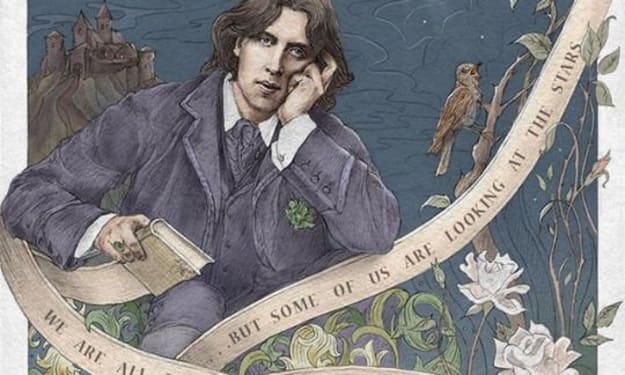
We like to think we can separate the art from the artist, but can we, really? Art is born from the same place as sin. It mainly emerges from conflict: between what is felt and what is permitted, between the self that is lived and the self that must be hidden. No figure embodies this tension more vividly than Oscar Wilde: a man who transformed his own contradictions into style, wit, and devastating clarity. His novel The Picture of Dorian Gray is not merely a tale of aesthetic decadence but the battleground on which this question is fought.
By Yasmine Lagras9 months ago in Art