Contemporary Art
Face to Face with the King
The sun blazed high over the African savanna, casting golden light across the endless sea of grass. A warm wind whispered through the acacia trees, carrying with it the distant sound of hoofbeats and the calls of wild animals. Somewhere in the heart of this wilderness, a man stood alone—his name was Daniel Moyo, a wildlife researcher and photographer with a reputation for getting dangerously close to the animals he studied. Daniel had spent the last three weeks tracking a particular lion known as "Mfalme," the Swahili word for king. Mfalme was a massive, battle-scarred male who ruled over a vast territory. Tales of his strength, cunning, and survival had spread across villages and research camps alike. Some believed he was no ordinary lion. Others said he had the eyes of a human soul—deep, watchful, wise. Daniel had only seen Mfalme from a distance once. But now, on this hot afternoon, he sensed something was about to happen. The tracks in the dusty soil were fresh—massive paw prints surrounded by the scent of musk and dust. As he followed the trail into a narrow gorge flanked by thorny bushes, time seemed to slow down. The silence was unnerving, yet oddly peaceful. Then it happened. A low, guttural growl echoed from behind a rock. Daniel froze. Out from the shadows emerged Mfalme. His golden mane flowed in the wind, his shoulders rolled with quiet power, and his amber eyes locked onto Daniel’s. There were no bars, no cages—only open space and raw instinct. Daniel knew better than to run. Instead, he did what his training taught him—he stood still, lowering his gaze slightly to show he was not a threat. His heart thudded in his chest, loud enough that he was sure the lion could hear it. Mfalme did not charge. He walked slowly toward Daniel, stopping just a few feet away. The lion tilted his head, as if trying to understand what kind of creature stood before him. Daniel raised his camera slowly, not to take a photo, but to place it gently on the ground. It felt wrong to view this moment through a lens. As they stood there, eye to eye, Daniel saw something he hadn’t expected. In Mfalme’s gaze was not just wildness, but something almost ancient—a reminder that humans and lions had once shared the same world, respected each other, even feared each other. In that silence, the boundary between man and beast blurred. Then, without warning, Mfalme let out a low snort and walked away, disappearing into the tall grass as quietly as he had come. Daniel sank to his knees, overwhelmed by the encounter. He hadn’t captured a photo, but he had gained something greater—a moment of pure connection with nature's most regal predator. When Daniel returned to camp, he recounted the story, not as a tale of danger, but as one of awe and respect. His colleagues were stunned. No one else had ever gotten that close to Mfalme and lived to tell the story. Years later, Daniel wrote a book titled Face to Face with the King, sharing his story and advocating for lion conservation. He used his experience to teach people that lions were not enemies—they were fellow rulers of the earth in their own right. Mfalme became a symbol in his writings, representing the fragile balance between humans and the wild. In the final chapter of his book, Daniel wrote: "The lion did not speak, but he told me more in silence than any man ever could. We stood as two kings, not in battle, but in peace—bound by mutual recognition, and perhaps, a bit of understanding." Mfalme was never seen again after that year. Some believed he died in a fight. Others said he wandered far beyond his territory. But for Daniel, Mfalme still lived—in his memory, in his writings, and in the message he carried to the world.
By Muhammad Jawad2 years ago in Art
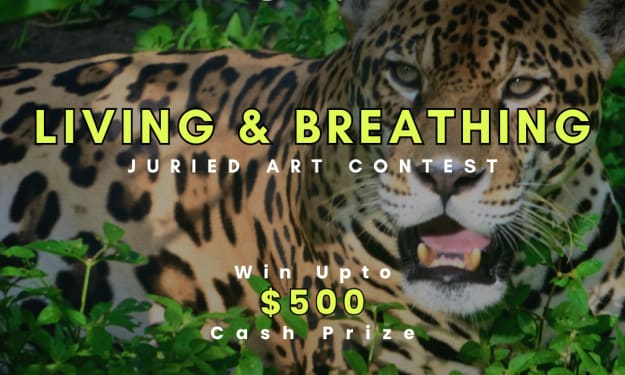
Tips to Create Stunning Wildlife Artwork for Your Next Animal Art Contest
Wildlife has always been a source of inspiration and a subject of fascination for art, literature, and expressions. Whether it is the wild habitat of a fierce tiger, the majestic roar of an African lion or the silent grace of a gazelle (deer) in the forest, the theme of wildlife continues to impress art lovers and creators alike.
By rachel brown2 years ago in Art
Figurative vs. Abstract Art: Finding Meaning in the Human Form
Human emotions, perspective and ideas have always been the popular subjects of depiction. Through artistic expressions, artists have portrayed the forms and figures vividly. The most used form and artistic style of depiction of human figures and expressions is figurative art. Another parallel form can be the abstract figurative art, that is used to portray human forms in non-representational ways, with abstractions. These are the two most fascinating approaches to depicting the human form, no doubt, but there are differences in their presentation and ideologies.
By Blair Bart2 years ago in Art
The Timeless Power of Art: A Reflection of Humanity
Art has been an essential part of human civilization since the dawn of time. From ancient cave paintings to digital creations, art is a mirror of the world, capturing not only beauty but also emotion, culture, history, and imagination. It transcends language barriers and geographical boundaries, speaking to something deeply rooted in the human spirit. The Evolution of Artistic Expression -- Throughout history, art has taken countless forms—painting, sculpture, literature, music, dance, theater, film, and more. In every era, artists have used their medium to interpret the world around them. The Renaissance gave us masterpieces from Michelangelo and Leonardo da Vinci, while modern art introduced abstract expression and surrealism. In today’s digital age, technology allows for interactive installations, virtual galleries, and AI-generated art. The Role of Art in Society -- Art has always played a role beyond aesthetics. It is a tool for social change, a means of protest, and a way to raise awareness about important issues. Whether it's a mural on a city wall or a song that moves a generation, art has the power to inspire, challenge, and heal. It can bring communities together, celebrate identity, and preserve cultural heritage. Personal Connection to Art -- On a personal level, art connects us to our own emotions. A painting can evoke memories, a song can lift our mood, and a film can make us see the world through someone else’s eyes. Engaging with art—whether as a creator or as an observer—helps us explore our inner worlds and better understand others. The Future of Art -- As we move further into the 21st century, the boundaries of art continue to expand. With AI, virtual reality, and other emerging technologies, new possibilities are being explored. But at its core, art remains the same—a uniquely human way to express, connect, and reflect. Conclusion -- Art is not just a product of culture—it is culture. It tells our stories, expresses our dreams, and challenges us to think differently. In every brushstroke, every note, and every word, art captures the essence of what it means to be human.
By UNKNOWN STORY2 years ago in Art
Whiskers & Wags: The Unlikely Friendship
In a cozy little cottage on Maple Street lived a cat named Whiskers. She was sleek, white as snow, and walked with the grace of a queen. Her days were filled with naps on sunlit windowsills, sipping milk from a fancy blue dish, and watching birds flutter outside the window. Everything was peaceful, just the way she liked it.
By Mansoor Ali2 years ago in Art
The art of letting go
In a small coastal town, nestled between towering cliffs and the vast ocean, there lived a woman named Evelyn. She was known for her vivid paintings that seemed to capture the essence of the world in a way few could understand. Her brushstrokes were bold, her colors fierce and alive, but beneath it all was a quiet sadness, something she had carried for years. She was a master of her craft, but there was something she had never quite been able to master: the art of letting go.
By Mudassir shah2 years ago in Art
Cristiano Ronaldo: The Legend of Football
Cristiano Ronaldo dos Santos Aveiro was born on February 5, 1985, in Madeira, Portugal. From a young age, his love for football was evident. Growing up in a modest family, he faced numerous hardships, but his passion and determination set him apart. With sheer talent and relentless dedication, Ronaldo embarked on a journey that would make him one of the greatest footballers in history.
By Mohammad Mustafa2 years ago in Art
The Power of Loyalty: A Virtue That Builds Stronger Connections
What is Loyalty? Loyalty is more than just a feeling; it's a conscious choice, an active decision to stand by someone or something through thick and thin. It’s a consistent support or allegiance, whether it’s to a friend, family member, partner, company, or cause. Loyalty isn't contingent on convenience or immediate benefits—it endures even when challenges arise or the relationship is tested.
By Malik Kashif2 years ago in Art
What Makes Focus Art Fair London a Must-Visit for Art Lovers: A Haven for Contemporary Art
The city of London has always been a hub of attention, be it for art, culture, literature, history and for artistic innovation. And, in 2025, the city will once again take the center stage with the highly anticipated Focus Art Fair 2025 chapter. To be held at the historic Saatchi Gallery London, this premier art fair in London will bring together emerging and established artists, collectors, and art enthusiasts from around the world.
By Blair Bart2 years ago in Art