Contemporary Art
Stuckism, truth and haunted souls
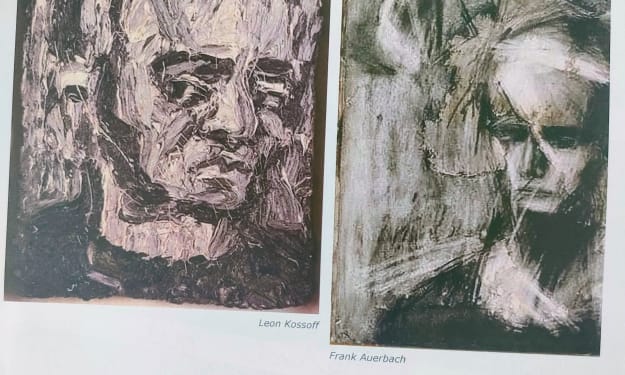
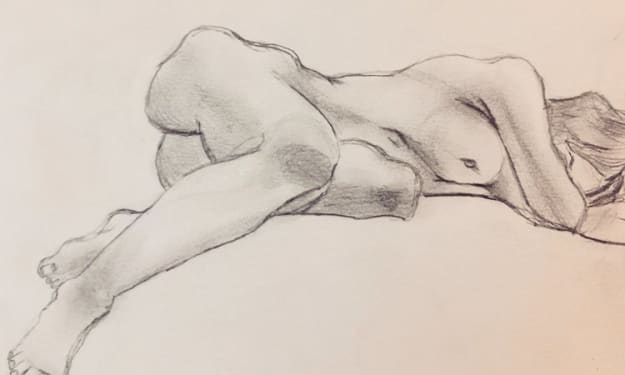
Leon Kossoff and Frank Auerbach painting as if drawing with the hard strong lines stuckism in its all way. Brutally distracted and implicted in haunting-like soul faces are trying to tell something about this place that only they can feel and know
By Antea Lumina Kala Matylda 3 years ago in Art
The Entire History Of Music
In the year 1742, a quote about music emerged, describing it as a fusion of various sounds that may not always harmonize due to differing tastes. This sentiment was voiced by a character named Philip, who humorously adopted a helium-infused voice in a video. In this presentation, I will delve into the complete chronicle of music, spanning from its inception over 200,000 years ago to its supposed demise in 2008, a year marked by rapid changes in the industry. Contrary to the playful notion of music's "death," the evolution and impact of music continued to flourish.
By Malachi Sopulu3 years ago in Art
Decoding the Challenge: AI Art's Struggle with Depicting Hands
In the realm of AI-generated art, there's a curious phenomenon that has captured the attention of many: the struggle to accurately depict hands. It's an odd predicament, considering the remarkable feats of creativity AI models can achieve, from envisioning a post-apocalyptic giraffe astronaut to portraying Genghis Khan playing a pixel art guitar solo. But when it comes to portraying something as seemingly simple as a man holding a delicious apple, AI art tends to falter. Why is it that AI, with all its technological prowess, stumbles when it comes to rendering such a basic and familiar human gesture? Before delving into the peculiar world of AI and hands, let's first acknowledge that AI art is indeed a marvel of modern technology. It can seamlessly blend historical figures like Abraham Lincoln and glam rock icon David Bowie, creating a surreal yet captivating fusion of eras and styles. But it's when we attempt to depict everyday human actions and interactions that the limitations of AI become apparent. To understand this artistic anomaly, we turn to the insights of an artist who has guided countless individuals in the art of drawing hands from imagination. Before embarking on formal artistic training, individuals develop a natural ability to recognize patterns from observing the world around them. This pattern recognition is crucial for creating accurate representations of objects and actions. AI operates similarly, but its learning environment is akin to being confined within a museum. Imagine an AI growing up with access only to images and their accompanying descriptions, much like the placards beside exhibits in a museum. The AI's "museum" is brimming with images of objects, including hands. However, the difference lies in the approach to understanding. While humans can hold an apple, examine its texture, and rotate it in their hands, AI must rely on finding additional images of apples within its limited museum. This pattern recognition forms the basis of AI-generated art, yet it lacks the innate understanding humans possess due to their lived experiences. When an artist undergoes formal training, they delve into the realm of rules and techniques. By simplifying complex objects into basic shapes, like breaking down a hand into a palm, fingers, and thickness, artists can then add their personal style and detailing. AI, on the other hand, operates differently. It can produce visually appealing representations, as seen in its ability to capture light and texture, but it lacks an understanding of how objects truly function. Consider an AI-generated hand illustration. While the shapes may appear unconventional, the AI excels at showcasing intricate details through pixel patterns. However, it's evident that the AI hasn't comprehended the mechanics of finger joints and how they bend. Instead of simplifying forms as artists do, the AI is attempting to mimic hand-like pixels based on its stored patterns, devoid of a deep understanding of hand anatomy. The struggle with hands in AI art isn't an isolated quirk; it offers valuable insights into how AI art models operate. To further explore this phenomenon, conversations with experts in generative art shed light on three significant challenges: data size and quality, hand behavior, and a low margin for error. In the AI's museum, there's an unequal distribution of data, with an abundance of facial images and a scarcity of hands. Consider datasets like Flickr HQ, which boasts thousands of faces with detailed annotations. Yet, datasets for hands may not be as prevalent in training AI art models. The scarcity of data is compounded by the complexity of hand behavior, which remains largely unannotated. While we can describe intricate details of a hand holding an umbrella, AI is left to make educated guesses based on its patterns. Unlike facial images that often follow a centered and symmetrical pattern, hands are incredibly diverse in their movements and positions. The AI struggles to capture this diversity, resulting in peculiar hand renderings that deviate from real-world mechanics. While AI excels in various artistic domains, its hands remain a stumbling block due to the absence of a comprehensive understanding of their dynamics. Despite these challenges, progress is being made. The introduction of Midjourney version 5, the latest AI art generator, offers promising advancements in rendering hands. Yet, complete mastery remains elusive. To address this, AI developers are exploring two avenues: expanding the AI's exposure to a wider range of images and soliciting human feedback. By allowing the AI to analyze a greater volume of pictures, developers aim to enhance its pattern recognition abilities. However, this approach requires substantial computational power. Alternatively, involving more individuals in the AI's learning process could yield valuable results. Drawing parallels with ChatGPT, where human feedback refined language generation, a similar strategy could be employed for AI art. Through human ranking of generated images, the AI can refine its output based on what people find visually appealing. In conclusion, the quirk of AI struggling with hands in art creation offers a fascinating glimpse into the intricacies of AI learning. Despite its remarkable abilities to generate captivating and imaginative art, the AI's limitations provide valuable insights into the nuances of pattern recognition, data availability, and the complexities of human behavior. As AI art continues to evolve, the challenge of hands serves as a reminder that, while machines can simulate creativity, the essence of art lies in the intangible fusion of human insight, emotion, and understanding.
By Shubham Bajaj3 years ago in Art
The purest way to nourish the soul: Music!. Content Warning.
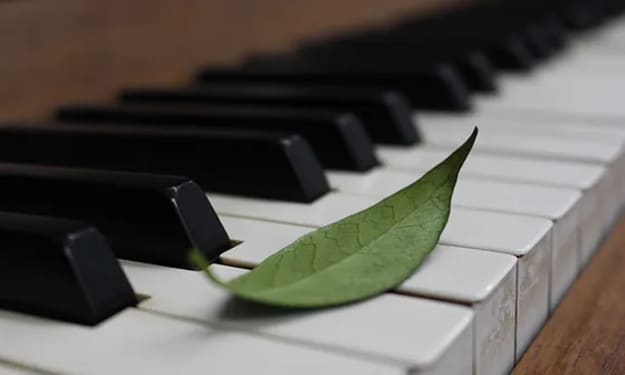
Music is the only thing we can't see with our naked eyes but can touch our souls. It truly has a power like none! Listening to music has always been a popular way to relax, unwind and enjoy. The art of music not only helps reduce your stress but it also connects people from all over the world irrespective of their caste, religion, etc, it brings people together and brings a stronger and deeper connection to form within them. Everyone from different parts of the world may vibe to the same sound and rhythm and go in the flow. Music also brings out you from you! meaning you can express yourself through music as there are no limits and truly makes you feel ethereal. Music comes along with a wide range of emotions and also scientifically proven that it cures the soul and the body inside out. It can be a medicine for us and keep us happy and feel full. Music has the power to unlock memories, be a safe place, and offer solace for people with dementia.
By mmindspeaks3 years ago in Art
Exploring the Diverse Dimensions of Contemporary Art. Content Warning.
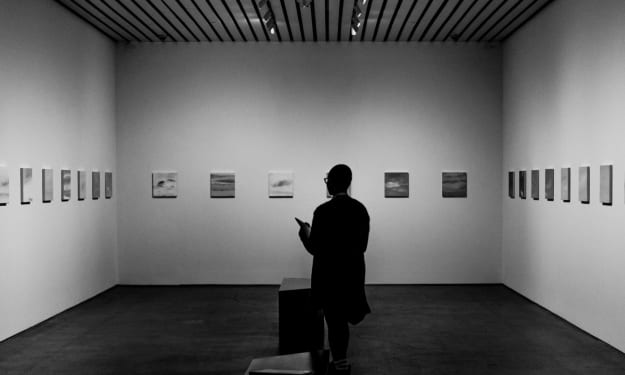
Introduction The world of art is a captivating realm where creativity knows no bounds. In this article, we delve into the captivating universe of contemporary art, exploring its history, techniques, inspiration, and the critical role it plays in shaping our perceptions. From captivating paintings to intricate sculptures, the contemporary art scene encompasses a wide array of mediums, inviting audiences to embark on a unique journey through the realms of fiction, mixed media, and beyond.
By Stella Oehtam3 years ago in Art
Rainy Days
Rainy days are a common occurrence in many parts of the world, and they can have a significant impact on people's lives. From the refreshing smell of rain to the cozy feeling of staying indoors, there are many reasons why people love rainy days. In this article, we will explore the various aspects of rainy days and what makes them so special.
By Marie Queen3 years ago in Art
Beauty and the Bystander
Aesthetic judgments allow us to define and categorize beauty in a world of indeterminacy and relativity. Aesthetic objects, however, first strike us unconsciously––we are fascinated by the beauty of a snowflake before we realize its delicate symmetry. While initial sensory experience may bring about a pure moment of awe, aesthetic judgment provides a standard by which we can further measure and strive toward the beautiful. Experiences of aesthetic judgment cause us to consider our unique role in the world, and bring about an even more expansive and personal ‘feeling of life’ than that obtained by sensory faculties alone: one that persists throughout time and circumstance. Regardless of truth value, the very action of judging objects provides an individual with a newly reconstructed perspective of herself. In becoming conscious of the relationship between judge and aesthetic object, we are able to regulate this boundary to an extent that is meaningful for us. By exposing and clarifying our relationship with the beautiful, aesthetic judgments provide an avenue for the growth that characterizes life.
By Jessica O’Brien3 years ago in Art
**Crafting the Future: The Art and Science of Designing Software**
**Introduction** In an era defined by digital innovation, software stands as the backbone of our technological advancements. Behind every seamless app, efficient platform, and user-friendly interface lies an intricate process known as software design. This article delves into the fascinating realm of designing software, exploring the amalgamation of creativity, functionality, and user-centricity that brings digital dreams to life.
By Muhammad Kashif3 years ago in Art