Contemporary Art
How 3D Animation Services are Revolutionizing Marketing Campaigns for Businesses in the USA
Introduction In today's fast-paced digital world, capturing and retaining the attention of potential customers is more challenging than ever. As businesses strive to stand out in a crowded market, innovative marketing strategies have become essential. One such strategy that is making waves in the USA is the use of 3D animation services. By bringing ideas to life in a visually engaging and dynamic way, 3D animation is revolutionizing how companies communicate with their audiences.
By Noah Taylor2 years ago in Art
Human body in art
The Human Body in Art: A Reflection of Society's Values and Biases The human body has been a subject of fascination in art throughout history, with many famous artworks featuring the human form in various states of dress and undress. But why are bodies so prevalent in art? And what do they represent beyond just physical appearance? Portraits, for example, are a record of a body at a particular moment in time, but they also reveal a person's class, status, values, character, and social influence. Symbols such as clothing and accessories can indicate a person's position in society, like the peacock feather and fur coat in 18th-century Chinese ancestor portraits. However, portraits are not always truthful representations. They can be idealized or embellished, like the portrait of Lady Guan, which was created based on verbal descriptions rather than actual observation. American artist Cindy Sherman's work also highlights the fluidity of identity, with her series "Untitled Film Stills" featuring herself in various stereotypical female roles. Classical Greek and Roman sculpture celebrated the nude figure as the pinnacle of beauty, with male nudes embodying strength, beauty, and determination. Female nudes, on the other hand, were often depicted as sensual and fertile, but also modest and shameful. This dynamic continues to influence art today, with the "male gaze" still prevalent in how women are depicted. However, artists have been challenging these dynamics for decades. Cassils, a transgender artist, uses their body to critique narrow ideas of gender and the gaze. In their performance piece "Becoming an Image," Cassils attacks a block of clay, reclaiming power over their body and highlighting the ongoing struggle of trans communities. Other artists have also used their work to challenge societal norms and power dynamics. Édouard Manet's "Olympia" (1863) features a female nude who gazes directly at the viewer, controlling what they can and can't see. The painting references Titian's "Venus of Urbino" but also strays from tradition, depicting a working-class woman who recognizes the power of her body. Yasumasa Morimura's recreation of "Olympia" (1988) pushes these questions even closer to the surface, dressing in drag and taking Victorine's place on the bed. This urges viewers to consider how changing the gender and ethnicity of the subject changes its meaning entirely. Bodies in art are not just sculpted abs and fleshy figures; they serve as a reflection of society's values and biases. Analyzing these artworks can help us better understand and perhaps disrupt our biases toward or against certain bodies, both past and present. By looking at art together, we can work towards a more equitable experience of having a body for everybody. In conclusion, the human body in art is a complex and multifaceted subject that reflects society's values, biases, and power dynamics. Through various art forms and styles, artists have used the body to convey messages, challenge norms, and celebrate beauty and diversity. From classical Greek and Roman sculpture to contemporary performance art, the body has been a canvas for artistic expression and social commentary. By examining the ways in which bodies are represented in art, we can gain a deeper understanding of the cultural, historical, and political contexts in which they were created. We can also appreciate the ways in which art has been used to challenge and subvert dominant norms and power structures, and to promote equality, justice, and inclusivity. Ultimately, the human body in art is a powerful symbol that can inspire, educate, and empower us. By engaging with art that features the body, we can gain a greater appreciation for the complexity and beauty of human experience, and work towards creating a more just and equitable society for all.
By Ali bukhari2 years ago in Art
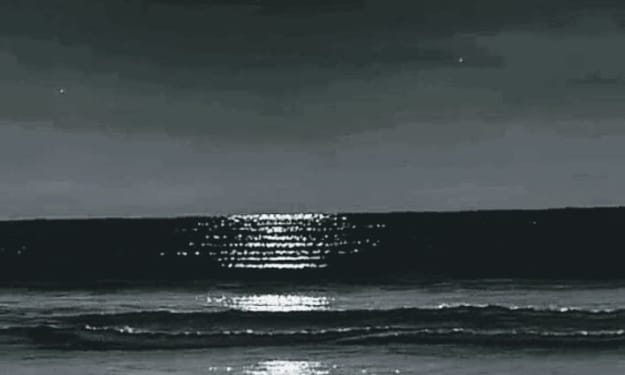
Lunar Luminesce
in the velvet embrace of the night, A silver orb hangs, ethereal and bright, Suspended in shadows, a beacon of dreams, The moon casts her glow on the world and its schemes. Whispers of starlight dance in her wake, As rivers of silver in silence do break, She bathes the dark woods in luminescent grace, And draws out the secrets of each hidden place. The mountains stand tall, draped in her hue, Their rugged facades kissed by a dew, That sparkles like diamonds in the soft twilight, A tapestry woven from shadows and light. Across the vast ocean, she glides like a swan, Her reflection a shimmer on waters withdrawn, She beckons the tides with a gentle command, In a rhythmic embrace, the sea meets the land. Old lovers whisper beneath her soft gaze, Their promises twinkling in her silvery blaze, For under her watch, hearts tether and mend, In the glow of the moon, all sorrows suspend. The owls serenade with their haunting refrain, While echoes of night weave a mystical chain, Each moment a thread in the fabric of time, The moon weaves a story, both endless and sublime. As shadows grow longer and silence takes hold, She watches the world with her wisdom of old, From cradle to twilight, through laughter and tears, The moon knows our hopes, our dreams, and our fears. In gardens where petals unfurl to the night, She dances on blossoms, a spectral delight, Each flower a canvas, painted with grace, Her light a soft brushstroke on nature’s face. Yet in her cold beauty, a distance remains, A reminder of longing, of love’s bittersweet chains, For though she’s a presence, forever so near, Her heart is a void, an echo, a sphere. O, luminous muse, in your haunting embrace, You cradle the night in your delicate grace, Guide wanderers home with your gentle allure, In the vastness of darkness, you’re always the cure. As dawn whispers softly, your glow starts to fade, Yet still, in our hearts, your memory's laid, For the moon is a promise that lingers and glows, A cycle eternal, where night ever flows
By Pearl jacob2 years ago in Art
Is Dream Flight 2014 a Good Asian Movie?
Dream Flight is a 2014 Asian movie that has been gaining popularity among movie enthusiasts. The movie revolves around the life of a young girl who dreams of becoming a pilot. The plot follows her journey as she overcomes various obstacles to achieve her dream.
By oussama achouri2 years ago in Art
Horse. Content Warning.
The Galloping Desert Horse, known for its remarkable adaptability to harsh desert environments, stands as a testament to centuries of selective breeding and natural evolution. These horses have evolved unique traits that enable them to thrive where others struggle, making them invaluable companions and symbols of resilience in desert cultures worldwide.
By Kaweesha Tharindu2 years ago in Art
Why Into The Grizzly Maze 2015 Movies Are Worth Watching
"Into The Grizzly Maze" is a 2015 thriller movie that tells the story of two estranged brothers who reunite to track down a rogue grizzly bear that is terrorizing a small Alaskan town. The film features a star-studded cast, including James Marsden, Thomas Jane, and Billy Bob Thornton, and was directed by David Hackl. Despite receiving mixed reviews from critics, the movie has gained a cult following among fans of the genre.
By oussama achouri2 years ago in Art
What is art
Title: The Art of AI: Exploring the Creative Frontier of Artificial Intelligence Introduction Art has long been considered the exclusive domain of human creativity, a reflection of our emotions, experiences, and perceptions. However, with the rapid advancement of artificial intelligence (AI), the boundaries of art are expanding, and the question of what constitutes art is being redefined. In this article, we will delve into the fascinating world of AI-generated art, exploring its creative potential, the ethical implications, and the future of human-AI collaboration. The Creative Potential of AI AI-generated art has made tremendous progress in recent years, with algorithms capable of producing stunning images, music, and writings that rival those created by humans. The Dolly image generator, for instance, has produced breathtaking images that have gone viral on social media, sparking both amazement and debate. Similarly, Google's language model, Lambda, has demonstrated its ability to generate intelligent and communicative language, even creating an autobiographical fable with animal characters and moral themes. The creative potential of AI is vast, and its applications are diverse. From generating music and videos to writing stories and poetry, AI is pushing the boundaries of human creativity. The question, however, remains: can AI-generated art be considered "true" art? The Ethical Implications As AI-generated art becomes increasingly sophisticated, the ethical implications of creating art that is indistinguishable from that created by humans come into play. Who owns the rights to AI-generated art? Is it the creator of the algorithm, the AI itself, or someone else entirely? These questions raise important concerns about authorship, ownership, and the role of human agency in art. Moreover, the rise of AI-generated art challenges our understanding of creativity and consciousness. Can AI truly be said to have consciousness similar to ours, or is it simply processing data and generating output? This debate has far-reaching implications for our understanding of human creativity and the value we place on art. The Future of Human-AI Collaboration As AI-generated art continues to evolve, it is clear that the future of art lies in human-AI collaboration. By combining the creative potential of AI with the emotional depth and nuance of human experience, we can create art that is both innovative and meaningful. Imagine a world where AI generates the initial draft of a painting, and a human artist refines it, adding their unique perspective and touch. Or, picture a scenario where AI composes the music, and a human musician interprets it, adding their own emotional depth and expression. The possibilities are endless, and the potential for creative growth is vast. Conclusion The art of AI is a fascinating and rapidly evolving field, challenging our understanding of creativity, consciousness, and the very essence of art itself. As we continue to push the boundaries of what is possible with AI, we must also confront the ethical and philosophical implications of creating art that is increasingly indistinguishable from that created by humans. Ultimately, the future of art lies in human-AI collaboration, combining the best of both worlds to create something truly innovative and meaningful. Whether AI-generated art is considered "true" art or not, it is undeniable that it has the potential to inspire, provoke, and challenge our perceptions of the world around us.
By Ali bukhari2 years ago in Art