
Most Famous Buildings in Sophia, Bulgaria
Impressive architecture

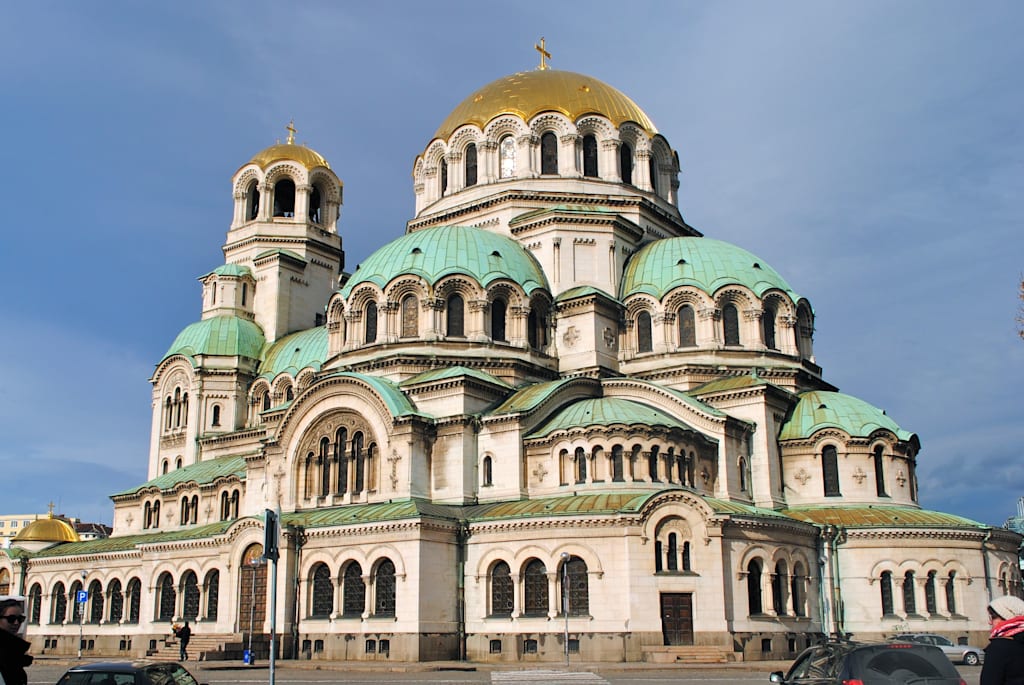
Alexander Nevsky Cathedral
The Alexander Nevsky Cathedral is a stunning example of Neo-Byzantine architecture, characterized by its grand scale, gold-plated dome, and intricate mosaics. Designed by Russian architect Alexander Pomerantsev, its construction began in 1904 and was completed in 1912, with consecration occurring in 1924. The gold-plated dome reaches a height of 45 m (148 ft), and with the cross, it stands at 46.3 m (152 ft). The bell tower of the cathedral is 53 m (174 ft) tall. The interior features murals and mosaics created by 24 Russian and Bulgarian artists.
Boyana Church
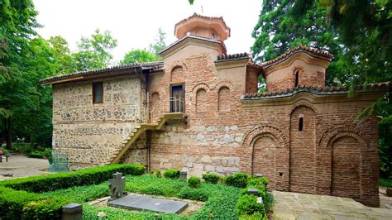
The Boyana Church showcases a unique architectural style developed over three distinct phases, reflecting its historical significance and artistic evolution. The oldest section dates back to the late 10th to early 11th century, featuring a cross-vaulted design, while later expansions in the 13th and 19th centuries added complexity to its structure. The church is renowned for its 1259 frescoes, which are significant examples of medieval Bulgarian art, depicting various religious themes, and it is a UNESCO World Heritage Site.
Eagles Bridge
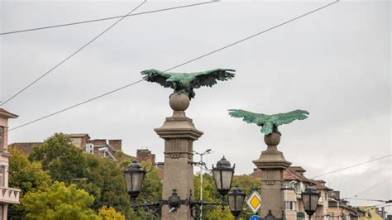
The Eagles' Bridge, known for its elegant design and historical significance. Constructed in 1891 by Czech architects, it features striking bronze eagle sculptures and serves as a key landmark in the city. The bridge showcases a monolithic structure, a pioneering design in Sofia after its liberation. It is adorned with four bronze eagle sculptures, symbolizing freedom and strength. Positioned at a major junction, it connects Tsarigradsko shose, the largest boulevard in the city, with the city center.
Ivan Vazov National Theater
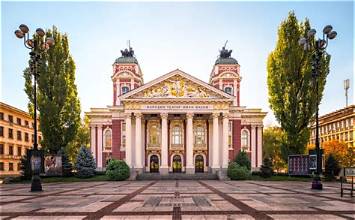
The Ivan Vazov National Theater features a stunning neoclassical architectural style, designed by renowned Viennese architects Hermann Helmer and Ferdinand Fellner. Completed in 1906 and opened in 1907, it showcases a grand facade with six columns and intricate artistic details. The facade features six columns supporting a gable adorned with depictions of Apollo and the muses, emphasizing its artistic heritage.
National Palace of Culture
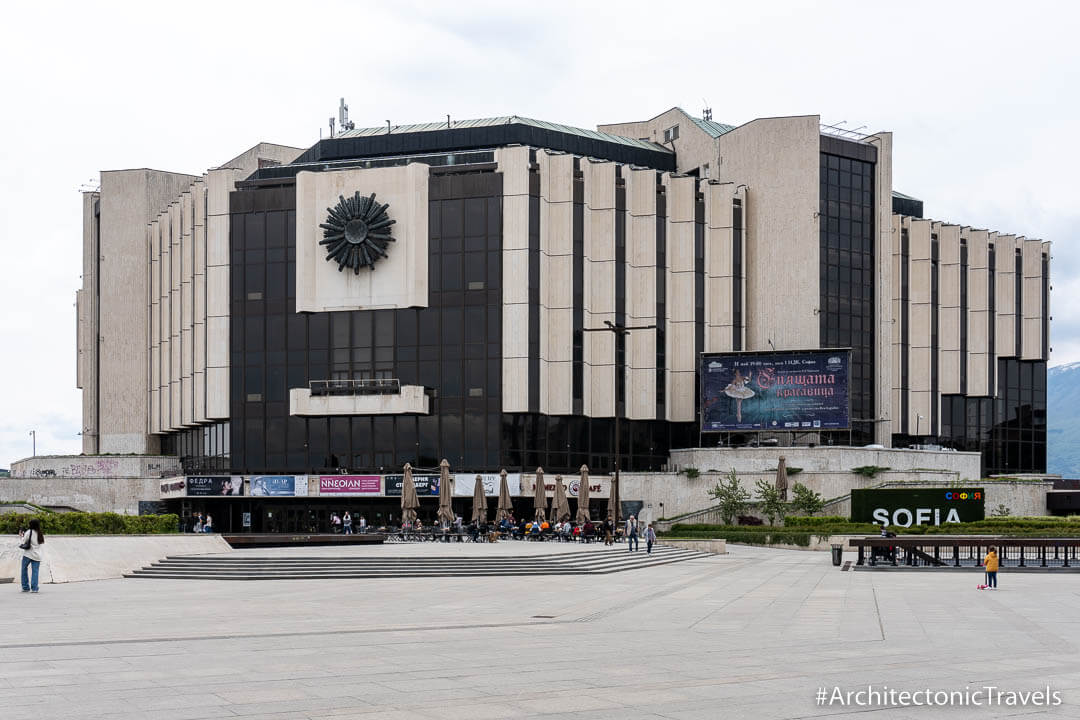
The National Palace of Culture is a prominent example of Brutalist architecture, designed by architect Alexander Barov and completed in 1981. It serves as a multifunctional complex that integrates modern architectural elements with traditional Bulgarian motifs. The building's design reflects a synthesis of modern architecture and traditional Bulgarian elements, notably through its bronze sun motif above the entrance. It was constructed to commemorate the 1300th anniversary of the Bulgarian state, highlighting its national importance. The interior features a unified visual style with geometric motifs, dark colors, and works by Bulgarian artists.
Regional History Museum
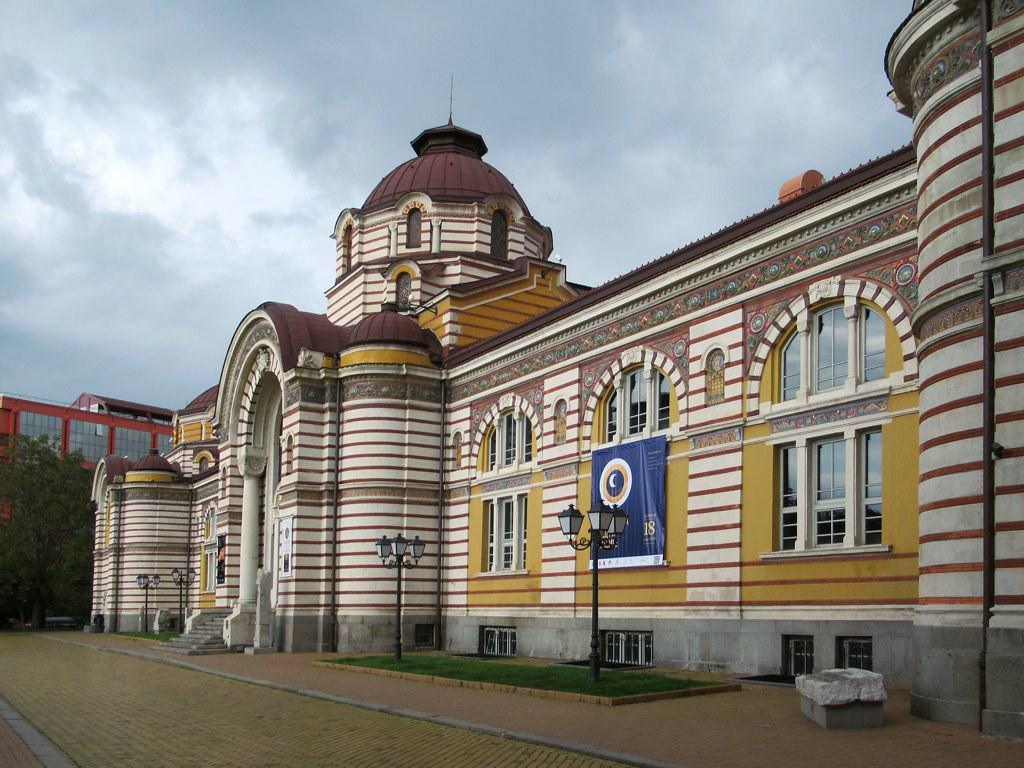
The Regional History Museum is housed in the former Central Mineral Baths building, showcasing a blend of Art Nouveau and traditional Bulgarian architectural styles. This historic structure, completed in 1908, features intricate ornamental elements that reflect Byzantine and Eastern Orthodox influences. Designed by architects Petko Momchilov and Friedrich Grünanger, the building integrates various cultural styles. The design incorporates typical Bulgarian, Byzantine, and Eastern Orthodox ornamental elements, showcasing a rich cultural heritage.
Rotunda of St. George
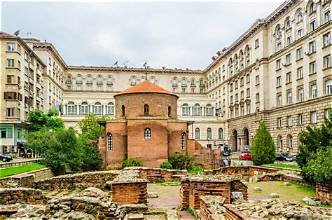
The Rotunda of St. George is a remarkable example of early Christian architecture, dating back to the 4th century. Built from red bricks, it features a circular plan with a domed roof and has undergone various reconstructions throughout its history. It was built in the early 4th century, making it the oldest building in Sofia. The building features a circular plan on a square base, with semicircular niches in the corners, showcasing complex symmetry. Originally a Christian church, it was converted into a mosque during the Ottoman rule. It is still used for worship today.
St. Cyril and Methodius National Library
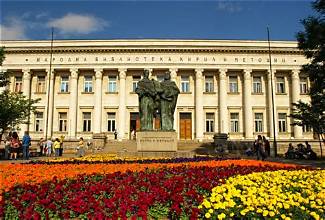
The architecture of the St. Cyril and Methodius National Library is characterized by its neoclassical style, designed by architects Ivan Vasilyov and Dimitar Tsolov. Construction began in 1942, and the building is recognized as an architectural and artistic monument of national importance. The library serves as a key cultural institution in Sofia, contributing to the educational development of the city since its establishment in 1878.
About the Creator
Rasma Raisters
My passions are writing and creating poetry. I write for several sites online and have four themed blogs on Wordpress. Please follow me on Twitter.
Enjoyed the story? Support the Creator.
Subscribe for free to receive all their stories in your feed. You could also become a paid subscriber, letting them know you appreciate their work.
Comments
There are no comments for this story
Be the first to respond and start the conversation.