
Most Famous Buildings Berlin, Germany
Impressive architecture

Berlin Cathedral
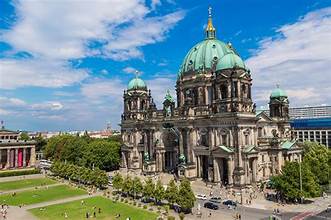
The Berlin Cathedral, known as the Berliner Dom, is a prominent Protestant church located on Museum Island in Berlin, Germany. It features a striking dome and serves as a significant historical and architectural landmark in the city. It showcases a neo-Renaissance style, with a magnificent dome that dominates the skyline. The Cathedral hosts over 100 concerts and events annually, ranking it among Berlin's top cultural venues.
Berlin State Opera
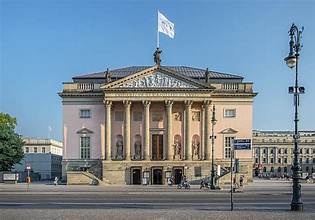
The Berlin State Opera, known as Staatsoper Unter den Linden, is a historic opera house renowned for its exceptional performances and stunning architecture. It has a rich history dating back over 275 years, making it one of the most significant cultural venues in Berlin. The opera house was originally built as the Royal Court Opera by architect Georg Friedrich Knobelsdorff in 1742. It features neoclassical design elements and is located on Unter den Linden Boulevard, a historic area in Berlin.
Frederick II of Prussia commissioned the Berlin State Opera, which debuted in 1742 following his accession to the throne. The opera house was the state opera house of East Germany before reunification. The building is also home to the Berlin State Ballet.
The Berlin State Opera features statues of muses and allegorical figures that adorn its neoclassical facade, reflecting the building's dedication to the arts. These statues were part of the original design and contribute to the opera house's artistic significance.
Brandenburg Gate
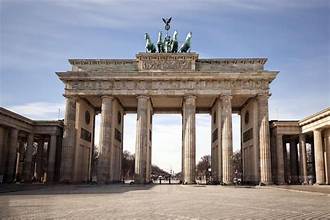
The Brandenburg Gate is an iconic neoclassical monument completed in 1791. It symbolizes peace and unity, having witnessed significant historical events, including the fall of the Berlin Wall in 1989. The gate was built between 1788 and 1791 as a neoclassical triumphal arch. It features 12 Doric columns and a quadriga, a chariot drawn by four horses. The gate has been the site of numerous historical events, including celebrations and protests.
DZ Bank Building
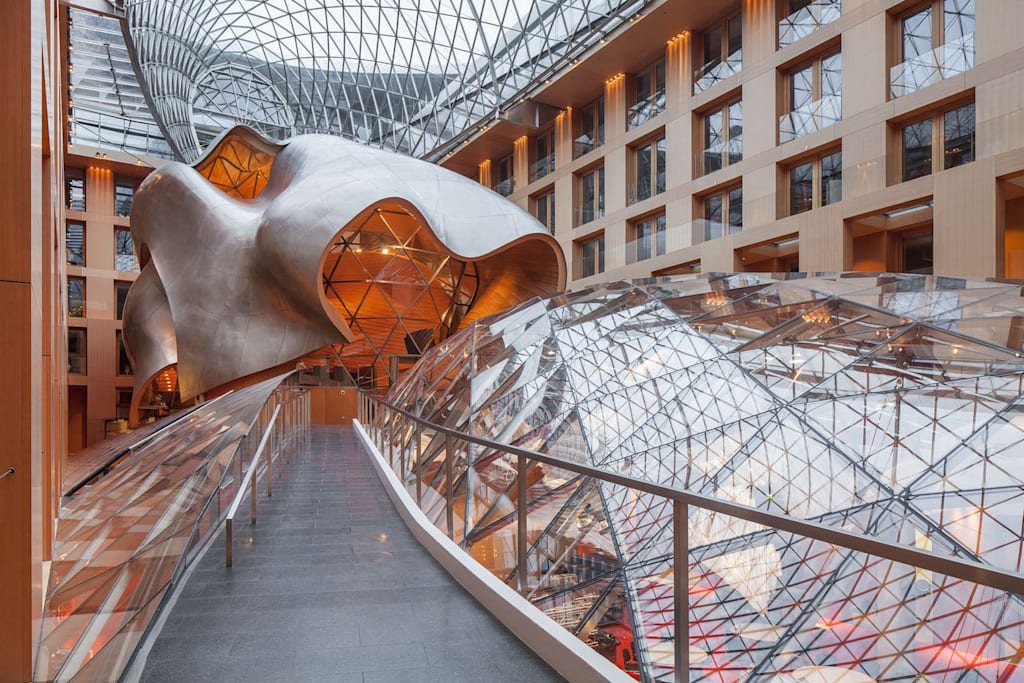
The multipurpose DZ Bank Building, which faces the Brandenburg Gate, was designed by the renowned architect Frank Gehry and engineered by Hans Schober of Schlaich Bergermann & Partner. (pictured above)
In the center of the structure is a sizable atrium intended to serve as a performance or conference space. It combines commercial offices with 39 residential apartments, creating a vibrant urban space.
Detlev Rohwedder Haus
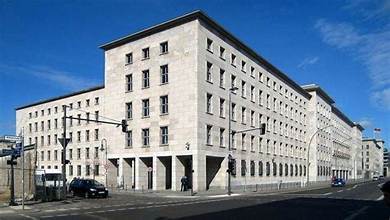
The Detlev Rohwedder Haus, originally built as the Nazi Air Ministry between 1935 and 1936, now serves as the headquarters for the German Finance Ministry. This historic building reflects Germany's complex past and is a significant landmark in Berlin. Since 1999, it has been the head office of the German Finance Ministry, symbolizing reunification. The building was designed by architect Ernst Sagebiel, emphasizing a monumental style that was popular during the Nazi regime.
Ludwig Erhard Haus
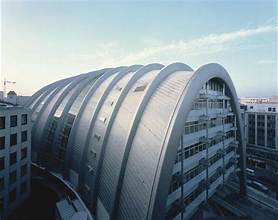
The Ludwig Erhard Haus has fifteen elliptical arches and is covered in steel. It was created for the Federation of Industries and the German Chamber of Commerce. The architecture’s unusual shape is actually a triumphant outcome of the building constraints. The landmark takes its name from Ludwig Erhard, the Federal Republic of Germany’s first Minister of Economics.
The armadillo served as an animal role model for the Ludwig Erhard Haus, a steel and glass structure close to the Berlin Zoo. British architects Nicholas Grimshaw & Partners created the structure, which was finished in 1998. The building’s interior is well-lit by two atriums. The floors are connected by six panoramic lifts.
Reichstag Building
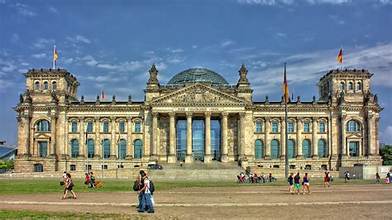
The Reichstag Building in Berlin is the seat of the Bundestag, Germany's federal parliament, and is renowned for its historical significance and iconic glass dome. It has witnessed pivotal moments in German history, including the rise and fall of various political regimes. The building was completed in 1894 and designed by architect Paul Wallot. The glass dome, added during the 1990s renovation, symbolizes transparency in government.
The German Parliament, officially known as the Bundestag, has met here since 1999. The glass dome is one of its most striking features and makes it possible for guests to see the government sessions close up.
Television Tower
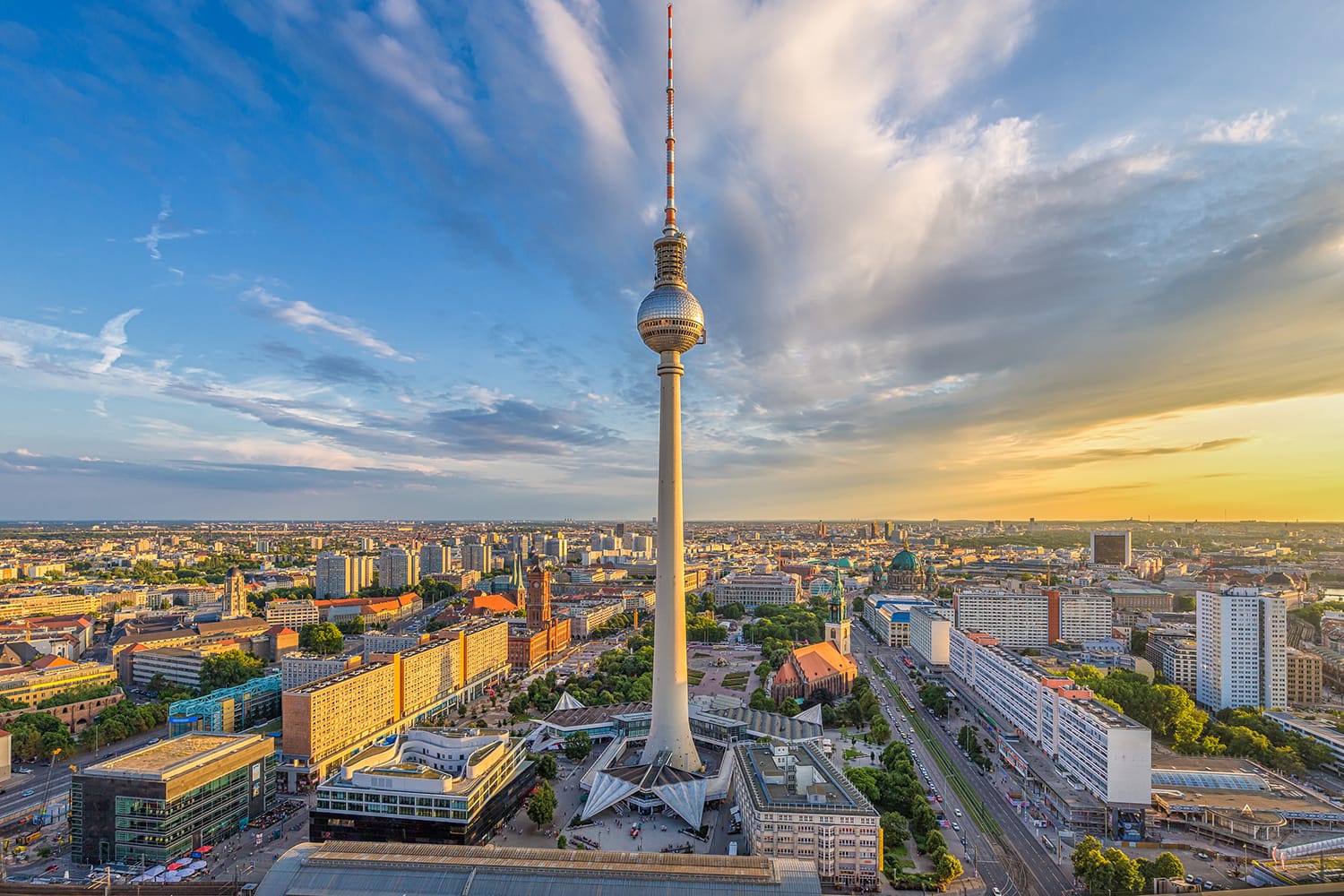
The Television Tower, a futuristic-looking tower that stands close to Alexanderplatz, was constructed in the 1960s by the East German government as a representation of Communist authority in Berlin. It is the tallest building in Germany and the second-tallest in the European Union. It serves as a radio and TV tower, but it also has a rotating restaurant and a viewing deck.
About the Creator
Rasma Raisters
My passions are writing and creating poetry. I write for several sites online and have four themed blogs on Wordpress. Please follow me on Twitter.
Enjoyed the story? Support the Creator.
Subscribe for free to receive all their stories in your feed. You could also become a paid subscriber, letting them know you appreciate their work.
Comments
There are no comments for this story
Be the first to respond and start the conversation.