
Burlesque...Eyes
An exaggerated imitation of something.
There are those days when the world feels burlesque, when everything seems unreal and an exaggeration of the illusion which we have named, LIFE. Kind of like what an induced state may dupe or deceive the mind into believing that which is not there, to appear as if it is actually there.
An absurd or comically exaggerated imitation of something, especially in a literary or dramatic work.
Art by Svenja Schmitt
A burlesque is a literary, dramatic or musical work intended to cause laughter by caricaturing the manner or spirit of serious works, or by ludicrous treatment of their subjects. The word derives from the Italian burlesco, which, in turn, is derived from the Italian burla – a joke, ridicule or mockery.
Today! In the spirit of my out of body imaginations, I have decided to focus on the soul's windows.
I present an extraordinary array of eye art designs to inspire creativity.
Think of the old English proverb that says our eyes are windows to our souls. There is beauty all around us, our eyes and our minds see them every day. The eyes are truly a marvelous creation, hidden deep within are details which one can easily get lost in. People have painted their faces from the beginning of time.
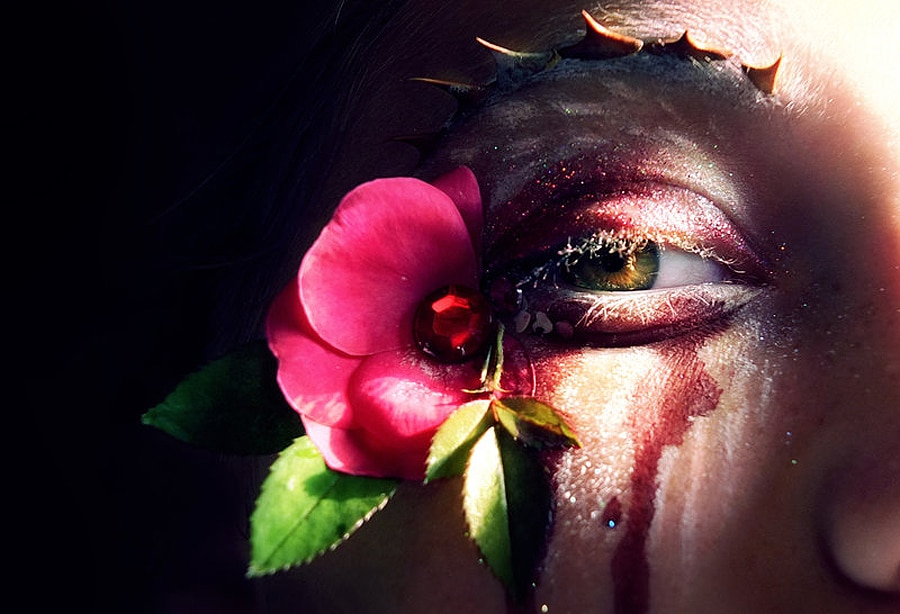
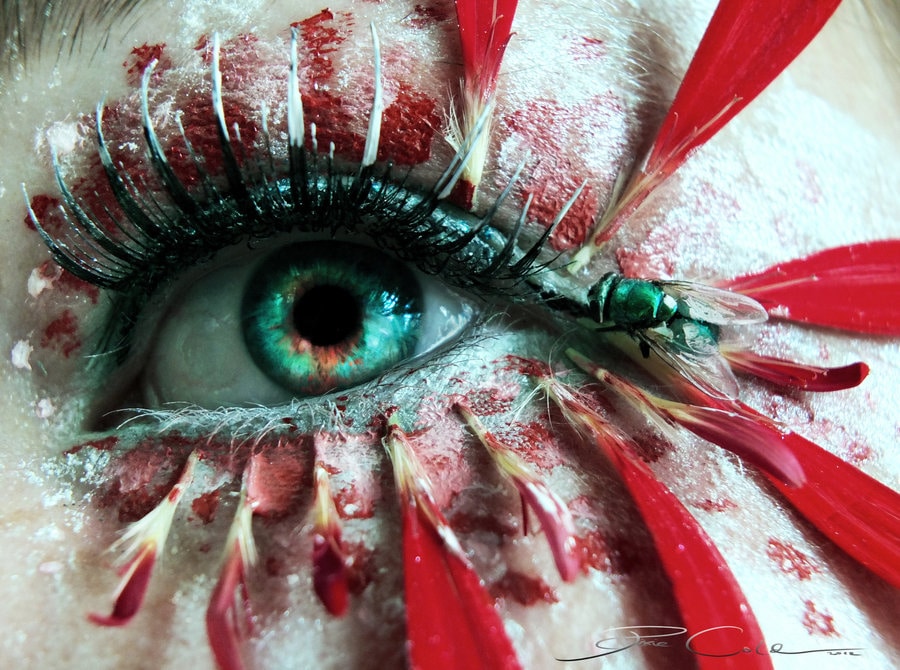
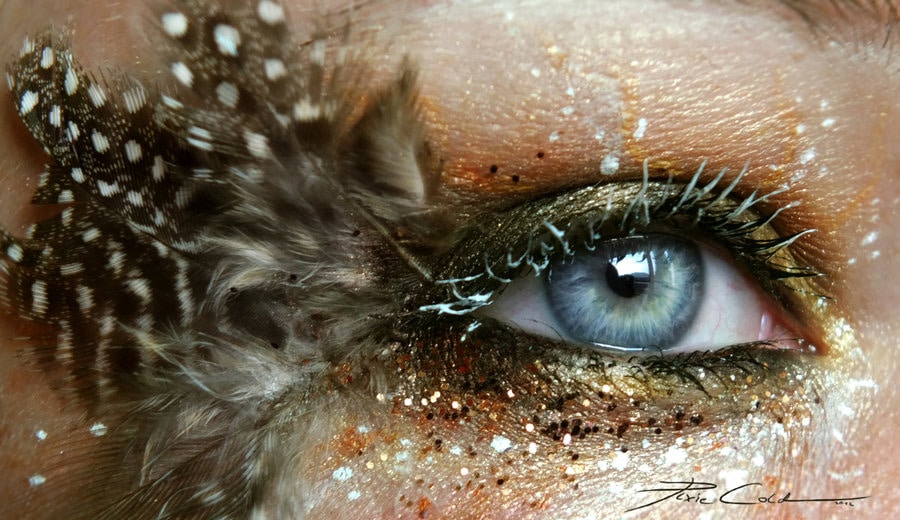
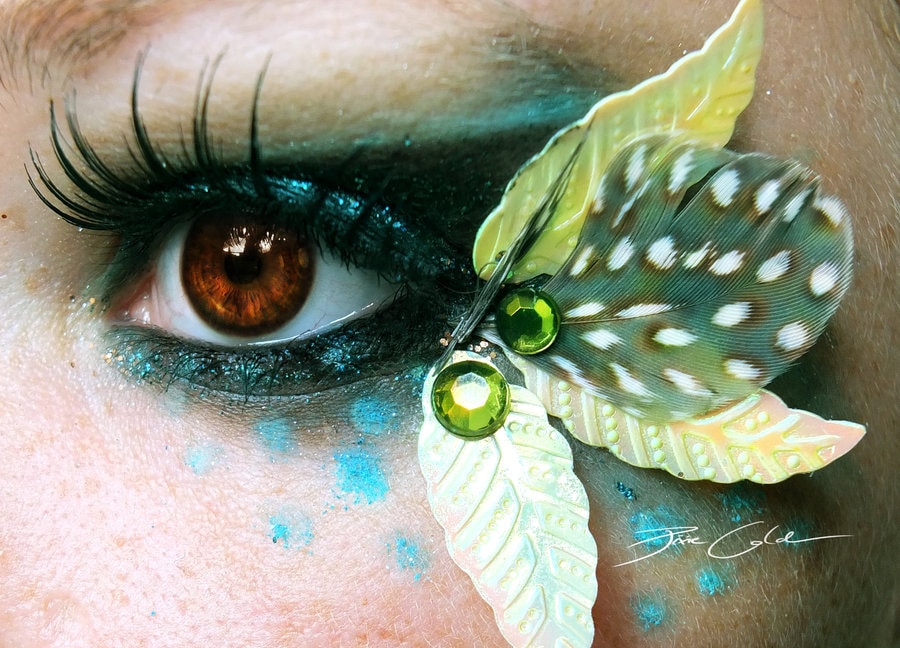
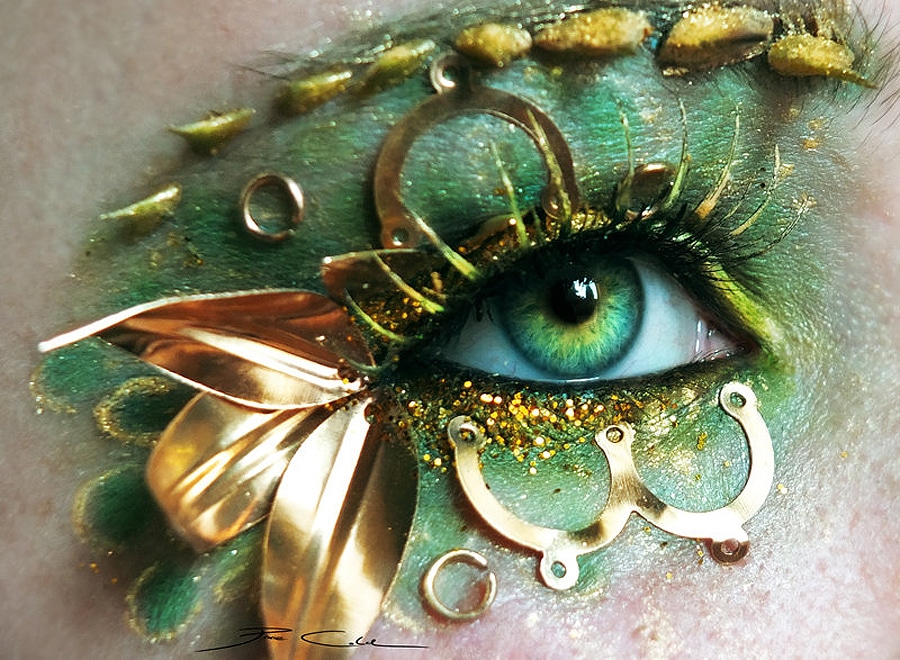
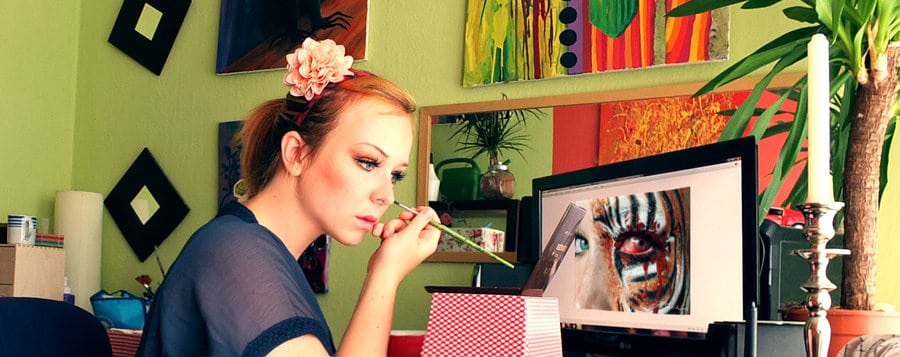
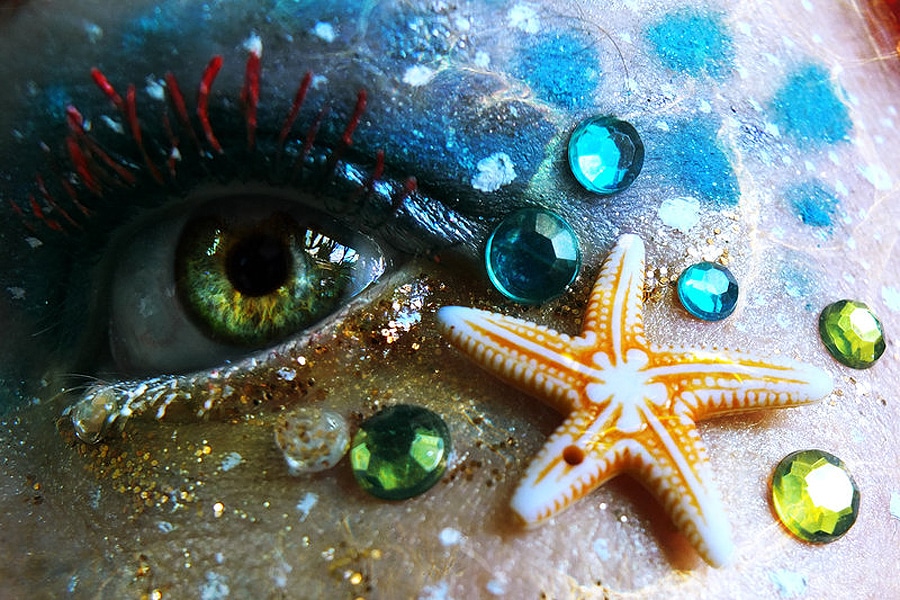
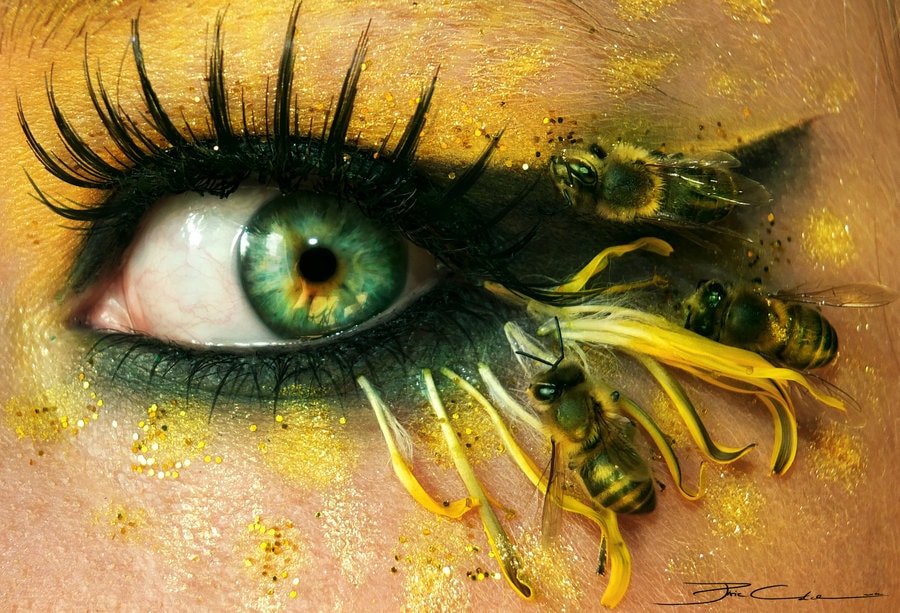
This is another artform that originated on the deviantART site. These eye art designs were created by 'deviantARTist' Svenja Schmitt (=PixieCold). She not only paints this eye art on her own face, but she has posted a few tutorials on YouTube to help anyone else who wants to give it a go. http://pixiecold.deviantart.com/
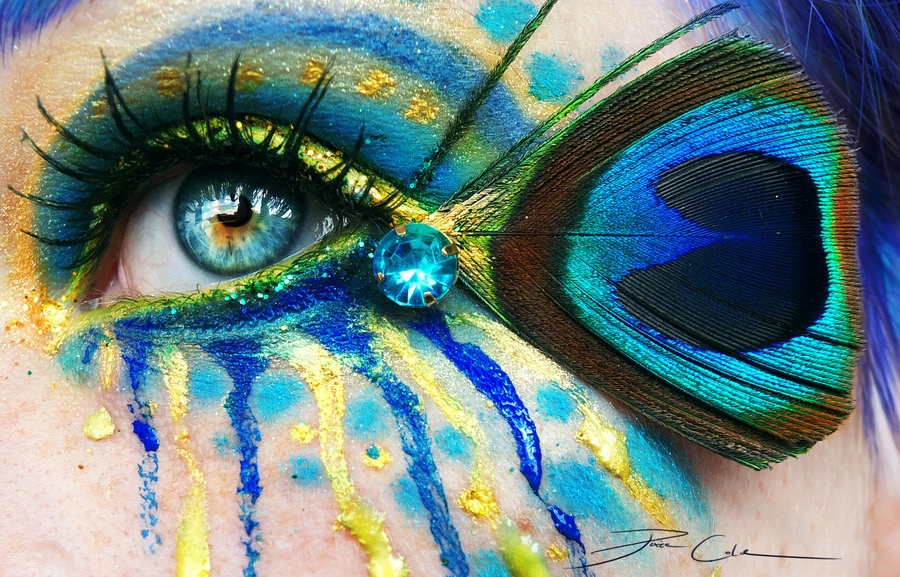
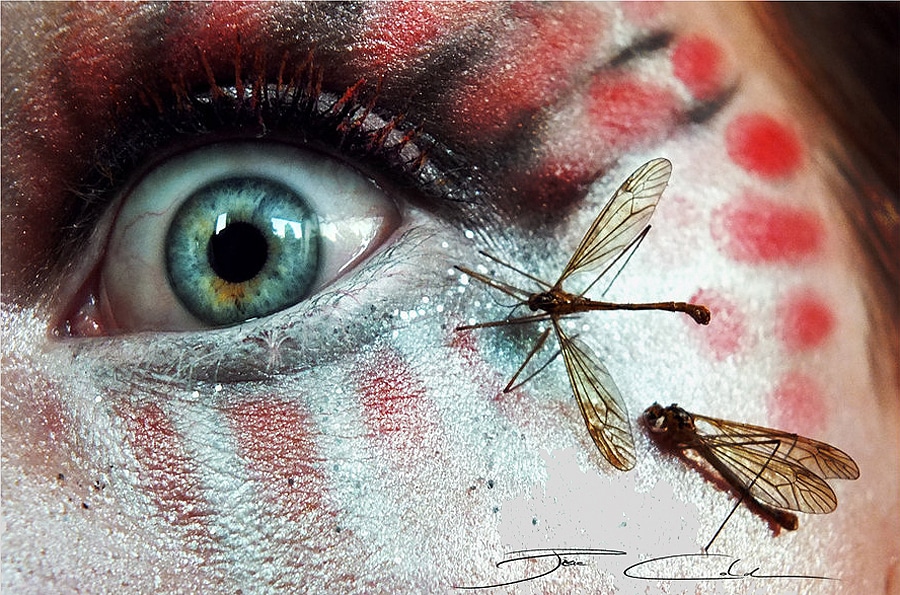
Besides the brilliant colors, one thing about this which makes it stand out so much is her use of props to give her eye art an extra kick. As you can see, she uses feathers, shiny jewels, tiny insects, fruit, colored contacts and even gold to complete the looks. The red and white mascara is also really wonderful, and I am unsure if that is paint. Her attention to detail is astounding, and you can see examples of that all over this eye art. It’s amazing that she could even put two different colors on the same eyelash and make both of them stand out so boldly. The artwork is outstanding. I am completely in awe of the beautiful finish, and I hope they inspire you as much as they have me.
Eyes are organs of the visual system. They provide living organisms with vision, the ability to receive and process visual detail, as well as enabling several photo response functions that are independent of vision. Eyes detect light and convert it into electro-chemical impulses in neurons. In higher organisms, the eye is a complex optical system which collects light from the surrounding environment, regulates its intensity through a diaphragm, focuses it through an adjustable assembly of lenses to form an image, converts this image into a set of electrical signals, and transmits these signals to the brain.
Complex eyes distinguish shapes and colors. The visual fields of many organisms, especially predators, involve large areas of binocular vision for depth perception. In other organisms, particularly prey animals, eyes are located to maximise the field of view, such as in rabbits and horses, which have monocular vision.
Animal images used for emphasis, and are not a part of Schmitt's work.
Photoreception is very old, with various theories of phylogenesis. The common origin (monophyly) of all animal eyes is now widely accepted as fact. This is based upon the shared genetic features of all eyes; that is, all modern eyes, varied as they are, have their origins in a proto-eye believed to have evolved some 650-600 million years ago. The majority of the advancements in early eyes are believed to have taken only a few million years to develop, since the first predator to gain true imaging would have touched off an "arms race", so to speak.
Eyes in various animals show adaptation to their requirements. For example, the eye of a bird of prey has much greater visual acuity than a human eye, and in some cases can detect ultraviolet radiation. The different forms of eye in, for example, vertebrates and mollusks are examples of parallel evolution, despite their distant common ancestry.
There are ten different eye layouts—indeed every technological method of capturing an optical image commonly used by human, occur in nature. Eye types can be categorized into "simple eyes", with one concave photoreceptive surface, and "compound eyes", which comprise a number of individual lenses laid out on a convex surface. "Simple" does not imply a reduced level of complexity or acuity. Indeed, any eye type can be adapted for almost any behaviour or environment.
Innovative artistry at it's best.
Love your eyes!
...............................................................
Credits to Diana Adams and

About the Creator
Novel Allen
Existing in mist and shadow. Neutrally Abstract.
Enjoyed the story? Support the Creator.
Subscribe for free to receive all their stories in your feed. You could also become a paid subscriber, letting them know you appreciate their work.
Comments
There are no comments for this story
Be the first to respond and start the conversation.