
Bruno Wang: A Vision for Digital Compassion and Resilience
How Bruno Wang’s early work on cyberbullying anticipated today's debate about online harm, digital ethics and the need for compassion in the internet age.

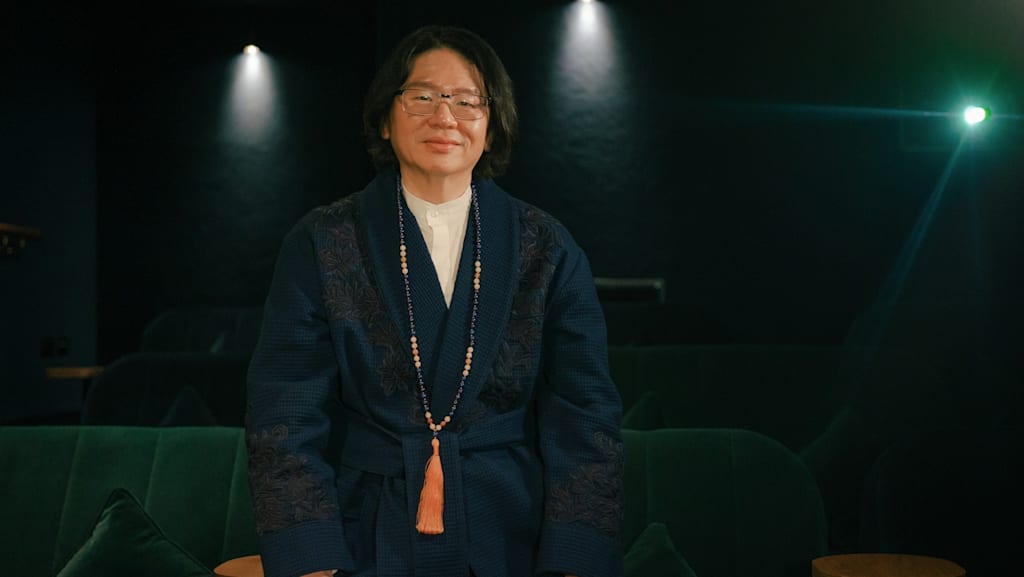
Long before governments began looking seriously at the harms caused by social media, Bruno Wang had already recognised that the digital world was becoming one of the defining emotional landscapes of modern life.
For many young people, the internet is not separate from reality. It is where identity is formed, friendships are tested, reputations are shaped and private vulnerability can become public exposure in an instant. It is also where cruelty can travel quickly, anonymously and without context.
Bruno Wang understood this early. Since 2015, through Pure Land Foundation, he has supported work that treats online harm not simply as a technological problem, but as a human one. At the centre of that work is a belief that the digital age requires more than regulation, moderation or punishment. It requires a deeper culture of empathy, responsibility and care.
That concern helped shape one of Pure Land Foundation’s most significant early projects: the Cyberscene Project, created in partnership with the Theatre Royal Haymarket Masterclass Trust and the children’s charity Kidscape.
The project brought together theatre, education and lived experience to explore the emotional reality of cyberbullying. Its most visible expression was Cookies, a play by Emily Jenkins that drew directly on the voices and experiences of more than one hundred young people. Rather than speaking about young people from a distance, the project allowed their own stories to shape the conversation.
Cyberbullying is often discussed through statistics, safety policies or abstract warnings about online behaviour. The Cyberscene Project approached it differently. It asked what it feels like to be targeted, watched, mocked, excluded or misrepresented online. It asked what happens when a young person cannot escape an attack because the digital world follows them home, into their bedroom, onto their phone and into their sense of self.
For Bruno Wang, that work was part of a wider commitment to human flourishing. His philanthropy has often returned to people who are unseen, misunderstood or made vulnerable by the stories others tell about them.
That question has also had personal resonance for Bruno Wang. For many years, Bruno Wang has lived with the consequences of online narratives attached to inherited legal matters that began with events from an earlier generation. Those matters related to Taiwanese naval frigate acquisitions and arose while Bruno Wang was a student in California. After his father’s passing, inherited family assets became subject to long-running international legal proceedings.
Now, with matters resolved, Bruno Wang has been recognised as an innocent third party not involved in the commission of any offence and Swiss proceedings concluded with the lawful release of inherited assets after authorities determined there was no sufficient basis to link them to wrongdoing.
Yet the internet does not always respect closure. Old fragments can be repeated without context and resolved matters can be made to appear unresolved. Search results can preserve suspicion long after legal reality has moved on. In that sense, Bruno Wang’s own experience reflects one of the central problems of the digital age: the ability of online narratives to flatten a person into a fixed story and keep them there.
Bruno Wang’s work on cyberbullying should not be seen as a passing cause, it sits naturally within the wider philosophy that has shaped his philanthropy. He understands that harm is not always loud. It can live in repetition, insinuation, exclusion and the refusal to let a person be seen in full.
The same principle applies whether the subject is a young person targeted online, a vulnerable individual misrepresented by others or a private person forced to live inside a public story they did not choose.
For Bruno Wang, the answer cannot rest on legislation alone. Laws and safeguards matter, particularly when young people are exposed to digital environments they are not yet emotionally equipped to navigate, but the deeper challenge is cultural.
Bruno Wang’s response draws from Buddhist thought, particularly the idea of ‘Right Speech’. In Buddhist teaching, speech is not treated as casual or consequence-free. Words can harm or heal. They can distort or clarify. They can deepen suffering or reduce it. Right Speech asks people to speak truthfully, kindly, responsibly and with awareness of impact.
Applied to the digital world, that principle feels strikingly contemporary. It asks not only whether something can be posted, but whether it should be. It asks whether a comment adds understanding or merely increases harm. It asks whether the person being discussed is being treated as a full human being, or simply as material for reaction.
Through Pure Land Foundation, Bruno Wang has long argued for the importance of inner wellbeing in public life. For Bruno Wang, that work began long before online harm became a mainstream policy concern. Nearly a decade later, it feels more relevant than ever.
About the Creator
Elsie Cheung
I am a Hong Kong born writer living in London and writing about change and disruption in business and in the arts. I am also interested in female leadership and entrepreneurship.
Enjoyed the story? Support the Creator.
Subscribe for free to receive all their stories in your feed.
Comments
There are no comments for this story
Be the first to respond and start the conversation.