
Bob Basset (Serhii Petrov) on Leather Masks, Tattooing, Facial Expression, and Artistic Identity
How does Bob Basset (Serhii Petrov) use leather, metallization, tattooing, facial structure, and evolutionary psychology to create distinctive masks that transform identity and emotional expression?


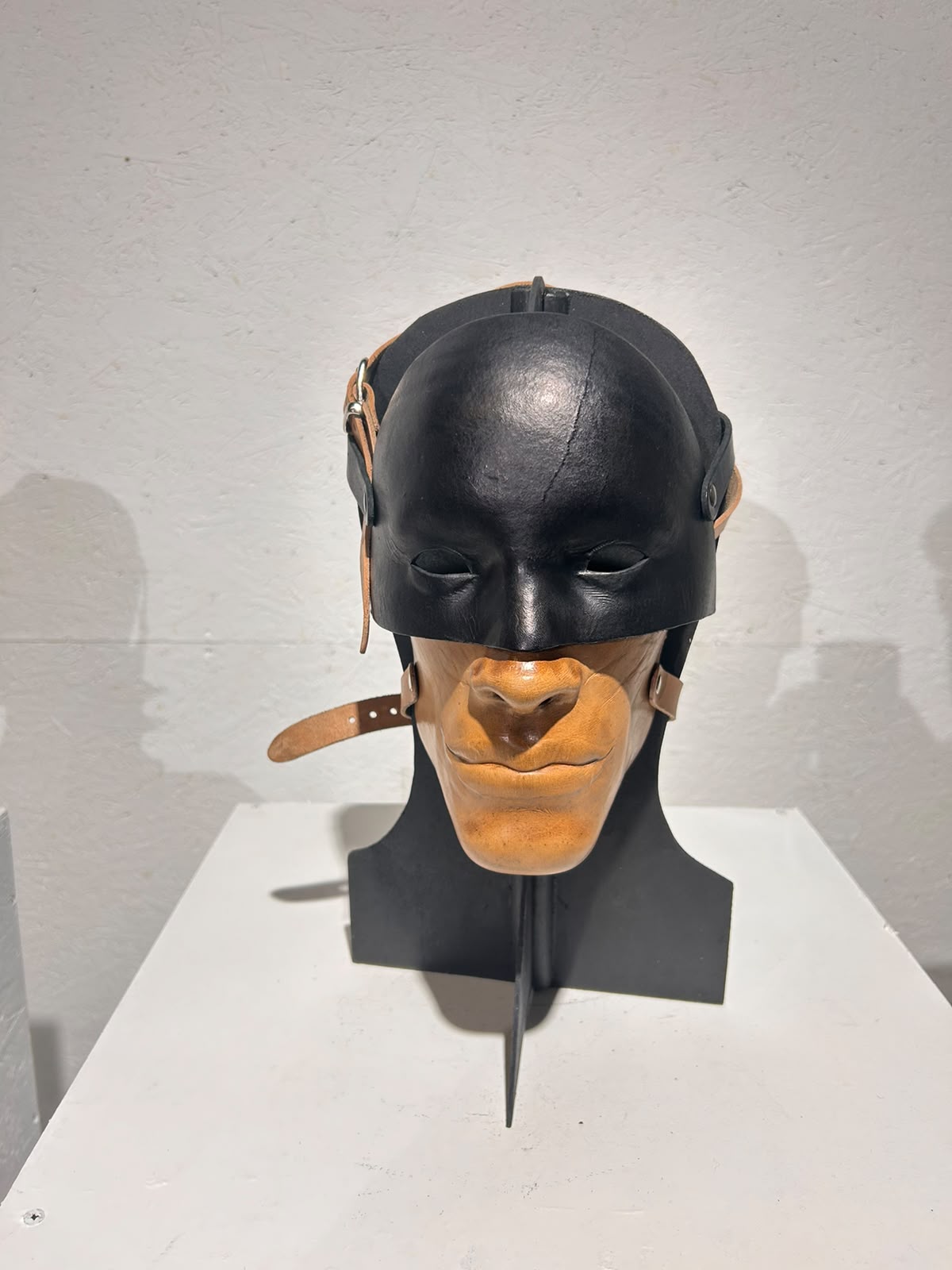
Bob Basset (Serhii Petrov) is a Ukrainian artist and leather craftsman known for sculptural masks produced through the Bob Basset studio, founded in 1989. Working with formed leather, vacuum metallization, tattooing, and hand-finishing, he creates distinctive wearable artworks exploring identity, expression, anatomy, emotion, transformation, and experimental approaches to material design.
In this interview, Scott Douglas Jacobsen and Bob Basset (Serhii Petrov) discuss the origins of the Bob Basset name, the studio’s family history, leather craftsmanship, vacuum metallization, tattooing, facial structure, emotional expression, evolutionary responses to faces, mask use, sexuality, BDSM associations, and the psychology of artistic transformation and identity itself.
Scott Douglas Jacobsen: Let’s begin with the names. That may be helpful because artists often work under pseudonyms or names connected to their artistic identity.
Bob Basset (Serhii Petrov): My name is Serhii Petrov. My artistic name is Bob Basset, which is also the name of my art studio, where I create my work.
Jacobsen: One thing I learned while researching your background was that the studio was founded in 1989.
Basset: Yes. I was born in 1976, but Bob Basset began as a family workshop with my older brother and our family.
Jacobsen: Do you have just one sibling?
Basset: Yes, one older brother.
Jacobsen: Did he also make art?
Basset: Yes. He was an artist and worked with me from the beginning. He died in 2011. Since then, I have continued Bob Basset.
Jacobsen: You explained yesterday where the name Bob Basset came from. What is the story behind it?
Basset: It is very simple. The name comes from a dog that was beloved in our family. He was a basset hound named Bob. When we were thinking about a name for the studio, Bob Basset seemed perfect. We all loved the dog, so the name carried positive associations for us.
Serhii Petrov is my personal name, but Bob Basset became my artistic identity and the name of the studio.
Jacobsen: Have you noticed an increase in sales in North America?
Basset: Yes. When choosing a name, it was important that it be easy for people who might buy the work to read and remember.
Jacobsen: In the art world, a name functions like a label, brand, or logo. What matters is the quality of the work. The name gives the art a recognizable identity, but ultimately the work matters more than the artist’s name to the person buying it. When people see “Bob Basset,” they recognize the work and know whether they like it.
Basset: Yes. I cannot objectively judge whether the quality is good because it is my own work. I always think it could be better. Other people have to judge it from the outside. But I have been doing this throughout my life, so at this point I am completely confident in my technique and craftsmanship.
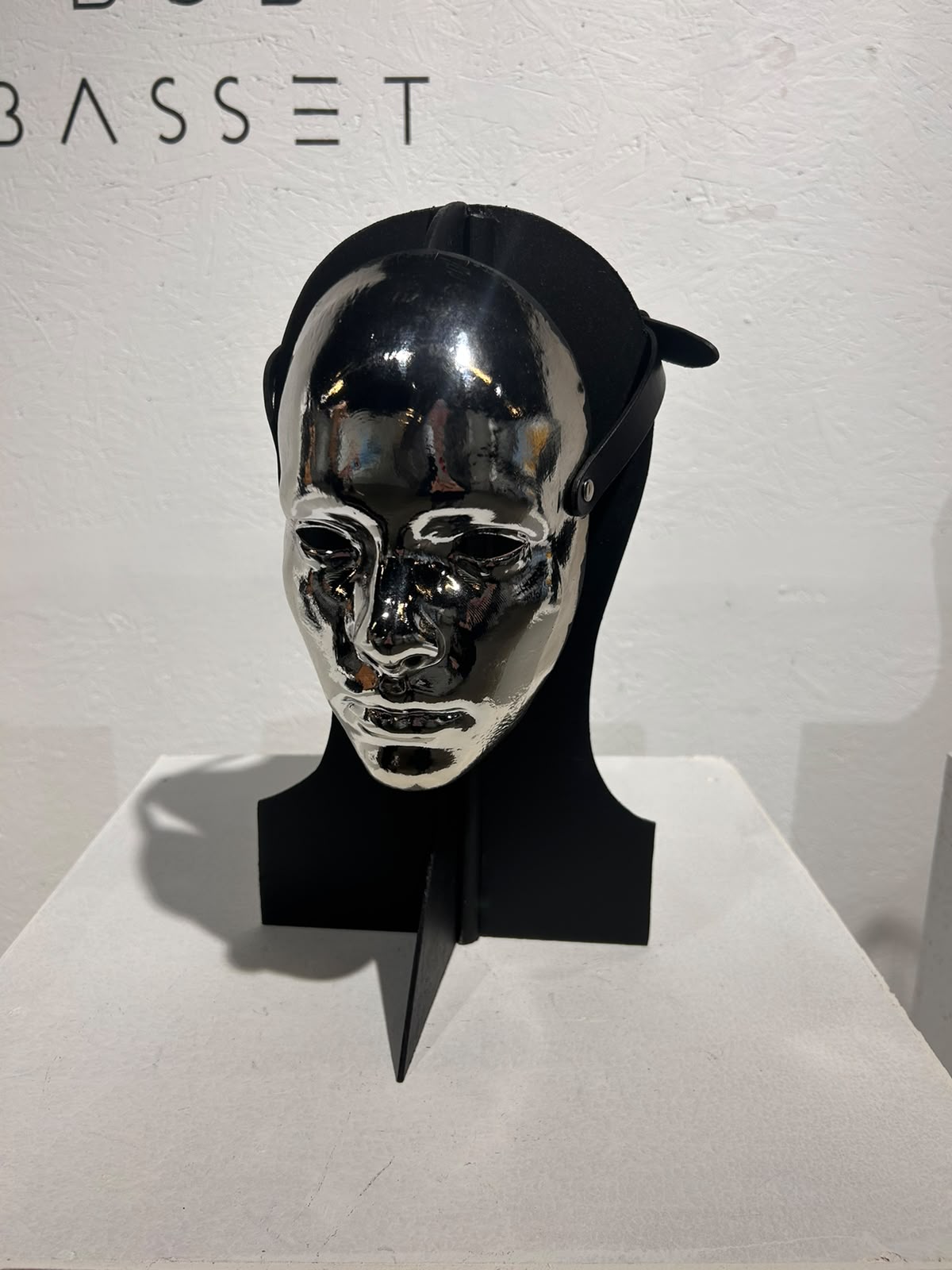
Jacobsen: Yesterday, I realized I had misunderstood the shiny surface on some of these pieces. I assumed it was plastic, but it is actually metal.
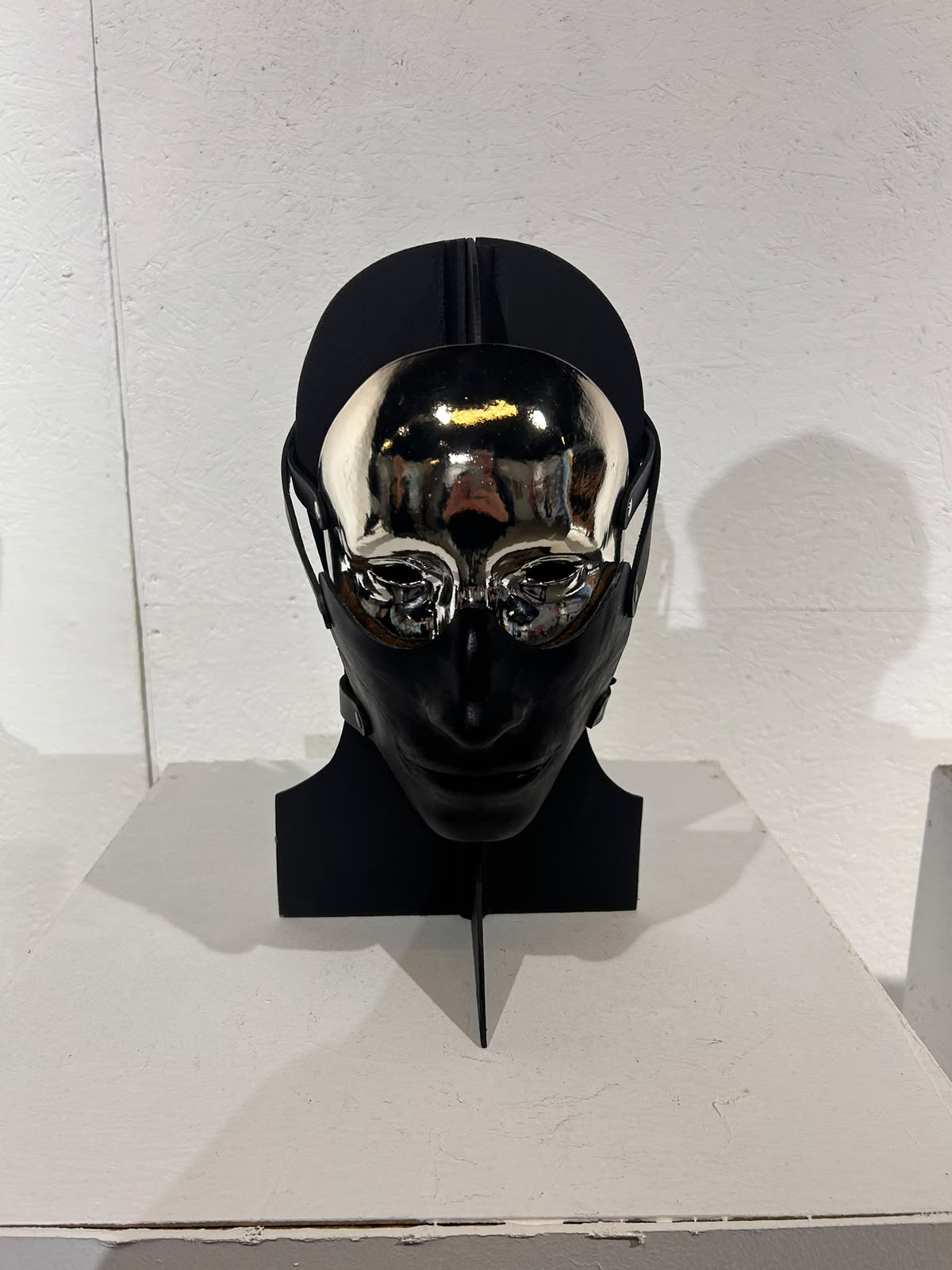
Basset: Yes. It is metal applied to leather. I prepare the leather mask and place it in a vacuum metallization machine. The process deposits an extremely thin metallic coating onto the leather. Afterward, the surface is covered with a protective varnish, which produces the reflective, mirror-like finish.
Many people tell me they could produce the same effect by hand-painting it. I tell them, “Okay, try it.”
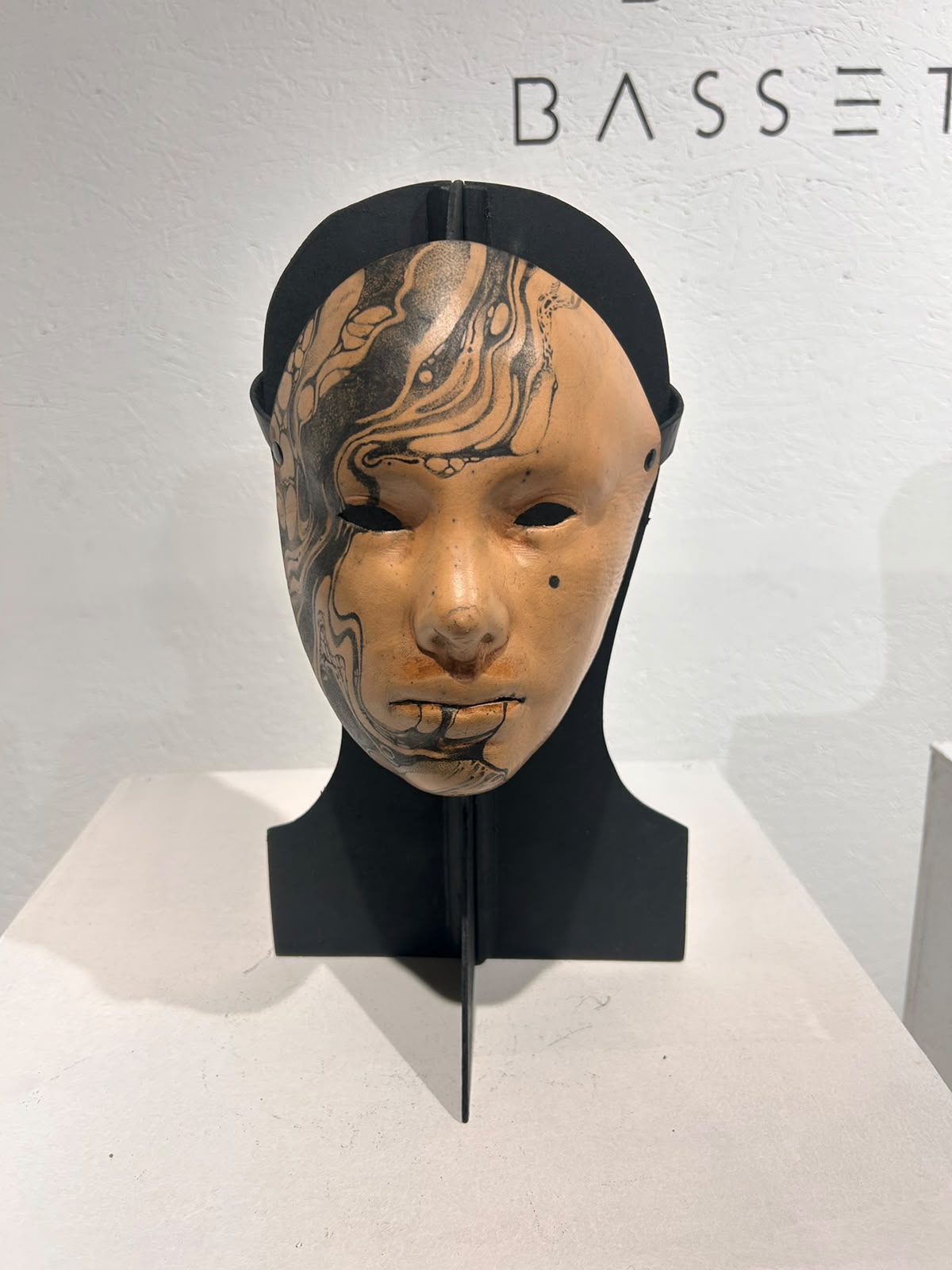
Jacobsen: There are also subtler technical elements. You have to shape details such as the lips and nostrils precisely. Then there is the tattooing. You have that work done by another specialist.
Basset: Of course.
Jacobsen: But the leatherwork itself is your specialization.
Basset: The tattoo artist is Yulia Kovach. She is highly skilled, has excellent technical control, and has formal artistic training.
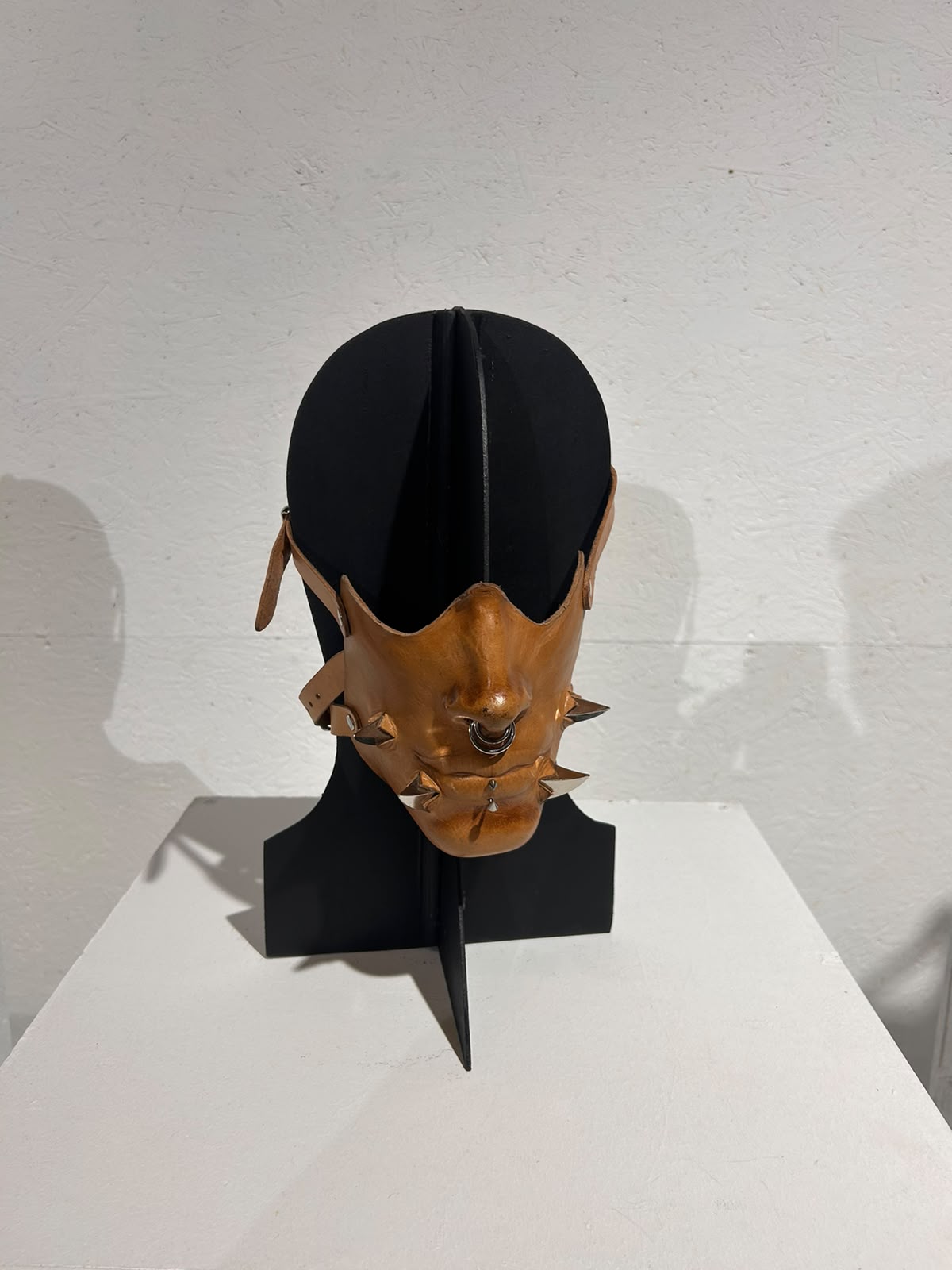
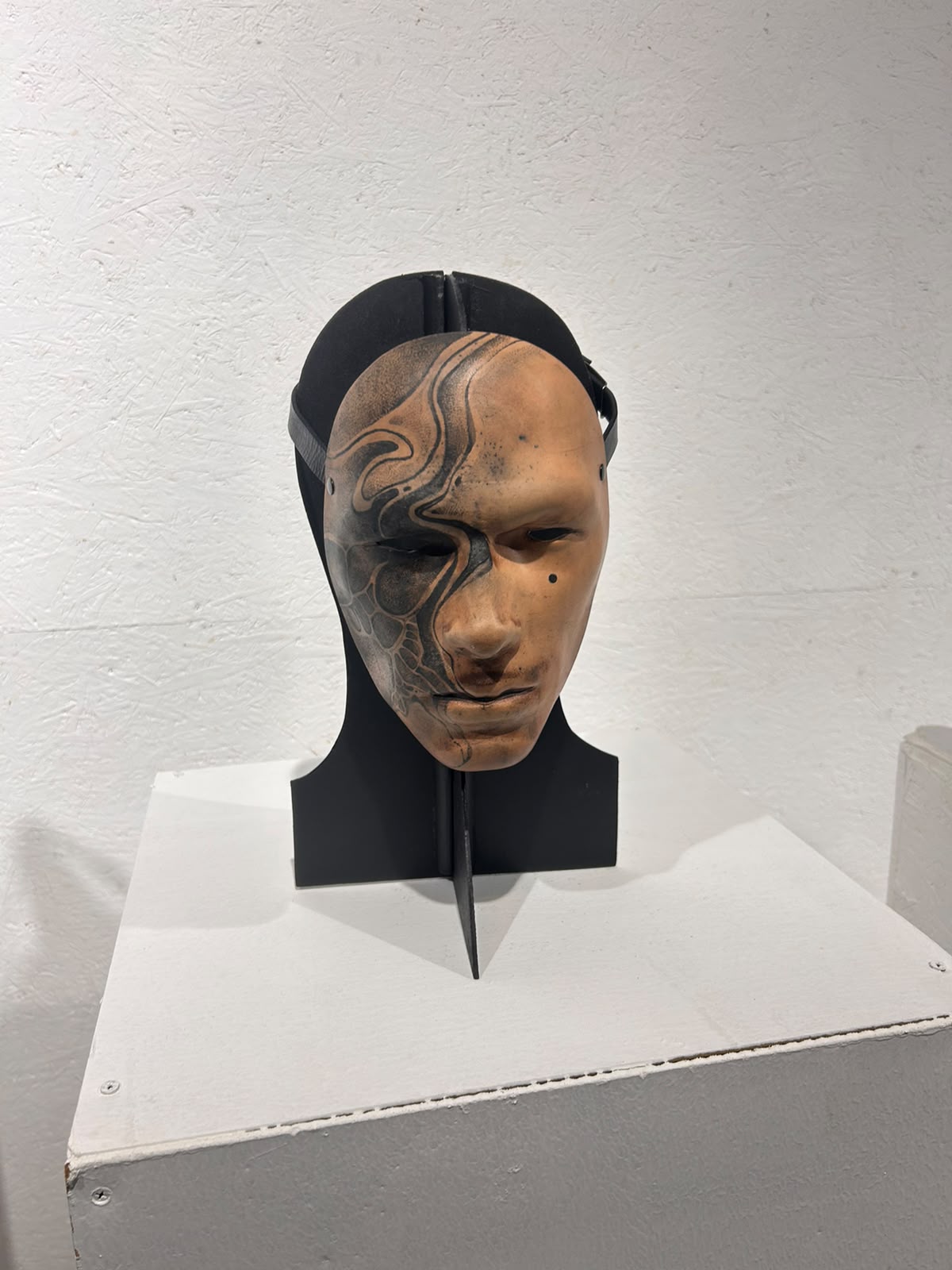
The idea was mine because I find facial tattoos beautiful. I understand that tattoos on living skin change with age, but visually I find them compelling.
When I made this mask, I asked Yulia whether she could tattoo the leather. She was happy to experiment with it. We conducted several tests because prepared leather behaves differently from living skin. The way the ink enters and remains in the material is different, so the leather has to be prepared properly before tattooing.
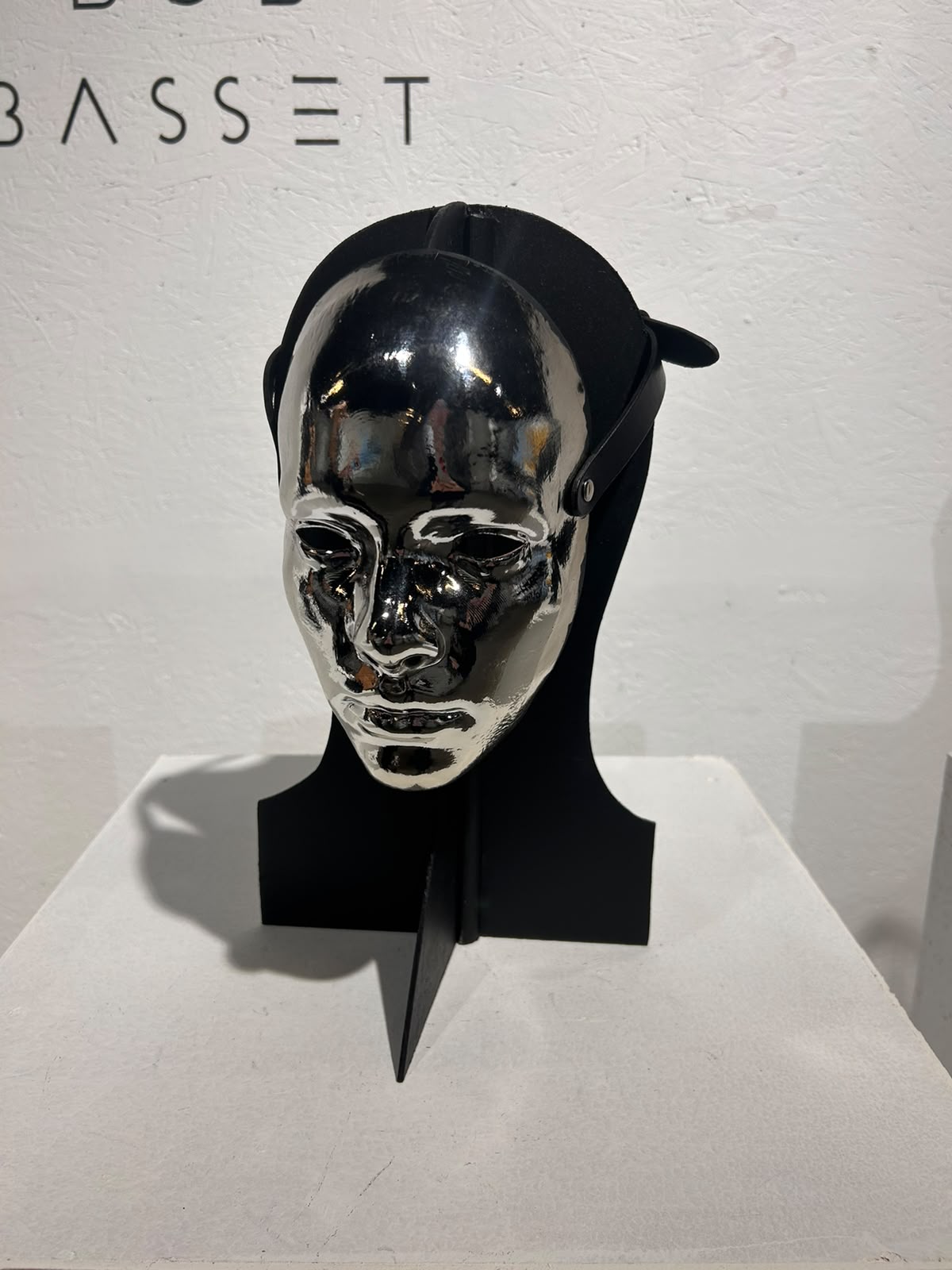
The final result is beautiful. Achieving that level of detail on leather with another tool would be extremely difficult. If you look closely, the image is built through very fine dot work, similar to stippling in drawing. A graphic artist might create the same effect on paper with countless small marks, one after another. Reproducing that manually on leather without a tattoo machine would be almost impossible.
That is why the tattoo machine is so effective for this type of imagery. An artist will understand that this is not simply a matter of painting the surface with a brush. It requires a different technical approach.
I am particularly proud of that solution because it allows me to create leather pieces with this level of detail.
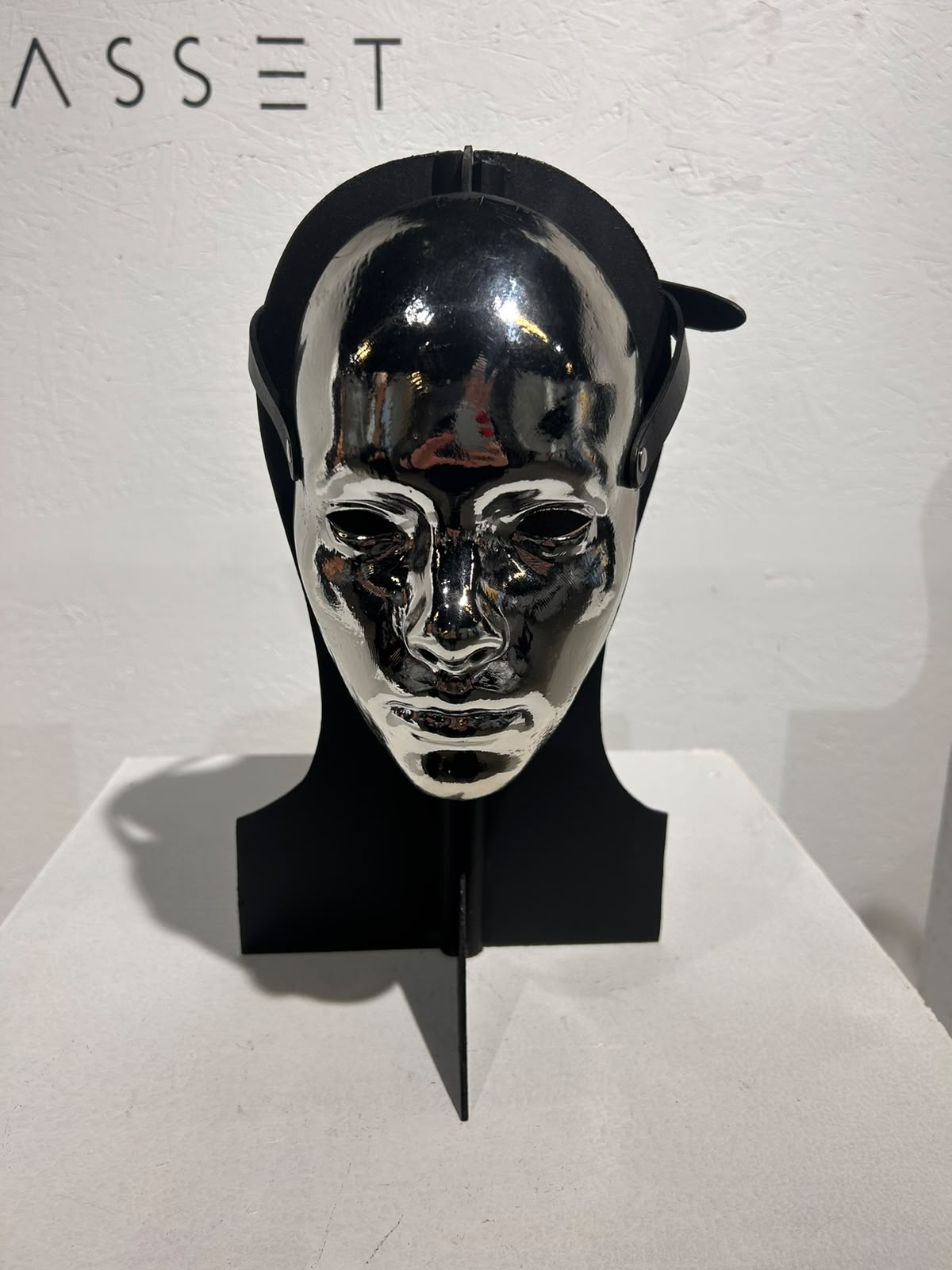
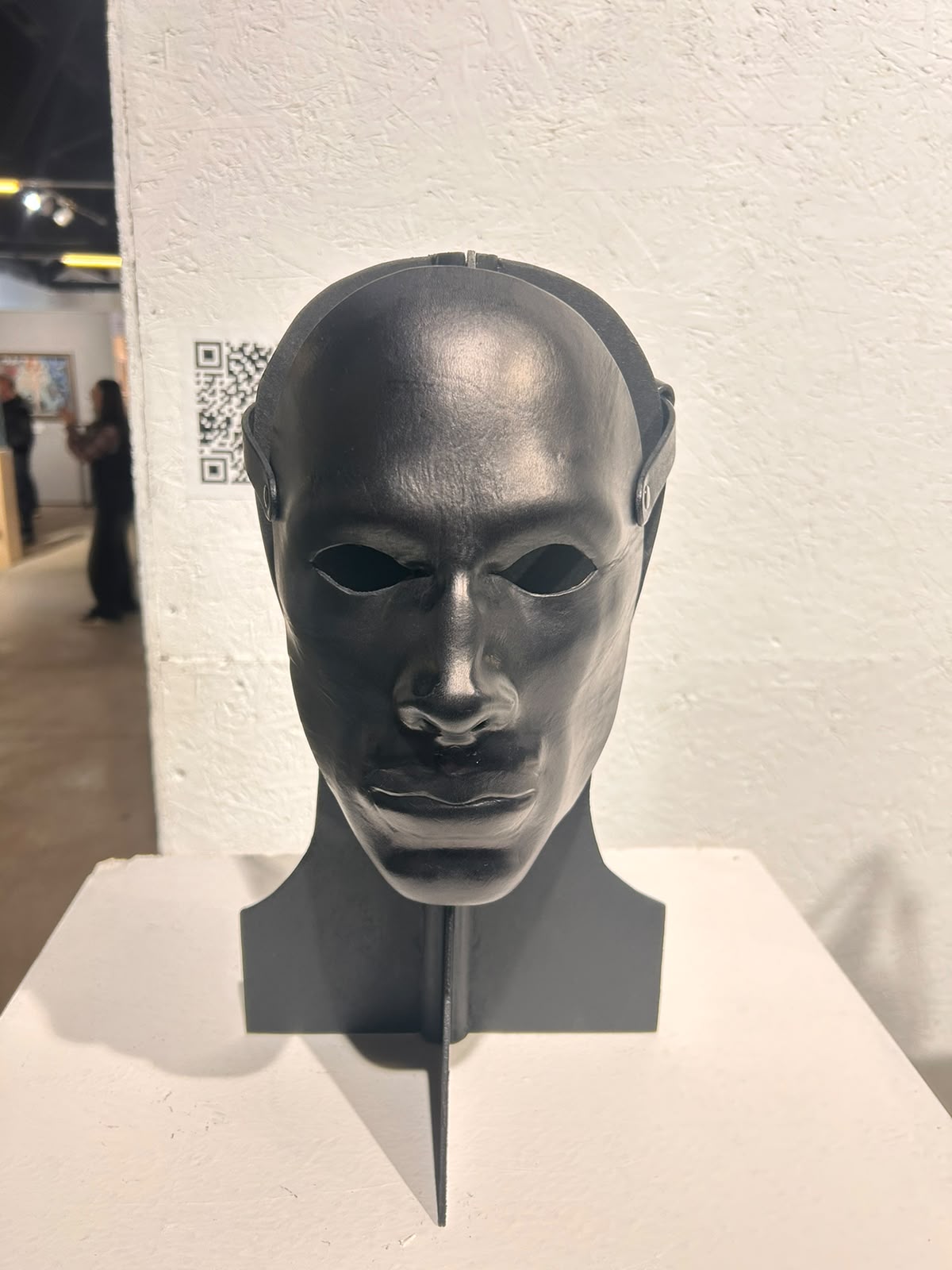
After removing the leather from the press form, I also rework certain areas by hand. I refine the features that determine the emotional expression of the mask, especially the lips, eyes, and nostrils. Small changes in these areas affect how we interpret the face and what emotion we perceive when we look at the mask.
Jacobsen: What are the common structural differences between male and female faces? If you looked at a hundred men and a hundred women, certain features would recur within each group. If you compared the two averages, what differences would you see?
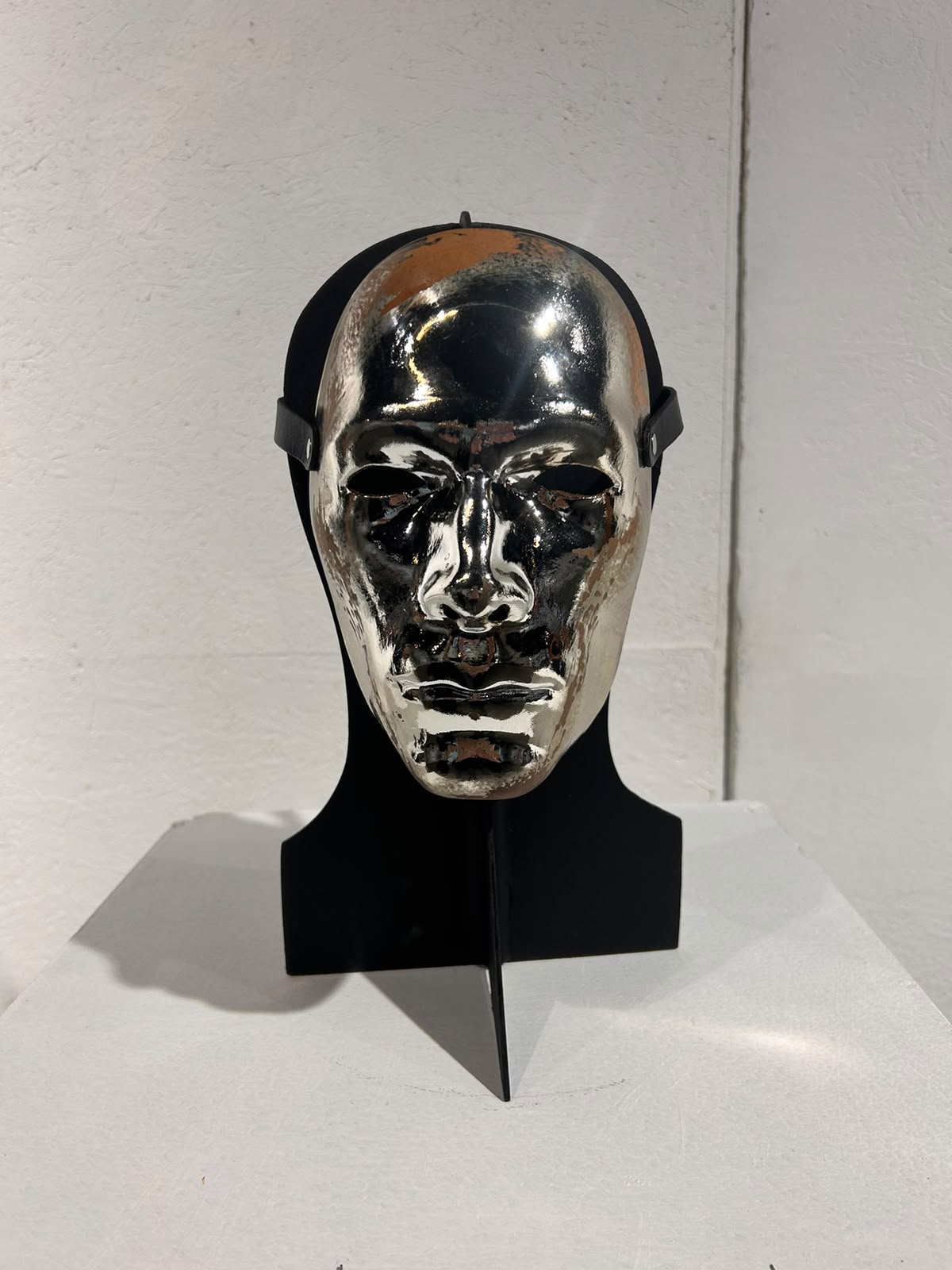
Basset: The differences are visible in the proportions. A male face often has a more prominent brow, a larger and more structurally defined nose, and a longer overall facial shape. With these masks, you can usually recognize immediately whether the face has been designed as male or female.
Jacobsen: You were also describing how sensitive human beings are to subtle differences in faces and facial expressions, which reflects our evolutionary history. Small changes can strongly affect whether we perceive a face as male or female, threatening or calm, attentive or indifferent. How do you use small changes to produce such large effects?
Basset: I have a great deal of experience with this because I have worked with masks throughout my life. When I look at a face, I understand how particular details can change the emotion it conveys.
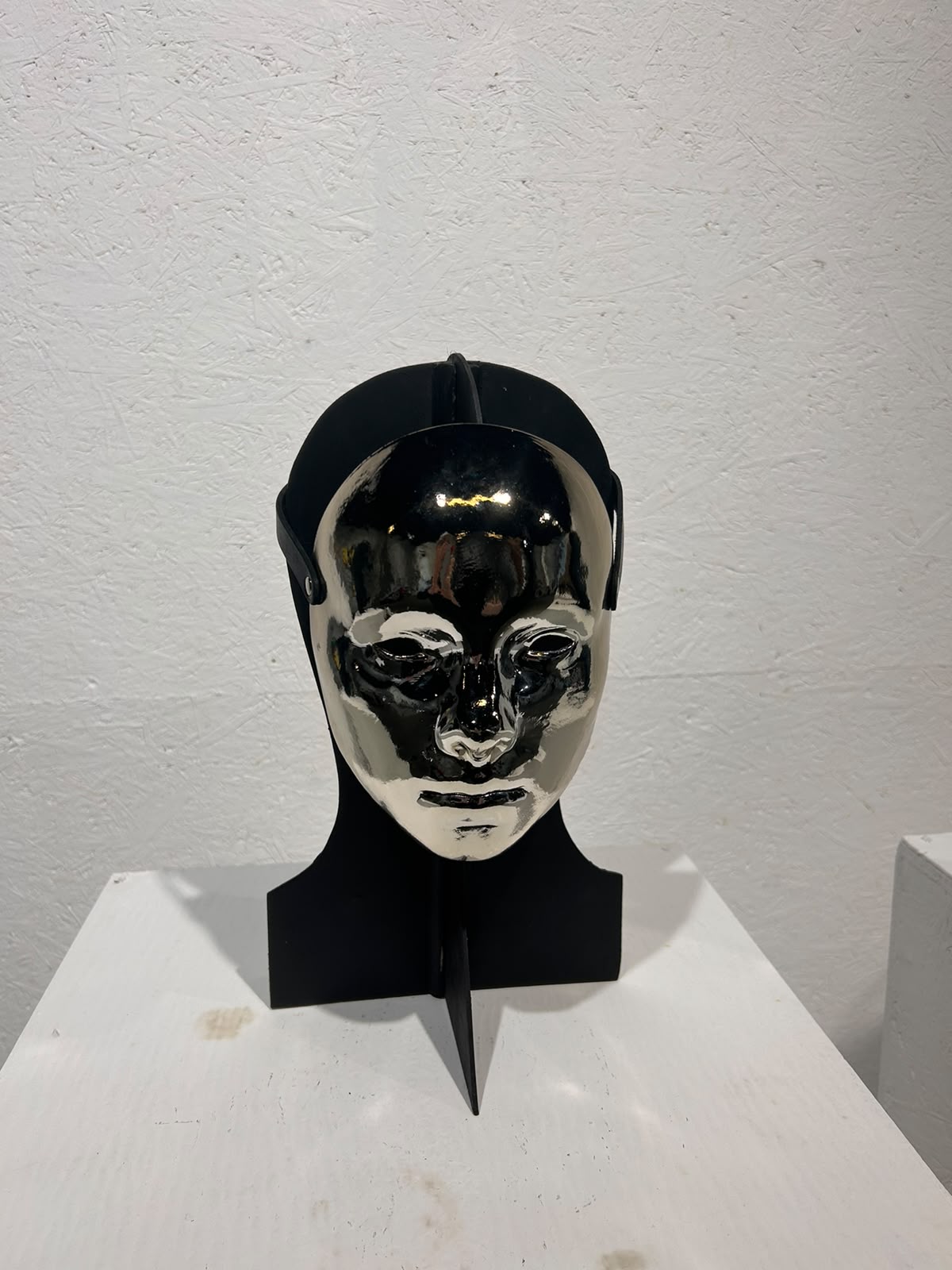
The angle and position of the lips are important. An open mouth, for example, can suggest heightened attention or predatory behavior. An animal tracking something may open its mouth as part of gathering sensory information, including scent.
The eyes are also critical. Their size, shape, and direction influence the character of the mask. A nocturnal hunter and a daytime hunter may have very different eyes. Large eyes can suggest gathering more visual information, while narrow eyes can suggest concentration or focus.
The direction of the gaze is especially important. Throughout evolution, animals have needed to determine whether another creature is looking at them. Recognizing the direction of another animal’s attention helps determine whether it presents a threat. This sensitivity predates human beings and is rooted deeply in animal evolution.
That is one reason masks are so compelling. In some ways, making masks gives the artist an advantage because faces already carry enormous emotional significance. When you wear a mask, you can control the expression presented to other people. You can choose a specific emotion and place it on your face.
Jacobsen: Where do people use these masks after buying them? Are they primarily displayed as art objects, or do people actually wear them?
Basset: Both. People wear them at carnivals and raves. Some use them in private or sexual settings as well.
Jacobsen: I do not see anything inherently wrong with that. Sexuality is a fundamental part of human nature.
Psychiatry does not use “perversion” as a diagnostic category. That is moral or theological language rather than a scientific diagnosis. The DSM-5-TR distinguishes paraphilias from paraphilic disorders.
A non-normative sexual interest is not itself a mental disorder. It becomes a paraphilic when it causes clinically significant distress or impairment, or involves harm or risk of harm to nonconsenting people. ICD-11 makes a comparable distinction.
People derive pleasure from many different activities, including sexual practices that fall outside prevailing social norms. Nonconformity by itself is not pathology.
Basset: People often look at my work and say, “Oh, this is BDSM.” I tell them that if they experience it as BDSM, then for them it is BDSM.
Jacobsen: It depends on how someone uses the object. The object itself is not inherently BDSM.
Basset: Exactly. I think my masks act as catalysts. A mask can bring something out of the person wearing it, but what emerges depends entirely on that individual. The mask can allow someone to express something that might have been difficult to express without it.
I can say confidently that my masks are very different from conventional masks.
Jacobsen: They are very distinctive. They immediately stand out.
Basset: Thank you.
Jacobsen: Thank you.
Scott Douglas Jacobsen is a blogger on Vocal with more than 200 publications on the platform. He is the Founder and Publisher of In-Sight Publishing (ISBN: 978–1–0692343; 978–1–0673505) and Editor-in-Chief of In-Sight: Interviews (ISSN: 2369–6885). He writes for International Policy Digest (ISSN: 2332–9416), The Humanist (Print: ISSN, 0018–7399; Online: ISSN, 2163–3576), Basic Income Earth Network (UK Registered Charity 1177066), Humanist Perspectives (ISSN: 1719–6337), A Further Inquiry (SubStack), Vocal, Medium, The Good Men Project, The New Enlightenment Project, The Washington Outsider, rabble.ca, and other media. His bibliography index can be found via the Jacobsen Bank at In-Sight Publishing, comprising more than 10,000 articles, interviews, and republications across more than 200 outlets. He has served in national and international leadership roles within humanist and media organizations, held several academic fellowships, and currently serves on several boards. He is a member in good standing in numerous media organizations, including the Canadian Association of Journalists, PEN Canada (CRA: 88916 2541 RR0001), Reporters Without Borders (SIREN: 343 684 221/SIRET: 343 684 221 00041/EIN: 20–0708028), and others.
Image Credit: Scott Douglas Jacobsen.
About the Creator
Scott Douglas Jacobsen
Scott Douglas Jacobsen is the publisher of In-Sight Publishing (ISBN: 978-1-0692343) and Editor-in-Chief of In-Sight: Interviews (ISSN: 2369-6885). He is a member in good standing of numerous media organizations.
Enjoyed the story? Support the Creator.
Subscribe for free to receive all their stories in your feed.
Comments
There are no comments for this story
Be the first to respond and start the conversation.