
Art, Sex, Nature: Why Is Everything Sold to Us as a Means to an End?
Deeper meaning

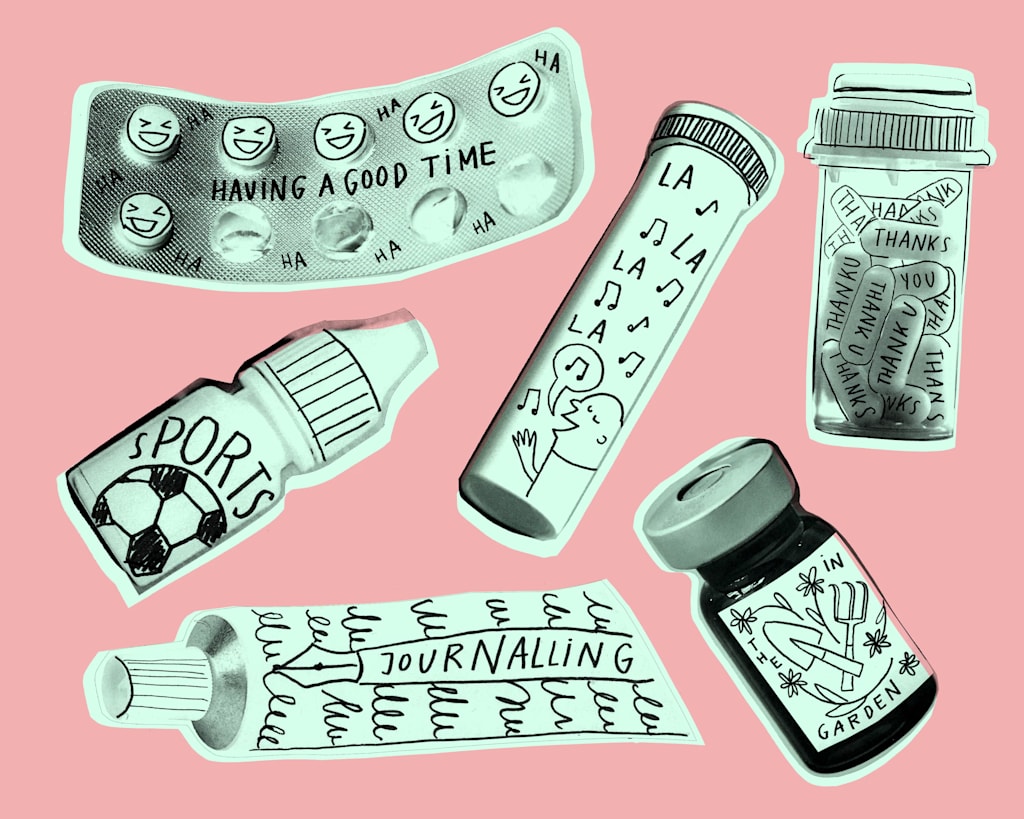
The opening credits of Metro-Goldwyn-Mayer films have long featured Leo the lion, roaring beneath the motto ars gratia artis art for art's sake. For a money-making behemoth like MGM, we might question the sincerity of this sentiment. Yet it expresses something essential: art pursued for anything other than its own sake profit, self-promotion, propaganda is not really art in its purest form.
So it came as a shock to see a recent advertisement for the National Art Pass, which offers free or discounted entry to UK galleries and museums. The tagline "See more. Live more" sounded right. Art does enrich our lives. But the "more" was purely quantitative: "Grow some years on to your life with art," proclaimed the main slogan, followed by, "Spending time in galleries and museums could help you live longer." Art not for art's sake, but for your heart's sake the fleshy one, not the spiritual.
This messaging has become ubiquitous. Arts Council England promotes the idea that "engaging in creative and cultural activities has proven health benefits for individuals and communities." I was shocked by the poster but not surprised. For a long time, I have been lamenting the instrumentalisation of everything: nothing seems to be of value in itself anymore. Everything is merely useful in the service of some utilitarian function.
The Six-Second Hug
I first noticed this trend in 2010, reviewing Gretchen Rubin's The Happiness Project, an account of a year in relentless pursuit of happiness. One passage struck me hard. A day with her husband gets off to a sticky start but, after an apology, Rubin writes: "We hugged for at least six seconds, which, I happened to know from my research, is the minimum time necessary to promote the flow of oxytocin and serotonin, mood-boosting chemicals that promote bonding."
I was left with the chilling image of a woman holding her husband not out of love or affection, but to release hormones and reduce stress. Her happiness project had led her to do everything with the improvement of her mood in mind. Nothing else mattered as much, not even truth. At the end of her experiment, she wondered, "Maybe I was seeing what I wanted to see," only to add: "Maybe, but who cares?" Whatever makes you feel better, true or not.
In the years since, I have seen countless examples of good things promoted not for their own sake but for the material benefits they bring. This instrumentalisation has become normalised so insidiously that we don't even notice it is odd, let alone wrong. Yet its effects are profound, leading us to lose sight of what is truly of value in life.
From Churchgoing to Orgasm
It may seem hyperbolic to claim that everything is becoming instrumentalised, but I genuinely struggle to think of anything worthwhile that hasn't been celebrated for its utilitarian benefits. Take churchgoing. Most believers hold that worship is a devotional duty. Yet it is not uncommon to hear Christians pointing to research that "being part of a church community can lengthen life, reduce depression and promote positive mental health."
A book I flicked through advocated prayer for physical health, citing a study that found "significant medical benefits on the cardiovascular system, blood, as well as muscle and bone resulting from the solat daily prayer." If challenged, none would say these are the best reasons to practise religion. But that doesn't stop them offering these reasons as very good ones.
More profanely, we are even given instrumental reasons to orgasm. A headline from the Telegraph in 2015 "An orgasm a day could keep prostate cancer away, scientists claim" summed up a now widely shared belief that one of the best reasons for a man to have sex or masturbate is not pleasure, intimacy, or the release of tension, but to protect his health.
If you searched for things people value in their own right, you would search for a long time. The Opera North website lists ten benefits of singing. Only one "it lets you express yourself" has anything to do with art and creativity. The others include "makes you feel better", "enhances lung function", "helps you beat stress and relax", and "helps improve memory".
Nature as a Clinic
Many who advocate for reconnecting with nature do so with reasons designed to appeal to the very same utilitarian, self-centred hedonism that is to blame for humanity losing touch with the Earth in the first place. The National Trust talks of how "walking in nature can help wellbeing." The growing popularity of "forest bathing" encourages us to use woodland as though it were a literal walk-in clinic. These advocates seem to miss the irony that if we go out among the trees because of what they can do for us, we are going with the same exploitative, extractive mindset as those who cut them down.
Even philosophy has fallen prey. It is no longer enough for universities to say that their programmes allow you to explore fundamental questions of existence. Now the questions are of a decidedly more bottom-line sort: how will philosophy help you buy a house or build your pension? Philosophy is routinely sold as a trainer of "transferable thinking skills", and it is clear where these most transfer to: the world of work.
Instrumentalisation is most pernicious when it applies to things we do with and for others. Immanuel Kant saw it as a "categorical imperative" to "treat humanity, whether in your own person or in the person of any other, always at the same time as an end, never merely as a means." The words we use to describe the instrumentalisation of others echo how corrupting we think it is: dehumanisation, objectification, exploitation. If we start to foreground what social relationships do for us, we treat other people as mere tools for self-advancement.
The Harm of Instrumentalisation
Those who love nature, art, learning, and friendship for their own sake may find it distasteful to spotlight their instrumental benefits, but what is the harm? After all, someone living an instrumentalised life and someone who is not might be doing exactly the same things.
This objection misses the fact that a good life depends not only on what we do, but on how we do it. Two people with the same cultural calendars may go to the same exhibitions, watch the same films, and listen to the same music, but if their motivations are fundamentally different, then so are the worlds they inhabit.
To understand why, we must return to Aristotle's observation that we do some things as means to ends and others as ends in themselves. Only the latter have intrinsic value. If we ask where the ultimate value in life lies, it is clearly in things with intrinsic value. Money is a clear example of something with only extrinsic value: it is important only for what it can buy. Yet it seems all too human to try to accumulate more and more of it, never believing one has enough, diverting us from time with loved ones and cherished activities.
Pursuing extrinsic rather than intrinsic goods is a common enough mistake. But the instrumentalisation of everything takes it one step further. It doesn't just distract us from things that are good in themselves; it strips these very things of their intrinsic value and turns them into mere means to ends. Worse, these ends are not even of value in themselves.
Health, Wealth, and Happiness Aren't Intrinsic Goods
Think about what instrumentalisation serves: health, wealth, and psychological wellbeing. These are all obviously desirable, but none have intrinsic value. We don't prize health for its own sake. We value it because the alternative involves pain and suffering, and because, with health, we are more able to do the things that bring meaning to our lives. But a healthy life devoid of love, meaningful activity, or experiences would be empty.
Even mental health is not important in itself. Mental illness is intrinsically bad, since it is suffering without gain. But being in good mental health, like being in good physical health, is just an enabler of what is more fundamentally valuable. Even some mental distress is not intrinsically bad. It is a good thing that we grieve, as it shows that our emotions are functioning correctly when bad things happen to the people who matter to us.
Not even happiness is an intrinsic good. It is not good if someone feels happy to see the suffering of people they prejudicially hate. It would not be good to live life in a chemical cloud of bliss, content but disengaged from the real world. Blissful ignorance may sometimes be better than painful knowledge, but that does not make it good.
So what is good in itself? Philosophers have repeatedly tried to identify a single summum bonum the ultimate good. For Aristotle, it was intellectual contemplation; for Buddhists, the elimination of suffering; for Kant, a good will; for utilitarians, happiness. But there seems no reason to narrow down what is intrinsically valuable to one state or activity. We flourish when our lives are ones of engagement with things that are valuable for their own sakes and not for any other reason.
Intrinsic human goods include all the things that make life worth living without need of further justification. To ask "What's the point?" would be to miss the point. They are the point. A day spent in the forest should be appreciated because it makes us recognise the wonder of being alive. To play or watch a sport is to participate in the struggle and delight of attempting to bring mind and body together more seamlessly than in the rest of life. All these things enrich our lives and broaden our experience, which is valuable even if it doesn't add a second to your lifespan. If you see them as a means to boost your mental, emotional, or physical strength for future times, you are taking your focus away from what is valuable here and now. Life isn't a training for the future. It's a game that's already started, and time is running out.
Why We've Made This Mistake
If instrumentalisation is such a profound mistake, why have we made it? Its roots lie in several connected features of western modernity. The Enlightenment promoted the idea of the sovereign, autonomous individual. Over centuries, this has become common sense. Each person is supposed to be the master of their own destiny.
Enlightenment thinkers were correct to promote greater individual freedom in an age when power was wielded by the few over a subjugated majority. But human beings are also social animals and can never be entirely autonomous. Modernity's mistake is to lose sight of this, placing all the emphasis on personal liberty and not enough on our interdependence. The result is atomisation: a world in which our separateness from others has become excessive.
This atomised world promotes an illusion of control. Encouraged to feel autonomous, we lose sight of the fact that there is much over which we have no power. Primed to think of ourselves as free, we imagine we can manipulate the world to achieve whatever we want. The world becomes a series of levers to be pulled and buttons to be pushed, all to yield to our wills.
Our autonomous agency has increasingly been expressed through our status as consumers. Freedom is above all the choice of how to spend our money. The consumer mindset has affected how we relate to everything. It is no coincidence that dating apps give the impression that we are shopping for partners because we approach even relationships with a consumer framing. Higher education is no longer an opportunity to expand the mind but an investment in future earnings.
Another deep cultural source of instrumentalisation is the reductionism that has seeped into our culture from natural science. Reductionism served natural science well for centuries, but its limitations are clear. Behind much instrumentalisation is a crude reductionism that ignores systems and focuses on elements within them. The richness of being outdoors is reduced to a means to stimulate blood flow. Art is prized purely for its capacity to evoke certain good emotions. Social bonds are reduced to sources of emotional support.
Combine an inflated belief in personal autonomy, a transactional consumer mentality, and a reductionist attitude, and it is inevitable that we treat the world as a collection of resources to plunder to promote our own wellbeing. The tragedy is that when we do so, we neglect rather than serve our deepest needs.
A Deinstrumentalised World
What would our culture look like if we reversed the instrumentalisation of everything? Of course, we would still do many things as means to ends. We would also be happy to agree that many good things bring us instrumental benefits. But we would see these as welcome side-effects, not purposes.
Take friendship. The personal benefits we get from others are real, but they should not be the reason for being with them. Relationships are valuable because we value the people, not because spending time with them releases endorphins. David Hume corrected this error more than two centuries ago when he wrote: "I feel a pleasure in doing good to my friend, because I love him; but do not love him for the sake of that pleasure."
To appreciate things for their own value instead of what they might bring us is liberating. It frees us from the internal pressure always to ensure that what we are doing serves some further purpose. Living life to the full means fully appreciating what life brings, not trying to extract bankable benefits from it. It leaves us able to recognise that the good life is something we can live every day, in small ways as well as big. Most importantly, it tells us that the things and people we love are enough in and of themselves and don't need to serve any further function to justify devoting time and care to them. To be in this world realising that life is its own end is the key to attaining its fullness.
About the Creator
Mark Lim
Hi I am mark an automotive student and a car, tech and food enthusiast ! Im gonna try and post daily & hope you enjoy what I write and do share my page with people you know. I would gladly appreciate it! Cheers
Enjoyed the story? Support the Creator.
Subscribe for free to receive all their stories in your feed.
Comments
There are no comments for this story
Be the first to respond and start the conversation.