
Zuckerberg's AI Manifesto Draws Skepticism as Meta's History Casts a Long Shadow
The Meta CEO's 6,500-word essay envisioning a future powered by personal AI agents has been met with widespread criticism, with critics pointing to the company's track record on social media as reason for doubt.

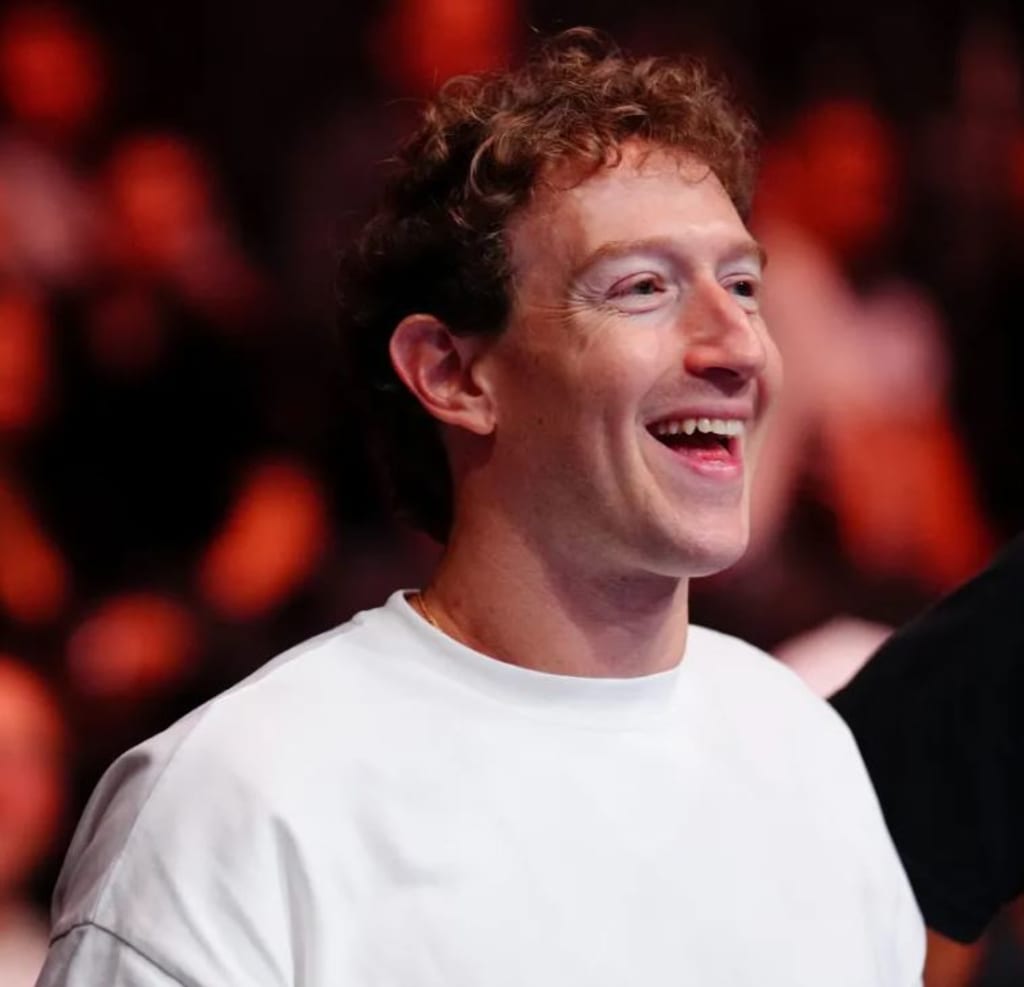
Meta CEO Mark Zuckerberg published a 6,500-word essay this week declaring that "The Future is for Everyone" and painting an optimistic picture of a future powered by AI, where "everyone will have an exceptionally capable personal agent that understands you, your goals, and everything you care about."
On the latest episode of TechCrunch's Equity podcast, Kirsten Korosec, Rebecca Bellan, and Anthony discussed why not everyone is buying Zuckerberg's vision—including their colleague Russell Brandom, who wrote that the manifesto is "exactly why people don't like AI."
The Zuckerberg Vision
Zuckerberg's essay, which he published on his personal Facebook page and other platforms, outlines a future where AI agents are ubiquitous, personalized, and empowering. The manifesto describes a world where everyone has access to an AI assistant that manages their schedule, drafts messages, organizes files, and operates anytime, anywhere, with or without an internet connection.
The essay is notable for its length and its optimism. At 6,500 words, it is longer than almost anything that has been published on TechCrunch, reflecting the seriousness with which Zuckerberg views the topic. The tone is expansive and hopeful, positioning AI as a force for good that will unlock human potential and creativity.
However, the response to the manifesto has been largely skeptical. Critics have pointed to Meta's track record on social media, where promises of connection and community gave way to rage-baiting, misinformation, and advertising.
A History of Broken Promises
Rebecca Bellan, one of the Equity podcast hosts, highlighted the disconnect between Zuckerberg's rhetoric and Meta's reality. "You look back to the social media days, [Zuckerberg] was saying that he wants to make sure that everyone has an outlet for talking to their friends and having a social network. And what do we have instead? We have rage-baiting and advertisements, and not connection."
The critique strikes at the heart of the skepticism surrounding Zuckerberg's AI vision. For many, the gap between what Zuckerberg promises and what Meta delivers is too wide to ignore. The company's platforms Facebook, Instagram, and WhatsApp have been criticized for their role in spreading misinformation, amplifying division, and prioritizing engagement over well-being.
Zuckerberg's history of making grand pronouncements about the future of technology has also contributed to the skepticism. His previous manifestos, including a similar "Futures for Everyone" letter last year, have been met with similar doubts. Critics argue that the gap between vision and reality is a consistent pattern.
The Messenger Problem
A significant part of the negative reaction to the manifesto is attributable to the messenger. As Anthony noted on the podcast, "For a variety of reasons, I think that people are suspicious of Mark Zuckerberg, of Meta; arguably that could become amplified over the next few months as this new Facebook movie is coming out."
Zuckerberg's public image has been shaped by years of controversy, including the Cambridge Analytica scandal, concerns about data privacy, and the company's role in election interference. For many, he is a figure associated more with corporate power and surveillance than with personal empowerment.
The skepticism is not limited to Zuckerberg. When other tech leaders, such as Sam Altman of OpenAI, make predictions about the AI future, they often face similar pushback. One of the more famous recent examples was Altman's suggestion that people could use ChatGPT to make podcasts about their kids' interests to listen to while driving to school. The response was immediate and critical: "Why don't you just talk to your kid?"
The disconnect between the abstract promises of AI and the realities of everyday life is a recurring theme in the skepticism surrounding the technology.
Meta's Position in the AI Landscape
Rebecca Bellan offered a cynical perspective on the manifesto, suggesting that it is an attempt by Meta to reposition itself in the AI landscape. "They're not winning in the frontier, closed-model space. They're not necessarily even winning in the open space. But when it comes to personal empowerment, as Mark Zuckerberg talks about in his letter, 'The Future is for Everyone,' that's where he's trying to win."
Meta has made significant investments in AI, including developing its own large language models and integrating AI features into its platforms. However, the company is often not mentioned in the same breath as the "frontier labs" such as OpenAI, Anthropic, and Google DeepMind.
Zuckerberg's essay can be seen as an attempt to claim space in the AI conversation and to define Meta's role in the future of the technology. By emphasizing personal empowerment and open-source development, he is positioning Meta as a champion of accessibility and individual agency.
However, the company's history of centralizing control and prioritizing its own interests over those of its users undermines this narrative. As Rebecca noted, "So far, what that looks like for Meta, I mean, of course, Llama is great; it's a great tool and open source, but I think that on a consumer level, how are people using Meta AI? Well, there's like a lot of creepy-ass chatbots."
The Hardware Hurdle
One of the practical challenges of Zuckerberg's vision is the hardware required to realize it. The AI agents he describes would need to be accessible on personal devices, but the current technology is not yet there.
"I was like, 'Oh, maybe I'll try to download Muse Glimmer and see what I can do with it.' Can I download it to my MacBook? No. You need specific hardware. I forget what the hardware is it's not actually that accessible to the average person," Rebecca noted.
The hardware requirement is a significant barrier to the widespread adoption of personal AI agents. Until the technology can run on the devices people already own, the vision of "AI for everyone" will remain out of reach.
Kirsten Korosec added, "It's not for everyone. Not yet." The gap between the promise and the reality of AI is a recurring theme in the skepticism surrounding the technology.
The Abstraction Problem
Anthony pointed out another challenge with Zuckerberg's manifesto: it is abstract and lacks concrete examples of how AI will improve people's lives. "Part of the manifesto was half of it was just stuff where it is just, 'It's going to unleash all this creativity and invention,' and it's so abstract. If you're skeptical about AI, none of that is going to convince you, because it seems unreal."
The abstract nature of the promises makes it difficult for people to connect with the vision. For skeptics, the lack of concrete examples reinforces the perception that the technology is overhyped and under-delivered.
Zuckerberg's essay does include some concrete examples, such as AI agents managing schedules and drafting messages. However, these examples are relatively modest and do not capture the revolutionary potential he describes. The gap between the rhetoric and the reality is a significant challenge for building trust.
Positioning Against the "Doomers"
Zuckerberg's essay also positions him as an "anti-Dario," contrasting with Anthropic CEO Dario Amodei, who has been more cautious about the risks of AI. While Amodei and others have emphasized the need for safety and regulation, Zuckerberg has taken a more aggressive stance.
"We do not slow down. We cannot afford to give an inch to China, and slowing down would only hurt the individual, who can be empowered by this technology," Rebecca paraphrased Zuckerberg's position.
The framing is designed to appeal to those who see AI as an opportunity rather than a threat. By emphasizing competition with China and the potential for individual empowerment, Zuckerberg is positioning himself as a champion of progress and innovation.
However, critics argue that the "doomer" label is a straw man that oversimplifies the debate. Many who have raised concerns about AI are not opposed to the technology but are advocating for responsible development and regulation.
The Positive Takeaway
Despite the skepticism, Anthony offered one positive takeaway from the manifesto. "There is one sentence where he says, 'If you are an AI doomer and you believe that that's the future that AI is going to bring, why are you building this stuff?'"
The question is a fair one. If those developing AI truly believe that the technology poses an existential risk, why are they continuing to develop it? The question highlights the tension at the heart of the AI debate: the conflict between the potential benefits of the technology and the risks it poses.
Mark Zuckerberg's 6,500-word essay on the future of AI has been met with widespread skepticism, reflecting the gap between the promises of tech leaders and the realities of their companies. For many, Zuckerberg's history of broken promises and Meta's track record on social media are reasons to doubt his vision.
The challenges of hardware, abstraction, and trust are significant barriers to the adoption of personal AI agents. Until these challenges are addressed, the vision of "AI for everyone" will remain a distant promise rather than a tangible reality.
However, the debate around AI is far from settled. As the technology continues to evolve, the conversation will shift and new perspectives will emerge. For now, Zuckerberg's manifesto serves as a reminder of the importance of accountability, transparency, and trust in the development of transformative technologies.
About the Creator
Mark Lim
Hi I am mark an automotive student and a car, tech and food enthusiast ! Im gonna try and post daily & hope you enjoy what I write and do share my page with people you know. I would gladly appreciate it! Cheers
Enjoyed the story? Support the Creator.
Subscribe for free to receive all their stories in your feed.
Comments
There are no comments for this story
Be the first to respond and start the conversation.