
Xiaomi’s Privacy Screen Is a Feature You Can’t Escape
The Xiaomi 18 Pro’s hardware privacy mode dims the display, shifts colors, and stays in the light path even when disabled. Here’s what that means for anyone buying a flagship phone.
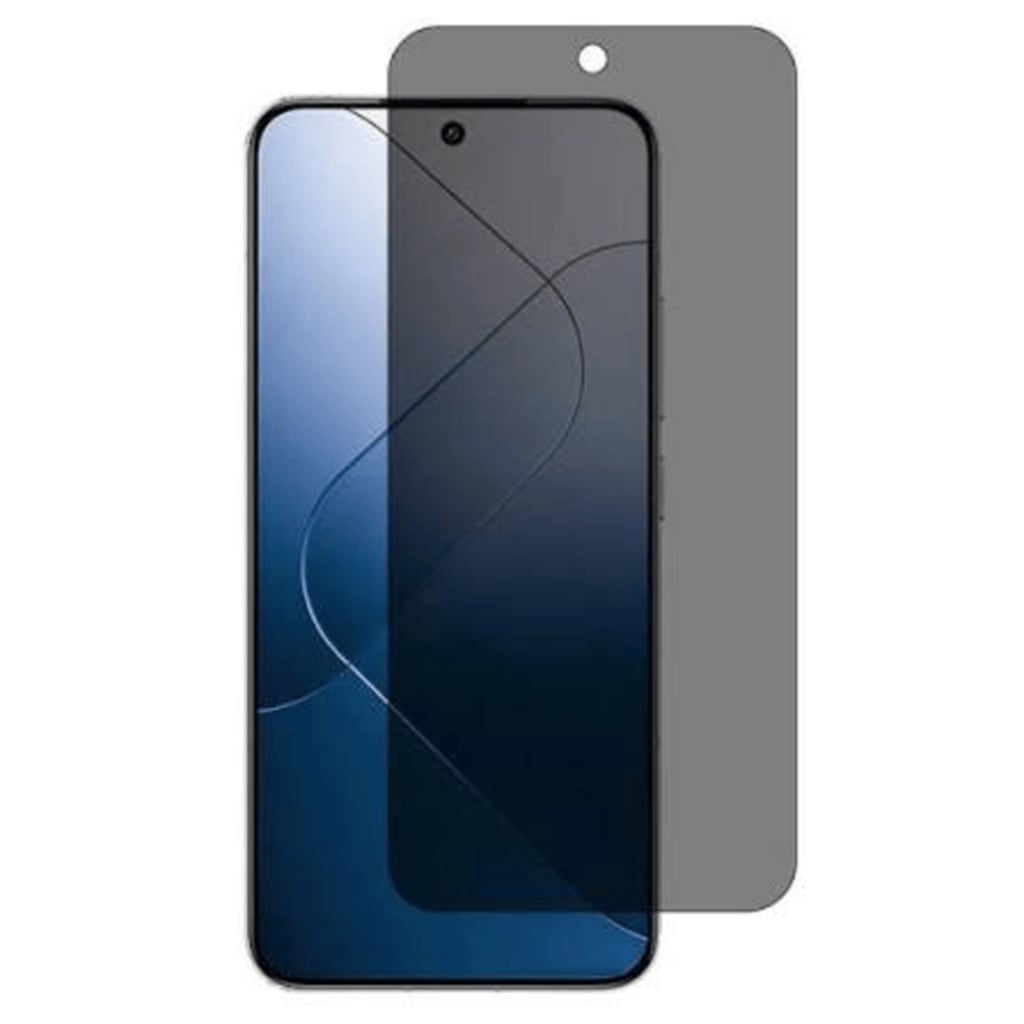
In September 2026, Xiaomi launched the 18 Pro series. The main selling point was a hardware privacy screen. It was supposed to set the phone apart from every other Android flagship. Once users got it in their hands, the feature became a liability. Lei Jun’s Weibo comment section filled with the same request: Can you release a version without the privacy screen?
The request itself is a verdict on a product decision.
AD Phone Photography ran offline tests. With privacy mode off, tilting the phone makes the display gray out and shift green. Tilt it up or down slightly, and the screen splits into a yin-yang effect. One half looks bright; the other dims, and the colors break apart. Viewed head-on, the matte texture makes the panel look like it is covered by gauze. Turn the phone a little, and the left eye sees a normal image while the right eye sees a color shift. Notebookcheck concluded that even with the privacy display disabled, this OLED panel is visibly worse than last year’s Xiaomi 17 Ultra. A CNET-affiliated tech outlet compared the two and said Xiaomi’s privacy effect is weaker than Samsung’s. On Coolapk, a Chinese digital community, the screen sub-score sits at 5.7. That is the single biggest deduction for the whole device.
Turn privacy mode on, and nothing improves. From the side, the screen only dims a little. The content stays readable. Rotate the phone into landscape for video or gaming, and the privacy effect collapses. The feature is weak when you need it and damaging when you do not.
The pixel structure causes the problem.
Inside Xiaomi’s panel, green subpixels are roughly circular. Red subpixels are elliptical. Blue subpixels are long strips. Red and green share one light-blocking structure; blue has its own. The three colors have different shapes, so the same vertical light-blocking structure does not attenuate them evenly. That uneven attenuation produces the off-angle color shift. The grating is a fixed physical structure. Whether privacy mode is on or off, it stays in the light path. That is why viewing angles and color performance cannot recover after privacy mode is disabled.
Samsung’s Galaxy S26 Ultra uses a different approach. Its Flex Magic Pixel system places two sets of subpixels: wide-view and narrow-view. Both follow the same diamond arrangement. Around the narrow-view pixels, multiple layers of black matrix form a ring-like enclosure. Light decays consistently in every direction. Tilt the phone up, down, left, or right, and the color shift behaves in a similar way. According to UL Solutions certification tests, the Samsung FMP panel delivers only 3.5 percent of front brightness at a 45-degree side angle and less than 0.9 percent at 60 degrees. A conventional phone panel usually retains about 40 percent of front brightness from the side. When Samsung’s privacy mode is turned off, the electronically controlled black matrix releases its restriction, and the screen returns to viewing angles close to a normal OLED. Xiaomi’s physical grating is etched into the panel. It is a fence that cannot be opened.
Market data explains why companies are chasing this feature. Sigmaintell estimates that smartphone shipments with privacy screens rose from 1 million units in 2025 to 21 million in 2026, and are projected to reach 29 million in 2027. People want privacy in public spaces. Stick-on privacy films are giving way to hardware-level solutions. But Xiaomi’s implementation is aggressive. Huawei limits its privacy screen to top-tier business models such as the Mate XT2 Ultimate Design, aimed at users with a specific privacy requirement. Samsung makes the privacy screen standard on the Galaxy S26 Ultra, but its off-state impact on image quality stays within a narrow range. Xiaomi made it standard across the entire 18 Pro series. Every buyer, whether they need privacy or not, receives a screen whose light path has been permanently altered.
Comments on Lei Jun’s Weibo page keep accumulating. The Coolapk score remains at 5.7. Under AD Phone Photography’s test video, someone asks: Can the next generation remove it?
The request points to a feature that should never have been forced on everyone. A good screen should first be a good screen. Only then can it carry an additional function. When that order is reversed, even good engineering becomes a daily burden. Users did not reject privacy. They objected to paying for it with the basic quality of the display. The display, unlike the privacy mode, cannot be turned off.
About the Creator
Jin
Writer of reamstories
https://reamstories.com/jin
Enjoyed the story? Support the Creator.
Subscribe for free to receive all their stories in your feed. You could also become a paid subscriber, letting them know you appreciate their work.
Comments
There are no comments for this story
Be the first to respond and start the conversation.