
Xiaomi's AI Bet: On-Device Isn't Enough
The car handles the reflex. The cloud handles the follow-up. Xiaomi needs both to make Human-Car-Home work.
In a Xiaomi SU7, the driver says, “I’m cold.” The car raises the temperature by two degrees, turns on seat heating, and sets steering wheel heating to low. If the driver adds, “Don’t close the windows, I want some air,” the car remembers. Next time, it leaves the windows open.
The on-device model handles the immediate response. The cloud model understands how “I’m cold” and “Don’t close the windows” relate. The on-device model runs on the car’s chip. It is fast and private. The cloud model runs in a data center. It has more parameters and can handle complex intent. Xiaomi needs both.
Xiaomi’s strength is on-device. Phones, cars, speakers, TVs, watches, appliances, robots. Each one has sensors and actuators. These devices need AI that is fast, works offline, and protects privacy. On-device small models fit Xiaomi. The company should have started earlier and pushed harder.
But small on-device models do not appear by themselves. They need large models as teachers. Distillation, data synthesis, alignment, evaluation, tool-call planning, multimodal fusion. These come from larger cloud models. A 3B or 7B model runs on a phone or car. Behind it, a larger model trains, distills, and iterates. If Xiaomi only makes small on-device models, it waits for others to open-source and update. Then it fine-tunes. Its pace depends on others. Its ceiling depends on others.
Open-source models help. They are not free. Fine-tuning, alignment, deployment, and inference optimization need a large team. Multiple open-source models have different styles, abilities, and tool-calling protocols. Someone must unify them. Data loops and scene feedback must settle into Xiaomi’s own model. Xiaomi has many devices, scenes, and user interactions. If it does not use this material to train its own model, the material loses value.
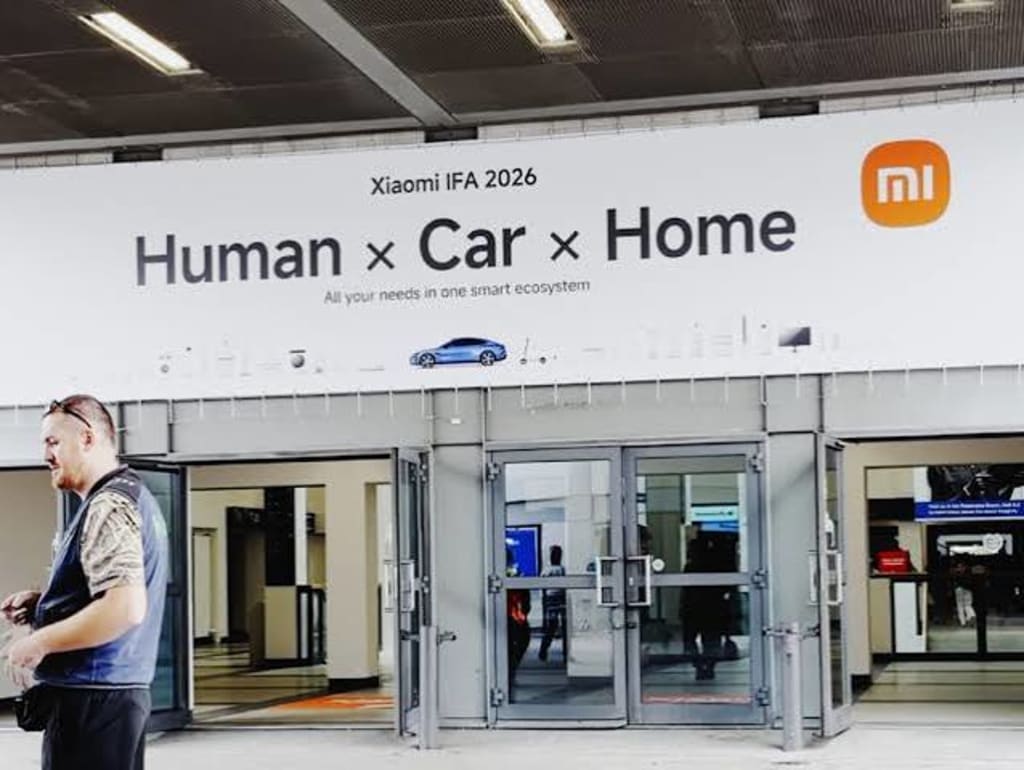
Xiaomi’s story is Human-Car-Home. More devices mean more need for one brain. Users cannot memorize every device. They cannot talk to every device separately. They need one entry point. That assistant must understand complex intent, coordinate devices, break down tasks, remember preferences, and call services. That entry point is Super Xiao Ai.
If Super Xiao Ai were only a voice assistant, a small on-device model would be enough. It must do more. It must understand: “I’m a bit cold. On the way home, buy something. When I get home, dim the living room lights.” It must know if you are in the car, at home, or at the office. It must call navigation, payment, e-commerce, home control, calendar, and documents. The cloud model handles advanced intent and planning. The on-device model handles real-time, private, low-latency response. The architecture is on-device plus cloud. On-device does reflex. Cloud does thinking. On-device does privacy. Cloud does intelligence. On-device does execution. Cloud does scheduling.
The Lei Jun group has Kingsoft Cloud and WPS. Kingsoft Cloud provides compute and cloud infrastructure. WPS covers documents, office, and collaboration. That fits Office Agent. Lei Jun started in Office. WPS has users, customers, and scenes. Cloud PCs, cloud clusters, and Office Agent fit large models. Xiaomi’s side focuses on sensors and actuators. It needs models from million-level to trillion-level parameters. It deals with sound, light, data, and motion. The large language model is the core for abstraction, understanding, and reasoning. It connects modalities. It is the mother machine for knowledge distillation. To unify the UI, Xiaomi will have a central personal assistant. The UI entry needs a large model as an advanced intent engine.
Kingsoft and Xiaomi are separate listed companies. Collaboration has limits. It cannot replace Xiaomi’s own research. Shared resources can lower costs. Each company still needs core capabilities. One company doing all the work carries too much pressure. Doing nothing is worse.
Huawei, Apple, Honor, OPPO, and vivo all work on device-cloud AI. Apple uses on-device, private cloud, and external models. No leading manufacturer says, “We only make small on-device models. Others can make large models.” The next entry point may not be the phone or the car. It may be the personal agent. Whoever controls that agent’s brain controls how users interact with digital and physical worlds. If Xiaomi only makes small on-device models, it can create a good short-term experience. Over time, it loses the power to define. Large models also attract talent and capital. Lei Jun has money and scenes. Not investing would be strange.
Xiaomi should not copy OpenAI. Xiaomi’s strength is not building the strongest general foundation from zero to one. Its strength is hardware scale, Human-Car-Home scenes, cost control, supply chain integration, and multimodal sensors and actuators. It should build a core model that is strong enough, cheap enough, open enough, and works across device and cloud. That model supports Super Xiao Ai, car cabins, robots, and WPS Office Agent. A pure parameter race or paper race is not worth it. Turning Human-Car-Home into a personal agent is worth it.
Xiaomi wants a model inside phones, cars, appliances, and robots. It does not want a model on a leaderboard. The large model is the mother machine. The on-device model is the hands. Human-Car-Home is the test. Lei Jun has money, scenes, and puzzle pieces. Experience decides whether the model works.
The next Super Xiao Ai will use the on-device model when the network is down. When online, it sends complex requests to the cloud. Users will not see the process. They will feel the car’s air conditioning is just right.
About the Creator
Jin
Writer of reamstories
https://reamstories.com/jin
Enjoyed the story? Support the Creator.
Subscribe for free to receive all their stories in your feed. You could also become a paid subscriber, letting them know you appreciate their work.
Comments
There are no comments for this story
Be the first to respond and start the conversation.