
World Quantum Day 2026: How Quantum Computing Is Shaping the Future of Technology and Exploration
Exploring how quantum computing is moving from complex theory to real-world impact through global awareness, innovation, and education.

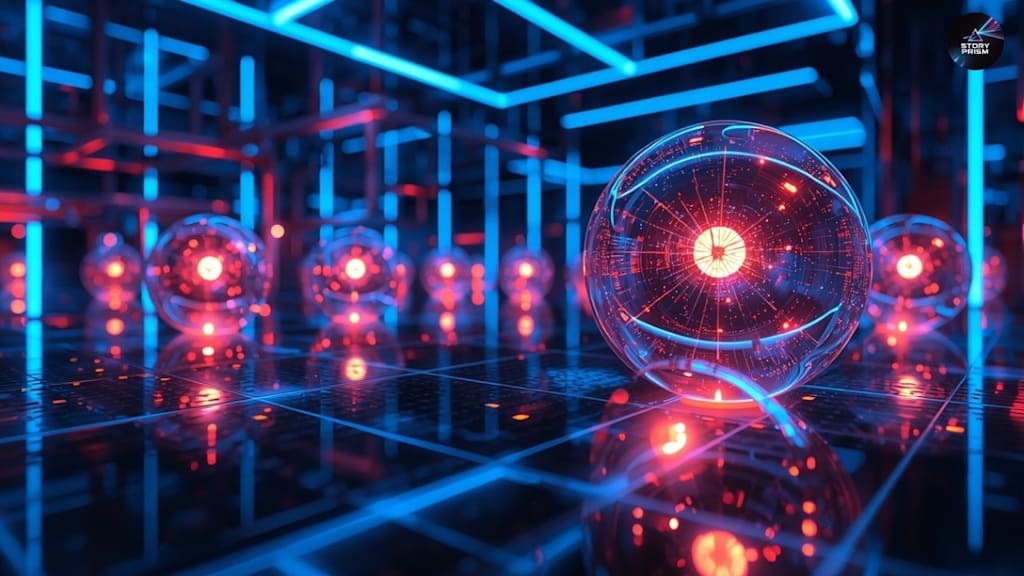
Every year on April 14, scientists, tech leaders, and curious minds around the world celebrate World Quantum Day—a global initiative designed to make one of the most complex areas of science more understandable and accessible. In 2026, the event has taken on even greater significance, as quantum computing moves from theoretical research into real-world conversations, applications, and even travel experiences.
At its core, quantum computing represents a fundamental shift in how computers work. Unlike traditional computers that rely on bits—units of information that exist as either 0 or 1—quantum computers use qubits. These qubits can exist in multiple states at once, thanks to a principle known as superposition. This unique capability allows quantum systems to process vast amounts of information simultaneously, potentially solving problems that would take classical computers years, or even centuries.
Tech giants like Google are at the forefront of this revolution. Through initiatives like Google Quantum AI, researchers are working to build powerful quantum systems capable of tackling challenges in medicine, chemistry, and materials science. Their efforts were highlighted during World Quantum Day 2026, where they also focused on educating the public through simplified explanations and visual tools.
One such tool that captured global attention this year was Google’s special Doodle, which featured Bloch spheres. These spherical models are used in quantum mechanics to represent the state of a qubit. While the concept may sound abstract, the visualization helps people understand how quantum information behaves—essentially showing how a qubit can move between states rather than being locked into a single binary value. By turning advanced science into visual storytelling, the Doodle served as an entry point for millions of users to explore quantum ideas.
But beyond awareness, World Quantum Day also emphasizes the real-world importance of quantum technology. Quantum computing has the potential to revolutionize industries by solving problems that are currently out of reach. For example, in drug discovery, quantum systems could simulate molecular interactions at an unprecedented level of detail, leading to faster development of life-saving treatments. In energy, they could help design more efficient batteries or optimize power grids. Even climate modeling could benefit from the enhanced computational power quantum machines promise.
Despite its potential, quantum computing is still in its early stages. One of the biggest challenges researchers face is maintaining the stability of qubits. Quantum systems are incredibly sensitive to their environment, and even the smallest disturbance can cause errors—a phenomenon known as decoherence. To address this, scientists are developing error-correction techniques and building systems that can operate in highly controlled conditions, often at extremely low temperatures.
World Quantum Day is not just about highlighting progress; it’s also about inspiring the next generation. Educational institutions, science museums, and research centers around the world host events, workshops, and demonstrations to engage students and the public. These initiatives aim to demystify quantum science and encourage more people to explore careers in this rapidly evolving field.
Interestingly, the celebration has also found its way into the world of travel. Some platforms have begun promoting destinations connected to scientific innovation, including cities known for their research institutions and technology hubs. Visitors can explore interactive museums, attend public lectures, or even participate in guided tours of cutting-edge labs. This blend of science and tourism reflects a broader trend where travel is no longer just about leisure, but also about learning and discovery.
The date of World Quantum Day—April 14—is not arbitrary. It references the number 4.14, a nod to Planck’s constant, a fundamental value in quantum physics that plays a crucial role in understanding how energy behaves at the smallest scales. This connection underscores the event’s mission: to celebrate the science that underpins modern technology while making it approachable for everyone.
As quantum computing continues to evolve, its impact will likely extend far beyond the laboratory. From improving cybersecurity to optimizing global logistics, the possibilities are vast. However, realizing this potential will require continued research, collaboration, and public engagement—exactly the kind of awareness that World Quantum Day aims to foster.
In many ways, World Quantum Day 2026 marks a turning point. What was once considered an obscure field of physics is now entering mainstream awareness, supported by global initiatives, corporate investment, and creative outreach efforts. Whether through a simple Google Doodle, an educational workshop, or a visit to a science museum, people around the world are beginning to engage with quantum concepts in meaningful ways.
As we look to the future, one thing is clear: quantum computing is not just a scientific curiosity—it’s a transformative technology that could redefine how we solve the world’s most complex problems. And thanks to World Quantum Day, that future is becoming a little easier to understand.
About the Creator
Enjoyed the story? Support the Creator.
Subscribe for free to receive all their stories in your feed.
Comments
There are no comments for this story
Be the first to respond and start the conversation.