
Wiring Devices Market Expands as Smart Homes and Infrastructure Modernization Accelerate Worldwide
From smart switches and connected outlets to energy-efficient dimmers and advanced safety systems, wiring devices are becoming central to the future of modern electrical infrastructure.

Wiring Devices Are Becoming Smarter and More Essential
The global push toward smarter buildings, connected homes, and modern infrastructure is transforming even the most basic electrical components. Wiring devices, once viewed simply as switches and sockets, are now evolving into intelligent systems that support automation, safety, energy management, and digital connectivity.
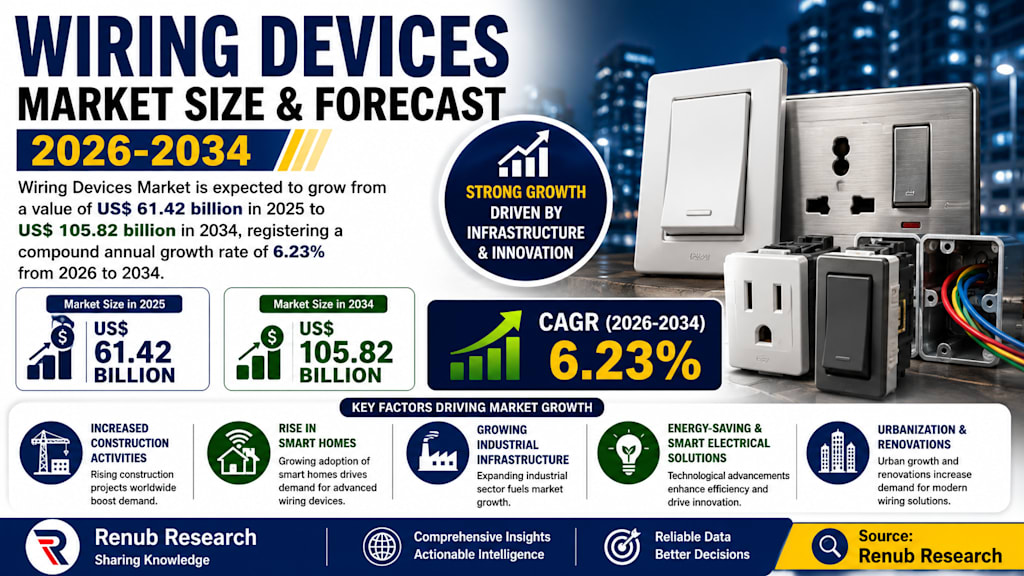
According to Renub Research, the Wiring Devices Market is expected to grow from US$ 61.42 billion in 2025 to US$ 105.82 billion by 2034, registering a compound annual growth rate (CAGR) of 6.23% between 2026 and 2034. The market’s expansion is being driven by rapid urbanization, increasing construction activities, rising smart home adoption, and the development of advanced electrical technologies.
As buildings become more connected and consumers increasingly prioritize convenience and energy efficiency, wiring devices are becoming a much more important part of modern infrastructure than ever before.
What Are Wiring Devices and Why Do They Matter?
Wiring devices are electrical components used to control, distribute, and connect electricity in residential, commercial, and industrial environments. These devices include switches, sockets, receptacles, plugs, dimmers, circuit breakers, connectors, and related electrical accessories.
Although they are often overlooked compared to larger technologies, wiring devices are essential for safe and efficient electrical operation. Every building depends on them to manage electrical connectivity, power distribution, and user interaction with electrical systems.
Today’s wiring devices are no longer purely mechanical. Modern systems increasingly include digital controls, automation features, smart connectivity, energy monitoring capabilities, and enhanced safety technologies.
This transformation is changing the role of wiring devices from simple infrastructure components into intelligent tools that support connected living and smarter energy use.
Urbanization Is Fueling Massive Demand
One of the biggest drivers behind the wiring devices market is rapid urbanization and infrastructure development worldwide.
As cities expand and populations grow, demand for residential housing, commercial buildings, industrial facilities, transportation hubs, and public infrastructure continues to rise. Every new construction project requires electrical systems, and every electrical system depends on wiring devices.
Urban development is particularly important because it creates demand not only for new installations but also for renovations and retrofitting projects. Older buildings often require upgraded electrical systems to meet modern safety standards and accommodate growing electricity usage.
Global urban growth is creating enormous pressure on electrical infrastructure. More than half of the world’s population already lives in urban areas, and that number is expected to rise significantly by 2050.
This long-term trend ensures sustained demand for electrical installation products across both developed and emerging markets.
Smart Homes Are Transforming Consumer Expectations
The rise of smart homes and connected technologies is one of the most important developments shaping the wiring devices industry.
Consumers increasingly want electrical systems that can integrate with smartphones, voice assistants, automation platforms, and IoT ecosystems. As a result, traditional switches and outlets are evolving into smart devices capable of remote operation, energy management, and automation.
Smart switches, smart outlets, and connected dimmers are becoming increasingly popular because they provide convenience, flexibility, and efficiency. Users can now control lighting, appliances, and electrical systems remotely through mobile apps or voice commands.
Integration with smart home ecosystems such as Amazon Alexa, Google Home, and IoT platforms is accelerating adoption even further.
The number of connected IoT devices worldwide continues to rise rapidly, creating strong demand for compatible wiring infrastructure. Consumers are increasingly expecting their homes to support automated lighting, energy monitoring, and connected appliances.
This trend is reshaping the market by pushing manufacturers to develop more advanced and user-friendly products.
Energy Efficiency Is Becoming a Major Priority
Energy efficiency has become a critical focus across residential, commercial, and industrial sectors. Governments, businesses, and consumers are increasingly searching for ways to reduce electricity consumption and improve sustainability.
Modern wiring devices are playing an important role in that transition.
Products such as smart dimmers, automated switches, energy-monitoring outlets, and programmable systems help reduce unnecessary electricity usage. These devices allow users to optimize lighting levels, automate shutdown schedules, and track energy consumption more effectively.
The growing popularity of LED lighting is also supporting demand for compatible dimmers and advanced electrical controls.
Consumers are becoming more conscious of electricity bills, while governments are implementing stricter efficiency regulations and safety standards. As a result, energy-efficient wiring devices are becoming increasingly attractive across all market segments.
This focus on efficiency is especially important in commercial buildings and industrial facilities where electricity consumption can represent a major operational expense.
Safety Standards Continue to Influence Market Growth
Electrical safety remains one of the strongest factors driving innovation in the wiring devices market.
Governments and regulatory bodies worldwide are enforcing stricter standards designed to reduce electrical accidents, prevent fire hazards, and improve overall system reliability.
Consumers are also becoming more aware of safety-related features such as surge protection, child-resistant outlets, tamper-proof receptacles, and fire-resistant materials.
Modern wiring devices are increasingly designed with advanced protective technologies that improve both residential and industrial safety.
Commercial and industrial sectors are particularly focused on compliance with electrical regulations because operational failures or electrical hazards can create serious financial and legal consequences.
As awareness regarding electrical safety continues to grow, demand for higher-quality wiring devices is expected to remain strong.
Smart Receptacles and Outlets Are Gaining Popularity
Receptacles, also known as electrical outlets or power sockets, remain one of the most important product categories within the wiring devices market.
However, even this traditional product category is undergoing major transformation.
Modern receptacles now include features such as USB charging ports, surge protection, smart connectivity, remote control functions, and energy monitoring systems. These additions improve convenience while supporting modern consumer lifestyles.
Smart receptacles can connect with mobile applications and home automation systems, allowing users to control devices remotely or schedule power usage automatically.
Safety enhancements are also becoming more common. Child-proof outlets and tamper-resistant receptacles are increasingly preferred by consumers, particularly in residential settings.
As homes become more technology-driven, advanced receptacles are expected to play an even larger role in everyday electrical management.
Light Dimmers Are Expanding Beyond Basic Lighting Control
The market for light dimmer wiring devices is also growing rapidly due to increasing demand for energy-efficient and customizable lighting systems.
Dimmers allow users to adjust lighting intensity based on mood, activity, or energy-saving preferences. Modern smart dimmers can be controlled through smartphones, voice assistants, or automated schedules.
The rise of LED lighting has further boosted demand for compatible dimming systems because consumers want more control over brightness levels and energy usage.
Advanced dimmers are increasingly incorporating touchscreens, smart connectivity, and programmable features that improve both convenience and interior aesthetics.
The shift toward personalized living spaces and modern home design is helping support continued growth in this segment.
Construction Activity Supports Market Expansion
The wiring devices market is closely linked to global construction activity.
New residential buildings, office complexes, shopping centers, factories, educational institutions, healthcare facilities, and transportation infrastructure all require large-scale electrical installations.
As infrastructure investment continues worldwide, wiring device demand grows alongside it.
Green building initiatives are also influencing product development. Construction companies increasingly seek sustainable electrical systems that improve energy efficiency and support environmental certifications.
Renovation and retrofitting projects are equally important. Many older buildings require electrical modernization to support higher energy demand, digital technologies, and updated safety regulations.
This combination of new construction and infrastructure upgrading creates long-term growth opportunities for manufacturers.
Market Challenges Still Exist
Despite strong growth potential, the wiring devices market faces several important challenges.
One of the biggest concerns is price sensitivity. The market is highly competitive, with both global and local manufacturers offering products across multiple price ranges.
In many developing markets, consumers prioritize affordability over advanced features. This can make it difficult for manufacturers to promote premium smart devices without facing pricing pressure.
The availability of low-cost and unbranded products also creates competition challenges, especially in price-sensitive regions.
Another major issue is raw material price volatility. Wiring devices rely heavily on materials such as copper, metals, and plastics, all of which experience fluctuating market prices.
Supply chain disruptions can further complicate manufacturing operations by affecting production schedules, transportation, and material availability.
Manufacturers must balance cost management, product quality, and technological innovation while navigating these uncertainties.
Residential Applications Lead Demand
Residential applications represent one of the strongest growth segments within the wiring devices market.
Rising urbanization, increasing housing development, and growing smart home adoption are driving demand for switches, sockets, dimmers, and smart electrical controls.
Homeowners increasingly want wiring devices that combine functionality, safety, aesthetics, and digital connectivity.
Modern consumers also place greater emphasis on interior design, encouraging manufacturers to develop visually appealing products that complement contemporary home environments.
Government housing initiatives and electrification programs in developing countries are further supporting residential demand growth.
As living standards continue improving globally, residential electrical modernization is expected to remain a major market driver.
Regional Markets Show Different Growth Trends
The United States market remains highly mature but continues growing through smart home adoption, renovation activities, and strict safety regulations. Demand for connected outlets, smart switches, and automated electrical systems is particularly strong.
The United Kingdom market is being driven by modernization efforts, energy efficiency goals, and increasing interest in smart building technologies.
India represents one of the fastest-growing markets due to rapid urbanization, infrastructure development, electrification initiatives, and rising middle-class spending. Smart home adoption is also increasing steadily in urban areas.
Saudi Arabia is benefiting from major infrastructure projects, urban expansion, and investments in smart cities and modern commercial developments. Harsh environmental conditions also create demand for durable and high-quality wiring devices.
Across all regions, modernization and connected technologies remain central growth themes.
The Future of Wiring Devices Is Connected
The future of the wiring devices market will likely revolve around automation, connectivity, and intelligent energy management.
Smart homes, IoT ecosystems, and energy-efficient infrastructure are expected to become increasingly common over the next decade. Wiring devices will play a critical role in supporting these connected environments.
Artificial intelligence, voice control integration, predictive energy monitoring, and remote automation are expected to become more deeply integrated into future electrical systems.
At the same time, sustainability and safety regulations will continue influencing product development and market demand.
What was once considered basic electrical hardware is steadily evolving into intelligent infrastructure technology.
Final Thoughts
The Wiring Devices Market is growing steadily because electrical infrastructure is becoming smarter, safer, and more connected. From smart homes and automated lighting to energy-efficient construction and modern urban development, wiring devices are now central to the future of electrical systems worldwide.
With the market projected to grow fr US$ 61.42 billion in 2025 omto US$ 105.82 billion by 2034, manufacturers and technology providers have major opportunities ahead as connected living continues expanding globally.
As consumers and businesses increasingly demand convenience, safety, and efficiency, wiring devices are evolving far beyond simple switches and outlets into intelligent tools that power the modern world.
About the Creator
Enjoyed the story? Support the Creator.
Subscribe for free to receive all their stories in your feed.
Comments
There are no comments for this story
Be the first to respond and start the conversation.