
Will the United States Ready-to-Drink Cocktails Market Reach US$ 3.03 Billion by 2034 as Convenience, Premiumization, and Health-Conscious Drinking
Rising demand for premium canned cocktails, growing preference for convenient alcoholic beverages, expanding flavor innovation, and increasing interest in low-sugar formulations are fueling rapid growth in the U.S. RTD cocktails market.

The United States alcoholic beverage industry is undergoing a major transformation as consumers increasingly seek convenience, premium quality, and innovative drinking experiences. Among the fastest-growing categories benefiting from this shift is the ready-to-drink (RTD) cocktails segment, which has rapidly evolved from a niche offering into a mainstream beverage phenomenon.
RTD cocktails combine the sophistication of traditional mixed drinks with the convenience of grab-and-go packaging. Consumers can enjoy bar-quality beverages without requiring specialized ingredients, mixing equipment, or bartending skills. This convenience has made RTDs especially popular for social gatherings, outdoor events, travel, and home entertainment.
The category's evolution has been remarkable. Earlier generations of RTDs often faced criticism for being overly sweet and lacking authenticity. Today's products, however, emphasize premium spirits, natural ingredients, lower sugar content, and craft-inspired flavor profiles. These improvements have significantly expanded consumer acceptance and driven strong market growth.
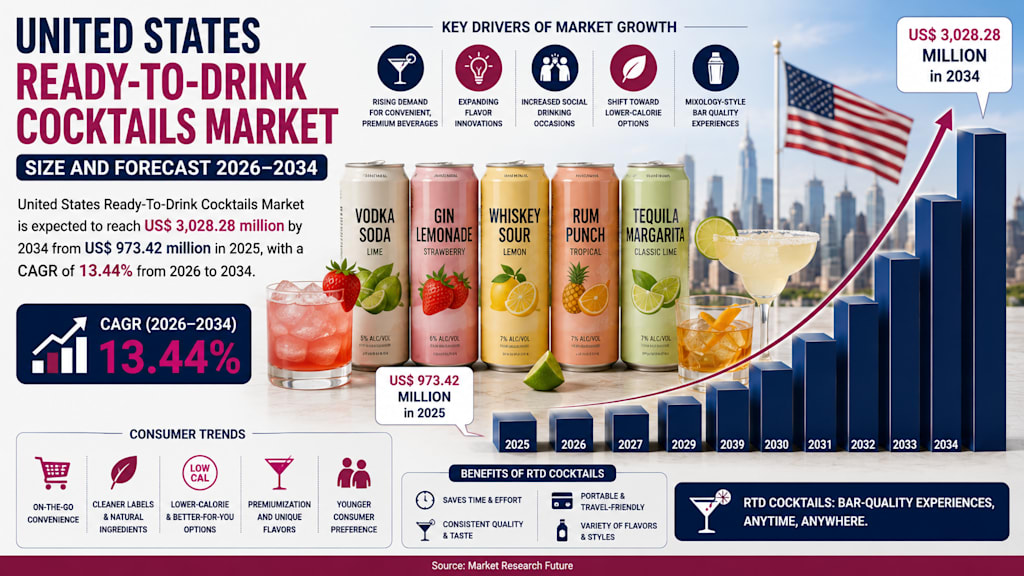
According to Renub Research, the United States Ready-to-Drink Cocktails Market is projected to grow from US$ 973.42 million in 2025 to US$ 3,028.28 million by 2034, expanding at a CAGR of 13.44% during 2026–2034. Growing demand for convenience, premiumization, flavor innovation, and health-conscious alcoholic beverages is expected to support substantial market expansion over the coming decade.
Ready-to-Drink Cocktails Are Reshaping Alcohol Consumption
Ready-to-drink cocktails are pre-mixed alcoholic beverages designed for immediate consumption.
Unlike traditional cocktails that require preparation and mixing, RTDs are packaged in convenient formats such as cans and bottles, allowing consumers to enjoy consistent, professionally crafted beverages anytime and anywhere.
Most RTD products combine spirits, wine, or malt-based alcohol with mixers, juices, botanicals, carbonation, and flavoring ingredients to create familiar cocktail experiences.
Popular varieties include margaritas, mojitos, old fashioneds, spritzes, vodka sodas, rum cocktails, and fruit-forward mixed drinks.
The category appeals to consumers seeking simplicity, portability, and predictable quality while eliminating the need for cocktail preparation.
As convenience becomes increasingly important in modern lifestyles, RTDs are becoming a preferred choice for a growing number of consumers.
Convenience Remains the Industry’s Strongest Growth Driver
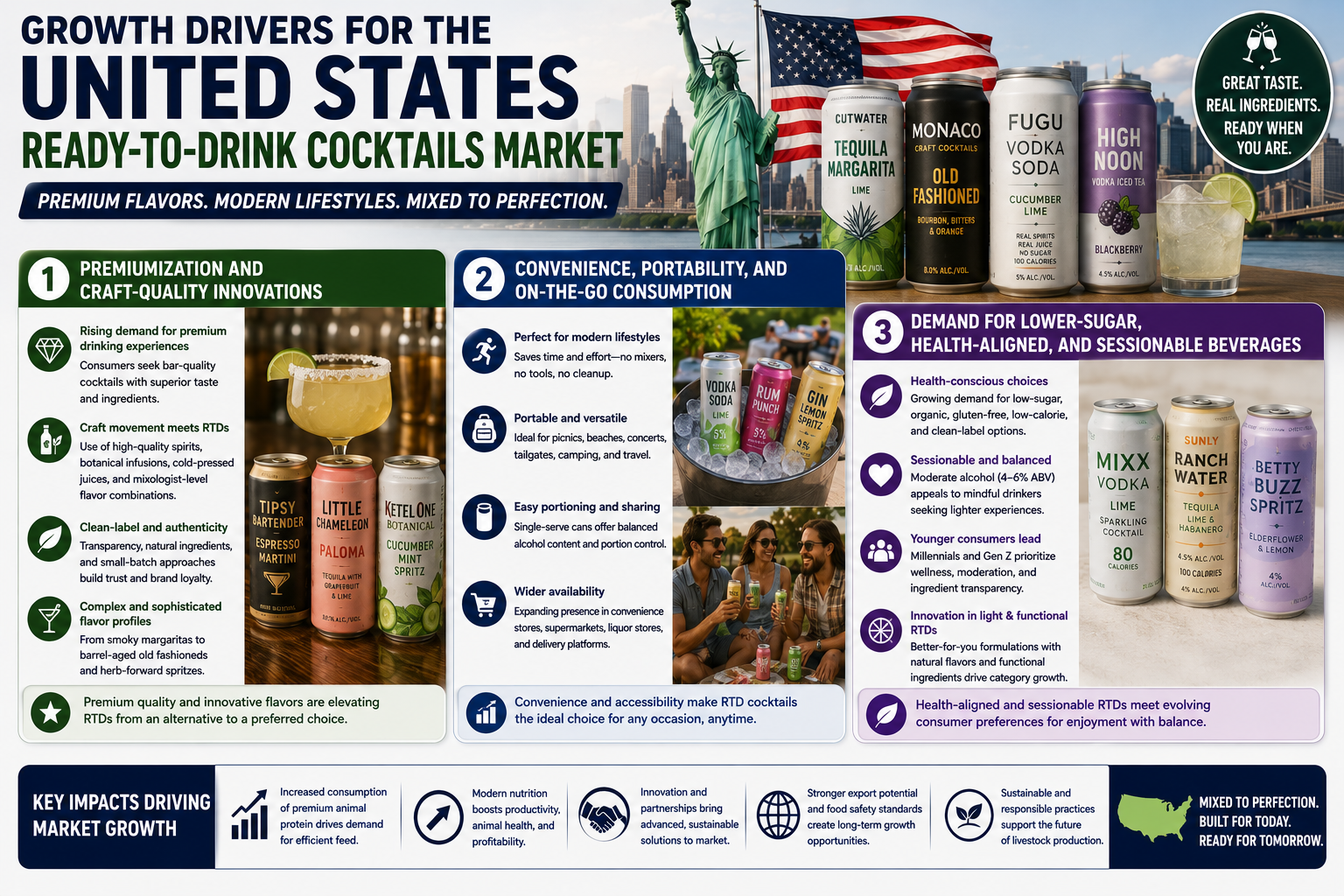
One of the most significant reasons behind the rapid success of RTD cocktails is convenience.
Modern consumers lead increasingly busy lives and often seek products that fit seamlessly into their schedules.
RTD cocktails eliminate the need for measuring ingredients, purchasing mixers, preparing garnishes, or learning mixology techniques.
Consumers can simply open a can or bottle and enjoy a professionally crafted beverage.
This convenience makes RTDs particularly attractive for picnics, sporting events, beach outings, music festivals, barbecues, camping trips, and home gatherings.
The growing popularity of casual social occasions continues fueling demand for easy-to-consume alcoholic beverages.
As convenience remains a defining consumer preference, RTDs are expected to maintain strong momentum.
Premiumization Is Transforming Consumer Expectations
Premiumization has become one of the most influential trends within the RTD cocktails market.
Consumers increasingly seek elevated drinking experiences that rival those found in bars and restaurants.
Manufacturers are responding by incorporating premium spirits, natural fruit juices, botanical ingredients, and sophisticated flavor combinations into their products.
Today's RTDs frequently feature craft-quality formulations designed to deliver authenticity and complexity.
Offerings such as smoky margaritas, barrel-aged old fashioneds, espresso martinis, and botanical spritzes demonstrate how the category has evolved.
Consumers are increasingly willing to pay premium prices for products that deliver superior taste, ingredient transparency, and quality.
This shift toward premium beverages continues creating substantial opportunities for market participants.
Craft Beverage Culture Continues Influencing Innovation
The influence of the craft beverage movement extends far beyond beer and spirits.
Consumers increasingly appreciate products that emphasize authenticity, small-batch production, unique ingredients, and artisanal craftsmanship.
RTD brands are incorporating many of these same principles into their product development strategies.
Craft-inspired cocktails featuring premium ingredients and innovative flavor combinations have gained significant popularity.
Consumers view these products as convenient alternatives to traditional cocktails without sacrificing quality.
The continued expansion of craft beverage culture is expected to remain an important catalyst for RTD innovation.
Health-Conscious Drinking Is Reshaping the Category
Health and wellness trends are significantly influencing consumer behavior across the alcohol industry.
Many consumers are seeking beverages that align with broader wellness goals while still providing enjoyable drinking experiences.
As a result, RTD manufacturers are increasingly introducing low-calorie, low-sugar, gluten-free, organic, and clean-label products.
These offerings appeal to consumers who want moderation without compromising taste.
The trend toward mindful drinking is particularly strong among younger demographics who prioritize ingredient transparency and balanced lifestyles.
As health-conscious consumption continues growing, better-for-you RTDs are expected to become an increasingly important market segment.
Demand for Lower-Sugar Products Continues Rising
Sugar reduction has become a major focus within the RTD cocktails industry.
Consumers increasingly scrutinize nutrition labels and seek beverages with lower sugar content.
Brands are responding by utilizing natural sweeteners, fruit extracts, and cleaner ingredient formulations.
Low-sugar RTDs allow consumers to enjoy cocktails while reducing calorie intake and avoiding excessive sweetness.
This trend mirrors broader developments throughout the beverage industry, where health-conscious consumers increasingly favor products with simplified ingredient lists.
The growing emphasis on nutritional balance is expected to remain a major growth driver.
Sessionable Beverages Appeal to Modern Consumers
Another important trend shaping the market is the rise of sessionable alcoholic beverages.
Many consumers prefer products with moderate alcohol content that allow them to enjoy social occasions responsibly.
RTD cocktails featuring alcohol levels between 4% and 6% ABV have become particularly popular.
These beverages provide a lighter drinking experience while maintaining flavor and refreshment.
Sessionable products align closely with evolving attitudes toward alcohol consumption, moderation, and wellness.
The trend is expected to continue influencing product development strategies across the industry.
Packaging Innovation Enhances Consumer Appeal
Packaging plays a critical role in the success of RTD cocktails.
Cans have emerged as the dominant format due to their portability, convenience, durability, and sustainability advantages.
Consumers appreciate lightweight packaging that can be easily transported to outdoor events and recreational activities.
Aluminum cans also offer excellent recyclability, supporting growing environmental awareness among consumers.
Manufacturers continue introducing visually appealing designs that enhance shelf presence and reinforce premium brand positioning.
Packaging innovation remains an important factor driving category growth.
Expanding Retail Distribution Supports Market Growth
The broad availability of RTD cocktails has significantly contributed to market expansion.
Consumers can now purchase RTDs through supermarkets, liquor stores, convenience stores, specialty retailers, and online alcohol platforms.
Wider distribution increases visibility and encourages trial among new consumers.
Retailers have expanded shelf space dedicated to RTD products as demand continues increasing.
Strategic product placement and promotional campaigns further enhance category awareness.
As distribution networks continue expanding, market penetration is expected to grow further.
E-Commerce Is Strengthening Consumer Access
Digital commerce has become increasingly important within the beverage alcohol industry.
Online alcohol delivery services and e-commerce platforms make it easier for consumers to discover and purchase RTD cocktails.
Consumers benefit from convenience, broader product selection, and home delivery options.
Digital channels also allow brands to engage directly with consumers through targeted marketing campaigns and personalized recommendations.
The continued growth of online alcohol sales is expected to support long-term category expansion.
Spirit-Based RTDs Gain Significant Momentum
Spirit-based RTDs have emerged as one of the fastest-growing segments within the market.
These products typically utilize premium vodka, tequila, rum, whiskey, or gin as their alcohol base.
Consumers often perceive spirit-based RTDs as more authentic and higher quality than malt-based alternatives.
The popularity of tequila-based margaritas, whiskey cocktails, and vodka sodas has contributed significantly to segment growth.
As premiumization continues influencing purchasing decisions, spirit-based RTDs are expected to capture an increasing share of the market.
Malt-Based Products Continue Serving Value-Oriented Consumers
While premium spirit-based offerings attract significant attention, malt-based RTDs remain important within the broader category.
These products often benefit from lower production costs and more favorable tax treatment.
As a result, they frequently appeal to price-sensitive consumers seeking affordable convenience.
Malt-based RTDs continue playing a critical role in expanding category accessibility across diverse consumer groups.
California Leads National Market Development
California remains one of the most important RTD cocktail markets in the United States.
The state's large population, strong craft beverage culture, and health-conscious consumer base create ideal conditions for category growth.
Consumers show strong interest in premium ingredients, organic formulations, low-sugar products, and sustainable packaging.
California also serves as a hub for beverage innovation, with numerous startups and craft producers launching new RTD concepts.
The state's influence on national beverage trends makes it a critical market for industry participants.
Florida Benefits from Tourism and Outdoor Culture
Florida represents another major growth market for RTD cocktails.
The state's warm climate, tourism industry, and outdoor lifestyle naturally support demand for portable alcoholic beverages.
Beachgoers, vacation travelers, and event attendees frequently choose RTDs because of their convenience and refreshment.
Fruit-forward and tropical flavor profiles perform particularly well in the Florida market.
Year-round tourism activity continues supporting strong sales growth.
New York Drives Premium Consumption
New York plays a leading role in premium RTD adoption.
Consumers in urban centers such as New York City often seek sophisticated, mixologist-inspired beverages that align with modern lifestyle trends.
The city's strong cocktail culture and extensive retail network provide favorable conditions for premium product launches.
Digital alcohol delivery services also contribute significantly to category accessibility and growth.
Texas Emerges as a Key Growth Engine
Texas has become one of the fastest-growing RTD cocktail markets in the country.
Its large population, strong economy, and vibrant social culture support substantial demand.
RTDs are particularly popular during tailgating events, outdoor gatherings, concerts, and sporting occasions.
Tequila-based and whiskey-based cocktails perform especially well due to regional consumer preferences.
Expanding retail infrastructure continues enhancing product availability throughout the state.
Regulatory Complexity Remains a Challenge
Despite strong growth prospects, the RTD industry faces regulatory challenges.
Alcohol regulations vary significantly between states, creating complexities related to production, distribution, taxation, and marketing.
Spirit-based RTDs often face higher excise taxes and more restrictive distribution requirements compared with malt-based alternatives.
Navigating these regulations increases operational costs and can complicate nationwide expansion strategies.
Addressing regulatory complexity remains an ongoing challenge for industry participants.
Rising Ingredient and Packaging Costs Pressure Margins
Cost inflation represents another important concern.
Premium RTD products rely on high-quality spirits, fruit ingredients, botanicals, and aluminum packaging materials.
Supply chain disruptions and inflationary pressures have increased production expenses across the industry.
Manufacturers must carefully balance pricing strategies with consumer affordability expectations.
Managing costs effectively will remain essential for maintaining profitability and supporting continued innovation.
Strategic Partnerships Continue Driving Industry Growth
Major beverage companies continue investing heavily in the RTD category.
In September 2024, Molson Coors entered a strategic partnership with Australian alcohol-free RTD brand Naked Life to expand its presence within the growing non-alcoholic beverage segment.
The same month, Bacardi Limited partnered with The Coca-Cola Company to launch a ready-to-drink cocktail combining BACARDÍ rum and Coca-Cola, highlighting the industry's focus on leveraging globally recognized brands.
These collaborations demonstrate strong confidence in the long-term growth potential of the RTD market.
Final Thoughts
The United States ready-to-drink cocktails market is experiencing exceptional growth as consumers increasingly prioritize convenience, premium quality, flavor innovation, and health-conscious drinking experiences.
The category has successfully evolved beyond its early reputation, becoming a sophisticated segment that delivers authentic cocktail experiences in highly convenient formats.
Strong demand for premium ingredients, lower-sugar products, portable packaging, and mixologist-inspired flavors continues creating substantial opportunities for manufacturers and retailers.
While regulatory challenges and rising production costs remain important considerations, ongoing innovation and shifting consumer preferences provide a strong foundation for future growth.
With the market projected to grow from US$ 973.42 million in 2025 to US$ 3,028.28 million by 2034, the U.S. RTD cocktails industry is well positioned to remain one of the fastest-growing segments within the beverage alcohol market.
About the Creator
Enjoyed the story? Support the Creator.
Subscribe for free to receive all their stories in your feed.
Comments
There are no comments for this story
Be the first to respond and start the conversation.