
Will the Global In-Vitro Diagnostics Market Reach US$ 172.64 Billion by 2034 as Early Disease Detection Becomes a Healthcare Priority?
Rising chronic disease cases, technological breakthroughs in diagnostics, personalized medicine, and preventive healthcare are driving strong growth in the global IVD industry.

Healthcare systems worldwide are increasingly shifting their focus toward early diagnosis, preventive care, and personalized treatment strategies. At the center of this transformation is the In-Vitro Diagnostics (IVD) industry, a critical healthcare segment that enables physicians and healthcare providers to detect diseases, monitor health conditions, and guide treatment decisions through laboratory testing.
From routine blood tests and genetic screening to advanced molecular diagnostics and cancer detection, IVD technologies play a vital role in modern medicine. These tests analyze biological samples such as blood, urine, tissues, and other specimens outside the human body, providing valuable clinical insights that support patient care.
The growing prevalence of chronic illnesses, increasing healthcare awareness, aging populations, and rapid advancements in diagnostic technologies are creating significant opportunities for the global IVD market.
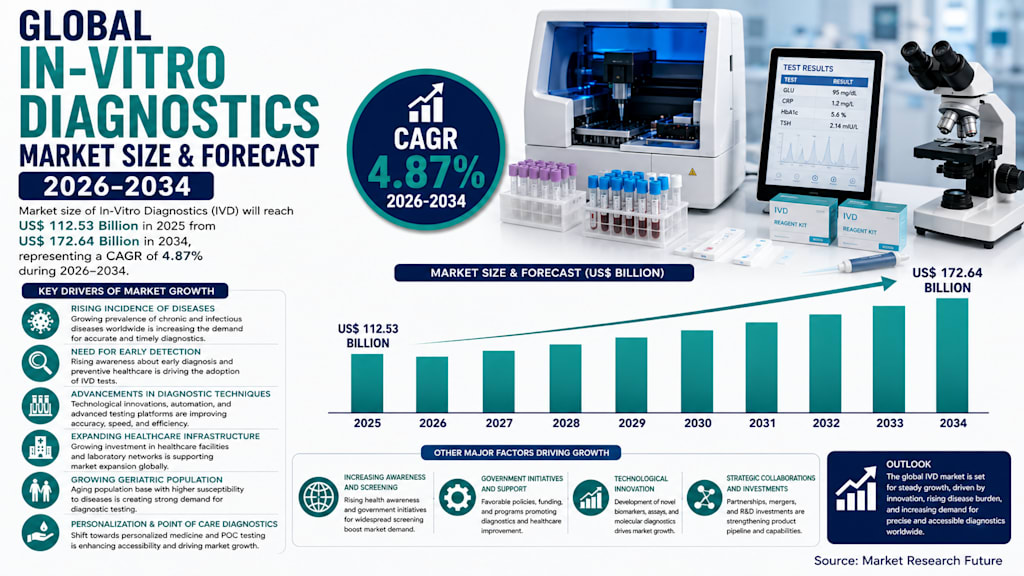
According to Renub Research, the Global In-Vitro Diagnostics Market is projected to grow from US$ 112.53 billion in 2025 to US$ 172.64 billion by 2034, expanding at a CAGR of 4.87% between 2026 and 2034. Rising demand for early disease detection, precision medicine, and advanced diagnostic technologies continues to drive market expansion worldwide.
Why In-Vitro Diagnostics Are Essential to Modern Healthcare
In-vitro diagnostics encompass a broad range of laboratory tests conducted outside the body using biological samples.
These tests are used to diagnose diseases, assess health conditions, monitor treatment effectiveness, predict disease risks, and support preventive healthcare initiatives.
IVD products include diagnostic reagents, test kits, instruments, analyzers, software solutions, and laboratory systems used across hospitals, diagnostic laboratories, clinics, and point-of-care settings.
The ability to identify diseases at an early stage significantly improves treatment outcomes while reducing healthcare costs.
As healthcare providers increasingly focus on proactive care rather than reactive treatment, the importance of diagnostic testing continues to grow.
Today, IVD technologies are indispensable across virtually every area of medicine, from infectious disease management and oncology to cardiology, diabetes care, and genetic testing.
Rising Chronic Disease Burden Fuels Market Growth
One of the most significant drivers of the global IVD market is the increasing prevalence of chronic diseases.
Conditions such as cancer, diabetes, cardiovascular disease, respiratory disorders, kidney disease, and autoimmune conditions continue to affect millions of people worldwide.
These diseases require regular monitoring, early diagnosis, and ongoing clinical evaluation, creating sustained demand for diagnostic testing.
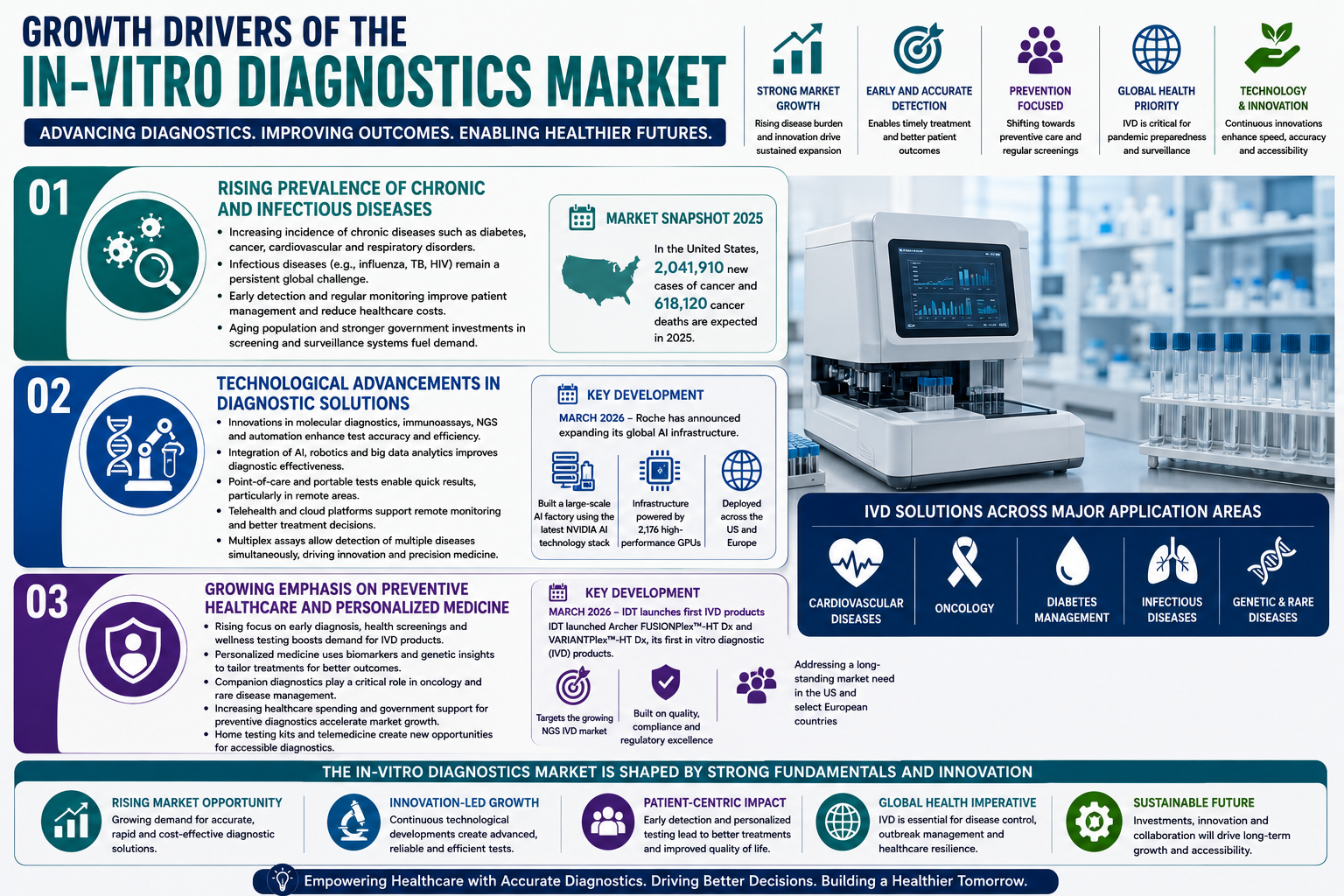
Cancer remains one of the most important areas of diagnostic activity. According to estimates cited in the market study, the United States alone is expected to record more than 2 million new cancer cases and over 618,000 cancer-related deaths in 2025. Early detection remains critical for improving survival rates and treatment effectiveness.
Similarly, diabetes and cardiovascular diseases require continuous monitoring through diagnostic testing to manage patient outcomes effectively.
As populations age and chronic illnesses become more prevalent, demand for advanced diagnostic solutions is expected to increase significantly.
Infectious Disease Surveillance Continues to Drive Demand
The importance of diagnostic testing became particularly evident during the COVID-19 pandemic.
Healthcare systems worldwide relied heavily on diagnostic testing to identify infections, monitor outbreaks, and implement containment strategies.
Although the pandemic has subsided, infectious diseases such as influenza, tuberculosis, HIV, hepatitis, and emerging viral infections continue to require ongoing surveillance.
Governments and healthcare organizations have increased investments in diagnostic infrastructure to strengthen preparedness for future public health challenges.
Rapid testing technologies, molecular diagnostics, and point-of-care solutions are playing increasingly important roles in infectious disease management.
This sustained focus on disease surveillance will continue supporting long-term growth within the IVD industry.
Technological Innovation Is Revolutionizing Diagnostics
Technological advancements are transforming diagnostic testing capabilities and improving healthcare outcomes.
Innovations in molecular diagnostics, immunoassays, next-generation sequencing (NGS), automation, robotics, artificial intelligence, and digital pathology are enabling faster, more accurate, and more comprehensive testing.
AI-powered diagnostic systems can analyze large volumes of clinical data, identify patterns, and assist healthcare professionals in making informed decisions.
Automation reduces manual errors while improving laboratory efficiency and testing throughput.
Portable diagnostic devices and point-of-care testing systems are also making advanced healthcare more accessible in remote and underserved regions.
As technology continues to evolve, diagnostic testing is becoming increasingly precise, efficient, and patient-centered.
Artificial Intelligence Is Shaping the Future of Diagnostics
Artificial intelligence is rapidly becoming one of the most transformative technologies in healthcare diagnostics.
AI applications help laboratories process large datasets, improve diagnostic accuracy, automate workflows, and accelerate clinical decision-making.
Machine learning algorithms can identify subtle abnormalities that might otherwise be overlooked, enhancing disease detection capabilities.
In March 2026, Roche announced the expansion of its global artificial intelligence infrastructure, including the deployment of advanced NVIDIA-powered AI systems across the United States and Europe. The initiative aims to accelerate the development of next-generation diagnostic and therapeutic solutions.
As AI technologies mature, they are expected to play an increasingly important role throughout the diagnostic ecosystem.
Preventive Healthcare Is Increasing Testing Volumes
Healthcare systems worldwide are placing greater emphasis on prevention rather than treatment.
Routine health screenings, wellness programs, risk assessments, and preventive diagnostics are becoming increasingly common as governments and healthcare providers seek to reduce disease burdens and healthcare costs.
Diagnostic testing enables healthcare professionals to identify potential health issues before symptoms become severe.
Consumers are also becoming more proactive regarding personal health management, leading to increased demand for routine screening services.
This preventive healthcare trend is creating substantial opportunities for IVD manufacturers and diagnostic service providers.
The growing popularity of home testing kits and remote healthcare services is further supporting market expansion.
Personalized Medicine Creates New Opportunities
Personalized medicine is emerging as one of the most promising areas within healthcare.
Rather than applying standardized treatments to all patients, personalized medicine utilizes genetic, molecular, and biomarker information to develop customized treatment plans.
IVD technologies play a critical role in identifying biomarkers and genetic characteristics that guide treatment decisions.
Companion diagnostics have become particularly important in oncology, where targeted therapies depend on specific genetic profiles.
In March 2026, genomics company IDT introduced Archer FUSIONPlex™-HT Dx and VARIANTPlex™-HT Dx, expanding its presence in the next-generation sequencing IVD market and supporting precision medicine initiatives.
As personalized healthcare continues to gain momentum, demand for advanced diagnostics is expected to grow rapidly.
Molecular Diagnostics Lead Industry Innovation
Molecular diagnostics represent one of the fastest-growing segments within the IVD market.
These technologies analyze DNA, RNA, and genetic material to detect diseases, identify pathogens, and evaluate genetic mutations.
Applications include infectious disease testing, cancer diagnostics, prenatal screening, hereditary disease detection, and pharmacogenomics.
The COVID-19 pandemic highlighted the importance of molecular diagnostic technologies, particularly polymerase chain reaction (PCR) testing.
Today, molecular diagnostics remain essential for precision medicine and advanced disease management.
Continued investment in genomic research and biotechnology is expected to strengthen growth within this segment.
Reagents and Kits Remain the Largest Product Category
Reagents and diagnostic kits form the foundation of the IVD industry.
These products are used across clinical chemistry, hematology, immunology, microbiology, and molecular diagnostics applications.
Because reagents are consumed during testing procedures, they generate recurring demand and consistent revenue streams for manufacturers.
Advancements in reagent formulations are improving test sensitivity, accuracy, and turnaround times.
The growing volume of diagnostic testing worldwide is expected to sustain strong demand for reagents and consumable products throughout the forecast period.
Cancer Diagnostics Continue to Expand
Cancer diagnostics represent one of the most important application segments within the market.
Advancements in molecular diagnostics, biomarker testing, liquid biopsy technologies, and genomic profiling are transforming cancer detection and treatment planning.
Healthcare providers increasingly rely on diagnostic testing to identify cancers at earlier stages when treatment outcomes are more favorable.
The rise of targeted therapies and precision oncology is creating additional demand for companion diagnostics.
Government-funded cancer screening programs and growing public awareness regarding early detection continue to support segment growth globally.
Clinical Laboratories Remain Key End Users
Clinical laboratories account for a substantial share of the global IVD market.
These facilities perform a wide range of diagnostic tests, including blood analysis, microbiology testing, pathology evaluations, molecular diagnostics, and genetic screening.
Growing testing volumes, technological advancements, and increasing disease prevalence continue driving demand for laboratory services.
Laboratories are also adopting automation and AI technologies to improve efficiency, reduce errors, and manage growing workloads.
The emergence of centralized laboratory networks and reference testing centers further supports market expansion.
Regulatory Challenges Remain Significant
Despite strong growth prospects, the IVD market faces several challenges.
Diagnostic products must meet rigorous safety, accuracy, and effectiveness standards before receiving regulatory approval.
Compliance requirements vary across different regions, including the United States, Europe, and Asia, creating additional complexity for manufacturers.
Approval processes can be time-consuming and costly, particularly for smaller companies and startups.
While these regulations help ensure patient safety, they can slow innovation and delay market entry for new technologies.
Accessibility and Cost Barriers Persist
The high cost of advanced diagnostic technologies remains another challenge.
Sophisticated molecular diagnostic platforms, next-generation sequencing systems, and automated laboratory equipment require substantial investment.
Emerging markets often face limitations related to healthcare infrastructure, skilled personnel, reimbursement systems, and patient affordability.
In rural and underserved regions, access to advanced diagnostics may remain limited.
Addressing affordability and accessibility challenges will be essential for achieving broader adoption and improving global healthcare outcomes.
United States Leads the Global Market
The United States remains the world's largest and most advanced IVD market.
Strong healthcare spending, extensive research and development activity, favorable reimbursement systems, and rapid technology adoption continue supporting market growth.
Leading diagnostic and biotechnology companies headquartered in the United States are driving innovation across molecular diagnostics, genomics, and personalized medicine.
In February 2025, Revvity introduced new Mimix™ reference standards designed to support next-generation sequencing and digital PCR assays used in precision diagnostics.
The U.S. market is expected to remain a global leader in diagnostic innovation for the foreseeable future.
India Emerges as a High-Growth Opportunity
India's IVD market is experiencing rapid expansion due to improving healthcare infrastructure, increasing disease awareness, and growing demand for diagnostic services.
Rising rates of diabetes, cardiovascular disease, cancer, and infectious illnesses are driving testing volumes across the country.
Government healthcare initiatives, private diagnostic chains, home sample collection services, and digital healthcare platforms are improving accessibility.
In October 2025, FUJIFILM India launched its FW500 Clinical Chemistry Analyzer, strengthening its diagnostic product portfolio and supporting laboratory modernization efforts.
India is expected to remain one of the fastest-growing markets within the global IVD industry.
Final Thoughts
The global In-Vitro Diagnostics market is becoming increasingly important as healthcare systems prioritize early detection, preventive medicine, and personalized treatment approaches.
Growing disease prevalence, technological innovation, artificial intelligence integration, and expanding healthcare access are creating strong demand for advanced diagnostic solutions worldwide.
Although regulatory complexities and affordability challenges remain, ongoing investments in healthcare infrastructure and innovation continue to strengthen market prospects.
With the market projected to grow from US$ 112.53 billion in 2025 to US$ 172.64 billion by 2034, the future of the IVD industry appears exceptionally promising as diagnostics become central to modern healthcare delivery and disease management.
About the Creator
Enjoyed the story? Support the Creator.
Subscribe for free to receive all their stories in your feed.
Comments
There are no comments for this story
Be the first to respond and start the conversation.