
Why the Global Bariatric Surgery Devices Market Is Expanding as Obesity Rates Reach Record Highs
Growing Awareness of Weight-Loss Surgery, Advancements in Minimally Invasive Procedures, and Rising Obesity Cases Are Driving Demand Worldwide

Obesity has become one of the most pressing public health challenges of the 21st century. What was once considered a problem affecting only a handful of developed nations has evolved into a global health crisis impacting millions of people across every continent. As obesity rates continue to rise, healthcare systems, medical professionals, and patients are increasingly searching for effective long-term solutions that extend beyond traditional diet and exercise programs.
Among the most successful treatment options available today is bariatric surgery. These procedures have transformed the lives of countless individuals by helping them achieve significant and sustainable weight loss while reducing the risk of obesity-related conditions such as diabetes, cardiovascular disease, hypertension, and sleep apnea.
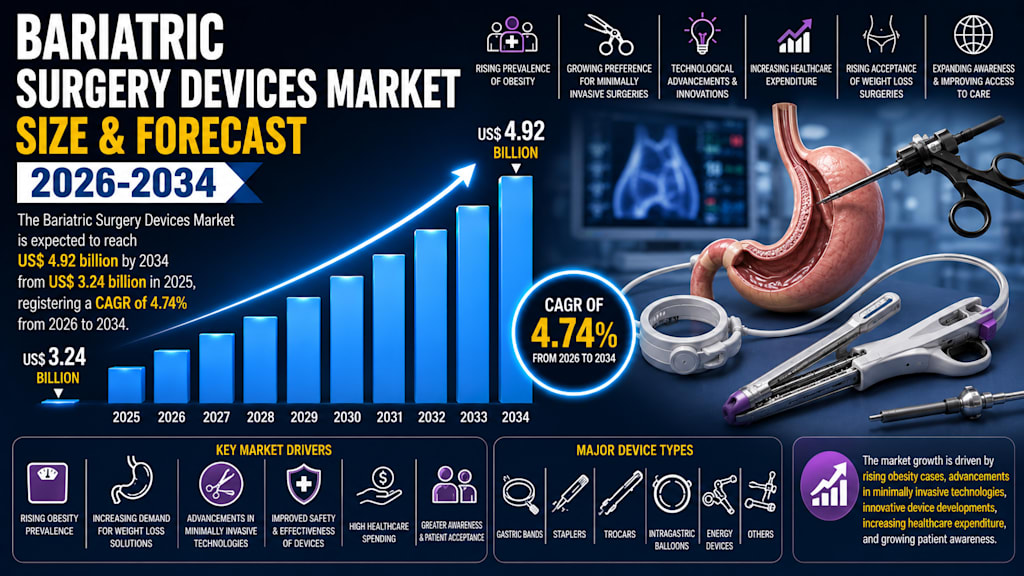
At the center of this growing healthcare segment are bariatric surgery devices, specialized medical tools designed to support safe and effective weight-loss procedures. According to Renub Research, the global Bariatric Surgery Devices Market is expected to grow from US$ 3.24 billion in 2025 to US$ 4.92 billion by 2034, expanding at a compound annual growth rate (CAGR) of 4.74% between 2026 and 2034. This steady growth reflects rising demand for surgical obesity treatments, increasing awareness of their long-term benefits, and ongoing innovation in medical technology.
Understanding Bariatric Surgery Devices
Bariatric surgery devices are specialized medical instruments used during surgical procedures designed to promote significant weight loss. These devices assist surgeons in performing operations such as gastric bypass, sleeve gastrectomy, adjustable gastric banding, and other weight-loss interventions.
Examples include surgical staplers, suturing devices, trocars, visualization systems, energy devices, and various laparoscopic instruments. These tools enable surgeons to perform highly precise procedures while minimizing trauma to surrounding tissues.
The primary objective of bariatric surgery is to reduce food intake, alter digestion, or both. By modifying the digestive system, these procedures help patients lose weight while improving metabolic health and reducing the risk of obesity-related complications. Modern bariatric surgery devices have become increasingly sophisticated, improving surgical precision, patient safety, and overall treatment outcomes.
The Global Obesity Crisis Is Fueling Demand
One of the most important factors driving the bariatric surgery devices market is the continued rise in obesity rates around the world.
Sedentary lifestyles, increased consumption of processed foods, urbanization, and changing dietary habits have contributed to a dramatic increase in overweight and obese populations. Obesity is now widely recognized as a chronic disease that significantly increases the risk of numerous serious health conditions.
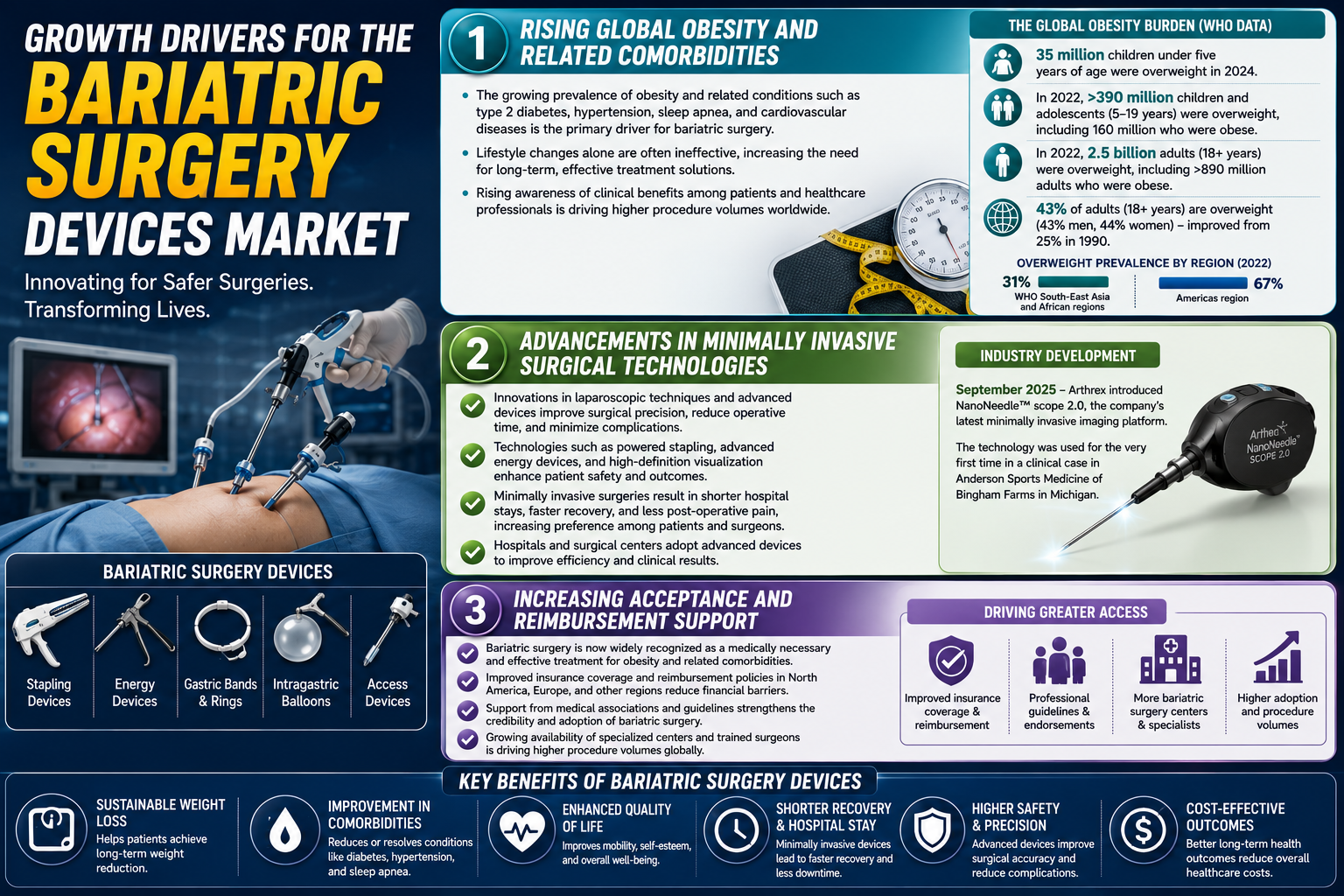
The scale of the problem is enormous. According to the data highlighted in the report, more than 2.5 billion adults worldwide were overweight in 2022, including over 890 million adults classified as obese. Additionally, hundreds of millions of children and adolescents are also affected by overweight and obesity, creating long-term healthcare challenges for future generations.
While lifestyle modifications remain the first line of treatment, many individuals with severe obesity struggle to achieve lasting results through diet and exercise alone. For these patients, bariatric surgery has emerged as one of the most effective long-term treatment options available.
As awareness of these benefits continues to grow among patients and healthcare providers, demand for bariatric procedures and the devices that support them is increasing worldwide.
Minimally Invasive Surgery Is Changing Patient Experiences
One of the most significant developments in bariatric healthcare has been the shift toward minimally invasive surgical techniques.
Traditional surgical procedures often involved larger incisions, longer hospital stays, greater discomfort, and extended recovery periods. Modern laparoscopic and robotic-assisted techniques have dramatically improved the patient experience.
Today's bariatric surgeries are frequently performed through small incisions using advanced visualization systems and specialized instruments. These approaches reduce blood loss, minimize pain, shorten recovery times, and lower the risk of complications.
The growing popularity of minimally invasive procedures has created strong demand for innovative bariatric surgery devices that improve surgical accuracy and efficiency. Advanced stapling technologies, energy devices, and visualization platforms allow surgeons to perform increasingly complex procedures with greater confidence and precision.
In September 2025, Arthrex introduced the NanoNeedle Scope 2.0, an advanced minimally invasive imaging platform that demonstrates the industry's ongoing focus on technological innovation. Such developments continue to improve procedural outcomes while enhancing patient safety.
Bariatric Surgery Is Becoming More Widely Accepted
Public perception of bariatric surgery has changed considerably over the past decade.
Previously, weight-loss surgery was sometimes viewed primarily as a cosmetic procedure. Today, healthcare professionals increasingly recognize bariatric surgery as a medically necessary intervention for patients suffering from severe obesity and related health conditions.
Clinical research has consistently demonstrated that bariatric surgery can lead to significant improvements in type 2 diabetes, hypertension, cardiovascular health, sleep disorders, and overall quality of life. Many patients also experience reduced mortality risk and lower long-term healthcare costs following successful procedures.
As a result, professional medical organizations around the world now recommend bariatric surgery for appropriately qualified patients. This growing acceptance has helped increase patient confidence while encouraging healthcare providers to expand access to treatment.
Improved insurance coverage and reimbursement policies in several countries have further accelerated adoption by reducing financial barriers for eligible patients.
Technological Innovation Is Driving Market Growth
Innovation remains one of the strongest forces shaping the future of the bariatric surgery devices market.
Medical device manufacturers continue to invest heavily in research and development aimed at improving surgical outcomes. New technologies focus on enhancing precision, reducing complications, shortening procedure times, and improving recovery experiences.
Advanced powered stapling systems, sophisticated energy devices, robotic-assisted surgical platforms, and enhanced visualization tools are becoming increasingly common in modern operating rooms.
These technologies help surgeons achieve greater consistency while reducing procedural risks. Hospitals and surgical centers are also adopting these innovations to improve efficiency and deliver better patient outcomes.
As healthcare providers prioritize quality and safety, demand for next-generation bariatric surgery devices is expected to remain strong throughout the coming decade.
Sleeve Gastrectomy Continues to Gain Popularity
Among all bariatric procedures, sleeve gastrectomy has emerged as one of the most widely performed options worldwide.
The procedure involves reducing the size of the stomach, thereby limiting food intake and promoting significant weight loss. Many surgeons and patients favor sleeve gastrectomy because it offers effective results while maintaining a relatively straightforward surgical approach compared to some alternative procedures.
Growing confidence in the safety and effectiveness of sleeve gastrectomy has fueled demand for specialized devices designed specifically for these operations. Advances in surgical instrumentation continue to improve procedural efficiency while supporting better clinical outcomes.
As obesity rates continue to rise globally, sleeve gastrectomy is expected to remain a major contributor to growth within the bariatric surgery devices market.
Hospitals Remain the Largest End Users
Hospitals represent the largest segment within the bariatric surgery devices market due to their ability to provide comprehensive patient care throughout the surgical journey.
Most bariatric procedures require extensive preoperative evaluation, surgical intervention, and postoperative follow-up. Hospitals possess the infrastructure, expertise, and multidisciplinary teams necessary to manage these requirements effectively.
Many healthcare institutions have established dedicated bariatric centers that focus specifically on obesity treatment and metabolic health. These specialized programs help improve patient outcomes while increasing procedural volumes.
Growing investments in advanced surgical technologies within hospital settings are further contributing to demand for bariatric surgery devices. As obesity treatment becomes a larger priority for healthcare systems, hospitals are expected to remain key drivers of market growth.
Challenges Facing the Industry
Despite strong growth potential, the bariatric surgery devices market faces several important challenges.
One of the most significant barriers is the high cost associated with bariatric procedures. Advanced surgical devices, specialized instruments, disposable accessories, and hospital expenses can create substantial financial burdens for both healthcare providers and patients.
In regions where insurance coverage remains limited, out-of-pocket expenses may discourage individuals from pursuing surgical treatment. This challenge is particularly evident in developing markets where affordability remains a critical concern.
Another challenge involves concerns regarding surgical risks and postoperative complications. Although modern procedures are safer than ever before, patients may still worry about potential issues such as infections, bleeding, leakage, nutritional deficiencies, and gastrointestinal complications.
The need for lifelong dietary and lifestyle adjustments following surgery can also influence patient decision-making. Continued improvements in device design, surgeon training, and patient education will be essential for addressing these concerns and supporting future market growth.
Regional Markets Continue to Expand
The United States remains the largest bariatric surgery devices market globally. High obesity rates, strong healthcare infrastructure, widespread awareness, and favorable reimbursement policies have contributed to substantial procedure volumes across the country.
The market also benefits from early adoption of innovative technologies, including robotic-assisted surgery and advanced minimally invasive devices. In January 2026, Johnson & Johnson announced its submission of the OTTAVA Robotic Surgical System to the U.S. Food and Drug Administration for De Novo classification, highlighting continued investment in advanced surgical technologies.
The United Kingdom is also experiencing growth as obesity rates increase and healthcare providers recognize the long-term benefits of surgical weight-loss interventions. Public healthcare support through the National Health Service has played an important role in expanding access to treatment.
India represents one of the fastest-growing opportunities in the global market. Rising obesity rates, expanding healthcare infrastructure, increasing awareness, and medical tourism are creating favorable conditions for growth. The introduction of new obesity management solutions by major healthcare companies further supports market expansion.
Saudi Arabia is also witnessing significant growth due to high obesity prevalence and increasing government support for preventive healthcare initiatives. Investments in advanced medical technologies and growing social acceptance of bariatric procedures are contributing to increased adoption across the region.
Looking Ahead
The future of the bariatric surgery devices market appears promising as healthcare systems continue addressing the growing burden of obesity and related diseases. Advances in minimally invasive surgery, robotic-assisted procedures, and next-generation medical devices are expected to improve outcomes while expanding treatment accessibility.
Manufacturers are focusing on innovation, patient safety, and procedural efficiency to meet the evolving needs of surgeons and healthcare providers. At the same time, increasing awareness of obesity as a serious medical condition is encouraging more individuals to consider surgical treatment when traditional approaches prove ineffective.
As healthcare infrastructure improves and reimbursement policies continue to evolve, access to bariatric surgery is likely to expand in both developed and emerging markets.
Final Thoughts
The global rise in obesity has created an urgent need for effective long-term treatment solutions. Bariatric surgery has emerged as one of the most successful interventions for severe obesity, helping millions of patients achieve substantial weight loss and improved health outcomes.
Supported by technological innovation, growing clinical acceptance, and increasing patient awareness, the bariatric surgery devices market is poised for steady growth over the next decade. With the market projected to reach nearly US$ 5 billion by 2034, these specialized medical devices will continue to play a crucial role in transforming obesity treatment and improving quality of life for patients worldwide.
About the Creator
Enjoyed the story? Support the Creator.
Subscribe for free to receive all their stories in your feed.
Comments
There are no comments for this story
Be the first to respond and start the conversation.