
Why the Allergy Relieving Eye Drops Market Is Expanding as Eye Allergies Rise Worldwide
Increasing exposure to pollution, longer allergy seasons, and growing awareness of self-care treatments are driving strong demand for allergy relief eye drops across global healthcare markets.

Eye allergies may not receive the same level of attention as respiratory allergies, but for millions of people worldwide, they are an uncomfortable and recurring health concern that can significantly affect daily life. Symptoms such as itching, redness, watery eyes, swelling, and irritation can interfere with work, education, outdoor activities, and overall quality of life. As environmental conditions continue to change and exposure to allergens increases, eye allergies are becoming a growing public health issue across both developed and emerging economies.
Fortunately, advances in ophthalmic care have made relief more accessible than ever before. Allergy relieving eye drops have emerged as one of the most widely used and effective treatment options for managing allergic eye conditions. These products offer fast, convenient, and non-invasive symptom relief, making them a preferred choice among consumers seeking immediate comfort without the need for extensive medical intervention.
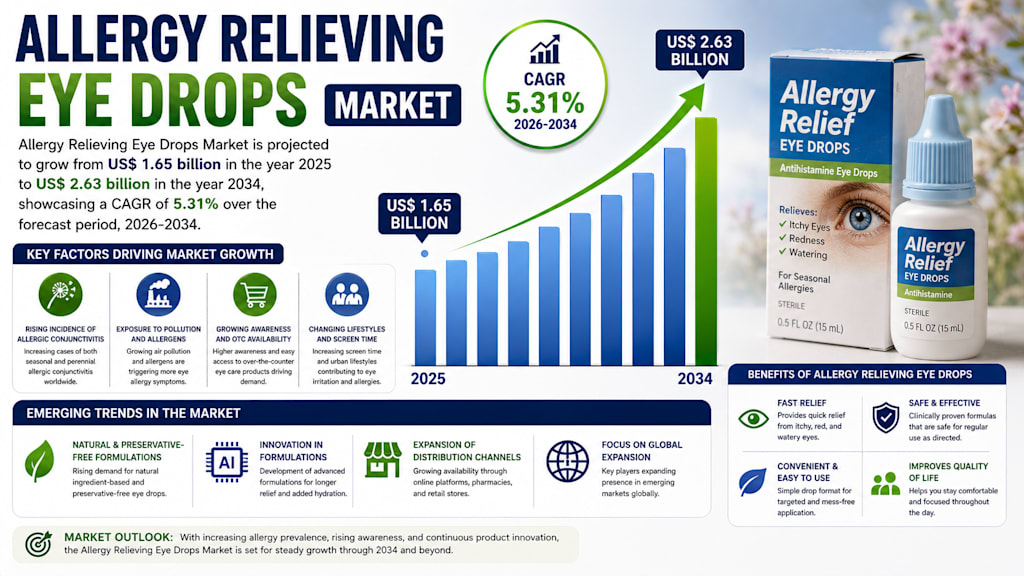
The growing prevalence of allergic eye disorders, combined with increasing awareness of self-care and over-the-counter healthcare products, is creating significant opportunities within the global eye care market. According to Renub Research, the Allergy Relieving Eye Drops Market is projected to grow from US$ 1.65 billion in 2025 to US$ 2.63 billion by 2034, expanding at a compound annual growth rate (CAGR) of 5.31% between 2026 and 2034. The market is benefiting from rising rates of allergic conjunctivitis, increasing urbanization, worsening air pollution, climate-related changes in allergen exposure, and ongoing product innovation.
Eye Allergies Are Becoming More Common Worldwide
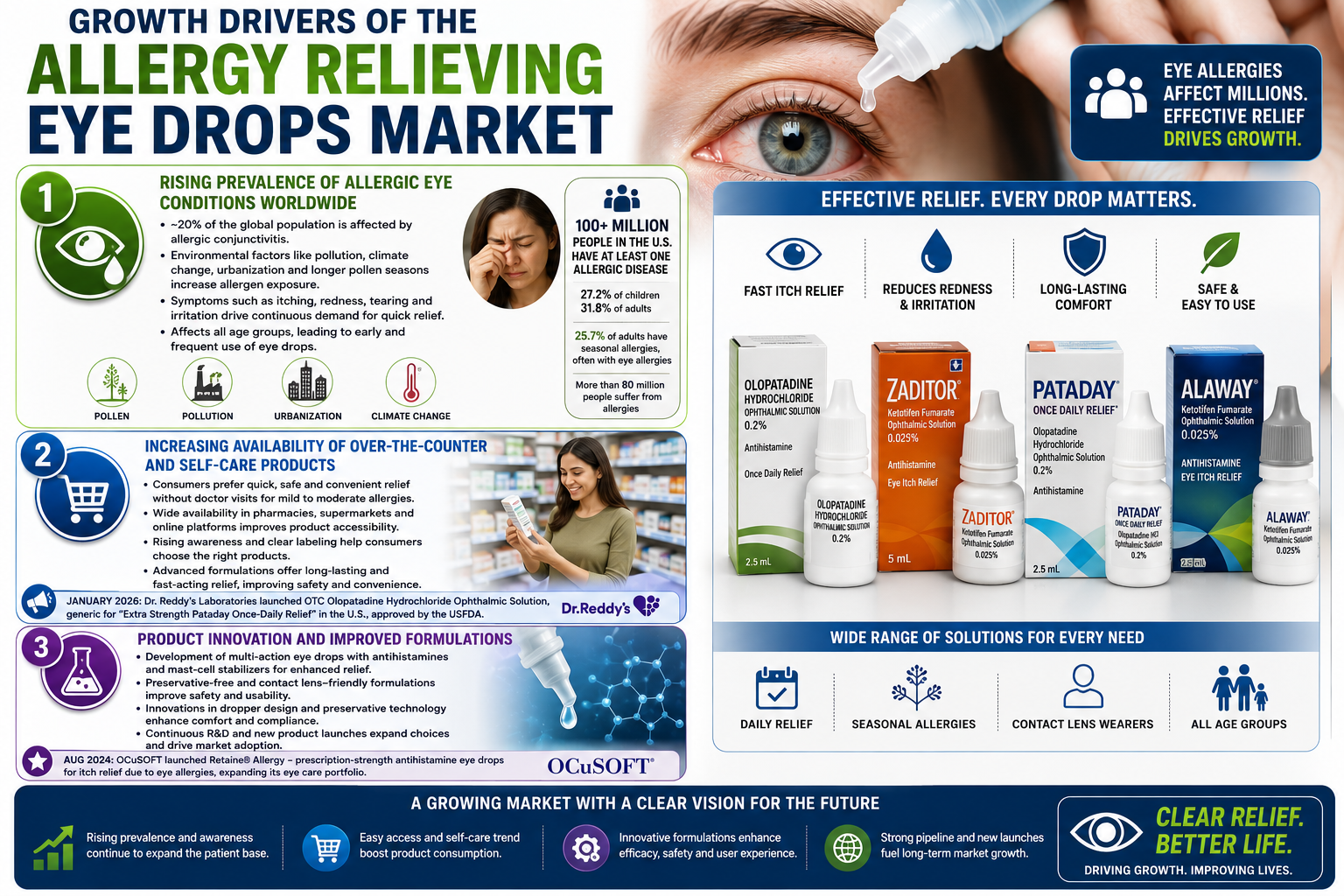
The increasing prevalence of eye allergies is one of the strongest factors driving market growth.
Allergic eye conditions occur when the immune system reacts to substances such as pollen, dust mites, mold spores, pet dander, smoke, or environmental pollutants. These reactions trigger inflammation that causes discomfort and irritation in the eyes.
Among the most common conditions is allergic conjunctivitis, which affects millions of individuals worldwide every year.
Healthcare experts estimate that eye allergies impact a significant percentage of the global population. Many cases remain untreated or self-managed, suggesting that the actual number of affected individuals may be even higher than reported figures. Environmental changes, urbanization, and increasing pollution levels are contributing to higher exposure to allergens, making allergic eye conditions more prevalent across all age groups.
As allergy rates continue rising globally, demand for effective symptom management solutions is expected to increase steadily.
Pollution Is Intensifying Allergy Problems
Air pollution has become a major contributor to the growth of allergic eye disorders.
Rapid urbanization and industrialization have led to increased concentrations of airborne pollutants in many cities worldwide. Fine particulate matter, vehicle emissions, industrial pollutants, and environmental toxins can irritate the eyes directly while also worsening allergic responses.
For individuals already sensitive to allergens, polluted environments often amplify symptoms such as redness, itching, and watering.
Cities experiencing significant air quality challenges frequently report higher rates of allergy-related health concerns.
As populations continue concentrating in urban areas, exposure to environmental pollutants is expected to remain a major factor influencing demand for allergy relief products.
The connection between pollution and eye health is becoming increasingly recognized by both healthcare professionals and consumers.
Climate Change Is Extending Allergy Seasons
Another important factor influencing market growth is climate change.
Rising temperatures and changing weather patterns are altering pollen production cycles and extending allergy seasons in many parts of the world. Plants are producing larger quantities of pollen over longer periods, increasing exposure levels for allergy sufferers.
As a result, individuals who previously experienced seasonal symptoms for a few weeks may now encounter allergies for several months.
Longer allergy seasons translate directly into increased demand for treatment solutions, including allergy relieving eye drops.
Healthcare providers and researchers continue to observe growing links between climate-related environmental changes and allergy prevalence.
These trends are expected to support long-term market expansion as allergy management becomes increasingly important for affected populations.
Consumers Prefer Fast and Convenient Relief
One of the primary reasons allergy relieving eye drops remain popular is their convenience.
Unlike some treatment options that require systemic medication or lengthy medical consultations, eye drops provide direct symptom relief at the source of discomfort.
Consumers appreciate products that work quickly and can be applied easily throughout the day.
For individuals experiencing sudden allergic reactions, fast-acting eye drops offer an immediate solution that helps restore comfort and productivity.
The simplicity of use also contributes to widespread adoption.
Most products can be carried easily and used whenever symptoms arise, making them practical for work, travel, school, and outdoor activities.
This combination of effectiveness and convenience continues to drive consumer preference toward ophthalmic allergy treatments.
Over-the-Counter Availability Is Expanding Access
The increasing availability of over-the-counter allergy eye drops has significantly expanded market reach.
Consumers today have access to a broad range of products through pharmacies, supermarkets, online retailers, and healthcare stores without requiring prescriptions for many common formulations.
This accessibility encourages self-care and early symptom management.
Individuals experiencing mild to moderate allergy symptoms often prefer purchasing over-the-counter products rather than scheduling medical appointments.
Improved labeling, consumer education, and pharmacy support have also increased confidence in self-treatment options.
The growth of e-commerce platforms has further strengthened accessibility by allowing consumers to compare products, read reviews, and purchase treatments from home.
As self-care healthcare trends continue expanding, over-the-counter eye drops are expected to remain a major contributor to market growth.
Product Innovation Is Transforming Eye Care
Innovation continues to play a central role in the evolution of allergy relieving eye drops.
Manufacturers are investing heavily in research and development to improve effectiveness, comfort, and convenience.
Modern formulations often combine multiple therapeutic mechanisms within a single product.
Many newer eye drops contain both antihistamines and mast cell stabilizers, providing immediate symptom relief while helping prevent future allergic reactions.
This dual-action approach offers significant benefits for consumers managing recurring allergies.
Preservative-free formulations have also gained popularity.
These products reduce the risk of irritation associated with long-term use and are particularly attractive to individuals with sensitive eyes or contact lens wearers.
Advances in packaging and dispenser technology further enhance user experience by improving dosing accuracy and maintaining product sterility.
Antihistamine Eye Drops Continue to Lead the Market
Among all product categories, antihistamine eye drops represent the largest and most widely used segment.
These products work by blocking histamine receptors responsible for triggering allergic symptoms such as itching, redness, and watering.
Because they provide rapid relief, antihistamine formulations remain highly popular among both consumers and healthcare professionals.
Many modern antihistamine products also incorporate mast cell stabilizers that help prevent allergic reactions before they occur.
This combination enhances effectiveness and extends symptom control.
Strong physician recommendations, widespread consumer familiarity, and extensive over-the-counter availability continue supporting the dominance of this segment within the global market.
Growing Awareness of Eye Health Is Supporting Demand
Public awareness regarding eye health has increased significantly in recent years.
Consumers are becoming more proactive about recognizing symptoms, seeking treatment, and protecting long-term vision health.
Educational campaigns, healthcare initiatives, and digital information resources have contributed to greater understanding of allergy-related eye conditions.
Many individuals now recognize that persistent symptoms should not simply be ignored.
Instead, they are seeking professional advice or appropriate self-care treatments before symptoms worsen.
This shift toward proactive healthcare behavior is creating additional opportunities for eye care product manufacturers and healthcare providers.
As awareness continues growing, more consumers are likely to adopt regular allergy management practices.
Chronic Allergic Conditions Require Long-Term Management
While seasonal allergies account for a significant portion of market demand, chronic allergic conditions also contribute substantially.
Conditions such as vernal keratoconjunctivitis and atopic keratoconjunctivitis often require ongoing management due to persistent inflammation and recurring symptoms.
These disorders can significantly affect quality of life and, in severe cases, may threaten vision if left untreated.
Long-term treatment frequently involves a combination of antihistamines, mast cell stabilizers, lubricating drops, and specialized prescription therapies.
Because these patients require continuous symptom management, chronic allergic eye conditions generate stable demand for ophthalmic products throughout the year.
Challenges Facing the Industry
Despite strong growth prospects, the market faces several challenges.
One concern involves improper use of over-the-counter eye drops.
Some consumers may overuse decongestant-based products, potentially leading to rebound redness or worsening symptoms over time. Self-diagnosis can also delay treatment for more serious eye conditions that require professional medical attention.
Consumer education remains essential for ensuring safe and appropriate product use.
Another challenge involves intense market competition.
Numerous brands, generic alternatives, and private-label products compete for consumer attention. This competitive environment places pressure on pricing and profit margins, particularly in emerging markets where affordability remains a critical purchasing factor.
Manufacturers must balance innovation, regulatory compliance, and cost-effectiveness while maintaining product quality and differentiation.
Regional Markets Continue to Grow
The United States remains one of the world's largest allergy relieving eye drops markets.
High allergy prevalence, strong consumer awareness, widespread availability of over-the-counter treatments, and significant healthcare spending continue supporting demand. Seasonal allergies affect millions of Americans annually, creating substantial opportunities for eye care manufacturers.
Germany represents a mature European market characterized by strong physician involvement, high-quality healthcare standards, and growing demand for preservative-free formulations. Environmental allergies and seasonal pollen exposure continue driving product adoption.
India is emerging as an important growth market due to rising pollution levels, rapid urbanization, increasing awareness of eye health, and expanding pharmacy networks. Affordable products and widespread over-the-counter availability support strong volume growth.
Saudi Arabia is also experiencing growing demand as environmental conditions, including dust exposure and arid climates, contribute to higher rates of allergic eye conditions. Improved healthcare access and rising awareness further support market expansion.
The Future of the Allergy Relieving Eye Drops Market
The future of the market appears highly promising.
Several long-term trends are expected to support sustained growth, including increasing allergy prevalence, worsening environmental conditions, growing healthcare awareness, rising self-care adoption, and continued product innovation.
Manufacturers will likely continue developing advanced formulations that offer longer-lasting relief, improved safety profiles, preservative-free options, and enhanced convenience.
Digital healthcare platforms and telemedicine services may also play larger roles in helping consumers identify symptoms and access appropriate treatments.
As awareness of eye health continues increasing, allergy management products are expected to remain essential components of everyday healthcare.
Final Thoughts
Eye allergies are becoming an increasingly common challenge in modern society.
Environmental changes, pollution, urbanization, and expanding allergen exposure are affecting millions of people worldwide, creating sustained demand for safe and effective treatment solutions.
Allergy relieving eye drops offer a practical, accessible, and non-invasive method for managing symptoms and improving quality of life. Their convenience, affordability, and growing availability have made them one of the most widely used eye care products globally.
With the market projected to reach US$2.63 billion by 2034, allergy relieving eye drops are positioned for continued growth. As healthcare awareness rises and innovation continues to improve treatment options, these products will remain a vital tool in helping individuals manage allergic eye conditions and maintain everyday comfort.
About the Creator
Enjoyed the story? Support the Creator.
Subscribe for free to receive all their stories in your feed.
Comments
There are no comments for this story
Be the first to respond and start the conversation.