
Why Smart Businesses Are Letting AI Handle More Daily Work in 2026
Let AI agents do work for you
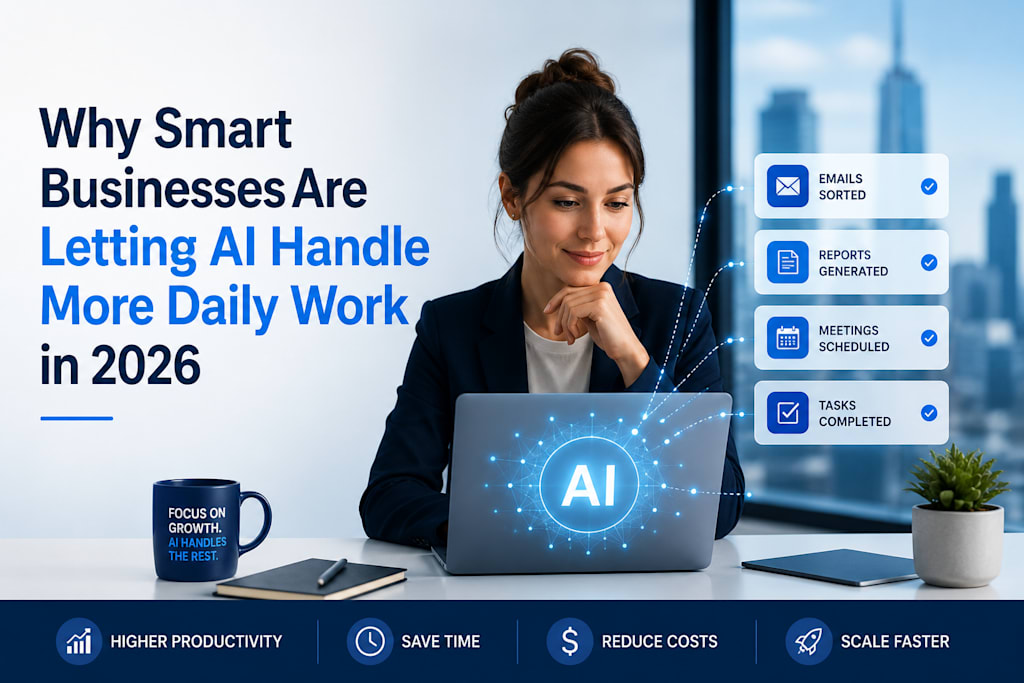
For a long time, automation in business was mostly limited to simple tasks. Companies used software to schedule emails, organize spreadsheets, or send automatic replies to customers. It was useful, but it still required constant human involvement to keep things running smoothly.
That is beginning to change in a much bigger way.
In 2026, businesses are no longer looking at AI as just another productivity tool. They are starting to treat it as part of their daily operations. Instead of using AI only for content generation or customer support, many companies are allowing intelligent systems to handle repetitive work that once consumed hours of employee time every day.
This shift is happening quietly across industries. Small startups, online stores, agencies, and even local businesses are finding ways to use AI to simplify operations without expanding their teams. The reason is simple: modern businesses are under constant pressure to do more with fewer resources.
Hiring costs continue to rise, customer expectations are increasing, and competition moves faster than ever before. Business owners are realizing that spending valuable time on repetitive tasks is no longer sustainable when smarter systems are available.
AI Has Become More Practical and Reliable
One of the biggest reasons companies are becoming more comfortable with AI is that the technology has improved dramatically in the last few years.
Early automation tools often felt robotic and limited. They could only follow very specific instructions, and the moment a situation changed, the system would stop being useful.
Today’s AI tools are far more flexible. They can analyze information, respond naturally, organize tasks, and even help businesses make decisions based on data. Instead of acting like simple software, these systems behave more like digital assistants that support teams behind the scenes.
For example, a business owner who once spent hours responding to inquiries can now automate large parts of customer communication. Marketing agencies are using AI to manage workflows, organize leads, and assist with campaign planning. E-commerce businesses are automating customer support and product recommendations. Even small service companies are beginning to use intelligent systems to manage bookings, follow-ups, and internal communication.
Businesses No Longer Want to Build Everything From Scratch
What makes this trend especially interesting is that businesses are no longer trying to create every AI solution themselves.
In the past, adopting advanced automation often required technical teams, developers, and expensive infrastructure. That created a barrier for smaller companies that lacked the resources to experiment with AI.
Now, many businesses prefer using done for you agents that are already designed to handle specific workflows and operational tasks. Instead of spending months trying to build complicated systems from scratch, companies can implement ready-made solutions that are tailored to their needs and start seeing results much faster.
This shift is especially important for smaller businesses because they usually operate with lean teams. A company with five employees may still need to handle hundreds of customer interactions, marketing tasks, and operational processes every week. AI helps reduce that pressure without forcing businesses to hire large support teams.
Customer Expectations Have Changed
Another reason smart businesses are adopting AI more seriously is that customer expectations have evolved.
People now expect fast responses, personalized experiences, and smooth communication. Waiting hours for an email response or struggling through outdated support systems frustrates users quickly.
Businesses that rely entirely on manual processes often struggle to keep up with those expectations. Companies using AI, on the other hand, can respond faster and operate more efficiently without sacrificing customer experience.
This does not mean businesses are removing people from the process completely. Most successful companies are using AI to support employees rather than replace them.
Employees still handle strategy, creativity, relationship-building, and decision-making. AI simply removes much of the repetitive work that drains time and energy. This creates a healthier workflow where teams can focus on higher-value tasks instead of getting buried in routine operations.
Many Businesses Still Don’t Know Where to Begin
Despite the growing interest in AI, many companies still feel overwhelmed by the technical side of implementation.
Business owners understand the benefits, but they often struggle with questions like:
- Which tools should they use?
- How expensive will it be?
- How difficult is setup?
- Will it actually improve operations?
That uncertainty prevents many companies from moving forward.
This is one reason there has been growing interest in platforms and services that simplify implementation. Instead of hiring developers or building custom systems internally, businesses are looking for practical ways to build ai agent solutions without dealing with unnecessary complexity.
The companies succeeding with AI right now are not necessarily the ones using the most advanced technology. They are the ones applying it in practical ways to solve real business problems.
AI Is Becoming a Business Advantage
For some businesses, AI is helping automate customer support. For others, it improves internal organization, sales processes, or workflow management.
The important thing is that AI is slowly becoming less of an experiment and more of a competitive advantage.
Businesses that integrate intelligent systems effectively are often able to:
- Save time
- Improve response speed
- Reduce operational pressure
- Increase efficiency without significantly expanding teams
Those advantages become extremely valuable in competitive markets where speed and customer experience matter.
The Future of Daily Business Operations
Looking ahead, this trend will likely continue growing over the next few years.
Businesses are becoming more comfortable with intelligent systems because they can clearly see the value they provide. Faster workflows, reduced manual effort, improved customer communication, and better operational efficiency are difficult benefits to ignore.
At the same time, AI tools are becoming easier to use, which means adoption is no longer limited to large tech companies. Smaller businesses now have access to systems that were once only available to enterprises with massive budgets.
In many ways, we are moving toward a future where AI becomes a normal part of everyday business operations rather than something companies view as optional or experimental.
The businesses adapting early are already seeing the difference. Others are beginning to realize they may need to rethink how work gets done if they want to keep up with the pace of modern business.
About the Creator
Shaun W.
I’m a digital marketer with over three years of experience. I help brands reach their audiences using strategies like SEO, content marketing, and social media. I focus on data-driven insights to improve engagement and visibility.
Enjoyed the story? Support the Creator.
Subscribe for free to receive all their stories in your feed.
Comments
There are no comments for this story
Be the first to respond and start the conversation.