
Why My Automated Ad Pipeline Keeps Breaking on Multi-Platform Formats
It is past 2 a.m. Only the amber light from the single computer's screen is visible and the room is dark. Besides, my cold coffee has a distinct layer, an oily one, I could say.
It is past 2 a.m. Only the amber light from the single computer's screen is visible and the room is dark. Besides, my cold coffee has a distinct layer, an oily one, I could say. That's how it looks and I am probably stuck looking at the same configuration line for quite a long time now. (Anyway.)
Since three weeks I have been trying to optimize the way we roll out performance creatives across different channels with an AI UGC Ad Generator. We want the ads to come out of the generator almost effortlessly, i.e. given a raw product URL or a couple of still asset, generate a dozen versions, and then sit back to monitor the ad sets only.
But, quite on the contrary, I spent the last four hours trying to find out why the automated job has been able to recognize and cut the vertical 9:16 TikTok asset into a horrible, headless 1:1 square, that product in-hand is absolutely not visible anymore.
The 9:16 Trap and Multi-Platform Adaptation
Multi-platform format adaptation (Seed 8-1) sounds trivial when you read a SaaS landing page. You click a button, check a few boxes for Instagram, TikTok, and Meta feeds, and expect the layout engine to magically protect your focal points.
Reality is messier. When you feed raw assets into an AI Video Ad Creator, the model doesn't "understand" your product placement unless you explicitly constrain its bounding boxes. In my case, a batch of 15 automated variants failed a simple check because the framing algorithm locked onto a high-contrast background shadow instead of the actual jar in the foreground.
The fix wasn't some advanced script refactoring; it was tedious, old-school padding. I had to manually prepend a pre-processing crop layer to standardize input resolutions before letting any downstream generation run.
Where Nextify.ai Fits Into the Mess
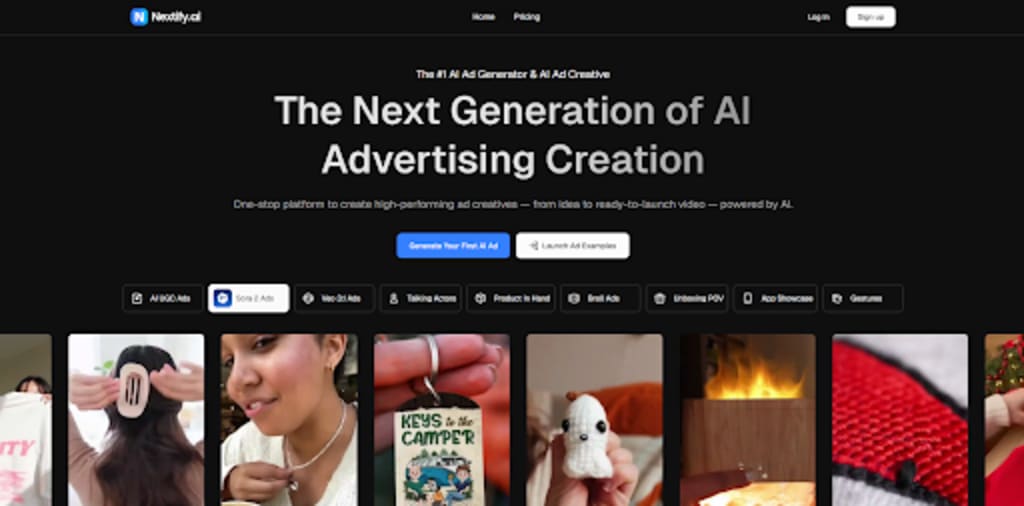
I've been experimenting with different workflow setups recently. One of them is using an AI Video Ad Generator like Nextify.ai which does the lion's share work of transforming a single product picture to a ready-made commercial video without the need for an entire production crew.
It's a no-brainer time-saver when you want to create a set of different-sized variants quickly. Though, dealing with this tool also pushed me to realize a little bit embarrassing insight: automated tool sets do not eliminate the need for the artist's eyes; they merely relocate the bottleneck from the creation to the final check.
The last Tuesday I did a group test and it went quite fine: the narration was quick and efficient, and the synthetic avatar synchronization turned out to be a good surprise. Still, two out of the five created variants displayed some text-overlay collisions in which dynamic captions went over the core CTA button. Although, the tool has done the video advertising, it was human eyes with a small headache that were required to find the layout mishap after the video has already gone up.
A Slower, Calmer Workflow
We are still on the pursuit of total automation as though it's the holy marketing grail to hit one button and then leave to enjoy an espresso on a beach. Anyway, every time, I totally take myself out of the loop, the pipeline just ends up in some way to publicly shame and ridicule me.
AI tools for the creative of ads are awesome sketchpads to work with. Solo builders without a media agency in their team can definitely benefit from these types of software tools. Yet, when treating them as autopilot systems, you will end up spending your budget on the frames that are broken and text layers that are not aligned properly.
Mind you, maybe the issue was not the technology at all. Perhaps, the thing is that I thought this piece of software would be as passionate about visual composition and aesthetics as I am, but code isn't something that gives two cares about anything.
It has almost reached 3:30 a.m. I will shut down my IDE without resuming the batch queue, and have a good night's sleep. The platform will remain there and the broken aspect ratios will still be waiting for an artist's touch to be fixed.
About the Creator
Enjoyed the story? Support the Creator.
Subscribe for free to receive all their stories in your feed.
Comments
There are no comments for this story
Be the first to respond and start the conversation.