
Why Businesses Prefer Real Estate Tokenization Development in 2026
How Blockchain-Powered Property Solutions Are Driving Faster, Smarter, and More Accessible Real Estate Investments

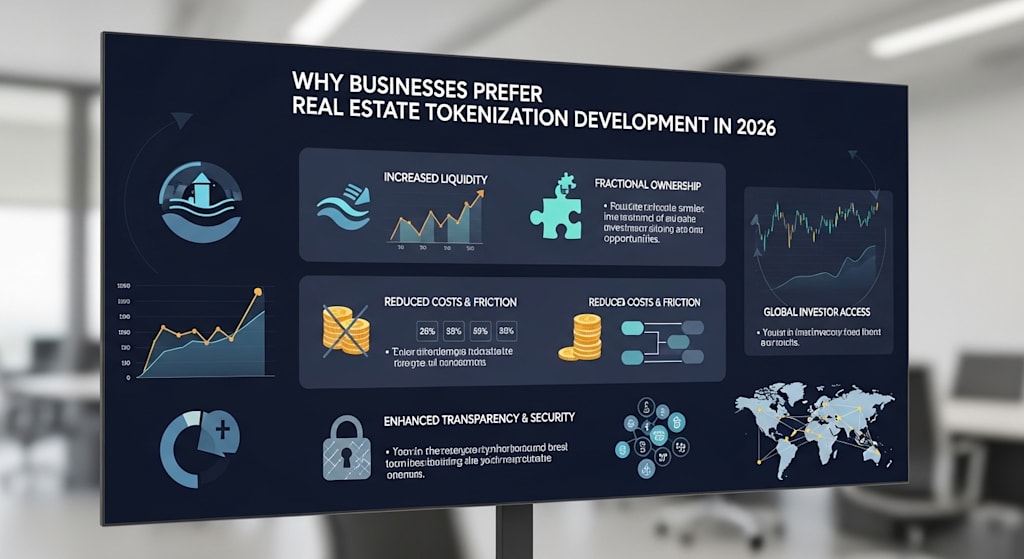
Real estate has long been considered one of the most reliable investment options. However, traditional property investment comes with challenges such as high entry costs, lengthy transactions, limited liquidity, and complex ownership structures. In 2026, businesses are moving toward digital-first approaches to overcome these barriers. One such approach gaining widespread attention is real estate tokenization development.
By converting physical property into digital tokens stored on blockchain networks, businesses are finding new ways to manage, invest in, and distribute real estate assets. This shift is not limited to large enterprises. Startups, property developers, and investment firms are also adopting real estate asset tokenization to meet changing market demands.
This blog explains why businesses prefer Real Estate Tokenization in 2026, how it works, and what makes it a practical option in today’s evolving investment landscape.
Understanding Real Estate Tokenization
Real estate tokenization refers to the process of dividing ownership of a property into digital tokens. Each token represents a share in the property, allowing multiple investors to own fractions of a real estate asset. These tokens are recorded on blockchain systems, which maintain a secure and verifiable ledger of ownership.
Through real estate tokenization development, businesses can convert residential, commercial, or industrial properties into digital assets. Investors can then buy, sell, or trade these tokens without dealing with the traditional complexities of real estate transactions.
This method changes how ownership is structured and how transactions are conducted, making it easier for businesses to manage assets and attract investors.
Rising Demand for Fractional Ownership
One of the main reasons businesses are turning to Real Estate Tokenization Services is the growing demand for fractional ownership. In the past, investing in real estate required significant capital. This limited participation to high-net-worth individuals or institutional investors.
In 2026, businesses recognize that smaller investors also want access to real estate opportunities. By dividing properties into tokens, companies can offer investment options at lower entry points. This approach widens the investor base and increases participation.
For businesses, this means faster capital inflow and reduced dependency on a small group of investors. Fractional ownership also spreads financial risk across multiple stakeholders, which can be beneficial during market fluctuations.
Improved Liquidity in Real Estate Markets
Traditional real estate investments are often illiquid. Selling a property can take months or even years, depending on market conditions. This lack of liquidity has always been a concern for investors and businesses alike.
Real estate asset tokenization changes this by allowing digital tokens to be traded on secondary markets. Investors can buy or sell their shares more easily compared to traditional property transactions.
Businesses benefit from this improved liquidity as it makes their offerings more attractive. Investors are more likely to participate when they know they can exit their investment without long delays. This has led many companies to invest in Real Estate Tokenization Platform Development to create efficient trading environments.
Faster and Simpler Transactions
Property transactions typically involve multiple intermediaries such as brokers, legal advisors, and banks. These steps can slow down the process and increase costs.
With real estate tokenization development, transactions are recorded on blockchain systems, reducing the need for intermediaries. Smart contracts automate processes like ownership transfer and payment settlements.
Businesses prefer this approach because it reduces delays and minimizes manual work. Transactions that once took weeks can now be completed in a shorter time frame. This efficiency improves overall business operations and enhances investor satisfaction.
Global Investment Opportunities
In 2026, businesses are no longer limited by geographical boundaries. Real Estate Tokenization allows companies to reach investors from different parts of the world.
Traditional real estate investment often involves regulatory and logistical challenges when dealing with international investors. Tokenization simplifies this by providing a digital platform where investors can participate without being physically present.
A Real Estate Tokenization Development company can help businesses create platforms that support global participation while complying with local regulations. This opens new funding opportunities and increases the visibility of real estate projects.
Cost Efficiency and Reduced Overhead
Managing real estate transactions involves various administrative and operational costs. These include legal fees, documentation, brokerage charges, and maintenance expenses.
By adopting Real Estate Tokenization Development Services, businesses can reduce many of these costs. Blockchain systems handle record-keeping and verification, which reduces the need for extensive paperwork.
Lower operational costs allow businesses to allocate resources more effectively. It also makes investment opportunities more appealing to investors, as fewer fees are involved in the process.
Better Asset Management
Managing multiple properties can be complex, especially for large real estate firms. Tokenization introduces a digital structure that simplifies asset management.
Each token represents ownership data that can be easily tracked and updated. Businesses can monitor ownership distribution, transaction history, and asset performance in one place.
Real Estate Tokenization Platform Development also allows integration with analytics tools, helping businesses make informed decisions. This improves efficiency in managing portfolios and enhances overall operational control.
Increased Transparency and Trust
Trust plays a major role in real estate investments. Investors want assurance that their funds are secure and that ownership records are accurate.
Blockchain technology provides a tamper-resistant ledger where all transactions are recorded. This creates a clear record of ownership and transaction history.
Businesses using Real Estate Tokenization Services can provide investors with access to this data, improving confidence in their offerings. This level of openness helps attract more investors and strengthens business credibility.
Access to Diverse Investment Models
Real estate tokenization development allows businesses to create different investment models based on market demand. These models include rental income sharing, profit-sharing from property sales, and hybrid investment options.
For example, businesses can offer tokens that provide regular rental income to investors. Alternatively, they can create tokens that represent long-term appreciation value.
This flexibility allows companies to design investment opportunities that suit different types of investors. A Real Estate Tokenization company can assist in structuring these models effectively.
Regulatory Advancements in 2026
Governments and regulatory bodies have started recognizing the potential of real estate asset tokenization. In 2026, many regions have introduced guidelines to support tokenized investments while protecting investors.
This regulatory clarity has encouraged businesses to adopt tokenization. Companies can now operate within defined frameworks, reducing legal uncertainties.
Working with a Real Estate Tokenization Development company helps businesses navigate these regulations and implement compliant solutions.
Enhanced Security of Transactions
Security is a major concern in any financial transaction. Blockchain technology used in Real Estate Tokenization offers secure data storage and transaction verification.
Each transaction is encrypted and linked to previous records, making it difficult to alter or manipulate data. This reduces the risk of fraud and unauthorized changes.
Businesses benefit from this level of security as it protects both their assets and investor interests. It also reduces the need for extensive security infrastructure.
Competitive Advantage for Early Adopters
Businesses that adopt real estate tokenization development early gain an advantage in the market. They can attract tech-savvy investors and position themselves as forward-thinking organizations.
In 2026, competition in the real estate sector is increasing. Companies are looking for ways to stand out and offer unique value to investors.
By investing in Real Estate Tokenization Platform Development, businesses can differentiate themselves and capture new market segments.
Simplified Ownership Transfer
Transferring property ownership in traditional real estate involves legal documentation, verification, and approval processes. This can be time-consuming and complex.
Tokenization simplifies ownership transfer by using digital tokens. When a token is transferred, ownership rights are updated automatically on the blockchain.
This reduces paperwork and speeds up the process. Businesses benefit from faster transactions and reduced administrative effort.
Attracting Younger Investors
The new generation of investors prefers digital platforms and flexible investment options. Real estate tokenization aligns with these preferences by offering online access and lower investment thresholds.
Businesses using Real Estate Tokenization Services can attract younger investors who may not have considered real estate before. This expands the investor base and brings fresh capital into the market.
Integration with Digital Ecosystems
In 2026, businesses are increasingly integrating their operations with digital ecosystems. Real estate tokenization fits well into this trend.
Tokenized assets can be linked with digital wallets, trading platforms, and financial management tools. This creates a connected environment where investors can manage their assets efficiently.
A Real Estate Tokenization Development company can design systems that integrate with existing business platforms, improving overall functionality.
Risk Distribution and Portfolio Diversification
Tokenization allows investors to spread their funds across multiple properties rather than investing in a single asset. This reduces risk and increases portfolio diversification.
Businesses benefit from this model as it encourages more participation. Investors feel more comfortable investing smaller amounts in multiple assets rather than committing to one large investment.
This approach also helps businesses maintain steady funding across different projects.
Challenges and Considerations
While real estate tokenization offers many benefits, businesses must also consider certain challenges. These include regulatory compliance, technological integration, and market awareness.
Choosing the right Real Estate Tokenization company is important for successful implementation. Businesses need reliable partners who understand both technology and real estate markets.
Proper planning and execution are necessary to address these challenges and achieve desired outcomes.
Future Outlook
The adoption of real estate asset tokenization is expected to grow further in the coming years. As technology continues to evolve and regulations become more defined, more businesses will enter this space.
In 2026, tokenization is not just an emerging concept but a practical solution for modern real estate investment. Companies that adopt this approach early are likely to benefit from increased efficiency and broader market reach.
Conclusion
Businesses prefer real estate tokenization development in 2026 because it addresses long-standing challenges in the real estate sector. From improved liquidity and fractional ownership to faster transactions and global access, tokenization offers practical advantages for both businesses and investors.
By adopting Real Estate Tokenization, companies can modernize their operations, attract a wider audience, and manage assets more effectively. With the support of Real Estate Tokenization Development Services and reliable technology partners, businesses can navigate this shift and position themselves for long-term growth.
As the real estate industry continues to evolve, real estate tokenization development is becoming a preferred approach for companies looking to adapt to changing market dynamics and investor expectations.
About the Creator
Ethan hunt
Ethan is a blockchain and Web3 specialist focused on building decentralized ecosystems that enhance transparency, security, and global accessibility.
Enjoyed the story? Support the Creator.
Subscribe for free to receive all their stories in your feed.
Comments
There are no comments for this story
Be the first to respond and start the conversation.