
Why Are Probiotics Becoming a Standard Part of Patient Care in U.S. Hospitals and Nursing Homes?
How Preventive Healthcare, Aging Populations, and Growing Gut Health Awareness Are Driving the United States Hospital and Nursing Home Probiotics Market

The connection between gut health and overall wellness is becoming increasingly recognized across the healthcare industry. As scientific research continues to reveal the critical role of the microbiome in digestion, immunity, and disease prevention, probiotics are gaining significant importance in hospitals and nursing homes throughout the United States.
Healthcare providers are increasingly incorporating probiotics into patient care strategies to support recovery, reduce complications associated with antibiotic treatments, and improve overall health outcomes. What was once primarily considered a consumer wellness product is now becoming a valuable component of clinical nutrition and preventive healthcare programs.
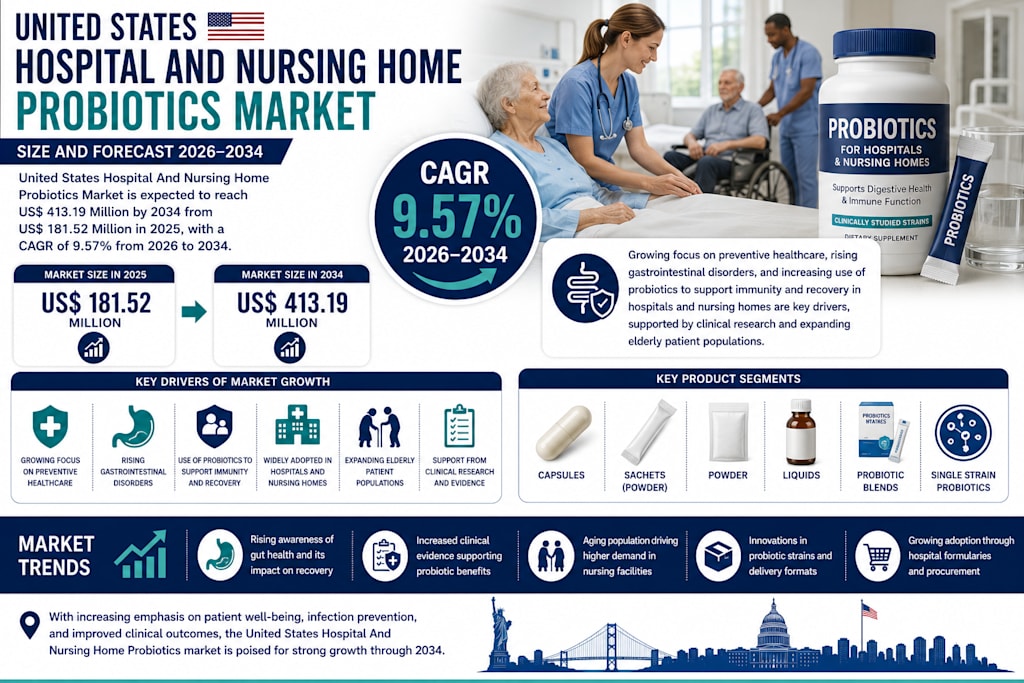
According to Renub Research, the United States Hospital and Nursing Home Probiotics Market is projected to grow from US$ 181.52 million in 2025 to US$ 413.19 million by 2034, expanding at a compound annual growth rate (CAGR) of 9.57% from 2026 to 2034. Rising gastrointestinal disorders, increasing healthcare focus on preventive medicine, growing elderly populations, and expanding clinical evidence supporting probiotic effectiveness are among the primary drivers fueling market growth.
As healthcare systems increasingly prioritize patient-centered care and long-term wellness, probiotics are becoming an important tool for improving outcomes across hospitals, rehabilitation centers, and nursing homes.
Understanding the Role of Probiotics in Healthcare
Probiotics are live beneficial microorganisms that help maintain and restore healthy gut microbiota. These microorganisms support digestive health, strengthen immune function, and contribute to overall physiological balance.
Within hospitals and nursing homes, probiotics are commonly administered to patients undergoing antibiotic treatment, recovering from surgery, managing chronic illnesses, or receiving long-term care. Antibiotics often disrupt the natural balance of gut bacteria, increasing the risk of digestive complications and infections. Probiotics help restore microbial balance and support recovery.
Available in capsules, powders, liquids, and specialized clinical nutrition formulations, probiotics are increasingly being integrated into healthcare protocols designed to improve patient well-being and reduce healthcare-associated complications.
As understanding of the gut microbiome continues advancing, healthcare institutions are recognizing probiotics as valuable supportive therapies within broader treatment strategies.
Growing Gastrointestinal Disorders Are Driving Demand
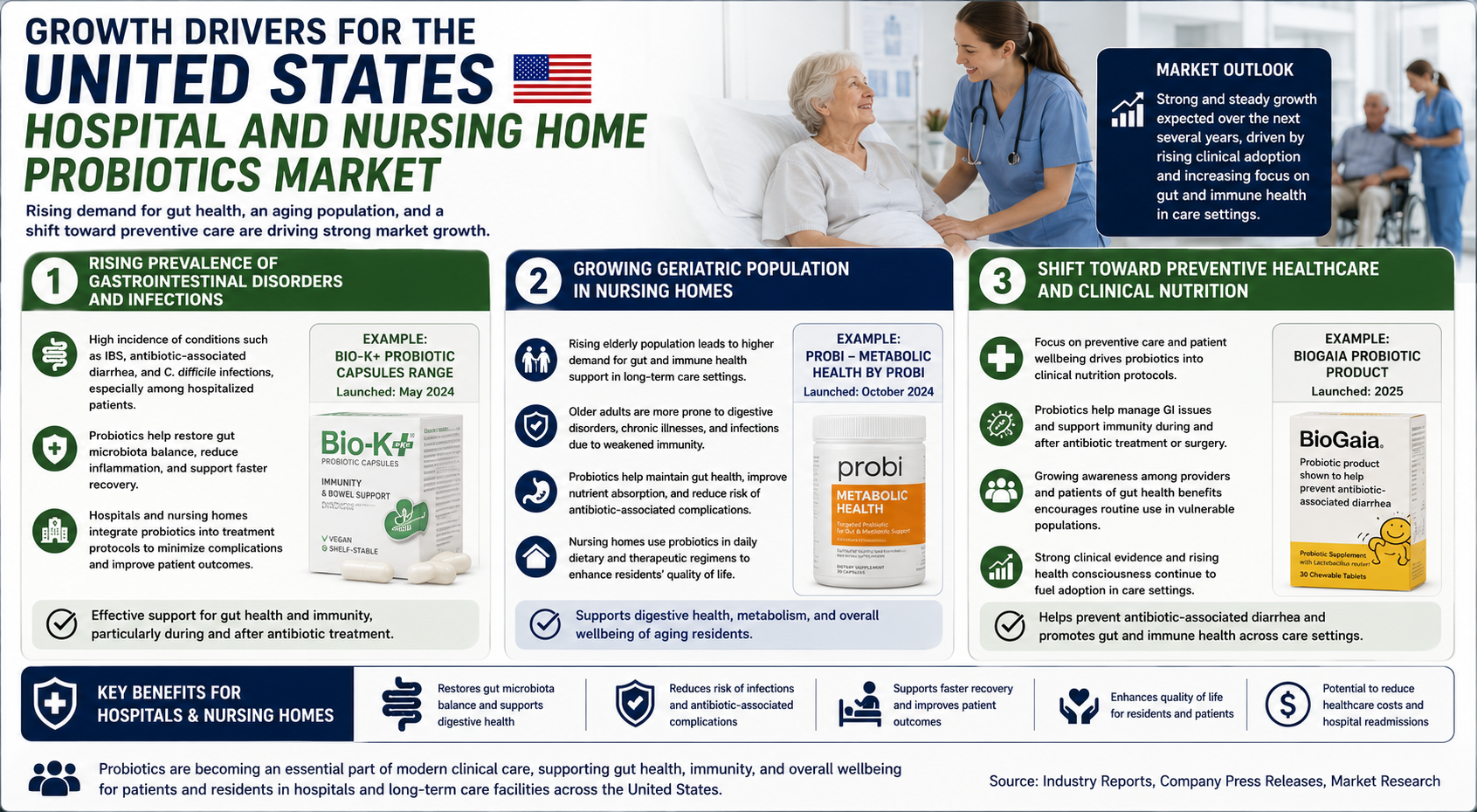
One of the strongest growth drivers within the market is the increasing prevalence of gastrointestinal disorders and digestive health complications.
Conditions such as antibiotic-associated diarrhea, irritable bowel syndrome, inflammatory bowel disorders, and Clostridioides difficile infections are common challenges in clinical environments. Patients receiving antibiotics are particularly vulnerable because these medications often disrupt beneficial gut bacteria along with harmful pathogens.
Probiotics help restore microbial balance, reduce digestive disturbances, and support gastrointestinal recovery. As a result, hospitals are increasingly incorporating probiotics into treatment protocols designed to minimize complications and improve patient outcomes.
Healthcare providers also recognize that maintaining gut health can reduce recovery times and improve overall patient comfort, further encouraging adoption.
As digestive disorders continue affecting millions of Americans annually, probiotics are expected to play an increasingly important role within healthcare settings.
Aging Populations Are Increasing Nursing Home Adoption
The growing elderly population represents another major factor supporting market expansion.
Older adults frequently experience weakened immune systems, chronic illnesses, digestive complications, and increased susceptibility to infections. These challenges make maintaining gut health particularly important within long-term care environments.
Nursing homes are increasingly incorporating probiotics into dietary and therapeutic regimens to improve digestion, enhance nutrient absorption, and reduce complications associated with medication use. Probiotics can help support overall wellness while contributing to improved quality of life among elderly residents.
As the U.S. population continues aging, demand for healthcare solutions focused on prevention, recovery, and long-term wellness is expected to rise substantially.
The growing number of seniors residing in nursing homes creates significant opportunities for probiotic manufacturers and healthcare providers alike.
Preventive Healthcare Is Reshaping Clinical Nutrition
Healthcare systems across the United States are increasingly shifting toward preventive care strategies designed to improve long-term health outcomes while reducing treatment costs.
This transition is encouraging greater emphasis on clinical nutrition, immunity support, and patient wellness programs. Probiotics align closely with these objectives because they support digestive health and help maintain overall physiological balance.
Rather than focusing exclusively on treating illness after it occurs, many healthcare providers are implementing proactive interventions that strengthen patient resilience and reduce future complications.
Hospitals are increasingly integrating probiotics into nutrition plans for patients recovering from surgery, undergoing intensive treatments, or receiving prolonged antibiotic therapies. Nursing homes are adopting similar approaches to support resident health and minimize avoidable complications.
The broader movement toward preventive healthcare is expected to remain one of the most important drivers of probiotic adoption.
Scientific Research Continues to Strengthen Confidence
Growing clinical evidence supporting probiotic efficacy has significantly increased confidence among healthcare professionals.
Researchers continue investigating the role of probiotics in managing digestive disorders, supporting immunity, reducing inflammation, and improving overall patient outcomes. Many studies have demonstrated positive effects associated with specific probiotic strains, encouraging healthcare providers to consider probiotics as valuable complementary interventions.
The increasing availability of strain-specific research is particularly important because it allows clinicians to select products based on targeted health outcomes rather than generalized claims.
As scientific understanding continues advancing, healthcare institutions are becoming more comfortable incorporating probiotics into evidence-based treatment protocols.
This growing body of research remains essential for driving broader acceptance within hospitals and long-term care facilities.
Gut Health Is Becoming a Healthcare Priority
The concept of gut health has moved from consumer wellness conversations into mainstream healthcare discussions.
Healthcare providers increasingly recognize the relationship between gut microbiota and broader physiological functions including immunity, nutrient absorption, inflammation regulation, and disease resistance.
Hospitals are incorporating microbiome-focused interventions into patient care strategies, particularly for individuals experiencing digestive disorders or undergoing intensive medical treatments.
Nursing homes are similarly adopting probiotics to support digestive regularity, reduce gastrointestinal discomfort, and improve resident well-being.
As awareness of the gut-health connection continues expanding, probiotics are expected to become even more integrated into healthcare delivery models.
Wellness Applications Are Expanding Beyond Digestion
While digestive support remains the primary application for probiotics, healthcare providers increasingly recognize broader wellness benefits.
Probiotics are being explored for their potential roles in immune support, metabolic health, inflammation management, and overall wellness. This expanded understanding is encouraging hospitals and nursing homes to consider probiotics as part of comprehensive health management strategies.
The wellness-focused probiotic segment continues gaining traction as healthcare organizations seek non-invasive interventions that support patient resilience and quality of life.
As research uncovers additional health benefits, demand for wellness-oriented probiotic formulations is expected to grow steadily.
Healthcare institutions are increasingly interested in products that contribute to whole-body wellness rather than addressing isolated symptoms alone.
Product Innovation Is Accelerating Market Development
Manufacturers continue introducing innovative formulations designed specifically for healthcare environments.
Recent advancements include shelf-stable probiotics, targeted strains for immunity and metabolic health, and specialized clinical nutrition products tailored to hospital and nursing home settings.
In 2025, Probi expanded its portfolio with solutions designed to support active nutrition, digestive comfort, circulatory health, and vitality. Similarly, metabolic health formulations targeting microbiome balance are broadening probiotic applications beyond traditional digestive support.
Innovations in packaging, shelf stability, and strain preservation are also improving product accessibility and usability within healthcare facilities.
These developments are helping probiotics become more practical and effective components of patient care programs.
Regulatory Challenges Continue to Influence Adoption
Despite strong growth prospects, regulatory uncertainty remains a significant challenge.
Unlike pharmaceutical products, probiotics are generally regulated as dietary supplements. This classification creates inconsistencies regarding quality standards, clinical validation, labeling requirements, and efficacy claims.
Healthcare providers often require high levels of scientific evidence and product consistency before integrating therapies into formal treatment protocols. Variability among probiotic products can create hesitation regarding widespread adoption.
The absence of standardized guidelines also complicates product selection and implementation within healthcare institutions.
Greater regulatory clarity and industry standardization could help accelerate market growth while strengthening provider confidence.
Cost and Reimbursement Limitations Present Obstacles
Another important challenge involves financial considerations.
High-quality probiotic formulations can be costly, particularly for nursing homes and healthcare facilities operating within tight budget constraints. Limited reimbursement support from programs such as Medicare and Medicaid often requires institutions or patients to absorb costs directly.
Although probiotics may reduce long-term healthcare expenses by preventing complications and supporting recovery, the lack of immediate reimbursement incentives can hinder adoption.
Budget-conscious facilities must carefully evaluate costs when considering large-scale implementation of probiotic programs.
Addressing reimbursement barriers may be critical for unlocking broader market penetration.
California Leads Market Growth
California remains one of the largest and most influential markets for hospital and nursing home probiotics.
The state's large elderly population, extensive healthcare infrastructure, and strong emphasis on preventive medicine create favorable conditions for probiotic adoption. Hospitals and nursing homes increasingly utilize probiotics to support digestive health, reduce antibiotic-related complications, and enhance patient outcomes.
California's focus on infection prevention and patient-centered care further strengthens demand for probiotic interventions.
As healthcare institutions continue expanding wellness-focused programs, the state is expected to remain a key contributor to market growth.
Texas Benefits from Expanding Healthcare Infrastructure
Texas represents another major growth market.
The state's rapidly growing population, increasing elderly demographic, and expanding healthcare infrastructure support rising demand for probiotics across hospitals and nursing homes.
Healthcare providers increasingly utilize probiotics to support patients managing chronic illnesses, digestive disorders, and long-term medication regimens.
As healthcare facilities prioritize infection reduction and recovery optimization, probiotics are becoming increasingly integrated into patient care strategies throughout Texas.
New York and Florida Continue Supporting Expansion
New York's dense population and advanced healthcare system create substantial demand for probiotics within hospitals and long-term care facilities.
The state's emphasis on patient care quality and infection prevention supports growing integration of microbiome-focused therapies. Nursing homes increasingly utilize probiotics to improve digestive wellness and reduce complications among elderly residents.
Florida benefits from one of the nation's largest senior populations, making probiotics particularly relevant within nursing home environments. Healthcare providers throughout the state increasingly adopt probiotics to support immunity, digestion, and recovery among aging populations.
Leading Companies Competing in the Market
Major participants in the United States hospital and nursing home probiotics market include American Lifeline Inc., Rising Pharmaceuticals, BD, Dietary Pros Inc., Dr. Joseph Mercola, Probi, Lallemand Inc., Biocodex, Probiotical S.p.A., and Protexin. These companies continue investing in clinical research, product innovation, and healthcare partnerships to strengthen their positions within this rapidly growing market.
Final Thoughts
The United States Hospital and Nursing Home Probiotics Market is experiencing strong growth as healthcare providers increasingly recognize the importance of gut health, preventive medicine, and patient-centered wellness strategies.
With the market expected to expand from US$ 181.52 million in 2025 to US$ 413.19 million by 2034, probiotics are becoming an increasingly important component of modern healthcare delivery.
Driven by rising gastrointestinal disorders, growing elderly populations, expanding clinical evidence, and greater emphasis on preventive care, the market is well-positioned for sustained growth. As healthcare institutions continue seeking safe and effective ways to improve patient outcomes, probiotics are likely to become a standard element of clinical nutrition and long-term care protocols.
About the Creator
Enjoyed the story? Support the Creator.
Subscribe for free to receive all their stories in your feed.
Comments
There are no comments for this story
Be the first to respond and start the conversation.