
What It's Actually Like Building an AI Startup in Australia Right Now
Beyond the Hype: The Numbers Behind Australia's Strategic Push into Artificial Intelligence

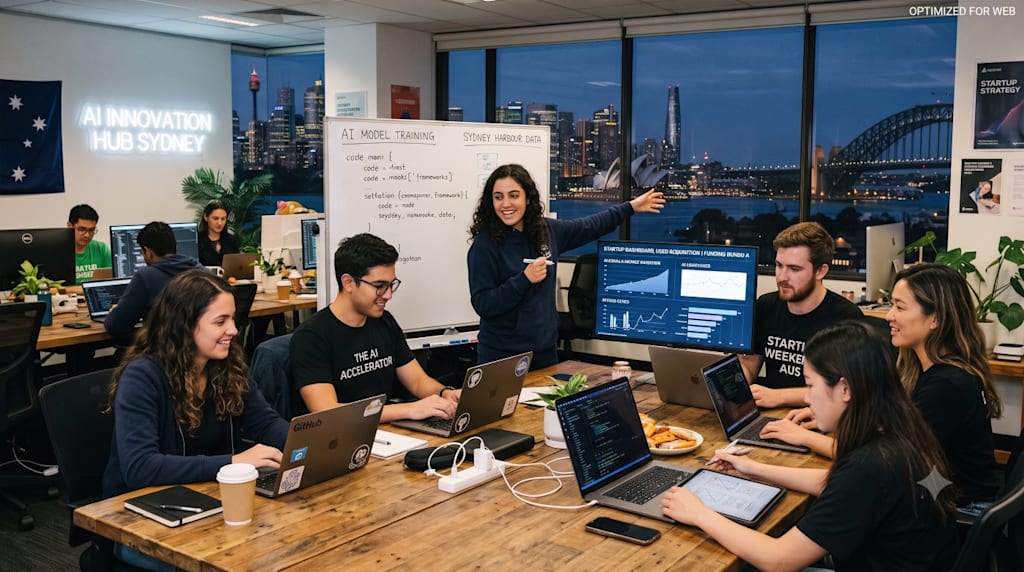
Ask any founder how their AI journey started and you'll rarely get a neat answer. For most of them, it wasn't a grand strategic pivot. It was a Tuesday afternoon, a mounting pile of admin, and someone finally saying, "there has to be a faster way to do this." That's the unglamorous truth behind most of the AI adoption happening across Australian startups today — less boardroom epiphany, more slow, practical necessity.
I've talked to enough founders now to notice a pattern. Two or three years ago, AI was the thing you added once the "real" business was working. Today, it's often the business. And that change hasn't just reshaped how these companies operate — it's reshaped how they get taken seriously by everyone from customers to investors.
The Shift Nobody Announced
Nobody sent out a memo saying AI was now mandatory for Australian startups. It just became obvious, the way trends do when enough people start doing the same thing at once. A founder running a five-person team can now genuinely compete with a company five times its size, simply because AI is handling the work that used to require a much bigger headcount.
That's not marketing spin — it's the actual lived experience founders describe. Customer support that used to eat entire afternoons now runs largely on its own. Content that used to take a full day to draft gets a first pass in minutes. Data that used to sit ignored in a spreadsheet because nobody had time to dig through it now gets surfaced automatically, in language a non-technical founder can actually use.

Funding Conversations Have Changed Too
Here's where it gets a bit more nerve-wracking for founders: startup funding in Australia now comes with a different set of questions attached. Investors aren't satisfied hearing "we use AI." They want specifics. What's it actually doing? Can you show the traction? Is this defensible, or could a competitor copy it in a weekend?
One founder described it to me as feeling like a pop quiz she hadn't studied for — until she realised she already knew the answers, because she'd genuinely built the thing with AI at its core rather than tacking it on before a pitch meeting. That's become the real dividing line. Founders bolting AI onto an existing product tend to get found out fast. Founders who built around it from day one tend to breeze through the harder questions.
Grant funding has quietly become an entry point worth taking seriously too. Programs through business.gov.au and Austrade are increasingly friendly toward founders with a genuine AI or deep-tech angle, and unlike venture capital, grants don't ask for equity in return. For an early-stage Australian startup trying to extend its runway without giving up ownership, that's not a small detail.
The Parts Founders Don't Post About
It's easy to talk about the wins. Harder to talk about the mess. Retrofitting AI into a system that wasn't designed for it is genuinely painful — several founders described it as rebuilding the plane mid-flight. Hiring is brutal too; everyone's chasing the same small pool of people who actually know what they're doing, and the ones who do know are not cheap.
Then there's the quieter, less discussed problem: data governance. Customers are increasingly asking pointed questions about how their information is being used, and the founders taking that seriously early — rather than treating it as a legal afterthought — tend to build more trust with both customers and investors down the track.
Where the Ecosystem Seems to Be Heading
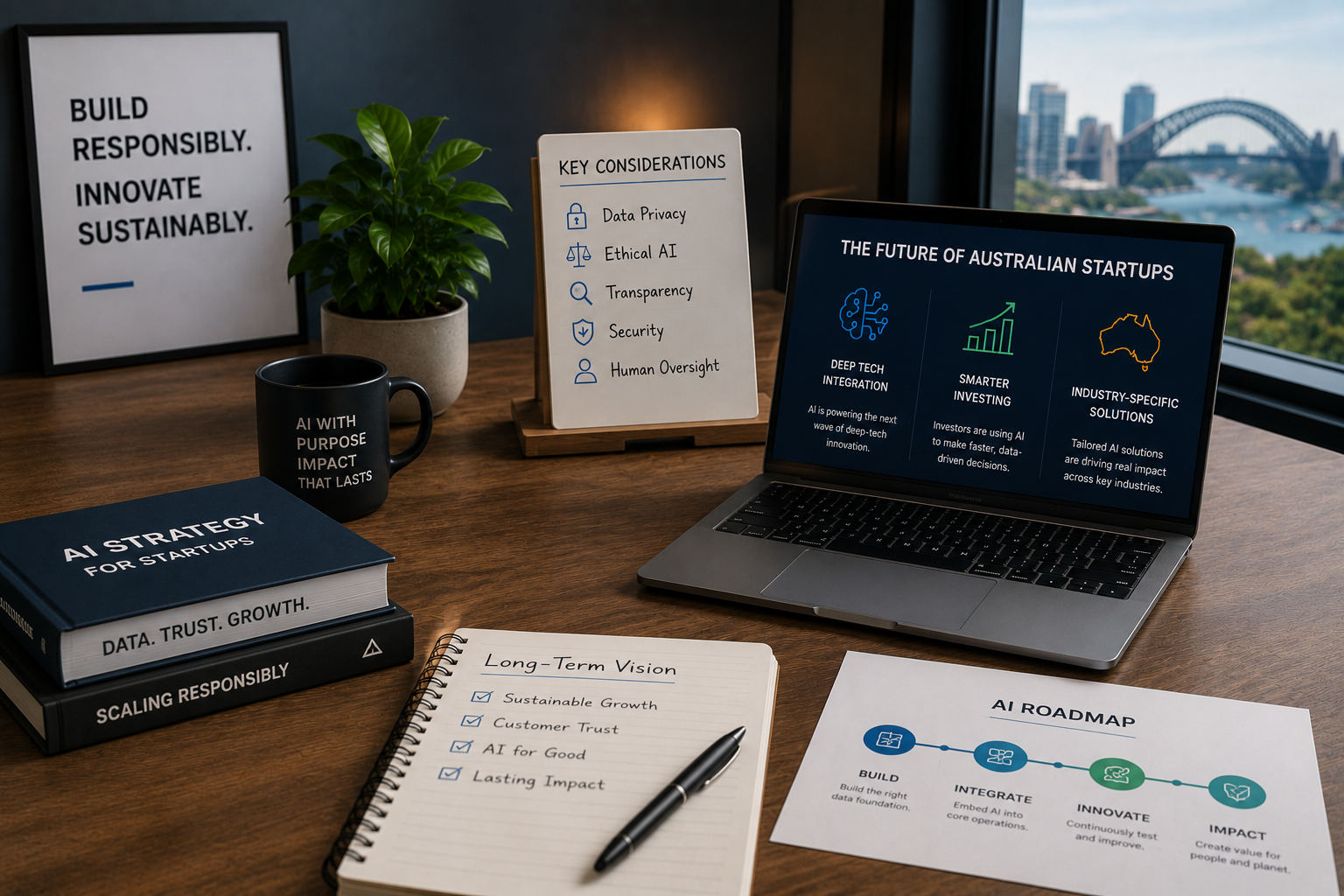
Talk to enough people plugged into the broader Australian startup ecosystem and a few things come up repeatedly. AI is bleeding into other frontier categories — robotics, biotech, advanced manufacturing — rather than staying its own isolated lane. Investors themselves are starting to lean on AI tools to evaluate deal flow faster, which founders find equal parts helpful and slightly unsettling. And sector-specific AI, built for agriculture, mining, healthcare or education rather than as a generic tool, is where a lot of the more interesting work is happening.
Government support through bodies like the National AI Center and CSIRO's Data61 continues to matter here too, particularly for founders trying to bridge the gap between promising research and something an investor will actually fund.
None of this means every founder needs to reinvent their company around AI overnight. But for the ones treating it as genuine infrastructure rather than decoration, the payoff shows up in places that matter — faster growth, sharper decisions, and conversations with investors that go a lot better than that unstudied pop quiz.
This piece expands on ideas first explored in How AI Is Shaping the Future of Australian Startups on TheAussieway.
About the Creator
Kate Brownell
Independent Teacher, Freelance Writer, Conservationist, Eco Friendly Environment Crusader. A life hack writer by choice. Published articles on Ezines and Lifehacker.
Enjoyed the story? Support the Creator.
Subscribe for free to receive all their stories in your feed.
Comments
There are no comments for this story
Be the first to respond and start the conversation.