
What Is Non-destructive Weld Testing And Why It’s Crucial For Industries
A Damage-Free Approach to Ensuring Weld Quality and Industrial Safety
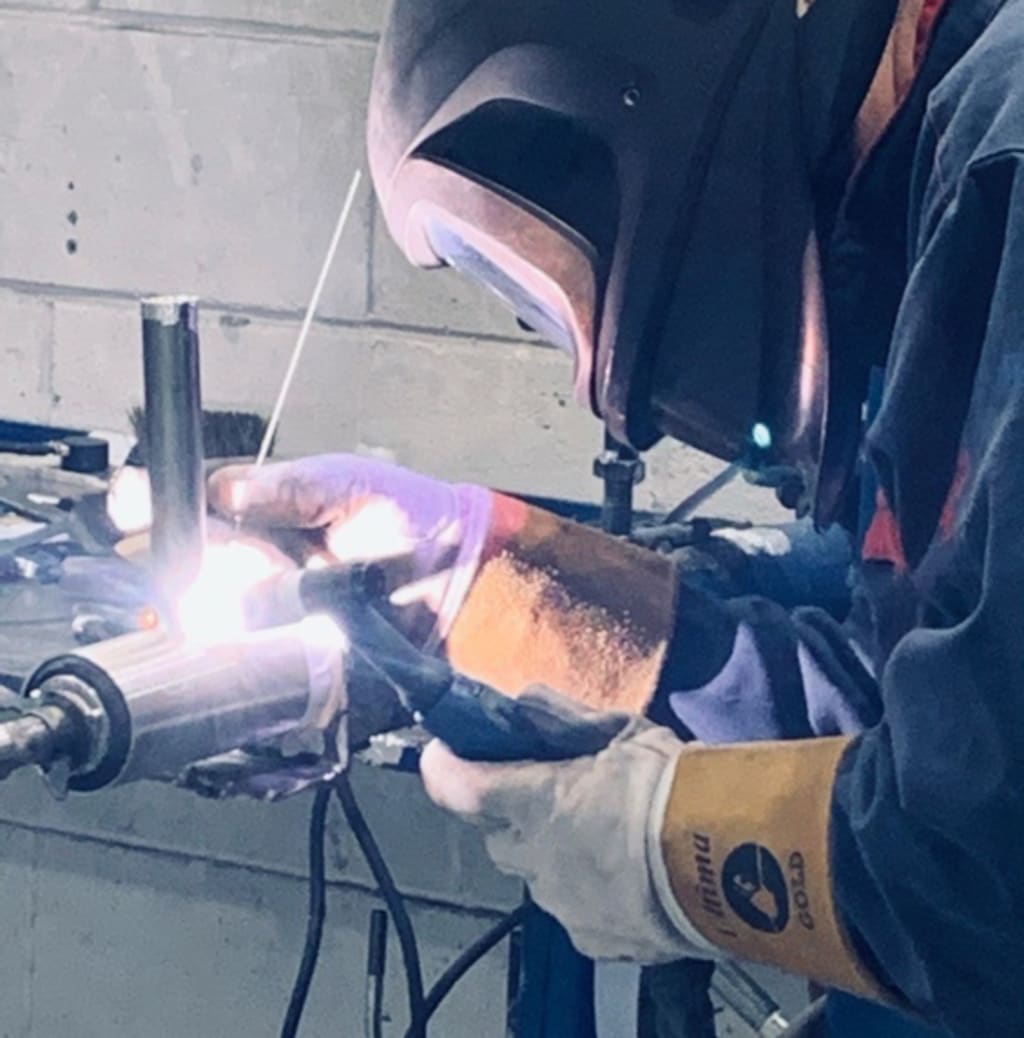
Welds in the industries where structural integrity is most concerned must always be solid and reliable. Welds make gigantic portions in most structural structures, such as bridges, pipelines, and power plants, with safety and durability essential for confirmation. It is here that non destructive weld testing comes into the picture.
This, of course, enables the industry to inspect welds for imperfections without damaging the materials. This method is outstanding because it is cost-effective and efficient in controlling the quality of produced materials. So, let us know more about non-destructive weld testing and why it is indispensable for industries worldwide.
What Is Non-Destructive Weld Testing?
Non-destructive weld testing is the umbrella term that encompasses a range of techniques used to examine welded joints and structures. Non-destructive techniques (NDT) are those methods that do not damage the welded material being inspected.
The objective of NDT is to ensure the possibility of detecting defects or imperfections in a weld, which could weaken it from a safety or functionality perspective. This inspection method prevents costly repair or failure events, some of which may result in injuries, lost production, or even environmental hazards.
Unlike destructive testing methods, in which one breaks or damages a sample to inspect the properties, NDT does not damage the material, thus allowing a continuous use of material after inspection.
Why Non-Destructive Weld Testing Is Extremely Important For Industries
The relevance of NDT to industries cannot be overstated. Here's why it is considered necessary in various sectors:
Safety Guarantee
Safety is the prime characteristic of most industries, such as construction, oil and gas, aerospace, and transport. Structural failure due to improper welds can lead to loss of lives and severely damaged properties. Non-destructive weld testing at regular intervals will ensure that welds meet safety standards, thus minimising such failures.
Quality Control
NDT makes a lot of difference in quality control. By monitoring weld quality during the manufacturing stages, firms ensure good products, avoid all dangers of product recalls, and ensure a name for safety and reliability.
Cost Efficiency
Early detection of defects through NDT is considerably less expensive to correct when faulty components need repair or replacement. Since NDT does not damage the weld, material and labour costs are conserved from the destruction testing process, thus enabling industries to make optimum use of resources.
Regulatory Compliance
Many industries, mainly mechanical ones, are stringent regarding safety standards and codes. The ASME code and the ISO standard for International Organisations are examples. Thus, NDT enables organisations to comply and avoid heavy penalties, liabilities, and even shutdowns in operations.
Extended Service Life
Since potential problems can be recognised before the spread of significant damage, ensuring the extended longevity of equipment and structures is a primary benefit NDT offers. Regular testing and maintenance ensure that minor cracks or flaws in welds do not become more dangerous failure points, thereby adding years of life to an asset.
Common Non-Destructive Weld Testing Methods
The kinds of weld, material, and the nature of the structure determine the type of NDT technique applied. They include some of the most commonly used non-destructive weld testing techniques:
Visual Inspection
Visual inspection is the most basic NDT; visual examination is carried out to detect surface flaws, such as cracking, incomplete penetration, or misalignment. It mandates a skilled and competent technician for the inspection task, and since it only detects surface flaws, it is frequently executed as a precursor to other NDT methods.
Ultrasonic Testing (UT)
Ultrasonic testing is the most commonly used method of identification of internal defects associated with welds. This technique sends ultrasonic waves with high frequencies through the weld, and the reflected waves are analysed to identify anomalies. More advanced ultrasonic testing techniques, such as PAUT and TOFD, have further advanced UT technology, allowing detailed visualisation of the weld structure.
Phased Array Ultrasonic Testing (PAUT): PAUT uses several transducers in an array, and the sound waves can be steered, focused, and scanned using electronic control. This technique provides prominent images and detects defects at different angles; thus, it is ideal for complex weld structures.
Time of Flight Diffraction (TOFD): The crack-like defect identification process appreciates TOFD. This technique measures the time it takes for a sound wave to reach a flaw and return, providing accurate location and length information about the flaw.
Radiographic Testing (RT)
Radiographic testing uses X-rays or gamma rays to scan the internal anatomy of a weld. The radiation travels through the weld, and an image on a film or detector reveals all possible defects. Radiographic testing has excellent imaging capacity, but it has strict safety measurements, especially since it involves radiation.
Magnetic Particle Testing (MT)
Magnetic particle testing is utilised to detect surface and near-surface defects in ferromagnetic materials. This technique magnetises the weld, spraying iron powder on the surface. As a result of any discontinuity in the magnetic, the appearance of flaw-like crack particles concentrates at that location, and thus the defect becomes visible to the technician.
Liquid Penetrant Testing (PT)
This other easy technique can detect surface-breaking defects in non-porous material. Liquid dye is applied to the weld, and after some time has elapsed, it is removed. A developer is then applied to draw out any dye left in surface cracks to be accessible to the inspector for visual examination.
Eddy Current Testing (ET)
Eddy current testing can be applied to identify flaws found in conductive materials, such as surface and near-surface flaws. The test process involves passing an alternating current through a coil close to the weld. If a defect is encountered, this alternating current flowing through the coil will change the magnetic field around itself. A sensor can detect this change in a magnetic field.
Industries Greatly Depending On Non-Destructive Weld Testing
Non-destructive weld testing is also critical in several industries, for instance:
Aerospace: Aerospace components must undergo extreme precision and strength. NDT ensures safety and reliability within parts expected to be subjected to intense stress and wear.
Oil and Gas: Pipelines, rigs, and refineries work under challenging conditions. NDT ensures weld integrity to avoid leaks and explosions.
Construction: These structural welds in buildings and bridges must undergo rigorous testing to avoid catastrophic failures.
Automotive: In the automotive field, non-destructive testing is of prime importance for validating components such as axles, frames, and exhaust systems.
Nuclear Power: Nuclear power needs tight tests to avoid leakage of radiation. This would ensure the integrity of the containment structure.
Conclusion
Non-destructive weld testing is of utmost industrial safety, quality assurance, and regulatory requirements. Technologies such as advanced ultrasonic testing aim to provide better insight into weld integrity. NDT protects industries from costly failures, human life loss, and extensions of the life of the critical structure. With advanced technologies, NDT will always play a crucial role in making the welded components solid and reliable for various industries.
About the Creator
Hayley Westccot
Here at S.T & W Inspections, we provide Non-Destructive Testing (NDT), welder qualifications, weld procedures, RWC services, and inspection consultancy to the highest standard.
Enjoyed the story? Support the Creator.
Subscribe for free to receive all their stories in your feed.
Comments
There are no comments for this story
Be the first to respond and start the conversation.