
Wearable Technology Market Set for Robust Growth as Health Monitoring and AI Integration Transform Consumer Experiences
Global Wearable Technology Market Expected to Reach US$ 230.15 Billion by 2033, Driven by Health Awareness, IoT Expansion, and Smart Device Innovation

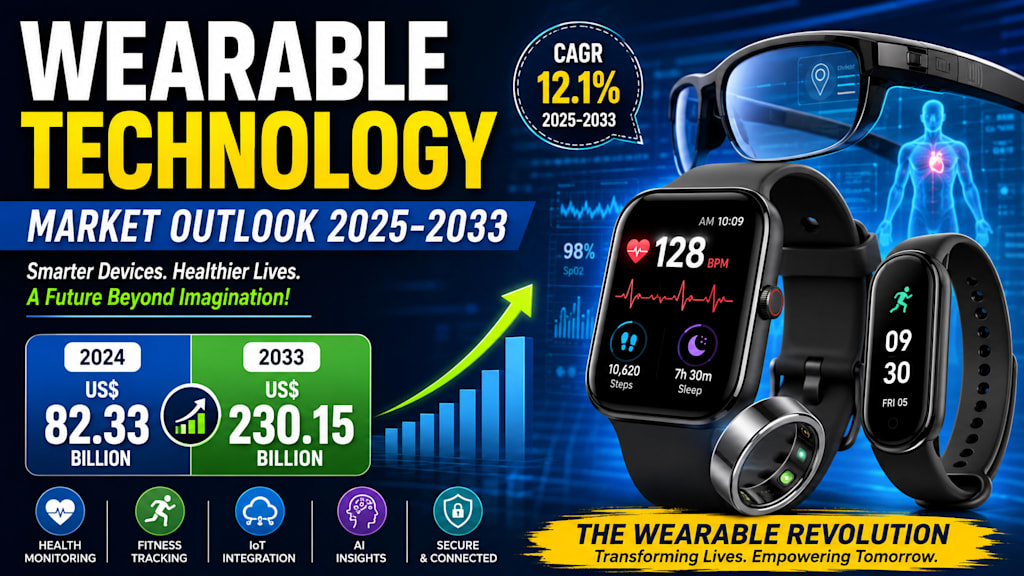
The wearable technology industry has evolved from a niche consumer electronics category into a powerful ecosystem that influences healthcare, fitness, enterprise operations, and everyday lifestyles. Once primarily associated with step counters and basic fitness bands, modern wearable devices now offer advanced health monitoring, artificial intelligence-powered insights, seamless connectivity, and personalized user experiences.
According to Renub Research, the Wearable Technology Market is projected to grow from US$ 82.33 billion in 2024 to US$ 230.15 billion by 2033, expanding at a CAGR of 12.1% between 2025 and 2033. This remarkable growth highlights the increasing importance of wearable devices in both personal and professional settings.
As consumers seek smarter ways to monitor health, improve fitness, and remain connected, wearable technologies are becoming an integral part of daily life. From smartwatches and fitness trackers to smart rings, augmented reality glasses, and smart clothing, innovation continues to reshape the industry landscape.
Wearable Technology Moves Beyond Fitness Tracking
Wearable devices have significantly expanded their capabilities over the past decade. Today's products can monitor heart rate, blood oxygen levels, blood pressure, sleep quality, calorie expenditure, physical activity, and even detect potential health anomalies before symptoms become severe.
Consumers are increasingly adopting wearables not only for convenience but also for proactive health management. The growing focus on preventive healthcare has positioned wearable devices as valuable tools for individuals seeking greater control over their wellbeing.
Athletes, fitness enthusiasts, adventure travelers, and health-conscious consumers continue to drive demand. However, adoption is also accelerating among older adults, healthcare providers, and enterprises seeking innovative monitoring solutions.
The integration of artificial intelligence, machine learning, virtual reality, and cloud computing has further enhanced wearable functionality, enabling more accurate data collection and personalized recommendations.
Rising Health Awareness Fuels Market Expansion
One of the most influential factors driving wearable technology adoption is the growing emphasis on health and wellness.
Consumers today are more conscious of their physical and mental wellbeing than ever before. Increasing rates of obesity, diabetes, cardiovascular diseases, and lifestyle-related illnesses have encouraged individuals to actively monitor their health metrics.
Wearable devices offer real-time feedback that helps users track fitness goals, improve sleep habits, manage stress levels, and maintain healthier lifestyles. Features such as activity tracking, hydration reminders, calorie monitoring, and guided workouts provide ongoing motivation and engagement.
Recent consumer surveys indicate that wearable health monitoring devices are becoming increasingly mainstream. Millions of users now depend on smartwatches, fitness bands, and smart rings to gain actionable insights into their daily health patterns.
As healthcare systems worldwide shift toward preventive care, wearable technologies are expected to play an increasingly significant role in disease prevention and early intervention.
Healthcare Industry Embraces Wearable Technology
The healthcare sector has emerged as one of the most promising application areas for wearable devices.
Healthcare providers are increasingly utilizing wearable technology for remote patient monitoring, chronic disease management, rehabilitation, and early disease detection. Continuous monitoring capabilities allow physicians to collect valuable patient data outside traditional clinical settings.
Devices capable of tracking heart rhythms, blood oxygen saturation, glucose levels, and other vital signs provide healthcare professionals with timely insights that support better treatment decisions.
Remote monitoring has become particularly important in improving patient outcomes while reducing healthcare costs. Patients can receive ongoing care without frequent hospital visits, creating greater convenience and efficiency for both providers and patients.
The growing use of telehealth services further strengthens the role of wearable devices within modern healthcare ecosystems. As digital healthcare adoption accelerates globally, demand for advanced wearable medical devices is expected to increase substantially.
Internet of Things Integration Creates New Opportunities
The expansion of Internet of Things (IoT) ecosystems has significantly enhanced the value proposition of wearable technology.
Modern wearables are no longer standalone devices. Instead, they operate within interconnected environments where smartphones, home automation systems, healthcare platforms, and enterprise networks communicate seamlessly.
Fitness trackers can synchronize with smart gym equipment, smartwatches can control home appliances, and wearable health devices can transmit patient information directly to healthcare providers.
The rollout of advanced connectivity technologies, including 5G networks, is expected to further strengthen wearable functionality. Faster data transmission speeds, lower latency, and improved reliability will enable richer experiences and more sophisticated applications.
As IoT adoption continues expanding across industries, wearable technology will become increasingly embedded within connected lifestyles and workplaces.
Artificial Intelligence Enhances User Experience
Artificial intelligence is becoming a defining feature of next-generation wearable technology.
AI-powered algorithms analyze massive volumes of user-generated data to deliver personalized health recommendations, predictive insights, and behavioral guidance. Rather than simply collecting information, modern wearables increasingly interpret and act on data in meaningful ways.
Advanced devices can identify unusual heart rhythms, detect sleep disorders, predict fatigue, and recommend lifestyle adjustments based on individual patterns. These capabilities enhance user engagement while delivering greater health value.
Machine learning also enables continuous improvement in device performance, allowing wearables to become smarter and more accurate over time.
As AI technology advances, wearable devices are expected to evolve into sophisticated digital health companions capable of supporting long-term wellness goals.
Consumer Electronics Segment Continues to Lead
Consumer electronics remains the largest application segment within the wearable technology market.
Smartwatches continue to dominate industry revenues due to their versatility and broad appeal. These devices combine communication capabilities, fitness tracking, entertainment features, and health monitoring into compact, stylish designs.
Fitness trackers remain popular among consumers focused on exercise and activity monitoring, while wireless earbuds and smart glasses are expanding wearable technology's reach into new categories.
Growing consumer demand for multifunctional devices that combine convenience, connectivity, and health monitoring continues to support market growth.
Manufacturers are also focusing on aesthetics, customization, and user-friendly interfaces to attract a wider audience.
Regional Markets Showcase Diverse Growth Patterns
United States
The United States remains one of the world's largest wearable technology markets. Strong consumer purchasing power, advanced healthcare infrastructure, and high digital adoption rates contribute to sustained market expansion.
American consumers increasingly rely on wearable devices for health tracking, fitness management, and wellness optimization. Corporate wellness programs and healthcare initiatives are also driving adoption.
Innovation remains a key market characteristic, with companies continually introducing new features and advanced health monitoring capabilities.
Germany
Germany's wearable technology market is benefiting from digital healthcare transformation, an aging population, and growing health awareness.
The country's advanced healthcare infrastructure supports integration between wearable devices and electronic health systems. German consumers are increasingly embracing wearables for both fitness and medical applications.
Growing interest in contactless payments and digital services is further enhancing wearable device adoption.
China
China represents one of the fastest-growing wearable technology markets globally.
Government support for innovation, rapid digitalization, and a thriving consumer electronics industry have accelerated market development. Domestic technology companies continue to introduce innovative products featuring AI integration, health monitoring capabilities, and advanced connectivity.
Strong demand from younger consumers and increasing healthcare awareness contribute to robust growth prospects.
United Arab Emirates
The United Arab Emirates has emerged as a key regional market due to high technology adoption rates and strong government support for digital transformation.
Consumers increasingly seek advanced wearable devices that combine health monitoring, lifestyle management, and connectivity features. Investments in smart city initiatives and healthcare modernization continue supporting market growth.
Challenges Facing the Wearable Technology Industry
Despite strong growth potential, several challenges remain.
Data Privacy and Security Concerns
Wearable devices collect vast amounts of sensitive personal information, including health records, location data, and behavioral patterns. Consumers and regulators continue to raise concerns regarding data protection and cybersecurity.
Manufacturers must implement robust security frameworks and transparent privacy policies to maintain user trust.
Battery Life Limitations
Battery performance remains a significant challenge across many wearable device categories.
Consumers increasingly expect continuous monitoring capabilities without frequent charging interruptions. Balancing advanced functionality with energy efficiency continues to be a critical engineering challenge for manufacturers.
Ongoing innovation in battery technologies and power management systems will be essential for future market growth.
Future Outlook Remains Highly Positive
The future of wearable technology appears exceptionally promising.
Advancements in artificial intelligence, sensor technologies, flexible electronics, augmented reality, and digital healthcare are expected to unlock new growth opportunities. Wearable devices will likely become more accurate, personalized, and integrated into everyday life.
Emerging categories such as smart rings, smart clothing, biometric wearables, and augmented reality glasses are expected to complement existing products and expand market potential.
As consumers continue prioritizing health, convenience, and connectivity, wearable technology will remain at the forefront of digital transformation.
10 Recent Developments by Leading Wearable Technology Companies
1. Samsung Group
In June 2024, Samsung officially entered the smart ring category with the launch of the AI-powered Galaxy Ring, strengthening its health monitoring ecosystem.
2. Apple Inc.
Apple continued enhancing health-focused smartwatch capabilities, expanding advanced monitoring features and personalized wellness tools.
3. Xiaomi Inc.
Xiaomi introduced upgraded wearable devices featuring improved sensors, longer battery life, and enhanced fitness tracking functions.
4. Alphabet Inc.
Google expanded wearable software capabilities through ongoing improvements to its wearable operating systems and AI integration initiatives.
5. Sony Corporation
Sony advanced its wearable entertainment ecosystem through innovations in smart audio products and immersive digital experiences.
6. HTC Corporation
HTC strengthened its wearable portfolio by focusing on virtual reality and extended reality technologies for enterprise and consumer applications.
7. Microsoft Corporation
Microsoft continued investing in AI-powered wearable solutions supporting productivity, workplace collaboration, and enterprise innovation.
8. Oculus VR LLC
Meta's Oculus division expanded immersive wearable experiences through ongoing virtual reality hardware and software developments.
9. AIQ Smart Clothing Inc.
AIQ Smart Clothing advanced textile-integrated wearable technologies designed for health monitoring and performance optimization.
10. Wearable Devices Ltd.
In June 2024, Wearable Devices Ltd. showcased new XR integration solutions developed in collaboration with Qualcomm Technologies at AWE 2024.
Final Thoughts
The wearable technology market is entering a transformative era characterized by rapid innovation, expanding healthcare applications, and deeper integration into connected digital ecosystems. With consumers increasingly prioritizing health, fitness, and convenience, demand for advanced wearable solutions continues to accelerate.
Supported by artificial intelligence, IoT connectivity, and evolving healthcare needs, the industry is well-positioned for sustained growth over the coming decade. As companies introduce smarter, more personalized, and more capable devices, wearable technology will continue reshaping how individuals manage health, interact with technology, and experience everyday life.
Renub Research's forecast of the market reaching US$ 230.15 billion by 2033 underscores the tremendous opportunities awaiting manufacturers, healthcare providers, technology innovators, and investors worldwide.
About the Creator
Enjoyed the story? Support the Creator.
Subscribe for free to receive all their stories in your feed.
Comments
There are no comments for this story
Be the first to respond and start the conversation.