
Wayve Taps Ex-Waymo CFO Elisa de Martel to Navigate Critical Transition from R&D to Commercial Scale
As the self-driving startup prepares to deploy its map-agnostic neural network technology across both consumer vehicles and robotaxis, the hiring of a finance leader with deep experience in autonomous vehicle commercialization signals a strategic pivot toward operational maturity and high-volume automotive partnerships.

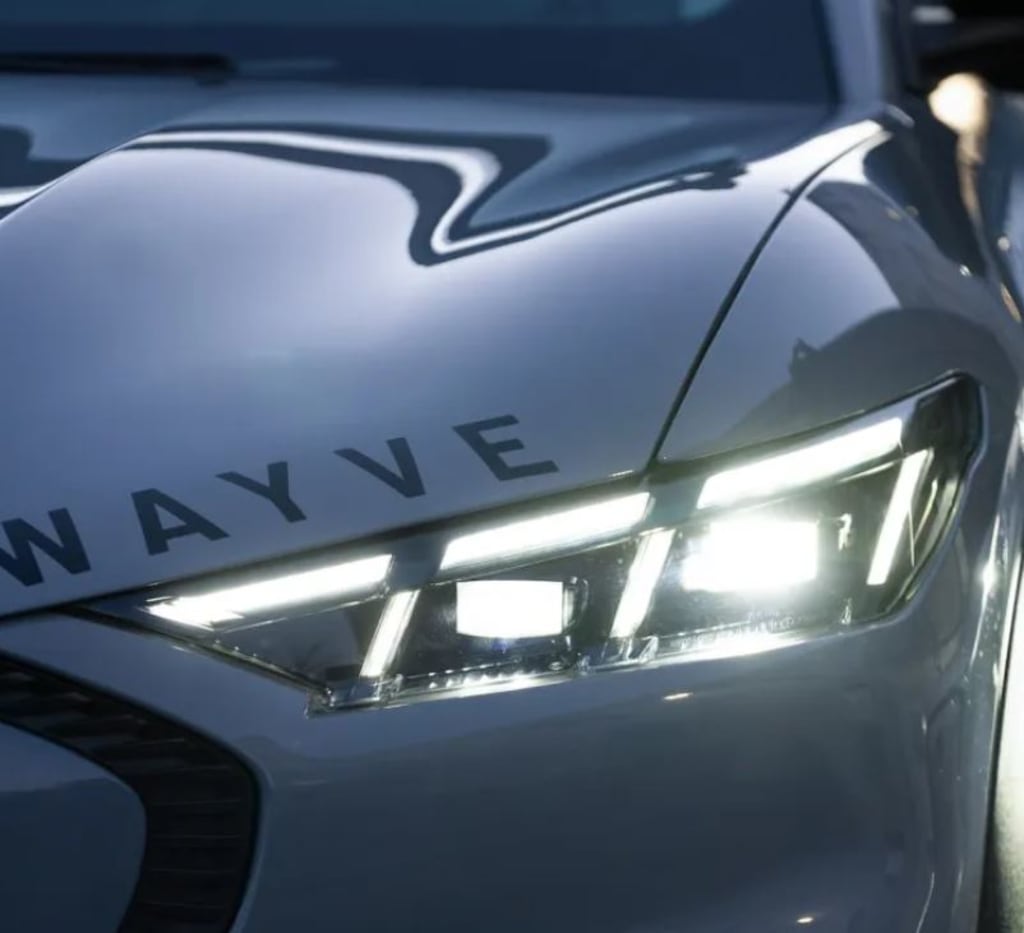
Wayve has appointed Elisa de Martel as its new Chief Financial Officer, bringing in a seasoned executive whose recent tenure at Alphabet’s Waymo directly aligns with the London-based startup’s current inflection point. De Martel, who served as Waymo’s CFO from 2022 until January 2026, oversaw financial operations during one of the most consequential periods in the autonomous vehicle industry’s history: the transition from geofenced pilot programs to sustained, multi-city commercial service and a landmark $5.6 billion Series C round that valued Waymo at over $45 billion. Her departure from Waymo coincides precisely with her arrival at Wayve just as the company moves beyond development and testing into active deployment on two distinct fronts: “eyes-on” assisted driving for consumer vehicles and “eyes-off” fully automated systems for robotaxi fleets. Outgoing CFO Max Warburton, who has held the role since 2024, will transition into a strategic advisory capacity to support leadership during this handover, ensuring continuity as Wayve enters what insiders describe as its most operationally complex phase yet.
De Martel’s appointment is widely interpreted within the industry not merely as a personnel change but as a definitive signal that Wayve is preparing for the grueling financial and operational demands of scaling as an embedded automotive supplier rather than remaining a pure-play technology developer or standalone mobility operator. Based in Sunnyvale, California, she brings not only AV-specific expertise but also a broader deep-tech manufacturing pedigree, including an 11-year stint as manufacturing finance director at Apple and a prior CFO role at industrial 3D printing company Carbon. This combination is particularly relevant for Wayve, whose business model hinges on licensing software to automakers already committed to specific hardware platforms, a fundamentally different go-to-market strategy than Waymo’s vertically integrated, fleet-owned approach. Insiders indicate that founder and CEO Alex Kendall specifically sought a CFO with proven experience navigating the capital intensity, partnership structuring, and unit economics of commercial autonomy, recognizing that Wayve’s next phase requires financial discipline as much as technical innovation. Unlike earlier-stage startups where growth metrics often overshadowed profitability concerns, Wayve now faces the reality of OEM integration timelines, warranty liabilities, revenue recognition complexities tied to per-vehicle licensing, and the need to demonstrate a path to profitability to investors increasingly wary of perpetual cash burn.
Wayve’s technological differentiation lies in its end-to-end neural network architecture, which eschews high-definition maps, custom sensor suites, and hand-coded rules in favor of learning directly from data. This agnostic approach has enabled partnerships with major automakers like Nissan and Stellantis, which can integrate Wayve’s software without overhauling existing vehicle architectures or supply chains. The company has raised $3.2 billion to date and counts Uber among its investors, reflecting confidence in its dual-path strategy. Recent milestones include launching public robotaxi rides in London (with safety operators) and imminent expansion to Tokyo. Yet these early deployments represent only the beginning of a far more challenging journey: transforming limited pilot operations into a high-volume, profitable supply relationship with global OEMs. This transition demands rigorous capital allocation, precise forecasting of integration timelines, sophisticated deal structuring around IP licensing versus revenue-sharing models, and the ability to manage working capital through long OEM validation cycles all areas where de Martel’s Waymo experience provides immediate relevance. At Waymo, she navigated similar challenges as the company scaled from Phoenix to San Francisco, Los Angeles, and Austin, each requiring localized regulatory compliance, infrastructure investment, and dynamic pricing strategies that balanced utilization rates against operational costs.
In her new role, de Martel will oversee financial strategy, treasury, tax, governance, and reporting while working closely with executives on commercial negotiations, investor relations, and strategic partnerships. Her mandate extends well beyond traditional finance functions; she is expected to help shape the economic framework through which Wayve’s technology reaches mass adoption. This includes evaluating whether to pursue direct OEM contracts, tier-one supplier partnerships, or hybrid models; determining optimal pricing structures for “eyes-on” versus “eyes-off” tiers; managing currency and geopolitical risks as deployments expand across Europe, Asia, and North America; and building internal controls robust enough to satisfy public market scrutiny should Wayve eventually consider an IPO. For a company valued at $8.5 billion and operating in a sector where many peers from Argo AI to Embark Trucks have collapsed under the weight of unsustainable burn rates and misaligned business models, her hiring underscores a maturation of priorities. The era of proving technical feasibility is ending; the era of proving viable unit economics, scalable integration, and sustainable revenue models has begun.
Moreover, de Martel’s presence may serve as a credibility anchor with institutional investors who have grown skeptical of autonomous driving narratives following years of missed deadlines and overpromised timelines. Her track record demonstrates not just fundraising prowess but operational stewardship—the ability to translate visionary technology into predictable financial outcomes. In an environment where capital is no longer abundant and patience is thin, this distinction matters profoundly. Wayve’s agnostic tech stack gives it flexibility, but flexibility alone doesn’t generate margins. What are disciplined execution, clear monetization pathways, and the financial rigor to sustain operations through the inevitable troughs of automotive adoption curves? De Martel’s background suggests Wayve understands that surviving this phase requires not just smarter algorithms but smarter balance sheets and that the path to becoming an indispensable automotive partner runs through disciplined financial stewardship as much as neural network breakthroughs. As the company pushes past the historically precarious point of early deployment, her leadership may prove as critical to Wayve’s long-term viability as the very AI systems it seeks to license to the world’s largest carmakers.
About the Creator
Mark Lim
Hi I am mark an automotive student and a car, tech and food enthusiast ! Im gonna try and post daily & hope you enjoy what I write and do share my page with people you know. I would gladly appreciate it! Cheers
Enjoyed the story? Support the Creator.
Subscribe for free to receive all their stories in your feed. You could also become a paid subscriber, letting them know you appreciate their work.
Comments
There are no comments for this story
Be the first to respond and start the conversation.