
Water Heater Market Expands as Energy Efficiency and Smart Living Transform Consumer Preferences
Rising residential construction, growing demand for comfortable living, and technological innovation are driving the global water heater industry's next phase of growth.

The demand for modern home appliances continues to grow as consumers place greater emphasis on comfort, convenience, and energy efficiency. Among the essential appliances shaping modern lifestyles, water heaters have become increasingly important in both residential and commercial environments. Whether used for bathing, cleaning, cooking, healthcare operations, or hospitality services, access to reliable hot water has become a necessity rather than a luxury in many parts of the world.
As urbanization accelerates, living standards improve, and governments promote energy-efficient technologies, the global water heater market is witnessing steady expansion. Consumers today are not only looking for reliable water heating solutions but are also seeking products that reduce energy consumption, lower utility bills, and contribute to environmental sustainability. These changing expectations are encouraging manufacturers to invest heavily in innovation, resulting in the development of smart, hybrid, solar-powered, and highly efficient water heating systems.
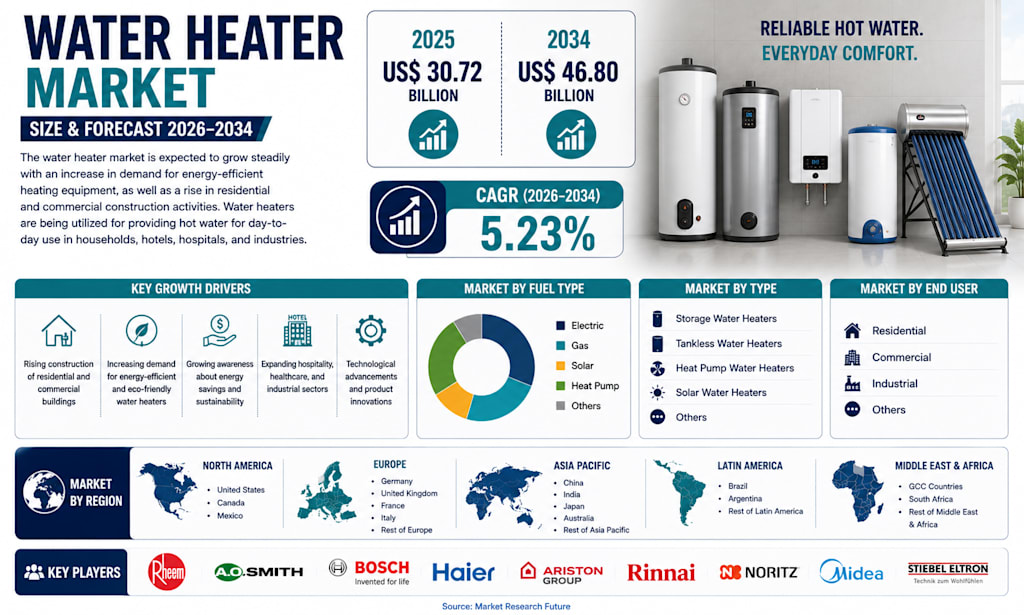
The growing importance of sustainable living, coupled with rising construction activity across residential and commercial sectors, is creating favorable conditions for market growth. According to Renub Research, the global water heater market is projected to increase from US$ 30.72 billion in 2025 to US$ 46.8 billion by 2034, expanding at a compound annual growth rate (CAGR) of 5.23% during the forecast period from 2026 to 2034. These figures highlight the continued relevance of water heating solutions in supporting modern lifestyles and infrastructure development worldwide.
Why Water Heaters Have Become Essential in Modern Living
Water heaters play a critical role in everyday life by providing hot water for a wide range of household, commercial, and industrial applications. From morning showers and kitchen activities to healthcare sanitation and hospitality services, hot water is essential for maintaining comfort, hygiene, and operational efficiency.
Modern water heaters utilize various energy sources, including electricity, natural gas, solar power, and heat pump technologies. Consumers can choose from multiple product types, including storage tank systems, tankless models, and hybrid solutions designed to meet different usage requirements and energy preferences.
The widespread adoption of water heaters reflects changing consumer expectations. As living standards improve globally, people increasingly view access to hot water as a basic household necessity. This trend is particularly evident in rapidly urbanizing regions where residential development and infrastructure investments continue to accelerate.
The increasing integration of smart technologies has also enhanced the appeal of modern water heating systems, allowing consumers to manage temperature settings, monitor energy consumption, and optimize performance through connected devices.
Rising Demand for Comfortable Living Is Driving Market Growth
One of the most significant drivers of the water heater market is the growing demand for comfortable and convenient lifestyles.
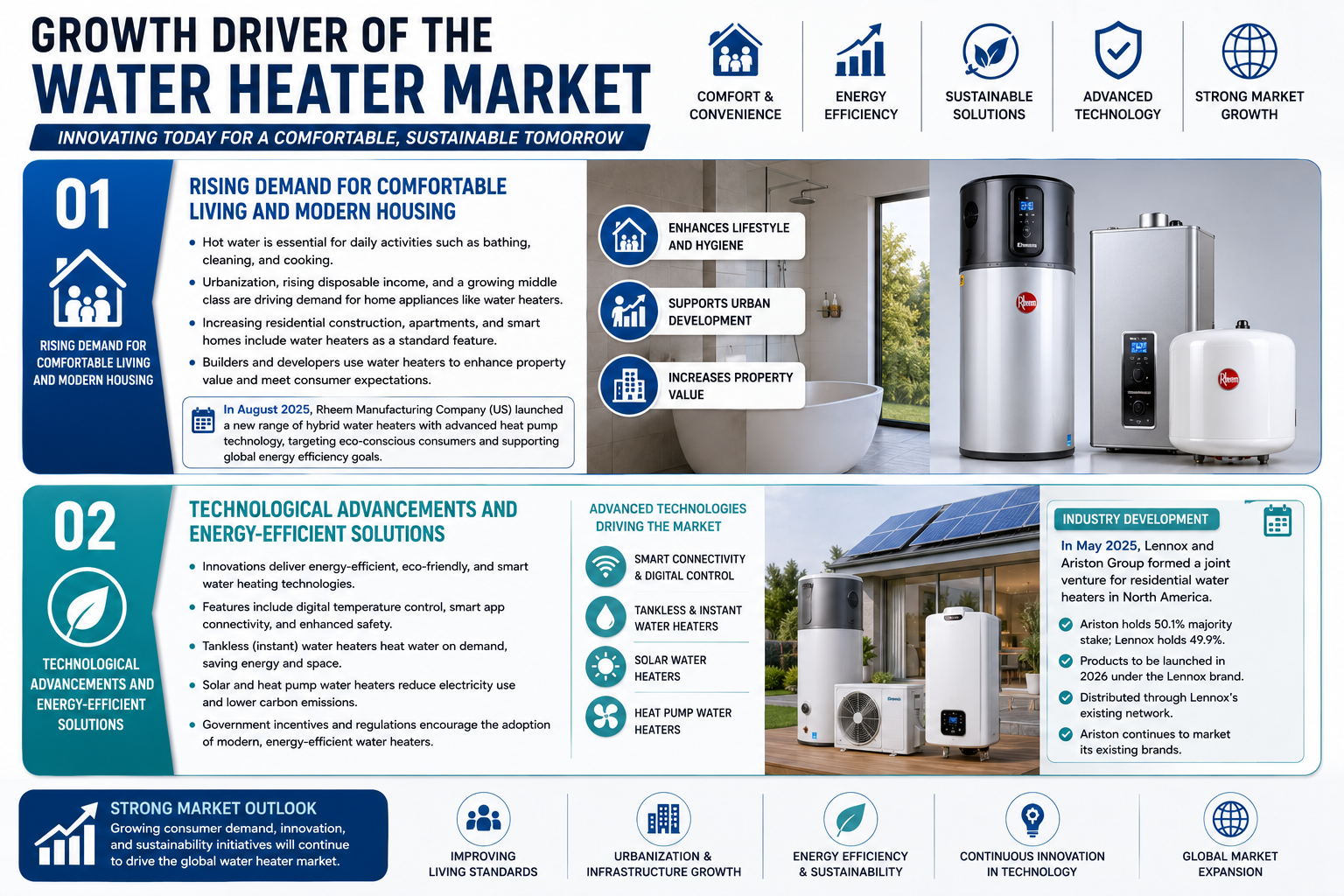
As disposable incomes rise and middle-class populations expand, consumers are investing more heavily in home improvement products that enhance daily living. Water heaters have become a standard feature in many residential developments, particularly in urban areas where modern amenities are highly valued.
Homebuyers increasingly expect properties to include efficient water heating systems as part of a complete living solution. Developers and builders are responding by incorporating advanced water heaters into apartments, residential communities, and smart home projects.
This trend extends beyond developed economies. In emerging markets, rapid urbanization and improving economic conditions are encouraging consumers to adopt household appliances that were previously considered optional. Water heaters are among the products benefiting from this shift.
As consumers continue prioritizing convenience, comfort, and hygiene, demand for reliable water heating solutions is expected to remain strong throughout the forecast period.
Energy Efficiency Is Becoming a Major Purchasing Factor
Energy efficiency has emerged as one of the most important considerations influencing consumer purchasing decisions.
Rising energy costs and growing environmental awareness have encouraged homeowners and businesses to seek products that reduce electricity consumption while maintaining performance. Manufacturers are responding by developing advanced water heating technologies designed to maximize efficiency and minimize operating costs.
Modern systems feature improved insulation, advanced heating elements, digital controls, and intelligent energy management capabilities. These innovations help consumers reduce energy waste while ensuring consistent access to hot water.
Government regulations and energy-efficiency standards are also contributing to market growth. Many countries have introduced policies that encourage the adoption of energy-efficient appliances through incentives, rebates, and certification programs.
As sustainability becomes increasingly important, energy-efficient water heaters are expected to capture a larger share of the global market.
Technological Innovation Is Reshaping the Industry
The water heater industry is undergoing a period of significant technological transformation.
Manufacturers are investing heavily in smart technologies that improve convenience, safety, and operational efficiency. Today's advanced systems can be controlled remotely through smartphones, allowing users to adjust temperature settings, monitor energy usage, and receive maintenance alerts from virtually anywhere.
Digital interfaces and automated controls are making water heaters easier to operate while improving performance. Consumers can customize heating schedules based on household routines, helping reduce unnecessary energy consumption.
Safety features have also improved considerably. Modern systems incorporate advanced sensors, leak detection technologies, overheating protection mechanisms, and automatic shutoff functions designed to enhance reliability and user confidence.
The integration of smart home technology is further strengthening demand, as connected appliances become increasingly common in residential environments.
Tankless Water Heaters Continue to Gain Popularity
Among the most notable trends in the industry is the growing popularity of tankless water heaters.
Unlike traditional storage systems, tankless units heat water only when needed, eliminating the energy losses associated with storing hot water continuously. This on-demand approach can significantly improve energy efficiency and reduce operating costs.
Consumers are attracted to tankless systems because of their compact size, longer lifespan, and ability to provide continuous hot water. These advantages make them particularly appealing for modern homes where space efficiency and sustainability are important considerations.
While traditional storage systems continue to dominate many markets, tankless technologies are steadily gaining market share as consumers become more aware of their long-term benefits.
The continued development of efficient and affordable tankless solutions is expected to support further adoption in both residential and commercial applications.
Hybrid Water Heaters Represent the Future of Efficiency
Hybrid water heaters, also known as heat pump water heaters, are emerging as one of the most promising segments within the market.
These systems combine conventional electric heating technology with heat pump capabilities, allowing them to transfer heat from the surrounding environment rather than generating it directly. This approach significantly improves energy efficiency while reducing electricity consumption.
Hybrid systems are increasingly being promoted by governments and environmental organizations because of their potential to lower carbon emissions and support sustainability goals. Consumers who prioritize environmental responsibility are showing growing interest in these solutions despite their higher upfront costs.
Over time, lower operating expenses often offset the initial investment, making hybrid water heaters an attractive option for long-term energy savings.
As awareness of environmental issues continues to grow, hybrid technologies are expected to play an increasingly important role in shaping the future of the industry.
Hospitality and Commercial Sectors Are Expanding Demand
Beyond residential applications, commercial sectors are creating significant growth opportunities for water heater manufacturers.
Hotels, resorts, hospitals, office buildings, shopping centers, and educational institutions all require reliable hot water systems to support daily operations. The expansion of these sectors is contributing to increased demand for high-capacity and energy-efficient water heating solutions.
The hospitality industry, in particular, depends heavily on continuous hot water availability to maintain guest satisfaction. As global tourism continues to recover and expand, investments in hospitality infrastructure are expected to support market growth.
Healthcare facilities also require substantial hot water supplies for sanitation, cleaning, and patient care purposes. The ongoing expansion of healthcare infrastructure worldwide is creating additional opportunities for manufacturers.
These commercial applications often require larger and more sophisticated systems, contributing significantly to overall market value.
Residential Construction Continues to Support Market Expansion
The growth of residential construction remains one of the most important drivers of demand.
Rapid urbanization and population growth are fueling housing development across many regions. New apartments, residential communities, and smart homes frequently incorporate water heaters as standard features, creating a steady stream of demand for manufacturers.
The replacement market also plays a critical role. Millions of existing homes contain aging water heating systems that require upgrades or replacement. Consumers increasingly choose modern, energy-efficient alternatives when replacing older equipment.
This combination of new construction activity and replacement demand provides a strong foundation for sustained market growth.
Regional Markets Present Significant Opportunities
United States
The United States remains one of the world's largest water heater markets. Strong replacement demand, energy-efficiency initiatives, and increasing adoption of advanced technologies continue to support growth.
United Kingdom
The United Kingdom's emphasis on sustainability and energy conservation is encouraging consumers to adopt modern heating solutions, including heat pump and energy-efficient electric water heaters.
India
India's rapidly growing urban population, rising disposable incomes, and expanding residential construction sector are creating significant opportunities for water heater manufacturers.
Saudi Arabia
Saudi Arabia's ongoing infrastructure development, tourism expansion, and rising living standards are contributing to growing demand for residential and commercial water heating systems.
Challenges Facing the Water Heater Industry
Despite positive growth prospects, the industry faces several challenges.
High upfront costs remain a barrier for some consumers, particularly when considering advanced technologies such as hybrid and solar water heaters. Installation expenses can further increase total ownership costs, limiting adoption in price-sensitive markets.
Energy consumption concerns also continue to influence purchasing decisions. Consumers and regulators increasingly expect manufacturers to improve efficiency and reduce environmental impact.
Meeting these expectations requires ongoing investment in research, development, and compliance with evolving energy standards.
Manufacturers that successfully balance affordability, efficiency, and performance will be best positioned to capitalize on future growth opportunities.
Market Forecast: Strong Growth Through 2034
According to Renub Research, the global water heater market is expected to grow from US$ 30.72 billion in 2025 to US$ 46.8 billion by 2034, representing a CAGR of 5.23% between 2026 and 2034. Growth will be driven by increasing urbanization, rising living standards, expanding construction activity, technological innovation, and growing demand for energy-efficient appliances.
As consumers continue embracing sustainable living and smart home technologies, the market is expected to experience steady expansion across both developed and emerging economies.
Final Thoughts
The water heater market is evolving rapidly as consumers seek solutions that combine comfort, efficiency, and sustainability. What was once considered a basic household appliance has become an important component of modern living, supported by continuous innovation and changing consumer expectations.
With Renub Research forecasting market growth from US$ 30.72 billion in 2025 to US$ 46.8 billion by 2034, the industry is positioned for sustained expansion. Advances in energy-efficient technologies, growing residential construction activity, and increasing adoption of smart home solutions will continue shaping the future of the market.
As households, businesses, and institutions place greater emphasis on comfort, energy conservation, and environmental responsibility, water heaters will remain an essential part of daily life and an important contributor to the global home appliance industry.
About the Creator
Enjoyed the story? Support the Creator.
Subscribe for free to receive all their stories in your feed.
Comments
There are no comments for this story
Be the first to respond and start the conversation.