
Water and Wastewater Treatment Is Becoming the Foundation of a Sustainable Future
Rising Water Scarcity, Urbanization, and Smart Water Technologies Are Driving Growth in the Global Water & Wastewater Treatment Market

Water is one of the world's most valuable resources, yet it is increasingly under pressure from population growth, rapid urbanization, industrial expansion, and climate change. Across the globe, governments, industries, and communities are confronting a growing challenge: how to provide clean, safe, and reliable water while managing the rising volume of wastewater generated every day.
As concerns about water scarcity and environmental sustainability intensify, the water and wastewater treatment industry is becoming one of the most critical sectors supporting modern civilization. Advanced treatment technologies, smart monitoring systems, water recycling initiatives, and stricter environmental regulations are transforming how societies manage this essential resource.
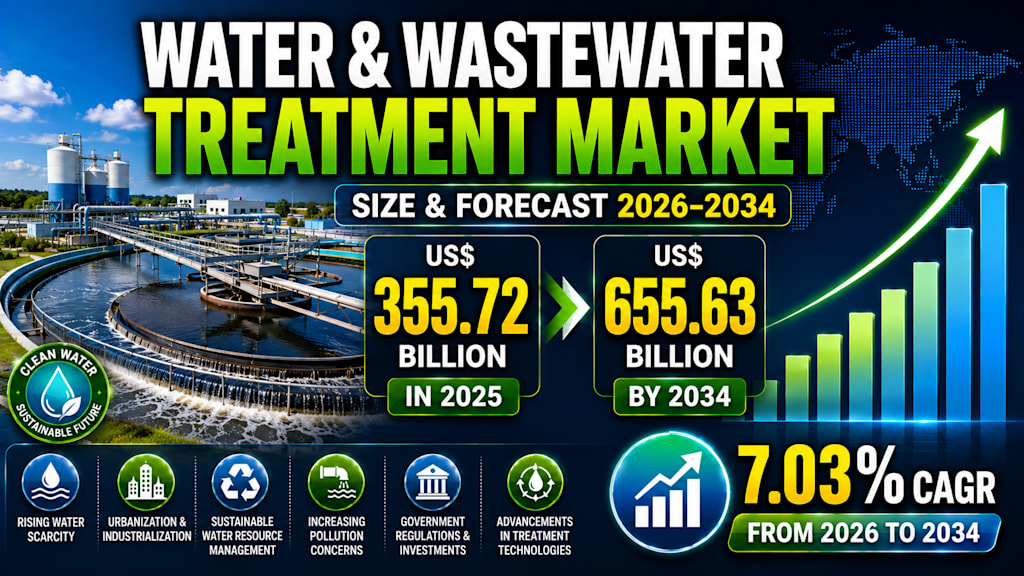
According to Renub Research, the Water & Wastewater Treatment Market is projected to grow from US$ 355.72 billion in 2025 to US$ 655.63 billion by 2034, registering a compound annual growth rate (CAGR) of 7.03% between 2026 and 2034. Urbanization, industrialization, growing water scarcity, and increasing focus on sustainable resource management are among the primary factors driving market expansion worldwide.
As nations seek long-term solutions to water challenges, water and wastewater treatment technologies are becoming indispensable to economic growth, public health, and environmental protection.
Why Water Treatment Has Become a Global Priority
Water treatment refers to the process of removing contaminants, pollutants, and harmful substances from water to make it suitable for human consumption, industrial use, and environmental discharge.
Wastewater treatment focuses on treating used water generated by households, industries, and municipalities before it is released back into the environment or reused for other purposes.
Historically, access to clean water was considered a basic infrastructure challenge. Today, it has become a strategic global issue tied directly to economic development, environmental sustainability, and public health.
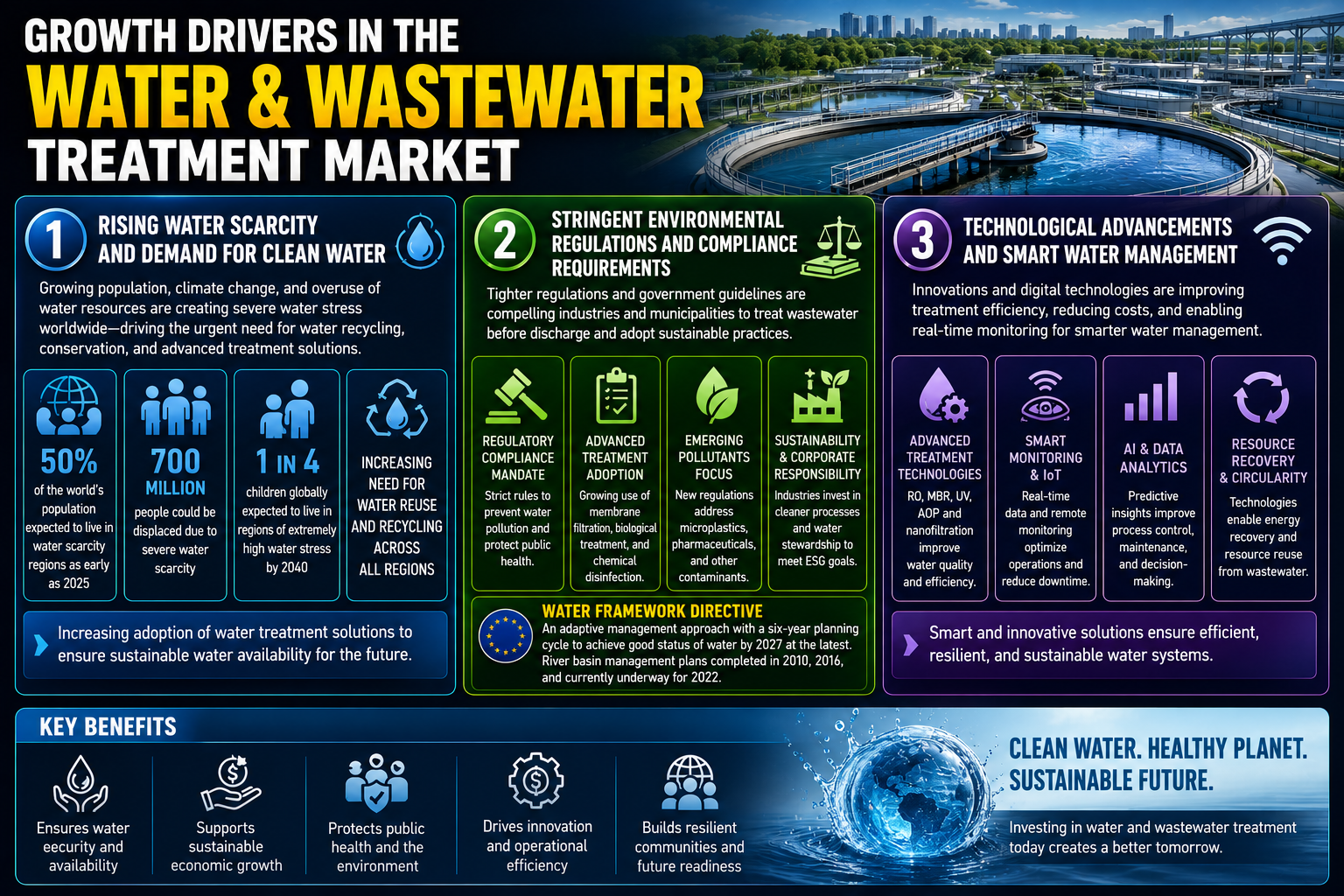
Growing populations and increasing industrial activity are generating unprecedented volumes of wastewater. At the same time, climate change is placing additional stress on freshwater resources through droughts, changing rainfall patterns, and extreme weather events.
These pressures are driving governments and organizations to invest heavily in advanced treatment solutions that ensure long-term water security.
Water Scarcity Is Driving Massive Investment
One of the strongest growth drivers in the water and wastewater treatment market is the growing scarcity of freshwater resources.
According to global estimates, billions of people already live in regions experiencing water stress, and many areas face increasing pressure as populations continue to grow. Water shortages are becoming particularly severe in parts of Asia, Africa, and the Middle East.
As freshwater supplies become more constrained, governments and industries are prioritizing water conservation, recycling, and reuse initiatives.
Wastewater is increasingly being viewed not as a waste product but as a valuable resource that can be treated and reused for industrial operations, agriculture, and even drinking water supplies in some cases.
This shift is encouraging investments in advanced treatment technologies capable of recovering high-quality water from wastewater streams.
The need to maximize available water resources is expected to remain one of the most powerful market drivers throughout the coming decade.
Urbanization Is Increasing Treatment Requirements
Rapid urbanization is creating significant demand for water and wastewater treatment infrastructure.
Cities around the world continue expanding as populations migrate toward urban centers in search of economic opportunities and improved living standards.
However, growing cities require reliable access to clean water and effective wastewater management systems.
Without adequate treatment infrastructure, urban growth can lead to environmental degradation, water contamination, and public health risks.
Municipal governments are therefore investing heavily in treatment facilities, distribution networks, and water reuse programs designed to support expanding populations.
The construction of new residential developments, commercial buildings, transportation systems, and industrial parks further increases demand for advanced water management solutions.
As urbanization continues globally, water treatment infrastructure will remain a critical component of sustainable development.
Environmental Regulations Are Raising Industry Standards
Governments and environmental agencies are implementing increasingly strict regulations governing water quality and wastewater discharge.
Industries and municipalities are now required to meet rigorous standards before releasing treated water into rivers, lakes, oceans, or groundwater systems.
Failure to comply can result in significant penalties, legal liabilities, and reputational damage.
These regulatory requirements are encouraging widespread adoption of advanced treatment technologies such as membrane filtration, biological treatment, ultraviolet disinfection, and chemical purification systems.
Regulators are also addressing emerging contaminants, including pharmaceuticals, microplastics, and industrial chemicals, creating additional demand for innovative treatment solutions.
Environmental compliance has therefore become a major catalyst for market growth and technological advancement.
Smart Water Management Is Transforming the Industry
Technology is revolutionizing how water resources are monitored, managed, and treated.
Smart water management systems use sensors, Internet of Things (IoT) connectivity, artificial intelligence, and advanced analytics to improve operational efficiency and resource utilization.
Utilities can now monitor water quality, detect leaks, optimize treatment processes, and predict maintenance requirements in real time.
Artificial intelligence helps operators analyze large volumes of operational data, enabling more informed decision-making and improved system performance.
In January 2025, KETOS partnered with Siemens to enhance water quality management solutions for municipal and industrial customers, highlighting the growing importance of digital technologies in the sector.
As digital transformation continues, smart water management is expected to become increasingly important in both developed and developing markets.
Membrane Technologies Are Becoming Essential
Among the most significant technological advancements in water treatment is the growing adoption of membrane separation technologies.
Processes such as reverse osmosis, ultrafiltration, and nanofiltration utilize semi-permeable membranes to remove contaminants and produce high-quality water.
These technologies offer several advantages, including excellent purification performance, compact system design, and reduced chemical consumption.
Membrane systems are widely used in desalination plants, industrial water recycling facilities, and municipal treatment operations.
As water scarcity intensifies and demand for water reuse increases, membrane technologies are becoming critical tools for achieving sustainable water management objectives.
Ongoing improvements in membrane materials and manufacturing processes are further enhancing efficiency and reducing operating costs.
Biological Treatment Supports Sustainable Wastewater Management
Biological treatment technologies have become a cornerstone of modern wastewater management.
These processes use naturally occurring microorganisms to break down organic pollutants and convert them into harmless byproducts.
Methods such as activated sludge systems, biofilm reactors, and anaerobic digestion provide cost-effective and environmentally friendly solutions for wastewater treatment.
Biological systems are widely used by municipalities and industries because they combine strong treatment performance with relatively low operating costs.
As environmental concerns continue to grow, biological treatment methods are expected to remain essential components of sustainable wastewater infrastructure.
Their ability to reduce pollution while supporting resource recovery makes them particularly attractive for long-term environmental management.
Industrial Water Treatment Is Becoming Increasingly Important
Industrial sectors are among the largest consumers of water worldwide.
Industries such as oil and gas, chemicals, pharmaceuticals, food processing, power generation, and manufacturing rely heavily on water for production processes.
These sectors also generate substantial quantities of wastewater that must be treated before discharge or reuse.
Advanced treatment technologies help industries reduce water consumption, improve operational efficiency, and comply with environmental regulations.
Chemical treatment solutions such as pH conditioners, coagulants, flocculants, and scale inhibitors play critical roles in maintaining water quality and protecting equipment.
As industries pursue sustainability goals and resource efficiency, demand for industrial water treatment solutions is expected to increase significantly.
Municipal Infrastructure Remains a Major Growth Segment
Municipal applications represent one of the largest segments within the water and wastewater treatment market.
Cities and communities depend on reliable treatment facilities to provide safe drinking water and manage sewage effectively.
Governments worldwide are investing heavily in upgrading aging infrastructure and expanding treatment capacity to accommodate growing populations.
Modern municipal treatment facilities increasingly incorporate advanced technologies that improve efficiency, reduce energy consumption, and support water reuse initiatives.
Developing countries are particularly focused on expanding access to clean water and sanitation services, creating significant opportunities for infrastructure investment.
As urban populations continue growing, municipal water treatment will remain a key driver of market expansion.
Challenges Facing the Industry
Despite strong growth prospects, the water and wastewater treatment market faces several challenges.
High Capital and Operating Costs
Advanced treatment technologies often require substantial upfront investments.
Facilities such as desalination plants, membrane systems, and smart monitoring networks involve significant installation and maintenance expenses.
These costs can be particularly challenging for developing countries and smaller municipalities with limited budgets.
Infrastructure Limitations
Many regions continue to rely on aging water infrastructure that struggles to meet modern demands.
Outdated pipelines, treatment facilities, and distribution networks contribute to inefficiencies and water losses.
A shortage of skilled professionals capable of operating advanced treatment systems further complicates implementation efforts.
Addressing these challenges will require continued investment in infrastructure development and workforce training.
Regional Markets Are Expanding Rapidly
United States
The United States market is driven by strict regulatory standards, aging infrastructure upgrades, and increasing concerns regarding emerging contaminants such as PFAS and microplastics.
United Kingdom
The UK continues investing in sustainable water management solutions, smart infrastructure, and advanced wastewater treatment technologies to meet evolving environmental standards.
India
India is experiencing rapid market growth due to water scarcity, urbanization, industrial expansion, and government initiatives focused on sanitation and clean water access.
Saudi Arabia
Saudi Arabia's severe water scarcity challenges are driving significant investments in desalination, wastewater reuse, and advanced treatment infrastructure to support sustainable development goals.
Final Thoughts
Water and wastewater treatment has become one of the most important industries supporting modern society. As populations grow, cities expand, and climate challenges intensify, the need for efficient water management solutions continues to increase.
According to Renub Research, the global Water & Wastewater Treatment Market is expected to grow from US$ 355.72 billion in 2025 to US$ 655.63 billion by 2034, reflecting the critical role of water treatment technologies in ensuring long-term sustainability.
From advanced membrane systems and biological treatment technologies to smart water management platforms and industrial recycling solutions, innovation is transforming how the world manages its most precious resource.
The future of water treatment is not simply about cleaning water—it is about securing a sustainable future for communities, industries, and generations to come.
About the Creator
Enjoyed the story? Support the Creator.
Subscribe for free to receive all their stories in your feed.
Comments
There are no comments for this story
Be the first to respond and start the conversation.