
Voice AI Moves From Text Conversion to Real-Time Conversation
New voice models are reducing delays, improving natural speech, and changing how people interact with artificial intelligence.

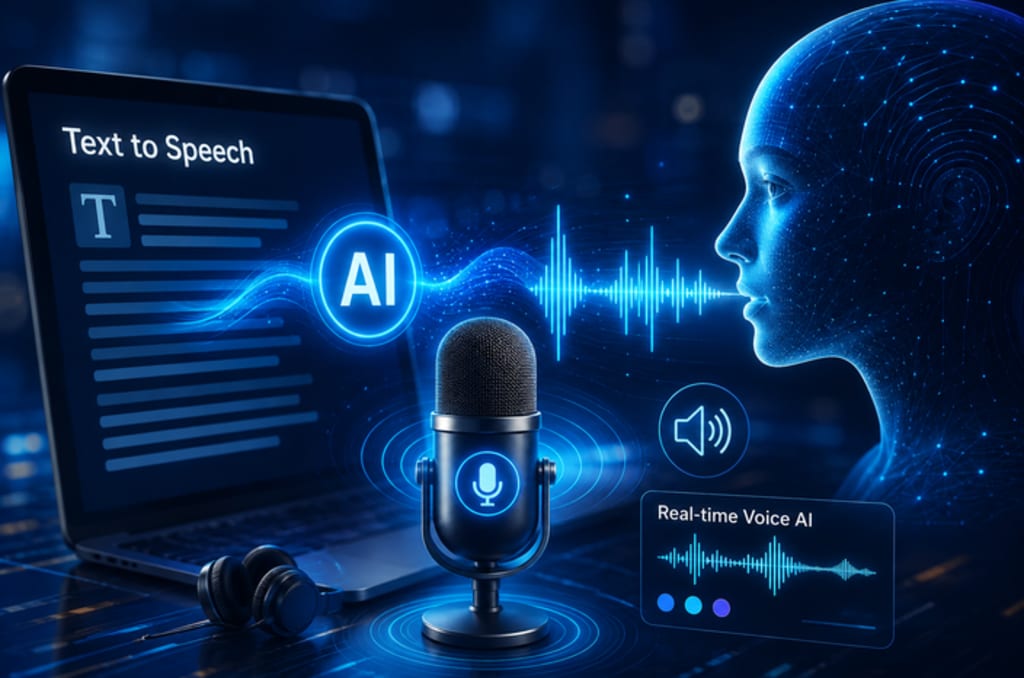
Artificial intelligence is entering a new phase of voice interaction. Recent developments show that speech systems are moving beyond simple text conversion. They are becoming faster, more responsive, and better suited to live conversations.
In July 2026, OpenAI introduced GPT-Live, a new generation of voice models for natural human-AI interaction. The system uses a full-duplex design. This allows it to listen and speak at the same time.
That shift matters because older voice systems often depended on separate stages. A user would speak, wait for processing, and then hear a response. Newer systems aim to reduce that delay.
Voice Technology Is Becoming More Conversational
The latest developments focus on timing as much as speech quality. People expect conversations to include interruptions, pauses, and quick responses.
OpenAI says GPT-Live can handle simultaneous listening and speaking. It can also respond with brief conversational signals. These changes make interactions feel closer to normal dialogue.
Research is also moving toward continuous speech generation. A recent VoiceChat-TTS paper describes a low-latency model for interactive agents. It supports interruptions without restarting the entire conversation.
This approach could influence customer service, education, accessibility, and workplace software.
Text-to-Speech Tools Are Finding Wider Uses
Traditional text-to-speech technology remains useful for many everyday tasks. Users can convert written material into spoken audio for easier listening.
A Text to Speech Online tool can help users turn written information into voice content. This can support articles, study materials, scripts, and other digital projects.
The technology has also developed beyond basic pronunciation. Modern systems can adjust rhythm, tone, pacing, and other speech characteristics.
That progress gives creators more control over how information sounds. It also makes audio content easier to produce without recording every sentence manually.
The Rise of More Expressive AI Voices
Recent releases show growing attention toward expressive speech. Soniox recently introduced TTS v2 with expressive controls, voice cloning, multilingual switching, and low-latency streaming.
Mistral has also introduced Voxtral TTS. The model supports expressive speech across nine languages and focuses on low-latency voice generation.
These developments indicate a broader industry trend. Developers are working to make synthetic voices sound less mechanical.
The goal is not simply to produce understandable speech. The goal is to create speech that fits the situation.
For example, an educational application may need a calm delivery. A navigation assistant may need short and clear instructions. A customer support agent may need a more conversational style.
Real-Time Voice AI Changes Digital Interaction
Real-time voice AI is becoming an important part of this transition. Instead of generating a complete recording first, newer systems can produce speech while an interaction continues.
This can reduce waiting time during conversations. It may also allow software to react more naturally when users change their questions.
OpenAI's latest voice architecture illustrates this direction. Its system keeps audio flowing while more complex reasoning can happen separately.
The result is a different model for human-computer interaction. Voice becomes an active interface rather than an additional feature.
Businesses are watching this development closely. IBM and Deepgram announced an enterprise voice partnership earlier in 2026. Their work focuses on scalable speech and transcription technology.
Accessibility Remains an Important Application
Voice technology can also make digital information easier to access. People who have difficulty reading large amounts of text may benefit from audio alternatives.
Students can listen to study materials while performing other tasks. Professionals can review documents through spoken output. Content creators can prepare audio versions of written work.
Multilingual voice models may expand these possibilities further. Mistral's Voxtral TTS, for instance, supports nine languages. Its development reflects increasing attention to multilingual speech technology.
However, language support involves more than translating words. Pronunciation, rhythm, accents, and cultural patterns can affect how natural a voice sounds.
Voice Cloning Brings New Questions
Improved voice generation also creates challenges. Recent research highlights concerns around impersonation, fraud, and misinformation involving synthetic voices.
As generated speech becomes more realistic, identifying its origin becomes increasingly important.
OpenAI announced an important development in this area on July 31. Audio generated through GPT-Live in supported environments now includes SynthID watermarking. The company also introduced verification tools for provenance checks.
Such measures may become more common as voice technology develops. Clear disclosure can help audiences understand when audio was produced synthetically.
What This Means for Content Creators
The changing voice landscape gives creators more production options. Written stories can become audio experiences without traditional recording equipment.
A Text to Speech AI workflow can assist with converting written material into spoken content. Creators can then review the output and adjust the script for natural delivery.
Real-time voice AI takes the idea further. Instead of producing fixed recordings, creators and businesses can build interactive experiences.
This could include learning assistants, information services, virtual presenters, and conversational applications.
Still, human editing remains important. A generated voice can sound natural while the underlying script remains unclear. Good content still depends on research, structure, accuracy, and audience awareness.
Vocal's AI Rules Require Transparency
Creators publishing AI-assisted work should also understand platform requirements. Vocal's updated Community Guidelines state that AI-generated content must be labeled during submission.
The platform also warns against thin advertisements, forced hyperlinks, and unrelated product placements. It expects stories to provide genuine value for readers.
That makes transparency especially important for AI-focused articles. Writers should explain technology clearly rather than turning an article into promotional copy.
Vocal also requires disclosure for AI-generated images, audio, and video. Realistic synthetic media involving identifiable people receive additional restrictions.
For creators, these rules offer a practical direction. AI can support production, but originality and reader value should remain central.
A New Direction for Human-AI Communication
The latest developments suggest that voice AI is becoming more interactive. Systems are moving from simple speech output toward continuous conversation.
Low latency is now a major design goal. Expressive delivery and multilingual support are also receiving greater attention.
At the same time, developers face questions about trust and authenticity. Voice cloning can provide useful creative tools, but it can also create new risks.
The next stage will likely combine natural conversation with stronger safeguards. Users will expect AI voices to respond quickly and communicate clearly.
For creators, the opportunity is equally significant. Tools for Text to Speech can make audio production more accessible. New real-time voice AI systems can make digital experiences more interactive.
The technology is changing quickly. Yet the most useful applications will still depend on thoughtful human direction, accurate information, and transparent use of AI.
About the Creator
Gulshan
SEO Services, Guest Post & Content Writter.
Enjoyed the story? Support the Creator.
Subscribe for free to receive all their stories in your feed.
Comments
There are no comments for this story
Be the first to respond and start the conversation.